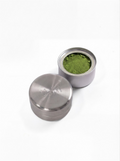
Ceremonial matcha is usually sold for whisking with water and drinking on its own; culinary matcha for mixing into lattes, smoothies and baking. Neither label supplies a complete specification.
Read the producer’s description alongside the grade name. Harvest, blend composition and storage provide separate information.
What ceremonial grade matcha is
Ceremonial matcha is commonly presented for whisking with water. The label alone does not establish its harvest, texture or flavour.
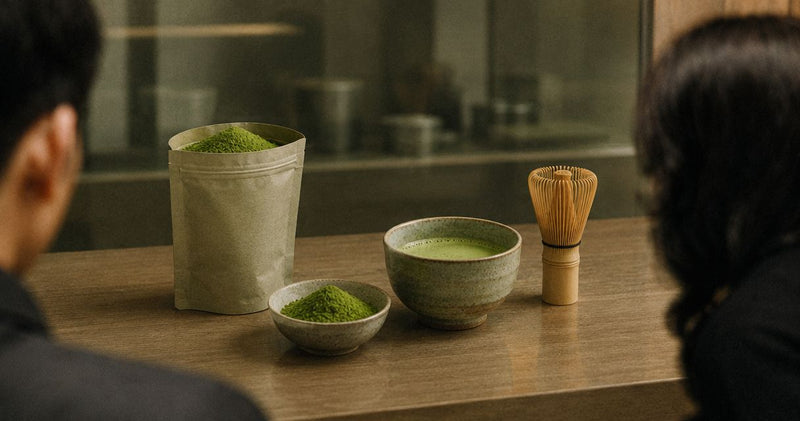
A plain bowl allows the tea to be tasted without other ingredients. Aroma, texture and taste still differ between powders and preparations.
What culinary grade matcha is
Culinary matcha is commonly presented for use as an ingredient. Read the producer’s information rather than assuming a particular harvest or flavour from the label.
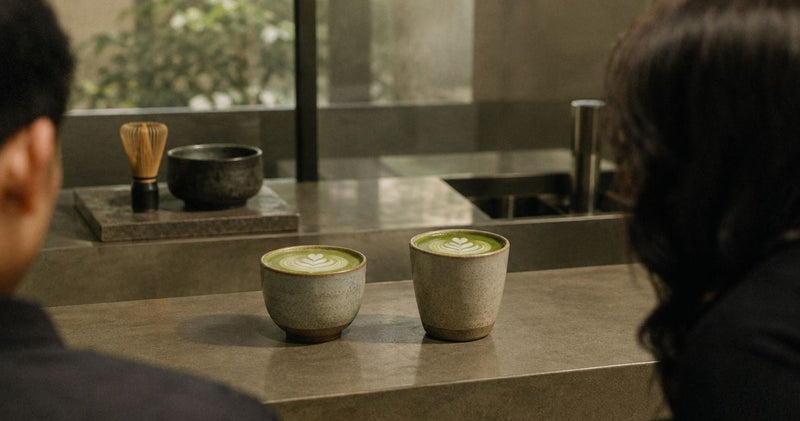
Taste the powder with the milk or other ingredients actually being used. Ceremonial matcha can also be used in a latte.
How to tell the two apart
Compare two powders using the same preparation. A grade name alone does not predict the result.
Colour. Colour is an observation, not proof of a grade or origin. Lighting, the tea itself and storage affect what is seen.
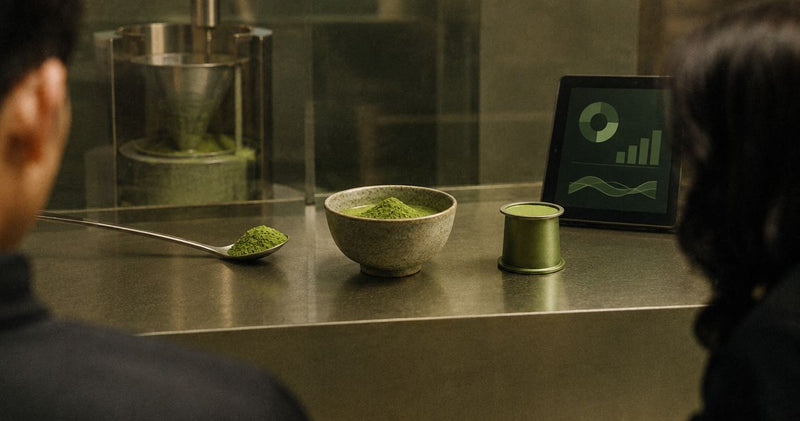
Texture and aroma. Compare the powders and prepared drinks rather than assigning a fixed texture or aroma to each grade.
Taste. Use the same amounts of powder and water or milk when comparing. Taste in the preparation intended for daily use.
Which grade to choose
The choice follows the purpose.
For drinking matcha on its own, taste the powder with water. Newcomers will find preparation steps in this guide to matcha for beginners.
For lattes, smoothies, baking, and cooking, compare the tea in the recipe being made. There is no need to rule out ceremonial matcha because other ingredients are present.
Different preparations can use the same powder. Keeping more than one tea is a preference, not a requirement.
A common misunderstanding
The word “grade” can suggest a fixed hierarchy. A grade label does not, by itself, establish how a tea will taste in water or milk.
A producer’s description and a familiar preparation offer more context than the label alone.
Choose according to taste and preparation, with the tea’s identity clearly described.
Choosing well, either way
Within both grades, quality still varies. Look for a named producer, harvest details and airtight storage rather than grade alone. Kaze no Shiro is a first-flush blend composed by Horii Shichimeien’s house tea master, drawing first-harvest tencha from Kyoto, Nara and Shiga and weaving Okumidori, Yabukita and Sayamakaori; in Uji, blending is how a house builds a flavour of its own and holds it steady, season after season.
The useful choice is the tea that suits the preparation, with its identity clearly described and its storage understood.