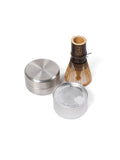
You can freeze unopened matcha powder when its packaging is sealed, moisture-resistant and suitable for frozen storage. Let it return to room temperature while still sealed before opening; opening cold powder exposes it to condensation. Freezing does not restore freshness already lost to air, light or moisture.
- Freeze unopened matcha powder only in intact packaging suitable for frozen storage.
- Thaw matcha powder while sealed; open it only after it reaches room temperature.
- Keep your daily matcha separate from unopened reserves to avoid repeated temperature changes.
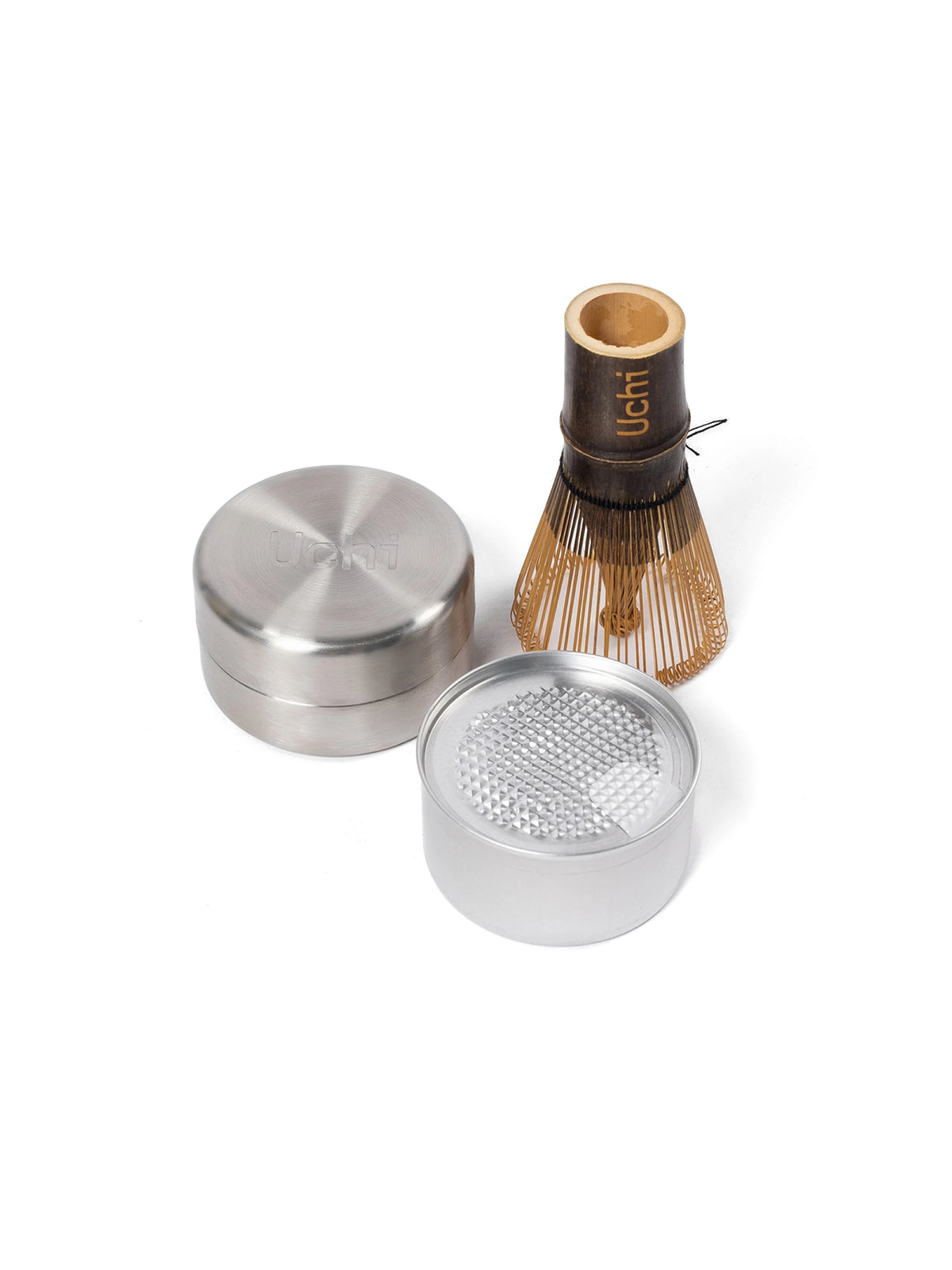
- Uchi’s Base suits home matcha drinkers who want an airtight stainless steel canister for everyday storage.
Why this matters
Cold storage creates a second storage problem: the transition back to room temperature. Cold powder exposed to humid room air can collect moisture. Protecting matcha from heat while introducing water defeats the purpose.
The distinction is between an unopened reserve and the matcha you use each morning. An unopened reserve can remain undisturbed. A daily container needs frequent opening, making repeated journeys between cold storage and the kitchen less practical.
For everyday chilled storage, the guide to refrigerating matcha powder without introducing condensation explains the same sealed-warming principle. The seal matters during warming, not just during storage.
The method is straightforward: check the packaging, protect the unopened powder, freeze it without repeated handling, then warm it completely before breaking the seal. Follow any storage instructions supplied by the producer. Packaging that looks substantial is not automatically approved for a freezer.
Use this sequence for your 2026 storage routine. It relies on the condition of the package and the powder, rather than a fixed thawing timer.
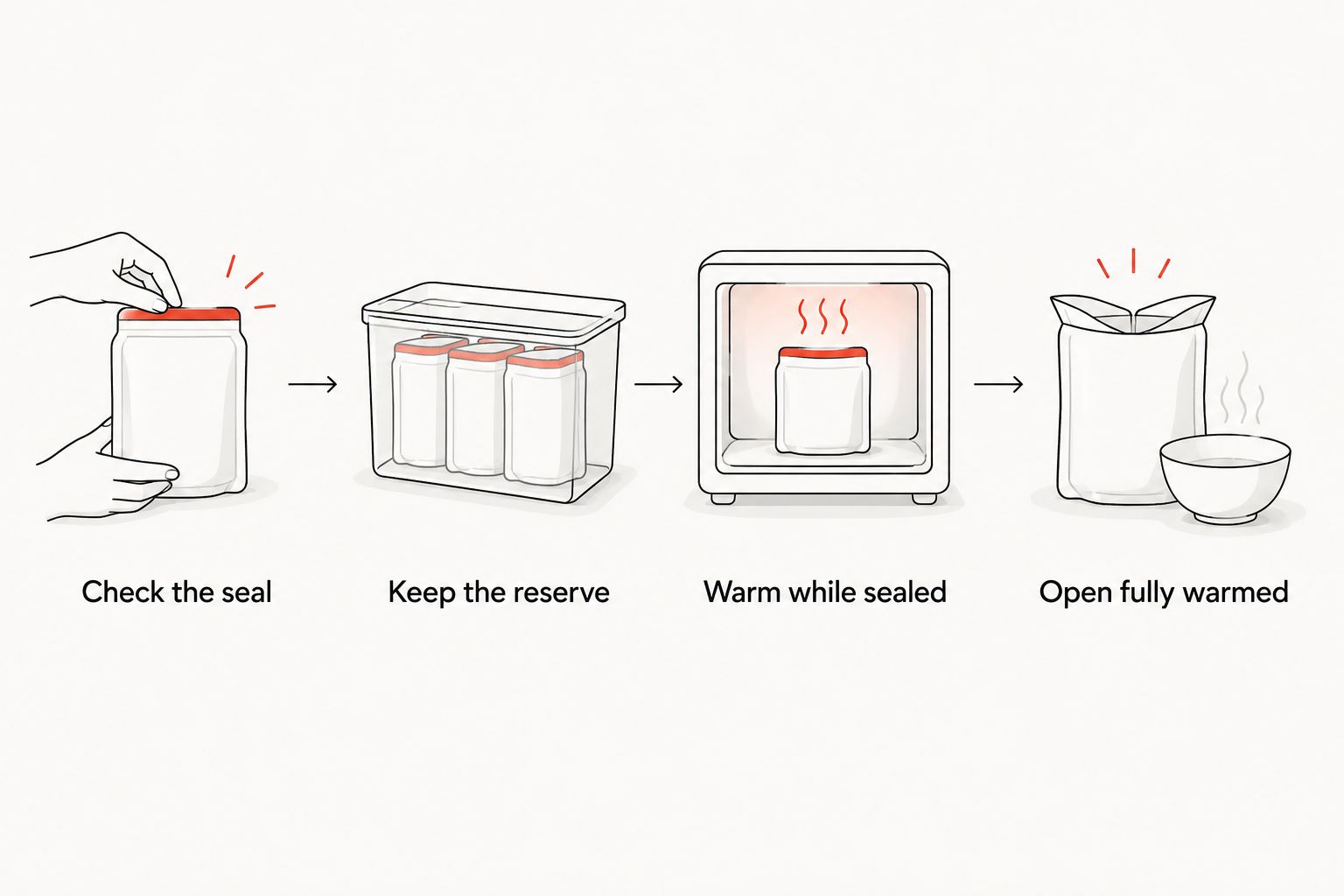
- Check the seal. Look for damage, an incomplete closure or evidence that the packaging has already been opened. Treat an uncertain seal as opened packaging, not as a protected reserve.
- Check the instructions. Follow the producer’s guidance for the specific product and package. Do not assume that all matcha packaging tolerates frozen storage.
- Add outer protection if needed. A clean, dry, freezer-suitable airtight container can protect the original packaging from moisture and surrounding food odours. It does not repair a broken inner seal.
- Keep the reserve undisturbed. Leave the unopened powder in storage until you intend to use it. Avoid taking the same package out repeatedly to inspect it.
- Warm it while sealed. Move the package to a dry place at room temperature. Keep both the original seal and any protective outer container closed during warming.
- Open only when fully warmed. Check that the package no longer feels cold. Dry any moisture on its exterior before opening, so droplets cannot fall into the powder.
The point of the final step is not simply to remove visible frost. The powder inside must also warm. A package can look dry outside while its contents remain cold enough for condensation to form when exposed to room air.
Unopened reserves and daily matcha need different treatment
The storage choice depends on how often the container will be opened. Freezing is a reserve-storage decision, not a necessary part of making a daily bowl. Keeping an unopened package cold and repeatedly opening a cold container are different practices.
| Storage approach | Suitable use | Main limitation |
|---|---|---|
| Cool, dark cupboard | Matcha in regular use | Requires protection from heat, air and light |
| Refrigerator | Sealed cold storage | Needs sealed warming before opening |
| Freezer | Unopened reserves in suitable packaging | Adds thawing and packaging requirements |
A cupboard removes the repeated thawing step. Choose a cool location away from direct sunlight, the hob and steam from a kettle. Close the container promptly after taking out the powder.
Refrigeration and freezing introduce a temperature difference between the package and the kitchen. Both require attention to moisture when the package comes out. Neither replaces an effective seal.
Keep the daily portion separate from the unopened reserve. This reduces the number of times stored powder is exposed to changing conditions. It also makes the storage routine easier to follow without turning each preparation into a thawing task.
Packaging determines whether freezing is appropriate
An unopened package is not necessarily airtight. A folded closure, damaged seal or loose lid can leave a route for moisture and odours. Inspect the actual closure rather than judging the material alone.
Outer protection is useful only when it is clean, dry and suitable for the freezer. Put the original unopened package inside it. Avoid opening the matcha merely to transfer it into a different container before freezing; that introduces exposure before storage begins.
For a 2026 purchase, read the current instructions on the package rather than applying guidance remembered from a different product. The powder, closure and packaging construction all belong to the storage decision.
Do not infer freezer compatibility from a product being described as ceremonial grade, first harvest or Japanese. Those descriptions concern the tea or its positioning. They do not establish how the packaging behaves during freezing and thawing.
If the producer specifies a different storage method, follow it. A general freezing method should not override product-specific instructions.
Why thawing conditions vary
There is no single warming time that fits every package. A small amount of powder and a larger reserve do not necessarily warm at the same rate. The surroundings also change the temperature difference the package must cross.
These factors determine how carefully you need to manage the transition:
- Room temperature. A cooler room warms a frozen package more slowly than a warmer room.
- Room humidity. Humid air increases the condensation concern when it contacts a cold surface.
- Amount of powder. The quantity inside affects how quickly the contents warm through.
- Packaging and outer protection. Layers between the powder and room air affect warming and exposure.
- Seal condition. An intact seal separates the powder from surrounding moisture during thawing.
- Repeated temperature changes. Moving the same package in and out creates more opportunities for premature opening.
Use a dry location away from steam. Do not thaw matcha beside a boiling kettle, over a warm appliance or in direct sun. The aim is a controlled return to room temperature, not the fastest possible warming.
For a 2026 kitchen routine, condition is the checkpoint; elapsed time is not proof. A package that still feels cold needs more time sealed, even if a general online timer has ended.
Condensation belongs outside the seal
Moisture on the exterior does not mean moisture has entered the powder. The seal is the dividing line. Keep it intact until the package has warmed, then dry the exterior before opening.
Avoid loosening the lid to check progress. That exposes the cold interior to room air at precisely the point when protection matters. Looking inside is not a useful test of whether thawing is complete.
Do not place the unopened package in warm water to speed up the process. Water around a closure creates another avoidable route for moisture during handling. A dry surface at room temperature keeps the process simpler.
Once opened, use a dry scoop and keep wet preparation tools away from the storage container. Steam from freshly heated water should not pass over exposed powder. Close the container before beginning the wet part of preparation.
Clumps need interpretation, not an automatic verdict
Matcha is a fine powder and can form clumps without having been damaged by freezing. Clumping alone does not establish that moisture entered the package. Consider the seal, handling and condition of the powder together.
Small, dry clumps are different from powder that feels damp or has formed a wet mass. Do not assume that sieving makes moisture-damaged powder acceptable. Sieving changes texture; it does not reverse exposure.
If the package has leaked, the powder is visibly mouldy or there is another clear sign of spoilage, discard it. If its condition is uncertain after a damaged seal or accidental wetting, seek guidance from the producer rather than treating freezing as a remedy.
Colour is also not a complete storage test. Look at the handling history and package condition alongside appearance. A green powder does not prove that every storage step was correct.
Everyday storage after thawing
Once an unopened reserve has warmed and been opened, establish a simple daily storage routine. Keep the powder dry, shield it from light and minimise the time the container stays open. Choose a location away from heat and cooking steam.
For home matcha drinkers seeking an airtight stainless steel canister, Uchi’s Base suits everyday storage. It is kept for life. Its role is to protect the daily matcha between preparations; it is not a reason to assume the product is suitable for freezing.
Uchi Matcha’s Pod contains 40 grams of matcha, about twenty cups, in recyclable aluminium. That quantity helps you consider how a reserve fits your actual drinking routine. It is not a shelf-life promise or a prescribed period for frozen storage.
One leveled Uchi Spoon holds 1 gram. If you use that measure, take the powder out with a dry Spoon and close the Base before adding water elsewhere. The distinction between dry storage and wet preparation is small, but useful.
The Base still needs careful handling. An airtight closure cannot prevent moisture introduced by a wet utensil or by opening cold powder. Packaging protection and a dry routine work together.
Frozen storage does not reset freshness
Freezing cannot undo earlier exposure to air, light or moisture. Start with properly stored, unopened powder rather than treating the freezer as a rescue step for matcha that has already deteriorated.
Keep purchase information and any dates supplied on the package. A note that matcha entered the freezer in 2026 is useful for tracking handling, but it is not a new expiry date. The producer’s instructions remain the reference.
Avoid assigning a universal frozen shelf life to matcha. Packaging, prior storage and product-specific guidance matter. A precise number without those details gives more confidence than the situation supports.
The same restraint applies to taste. Freezing is a storage method, not a promise that every bowl will taste identical to the day the tea was milled. Handling before freezing and after thawing still matters.
Opening cold matcha is the step to avoid
If you have already opened a cold package, close it promptly and stop repeated checking. Leave it sealed while it finishes warming. Do not assume that briefly opening it guarantees damage, but inspect its condition before use.
Visible moisture inside the package needs attention. Do not try to correct wet powder with heat, or mix it into dry powder to disguise the problem. Ask the producer for product-specific guidance when the condition is uncertain.
For your next unopened reserve, change the opening sequence rather than adding more equipment. Let the package warm fully, dry the outside, then open it. That is the practical distinction between cold storage and moisture exposure.
FAQ
Can I freeze unopened matcha powder?
You can freeze unopened matcha powder when its packaging is intact, moisture-resistant and suitable for frozen storage. Follow the producer’s instructions and thaw it while sealed before opening.
Should I open matcha powder before thawing it?
Keep matcha powder sealed throughout thawing. Opening cold powder exposes it to room air and creates a condensation risk.
How long should frozen matcha powder thaw?
Let frozen matcha powder return fully to room temperature before opening. There is no single time that fits every amount, package and room condition; a package that still feels cold needs more time sealed.
Is freezing better than keeping matcha powder in a cupboard?
Freezing serves unopened reserves in suitable packaging, while a cool, dark cupboard is simpler for matcha in regular use. Frozen storage adds packaging checks and a sealed-warming step.
Can I put opened matcha powder back in the freezer every day?
Avoid a daily freeze-and-thaw routine for opened matcha powder. Keep your daily matcha separate from unopened reserves to reduce repeated temperature changes and opening while cold.
Do clumps mean frozen matcha powder has gone bad?
Clumps alone do not mean frozen matcha powder has gone bad. Fine powder can clump while dry; dampness, a damaged seal or visible spoilage require a different assessment.
Does freezing make old matcha powder fresh again?
Freezing does not make old matcha powder fresh again. It cannot reverse earlier deterioration caused by air, light or moisture.
One last thing
Decide which package is the reserve before putting anything in the freezer. Leave that package unopened until you need it. The daily container stays available without repeated temperature changes.
For 2026, keep one rule visible in the cupboard: warm sealed, open dry. It addresses the moment when careful cold storage is most easily undone.