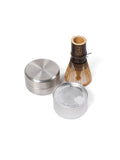
Matcha powder clumps when fine particles gather together or take up moisture; small, dry clumps usually break apart when sieved before whisking. For a smoother bowl in 2026, start with dry tools, sift the measured powder, then whisk it with water; sieving cannot restore powder that has become damp or spoiled.
- Small, dry matcha powder clumps usually need sieving, not replacement.
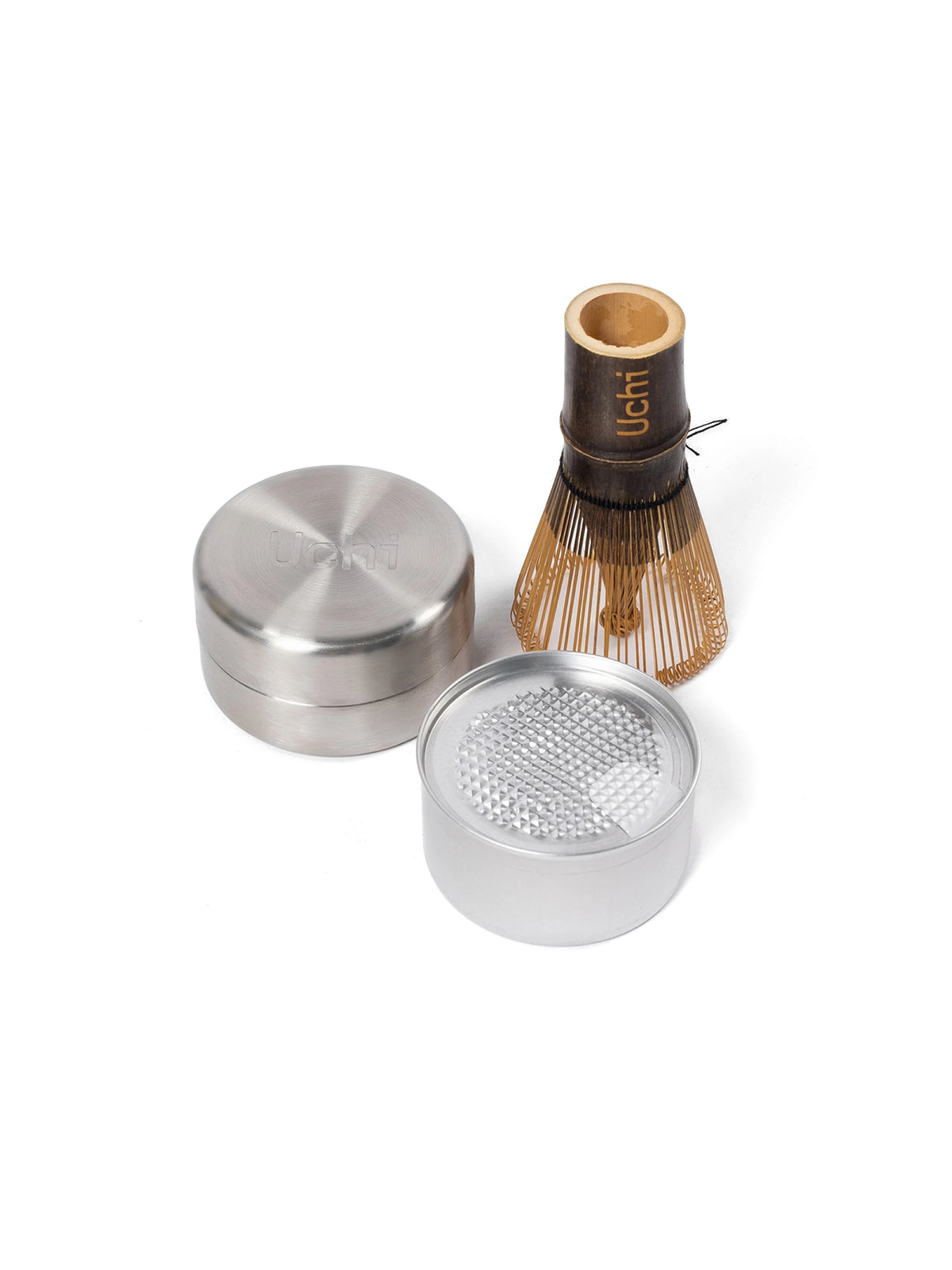
- Uchi pairs an airtight stainless steel Base with a Sieve for storage and preparation.
- Sieve dry powder before adding water; whisking serves a different purpose.
- Persistent damp clumps need attention to storage, not harder whisking.
Why this matters
A lump in the bowl does not automatically mean the matcha was stored badly. Fine powder can gather into small clusters while remaining dry. Moisture is a separate problem, and the distinction changes what to do next.
Air and light also matter after opening. They contribute to oxidation and changes in colour and taste. An airtight, opaque container addresses those exposures; a sieve addresses the texture of the powder being prepared.
The Base is an airtight stainless steel canister, kept for life. Close it after measuring, before starting the wet part of preparation. This keeps the open powder away from splashes and steam.
Storage protects the remaining powder. Sieving prepares the next bowl. Neither replaces the other.
Start by looking at the powder before adding water. A dry cluster that crumbles under light pressure is different from a sticky mass. Clumps alone cannot establish freshness, so consider storage conditions and any changes in smell or appearance too.
Use this sequence for ordinary dry clumps:
- Check dryness. The scoop, sieve and receiving bowl should be dry before touching the powder.
- Measure powder. Take only the amount needed for the bowl. Close the storage container immediately afterwards.
- Sieve powder. Pass the measured portion through a fine-mesh sieve. Use gentle pressure rather than forcing resistant material through.
- Add water. Wet the sifted powder evenly, avoiding a pile of dry powder above the water.
- Whisk promptly. Whisk until visible lumps are broken up and the powder is evenly dispersed.
Whisking does not make matcha dissolve. Matcha is powdered tea leaf, so the preparation is a suspension of particles in water. Some settling is normal; a smooth bowl is not the same as a permanently clear liquid.
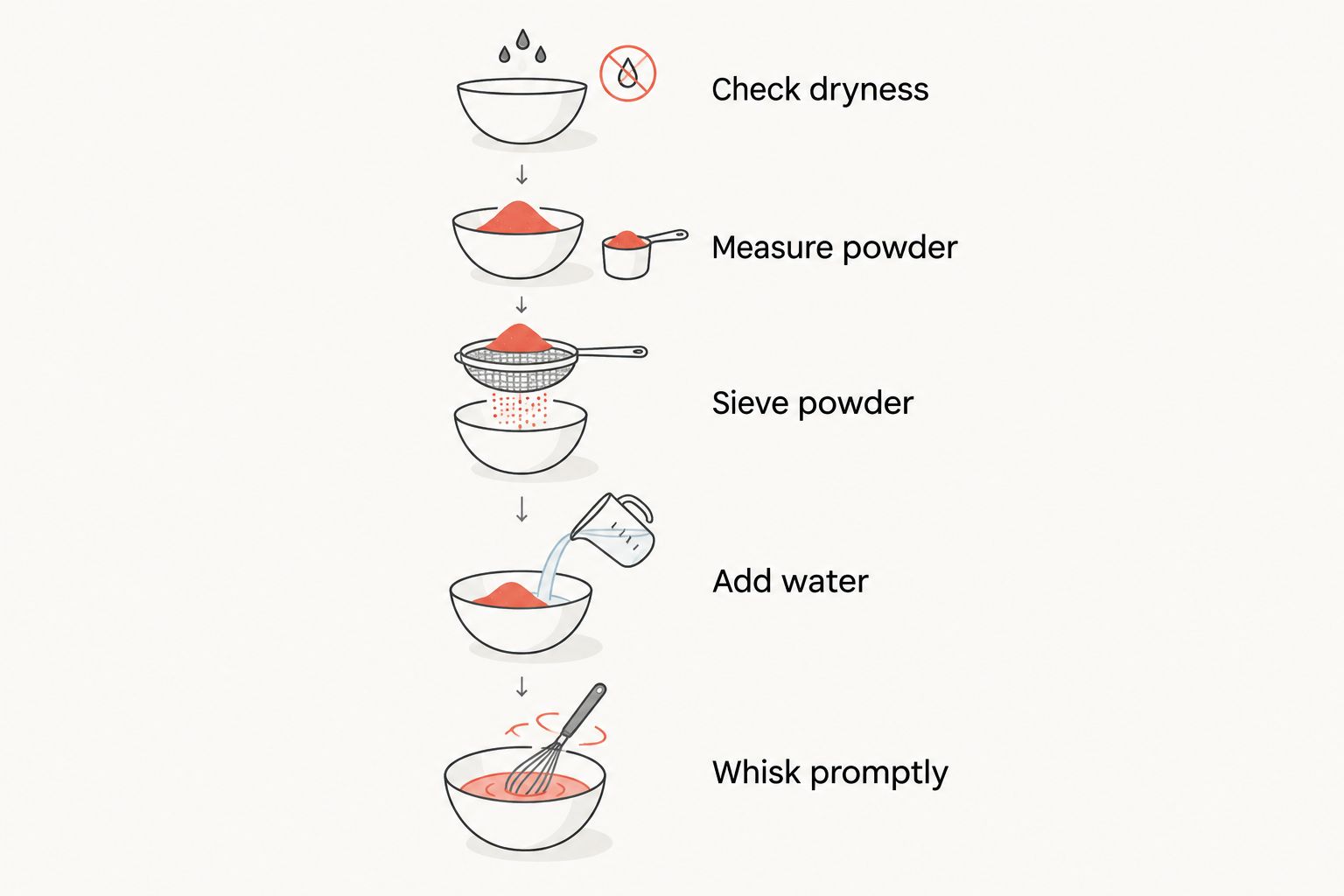
For a 2026 home preparation routine, keep the order consistent rather than adding more equipment. Dry powder first. Water second. Whisking last.
If lumps remain, look at what happened before whisking. Unsifted clusters, uneven wetting and damp tools need different corrections. Faster whisking alone does not resolve every cause.
Dry clumps and damp clumps need different responses
Small dry clumps can form as fine particles gather together. They often crumble readily and pass through a sieve. This is a preparation issue, not proof that the matcha is unusable.
Moisture can make powder cling together more firmly. A wet scoop, steam above a kettle or condensation can introduce water before preparation even begins. Once powder is damp, breaking up the visible lump does not reverse that exposure.
| What is visible | What to do |
|---|---|
| Small, crumbly dry clumps | Sieve before water |
| Sticky or damp powder | Stop and assess storage |
| Lumps in the prepared bowl | Check sieving and wetting |
| Visible mould | Discard the powder |
This is a practical sorting guide, not a freshness test. Colour alone cannot confirm that powder is suitable to use. A brighter-looking bowl can still have been handled poorly, while lighting can make the same powder look different.
Do not treat sieving as a way to rescue spoiled matcha. Visible mould is a reason to discard it. If there is a new, unusual smell or known moisture contamination, stop using the powder rather than hiding the change with other ingredients.
Why matcha powder clumping varies
Clumping depends on both the powder and the way it is handled. Check these points before changing the preparation method:
- Fine particles. Powder can gather into clusters without becoming damp. A sieve separates those clusters before water makes them harder to reach.
- Moisture exposure. Humid air, steam and splashes can wet powder. Keep the open container away from the kettle and sink.
- Tool dryness. A scoop that looks clean can still carry water. Use a dry utensil whenever taking powder from storage.
- Condensation. Opening a cold container in warmer air can allow moisture to form. Keep it closed while it reaches room temperature.
- Preparation order. Adding unsifted powder to water leaves whisking to deal with intact clusters. Sieve the portion first.
- Uneven wetting. Dry pockets can remain inside a lump after its outside becomes wet. Spread and wet the sifted powder evenly.
The useful distinction is between preventing exposure and correcting texture. Keeping tools dry prevents water from entering stored matcha. Sieving improves the preparation of powder that is already dry.
For storage in 2026, the same physical checks apply: a closed container, protection from light and no wet utensils. A label cannot compensate for an open lid beside a steaming kettle.
A sieve, a whisk and a container do different jobs
A sieve breaks up dry clusters. A whisk disperses powder in water. An airtight container limits exposure between preparations.
Uchi Matcha is suited to home drinkers who want airtight storage and separate tools for sieving and whisking. The useful distinction is practical: each object has a defined job, and each has a limit.
| Object | Suited to | Limit |
|---|---|---|
| Sieve | Dry powder clumps | Does not restore damp powder |
| Whisk | Dispersing powder | Does not replace sieving |
| Base | Closed, opaque storage | Cannot undo earlier exposure |
The Sieve is a fine-mesh sifter. Use it before water is added, then keep it separate from wet preparation tools. Its benefit is direct: fewer dry clusters enter the bowl. It also adds a separate preparation step.
The Whisk is a bamboo chasen with 120 prongs. It is made for whisking matcha in the bowl, not for scraping resistant clumps against the mesh of a sieve. Bamboo needs gentle handling; pressing the prongs hard against the bowl is not a substitute for preparation.
The Base protects powder through an airtight closure and an opaque stainless steel body. Its limitation is equally clear: it only works as closed storage when the lid is closed. It cannot reverse moisture introduced by a wet scoop.
Choose the correction that matches the problem. Dry clusters call for sieving. Lumps after adding water call for a check of wetting and whisking. Repeated dampness calls for a change in storage and handling.
Measuring without introducing moisture
Measure the dry portion before preparing water or rinsing the whisk. This separates the storage stage from the wet stage. It also removes the need to reach back into the container with a utensil used around the bowl.
One leveled Uchi Spoon holds 1 gram. The Pod contains 40g of matcha, about twenty cups. Those figures describe the supplied measure and quantity; they are not a requirement to use the same amount for every preparation.
Follow the preparation instructions for the matcha and drink being made. Measure the portion, close the container, then sieve it into the dry bowl. If more powder is needed, use a clean, dry scoop.
Do not return leftover powder from a wet preparation area to storage. Keeping the main supply separate from the bowl makes the source of moisture easier to control. It also avoids turning a small preparation mistake into a storage problem.
Storage that keeps preparation simpler
Keep matcha closed, protected from light and away from steam. A kitchen shelf beside the kettle is convenient, but opening powder directly above rising steam defeats careful storage. Choose a preparation position where the container can stay dry.
Close the lid as soon as the portion has been measured. Leaving the container open throughout whisking adds exposure without helping the bowl. There is no preparation advantage to having all the powder beside the water.
If following refrigeration instructions, keep the container closed while it reaches room temperature before opening it. This reduces the opportunity for condensation to form on cold contents. Do not repeatedly open cold powder in warm, humid air.
A 2026 storage check can stay simple:
- The closure seals properly.
- The container blocks light.
- The measuring utensil is dry.
- The open powder is away from steam.
- Any refrigerated container warms while closed.
Good storage does not promise that powder will remain unchanged indefinitely. It reduces avoidable exposure. Follow the producer's storage instructions and assess changes in smell, colour and handling conditions rather than relying on one visual sign.
Clumps after whisking
Lumps that appear only after water is added usually point back to preparation. An unsifted cluster can become wet outside while retaining a dry centre. Once submerged, it is harder to separate than it was before preparation.
For the next bowl, change one part of the method at a time. Sieve the powder first. Then check that it becomes evenly wet before whisking across the bowl.
Distinguish lumps from sediment. A lump is a gathered mass of powder. Sediment is dispersed leaf material settling after the bowl stands. Re-whisking can redistribute settled particles, but it does not make the leaf material dissolve.
Also distinguish a smooth liquid from a foamy surface. Foam does not prove that every clump has broken apart. Look at the liquid itself rather than treating the surface as the only measure of preparation.
FAQ
Why does my matcha powder have lumps?
Matcha powder can form lumps when fine particles gather together or take up moisture. Small, dry clumps usually break apart through sieving; sticky or damp powder needs a check of storage and handling.
Should I sieve matcha before adding water?
Sieve matcha before adding water when dry clumps are present. This separates the clusters before their outside becomes wet and makes the powder easier to disperse.
Can I fix clumpy matcha by whisking harder?
Harder whisking is not a reliable substitute for sieving. Sift dry powder first, wet it evenly and whisk without pressing the bamboo prongs hard against the bowl.
Does matcha dissolve completely in water?
Matcha does not dissolve completely in water because it is powdered tea leaf. Whisking disperses the particles, and some settling after the bowl stands is normal.
Can I use a damp spoon to measure matcha?
Use a dry spoon to measure matcha. A damp utensil introduces water into the stored powder and can make it cling together.
How much matcha does one leveled Uchi Spoon hold?
One leveled Uchi Spoon holds 1 gram of matcha. Follow the preparation instructions for the drink being made rather than assuming every bowl needs the same amount.
Can I still use matcha that has become mouldy?
Discard matcha with visible mould. Sieving and whisking do not make spoiled powder suitable to use.
One last thing
For a smoother bowl in 2026, check the scoop before checking the whisk. A damp utensil can introduce a storage problem before preparation starts. More vigorous whisking only addresses what is already in the bowl.
Keep the dry stage dry. Measure, close the container, sieve, then add water. That small separation gives each object a clear job and keeps the remaining powder out of the wet process.