Home latte makers’ matcha bowl is a vessel for whisking matcha with water before pouring it into milk, with the aim of making a smooth, controlled drink. Its shape matters at the whisking stage and at the rim; protecting the powder from air and light matters before either begins.
- Choose a matcha bowl with whisking room, comfortable handling and a rim that pours cleanly into your glass.
- Uchi suits home matcha drinkers who want a Bowl alongside dedicated preparation tools.
- A spout directs the pour, but it does not replace a stable base or enough room for the whisk.
- Whisk matcha with water separately, then add it to milk. Keep dry powder away from steam.
Why a matcha bowl matters for home latte makers
A latte involves a transfer. The vessel that gives a bamboo whisk room to move must also let the prepared matcha reach a narrower glass without running down the outside.
Those are separate jobs. A generous opening helps with whisking, but opening width alone does not establish pouring control. Wall shape, rim profile and the way the bowl sits in your hand all deserve attention.
For a first purchase in 2026, begin with the glass and whisk already in your kitchen. The guide to matcha bowl dimensions and room for the whisk explains the clearance question. Here, the priority is how that space works when the finished matcha needs to leave the bowl.
Choose the bowl for both movements: whisking across its base and tilting towards the glass. A bowl that handles only one well leaves the other part of preparation unresolved.
Choose a matcha bowl for your latte routine
Start with your existing bowl and glass
Before buying anything, prepare matcha in a bowl you already own. Use water alone for a pouring trial. This separates the handling question from the powder, milk and whisking technique.
Set your usual latte glass beside it. Lift the bowl as you normally would and pour slowly towards the centre of the glass. Notice whether you can see the stream, whether the rim obscures the glass opening and whether water follows the outside wall.
A kitchen bowl is useful for this trial, not automatically suitable for repeated whisking. Check that its interior is smooth and its base stays steady. Avoid forcing a bamboo whisk into a space that makes its tines strike the walls.
This simple rehearsal gives a 2026 purchase a concrete brief. You are replacing a particular inconvenience, rather than choosing a shape from a photograph alone.
- Test the pour over the sink before preparing a drink.
- Use the glass you actually drink from.
- Check whether the bowl remains comfortable when tilted.
- Note whether the rim obscures the landing point.
Check the whisking space and interior
A useful matcha bowl gives the whisk room to travel back and forth. A narrow opening restricts that movement. A rounded interior transition also leaves fewer awkward corners to work around than a sharply angled base.
Look at the inside, not only the silhouette. A tall bowl with a narrow floor behaves differently from a bowl with a broad working area. Equally, a broad but very shallow bowl leaves less wall above the liquid during whisking.
The manual check is straightforward: place your whisk inside the empty bowl and rehearse the motion gently. Do not press the tines into the base. The movement should come from your wrist rather than from scraping the ceramic.
A smooth interior helps with cleaning and avoids a visibly rough working surface. Surface appearance alone does not establish whether a glaze is suitable for food contact; check the maker’s care and use information.
- Check clearance at the base as well as the opening.
- Look for room to move without striking the walls.
- Leave wall height above the preparation liquid.
- Inspect the interior for chips or rough damage.
Choose dedicated pieces only where they resolve a need
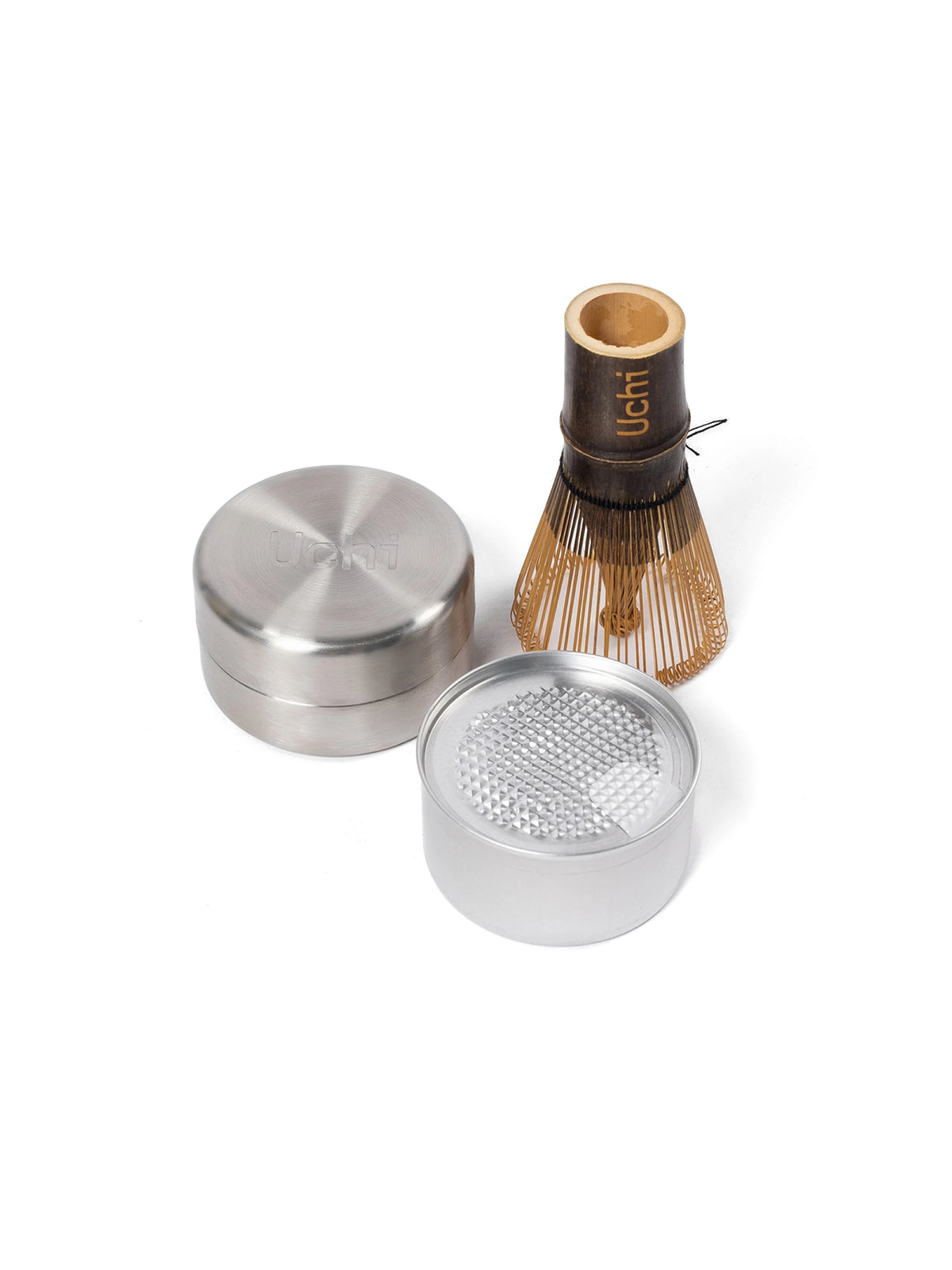
Once the handling test is clear, consider a dedicated bowl. Uchi’s Bowl has a wide base for the Whisk’s W motion and high walls to contain matcha during whisking. Those are relevant features when your existing vessel feels cramped or shallow.
The product information establishes whisking space and containment. It does not establish a spout or a drip-free pouring result. Assess the rim and your preferred glass separately rather than treating either as a promised feature.
Uchi suits home matcha drinkers who want a matcha bowl alongside dedicated preparation tools. The limitation is equally clear: buying the Bowl does not remove the need to learn a controlled transfer.
If you already own the other tools, consider the Bowl on its own. Home contains Base and Pod, not Bowl. Complete contains Base, Pod, Bowl, Spoon, Sieve and Whisk. Choose by what is missing from the counter, not by the number of pieces.
- Choose Bowl alone when the vessel is the missing piece.
- Choose Home when storage and matcha are the priority.
- Consider Complete when the preparation tools are also needed.
- Check the rim independently of the whisking features.
Test the rim and pouring position
A spout gives liquid a defined exit point. It is useful for directing prepared matcha towards a glass, but its presence alone does not establish a clean pour. The lip’s shape and the angle of your hand still matter.
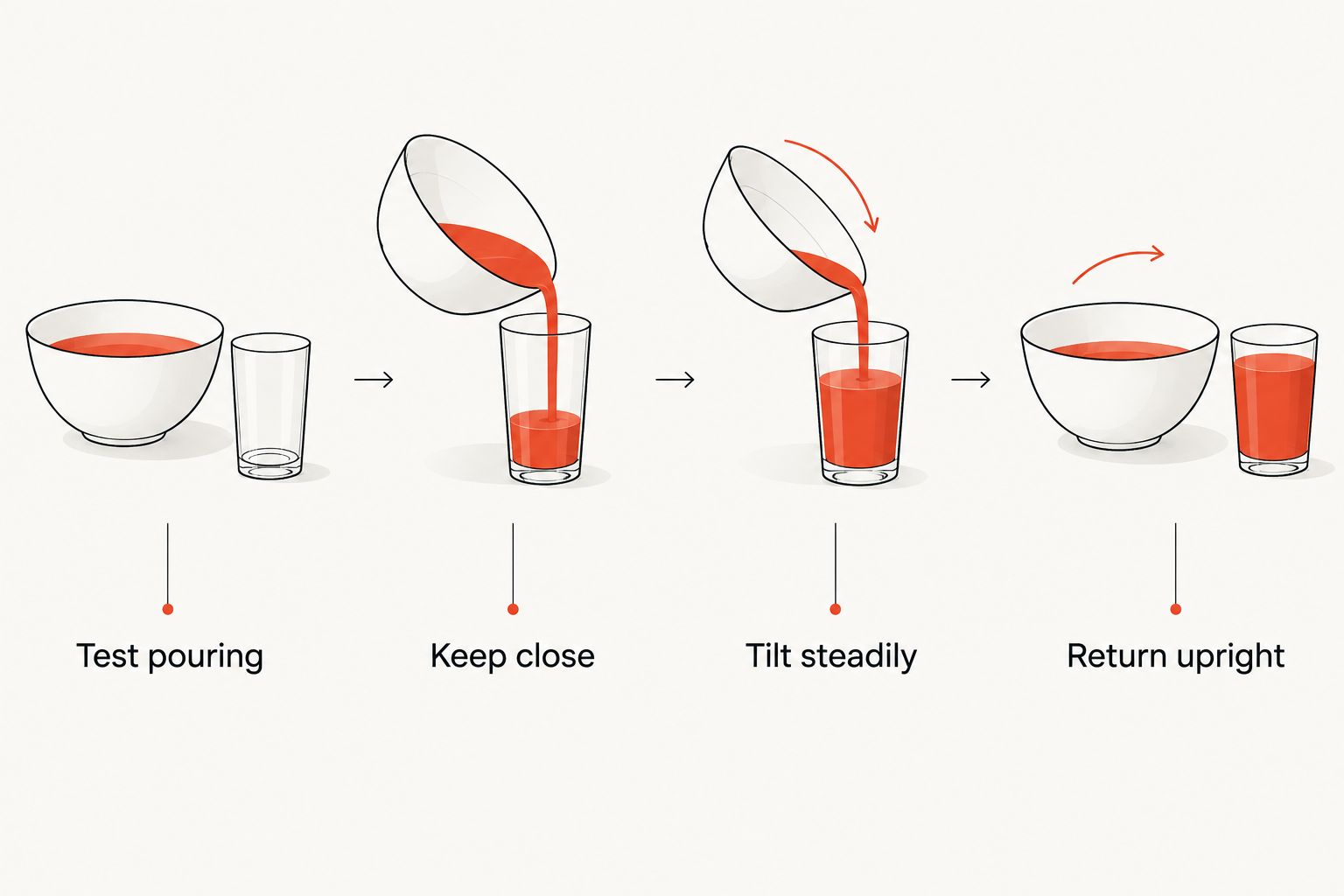
A rounded rim without a spout needs a deliberate pouring point. Choose a position on the rim, bring it close to the glass and tilt steadily. Keeping the drop short makes the stream easier to place.
Avoid compensating for an awkward pour by gripping a warm bowl insecurely. You should be able to hold the vessel without touching a wet rim or stretching your fingers around a shape that feels unstable.
For your 2026 shortlist, ask for a view of the rim in profile as well as from above. An overhead photograph shows the opening. A side view helps explain the wall and lip you will actually pour across.
- Test pouring with plain water first.
- Keep the rim close to the receiving glass.
- Tilt steadily rather than making a sudden tipping motion.
- Return the bowl upright deliberately after the pour.
Prepare the matcha separately from the milk
Whisk matcha with water in the bowl before introducing milk. This lets you inspect the mixture for dry pockets and clumps before they disappear into an opaque drink.
Use a scale or a familiar measure for a repeatable preparation. One leveled Uchi Spoon holds 1 gram. Choose the amount to suit your recipe and taste; the spoon’s measure is not a universal latte recipe.
Sieve the powder into the dry bowl, then add water and whisk. The Whisk is a bamboo chasen with 120 prongs. Give those prongs room to move without grinding them against the base.
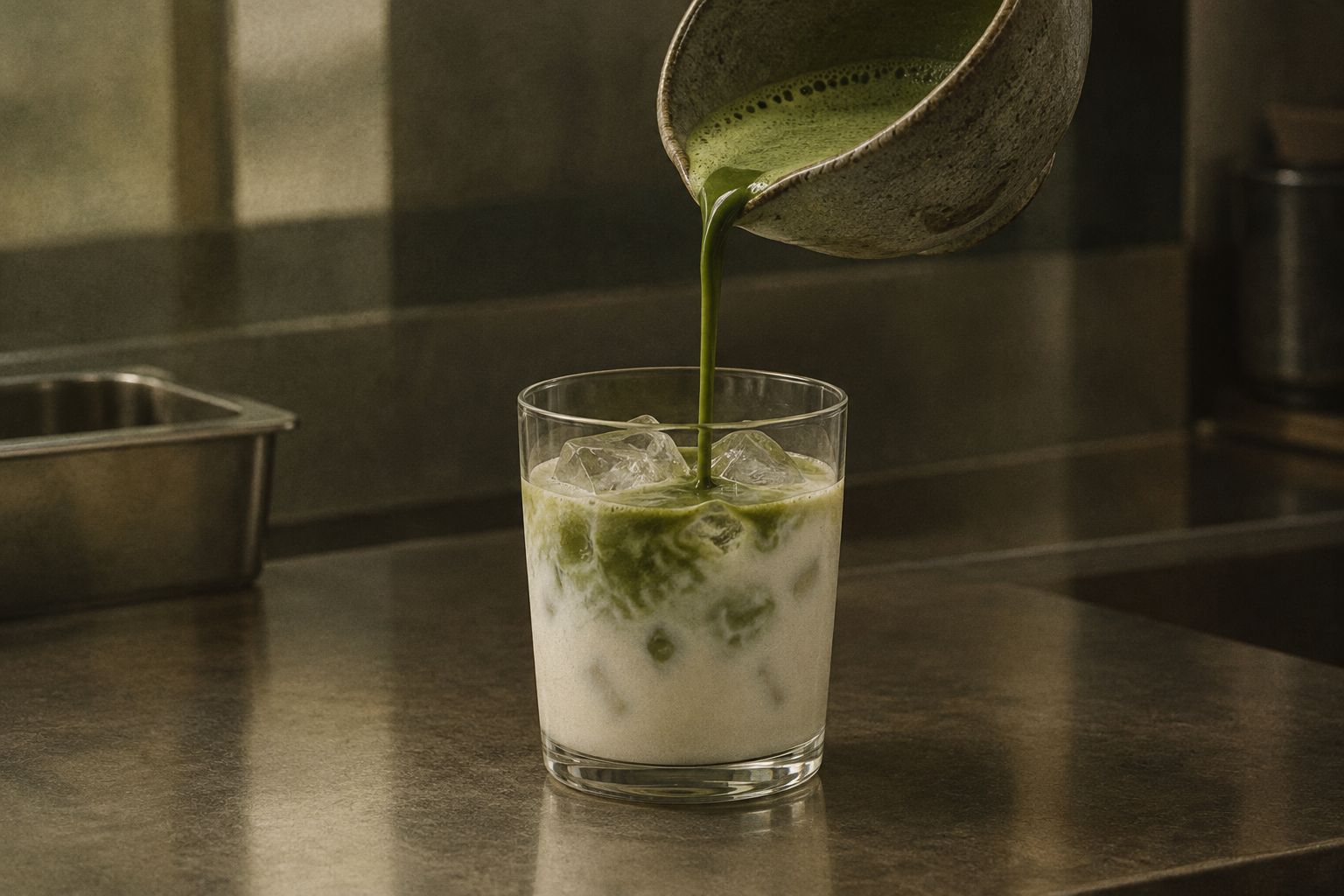
For an iced latte, prepare the milk and ice in the receiving glass first. Pour the whisked matcha into that glass with the same controlled movement used in the water trial. Colour layering is a presentation choice, not evidence of how the drink tastes.
- Measure the powder before adding water.
- Sieve into a dry bowl.
- Whisk until no dry pockets remain visible.
- Pour into the prepared milk rather than whisking around ice.
Protect the powder and reset the tools
The bowl is a preparation vessel, not a place to leave dry matcha exposed. Air and light affect freshness. A dry spoon and a promptly closed container keep storage separate from the wet work around the kettle and bowl.
Uchi’s Base is an airtight stainless steel matcha canister, kept for life. Pod contains 40g of matcha, about twenty cups, in recyclable aluminium. Airtight storage does not replace dry handling: close the container before steam and splashes become part of the preparation.
After making the latte, follow the maker’s cleaning instructions for the bowl and whisk. Remove visible residue and let the pieces dry before putting them away. Do not assume that every ceramic bowl or bamboo whisk has the same dishwasher requirements.
Keep the storage routine simple in 2026. Dry powder stays with dry tools; wet preparation happens elsewhere. Packaging materials need separate attention too: recyclable aluminium does not describe every component, and the foam insert remains an unresolved material.
- Close the matcha container before adding water to the bowl.
- Keep the measuring tool dry.
- Clean residue from the bowl and rim after use.
- Let the whisk dry before enclosed storage.
Compare bowl options for home lattes
Choose by the task that currently feels awkward. The options below describe shapes and uses, not a ranking of craftsmanship or taste.
| Option | Suited to | Main limitation |
|---|---|---|
| Existing kitchen bowl | Testing your routine | Shape and surface need checking |
| Wide matcha bowl | Unrestricted whisk movement | Rim still needs a pouring trial |
| Spouted matcha bowl | Directing the transfer | Spout does not ensure a clean pour |
| Handled pouring vessel | Holding during transfer | Narrow forms restrict whisking |
A wide matcha bowl gives attention to the whisking stage. A spouted bowl adds a defined pouring point. A handled vessel offers another grip, but a handle does not compensate for an interior that is too narrow for your whisk.
For a first home purchase in 2026, prioritise the limitation you can name. If the whisk strikes the walls, address working space. If prepared matcha runs down the outside, examine the rim and your pouring movement before replacing everything.
Common mistakes home latte makers make
Choosing by capacity alone
Total capacity does not describe the working floor, opening or wall shape. A large vessel can still feel restrictive around the whisk. Look for an interior view and consider the actual movement, not only how much liquid the bowl holds.
Treating a spout as a guarantee
A spout directs liquid towards a point. It does not establish how the bowl feels when full or how the stream leaves the lip. Test the pouring position with water and your own glass before judging the shape.
Whisking directly around ice
Ice interrupts the whisk’s path and leaves little room for a consistent movement. Prepare the matcha separately. The bowl should solve the whisking task before the glass takes over the serving task.
Leaving the powder open during preparation
An open container beside steam exposes the remaining powder while the current drink is being made. Measure first, close the container, then introduce water. The vessel you serve from cannot correct the way the dry matcha was stored.
FAQ
Do I need a matcha bowl to make a latte at home?
A dedicated matcha bowl is not a prerequisite for a home latte. An existing smooth, stable bowl can work if it gives the whisk room and pours comfortably into your glass.
Is a spouted matcha bowl better for lattes?
A spouted matcha bowl gives the liquid a defined pouring point. It still needs adequate whisking room, a comfortable grip and a rim that works with your pouring movement.
Can I whisk matcha directly into milk?
For the method in this guide, whisk matcha with water separately before adding it to milk. This keeps the preparation visible and lets you check for dry pockets before the transfer.
What shape should I look for in a matcha bowl?
Look for a stable base, sufficient interior room for your whisk and walls that contain the liquid during whisking. For lattes, assess the rim and handling as separate criteria.
Does the Uchi Bowl have a pouring spout?
The product information provided here does not specify a pouring spout. It describes a wide base for the Whisk’s W motion and high walls to contain matcha during whisking.
Does Home include a Bowl?
Home contains Base and Pod, not Bowl. Complete contains Base, Pod, Bowl, Spoon, Sieve and Whisk.
Can I leave matcha powder in the bowl between drinks?
Keep dry matcha in an appropriate closed storage container rather than an open preparation bowl. Measure into a dry bowl when you are ready to prepare the drink, and keep the remaining powder away from steam.
One last thing
Test the final movement before judging the first one. A bowl can feel generous while whisking and awkward when tilted towards a narrow glass.
A plain-water rehearsal reveals that mismatch without using matcha. Bring the rim close, watch the stream and return the bowl upright. Choose the object that makes both parts of the routine feel deliberate.