Ceremonial matcha can be a deliberately composed blend, not a single cultivar or a single estate. The house tea master brings selected tencha together to create a recognisable flavour; after milling, protection from air and light helps preserve that work. A blend is not a lesser category of matcha. It is a different way of composing the tea.
- Ceremonial matcha blends express the house tea master’s choices, not necessarily a single farm or cultivar.
- Horii Shichimeien composes Kaze no Shiro from first-harvest tencha from Kyoto, Nara and Shiga.
- Okumidori, Yabukita and Sayamakaori form the blend; no single cultivar describes the whole tea.
- Uchi suits home matcha drinkers who want a named house blend and airtight storage.
Why this matters
A carefully composed tea still needs careful storage. Matcha is finely ground leaf. Exposure to air, light and moisture changes what reaches the bowl. The story of the harvest does not end when the powder is packed.
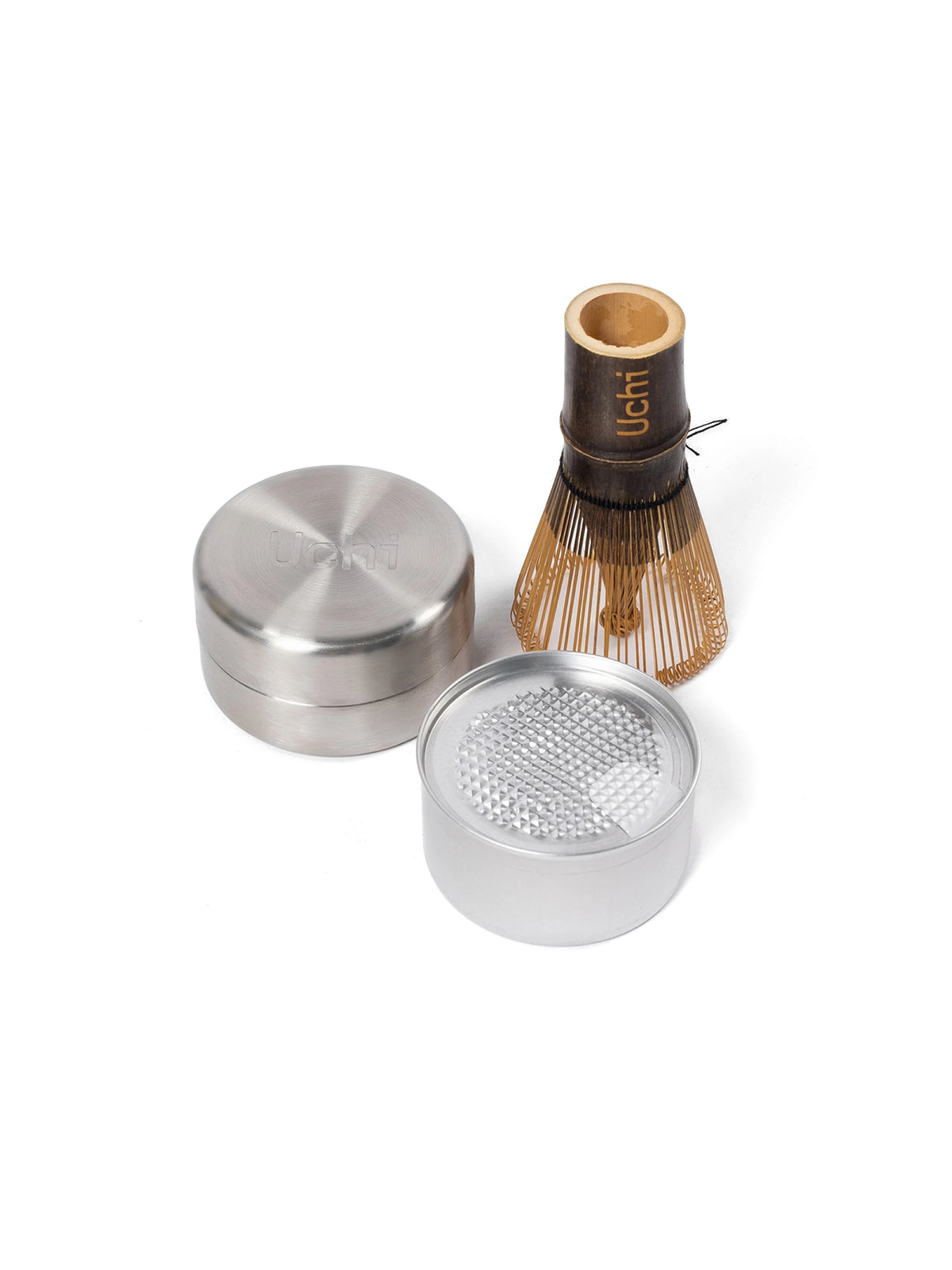
The Base is an airtight stainless steel matcha canister, kept for life. Its role is concrete: limit exposure between preparations. It does not reverse deterioration that has already happened.
When choosing ceremonial matcha in 2026, separate the questions of composition and condition. Who made the tea? What leaves form the blend? How will the powder be protected once opened? Those questions reveal more than a grade word alone.
The house tea master composes a flavour from selected tencha rather than treating a single cultivar as the only expression of quality. Tencha is the leaf material milled into matcha. Blending allows a tea house to build its own flavour and hold it steady across successive harvests.
That distinction matters. A blend can contain carefully selected first-harvest material. A single-cultivar tea can offer a more narrowly defined expression. Neither description, by itself, tells the whole story of the finished powder.
| Composition | What it tells you | What it leaves open |
|---|---|---|
| House blend | Leaves are composed together | Exact proportions and tasting profile |
| Single cultivar | One cultivar is identified | Producer, harvest and storage |
| Single estate | One estate is identified | Cultivars and processing choices |
These descriptions answer different questions. Cultivar describes the plant variety. Estate describes where the leaves were grown. Blend describes how selected material is brought together.
A house blend offers a recognisable house expression, but the word alone does not reveal every component. A single-cultivar tea gives a narrower botanical description, but that label does not establish its freshness. A single-estate tea identifies a growing source, but it does not necessarily mean a single cultivar.
For a home drinker, the useful choice is between clear descriptions, not a hierarchy built from those words. Look for the producer and the actual composition. Then consider how the tea will be stored and prepared.
Kaze no Shiro: a first-flush house blend
Kaze no Shiro is a first-flush blend composed by the house tea master at Horii Shichimeien. The producer was founded in Uji, Japan, in 1879.
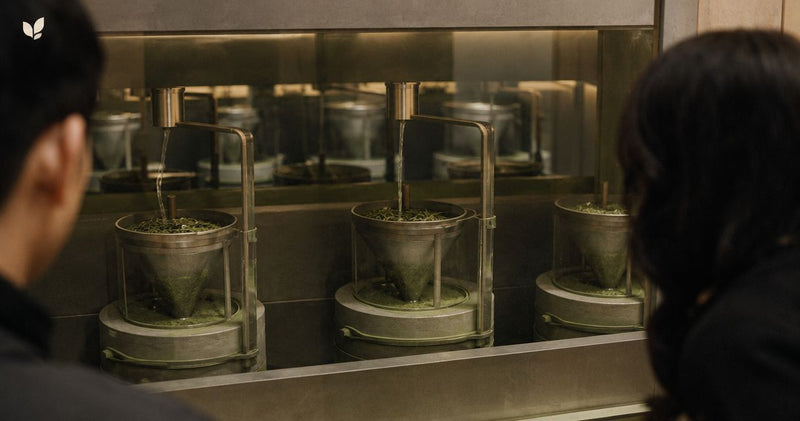
The blend draws first-harvest tencha from Kyoto, Nara and Shiga. It weaves three cultivars: Okumidori, Yabukita and Sayamakaori. The leaves are shaded for 25 days before harvest and stone-milled at 40 grams an hour.
Those details describe distinct parts of the tea’s making. The regions identify the sources of the tencha. The cultivars identify the plant varieties. Shading and milling describe production. None should be substituted for another.
Kaze no Shiro is a composed blend, not a single-origin, single-estate or single-cultivar tea. Calling it any of those would erase part of its actual composition.
The distinction is especially useful when reading a ceremonial matcha label in 2026. A prominent place name can identify the tea house without describing every growing location in a blend. Here, Uji is the home of Horii Shichimeien; Kyoto, Nara and Shiga are the stated sources of the first-harvest tencha.
The name of the producer and the description of the leaves belong together. One establishes who is responsible for the tea. The other explains what the house has chosen to compose.
What the house tea master contributes
A cultivar is an ingredient in the composition. It is not a complete tasting note. Growing conditions, harvest and processing also shape the leaf that arrives for selection.
The house tea master’s work is to bring selected material into a coherent tea. In Uji, blending is how a house builds a flavour of its own and holds it steady, season after season. The intention is continuity of expression, not the elimination of every natural difference between harvests.
Three distinctions help make that work legible:
- Selection: the leaves entering the blend matter before any proportions are considered.
- Composition: several components form one finished tea rather than remaining separate tasting samples.
- Continuity: the house aims to maintain a recognisable expression across seasons.
Knowing the cultivar names does not disclose the recipe. It also does not justify assigning an exact role to each cultivar without the producer’s account. The presence of Okumidori, Yabukita and Sayamakaori identifies the blend’s components; it does not establish which one contributes a particular note in the bowl.
This is where restraint makes a description more useful. A clear account of the ingredients is stronger than an elaborate flavour story that the producer has not supplied.
Why ceremonial matcha varies
Ceremonial matcha varies because the finished powder carries several decisions, not one defining feature. The grade wording cannot replace those details.
For the blend described here, the relevant factors are:
- Harvest: Kaze no Shiro uses first-harvest tencha. This identifies the harvest material rather than a promised taste.
- Growing regions: Kyoto, Nara and Shiga contribute to the stated composition. The blend is not confined to one estate.
- Cultivars: Okumidori, Yabukita and Sayamakaori are distinct plant varieties woven into the tea.
- Shading: the stated shading period is 25 days before harvest. This is a production detail, not a substitute for tasting.
- Milling: the tea is stone-milled at 40 grams an hour. Milling turns the selected leaf material into powder.
- Storage: air, light and moisture affect the condition of matcha after production. Protection remains necessary after opening.
These factors should stay separate when comparing descriptions. A named cultivar cannot explain storage condition. A container cannot establish the harvest. A milling rate cannot tell a reader how a particular bowl will taste.
For a 2026 purchase, ask for details that can actually be checked. A producer name, a blend description and a clear storage approach form a more useful account than an unsupported string of adjectives.
Reading a blend description without overinterpreting it
Start with the producer. Then read the harvest, the regions and the cultivars as separate pieces of information. Finally, check whether the seller describes how the powder is contained after opening.
A specific description still has limits. The names of three cultivars do not disclose their proportions. A first-harvest statement does not disclose a packing date. A regional account does not establish a single estate.
None of those gaps needs an invented answer. They simply mark the boundary of what the description tells you.
The word ceremonial also deserves proportion. It is widely used in retail descriptions, but it is not a universal grading standard that makes products equivalent across producers. Read it alongside the underlying details, not in place of them.
Choose a clearly described tea, then protect its condition at home. That is a practical way to assess ceremonial matcha without turning every label into a ranking.
For anyone choosing ceremonial matcha in 2026, this approach also makes comparison easier. Two products carrying the same grade wording can still differ in composition, harvest information and packaging. Compare those named facts directly.
Protecting the blend after opening
The tea master composes the leaf. Storage protects the powder that results. An airtight container limits air exchange when closed; an opaque container keeps light away from the contents.
Neither makes matcha unchanged indefinitely. Opening the container still exposes the powder. Dry handling and prompt closure remain part of the routine.
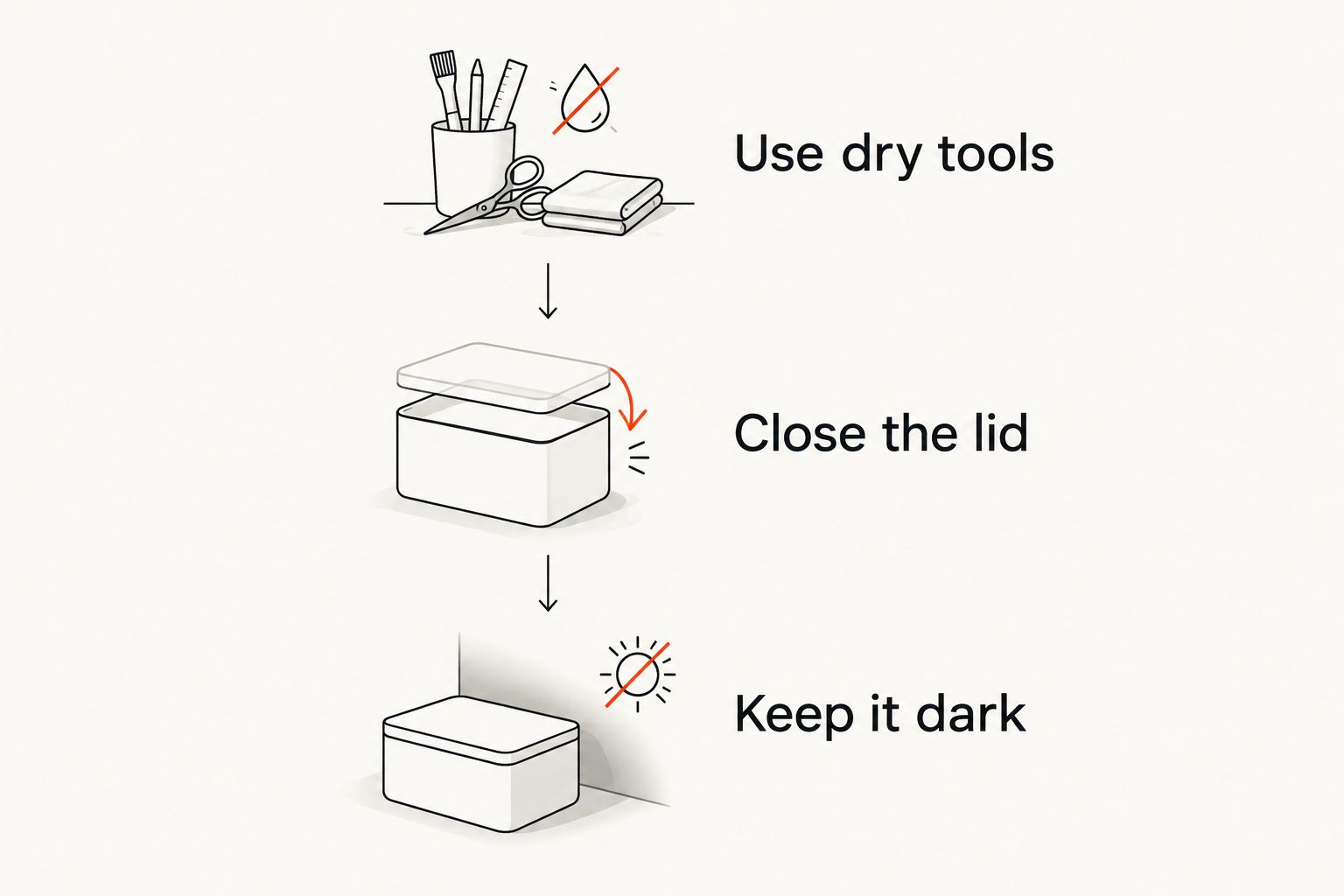
A simple sequence keeps the task small:
- Use dry tools. Keep water away from the stored powder. Prepare the bowl separately from the container.
- Close the lid. Take out the amount needed, then close the container rather than leaving it open through preparation.
- Keep it dark. Store the matcha away from direct light and heat. Avoid making the container a permanent fixture beside a heat source.
Colour can prompt a closer look, but colour alone does not establish origin, cultivar or flavour. The powder’s condition and the producer’s description answer different questions. Keep both in view.
Uchi Matcha pairs Kaze no Shiro with this storage approach. The Pod contains 40g of matcha, about twenty cups, in recyclable aluminium. The Base provides the airtight stainless steel canister for the home routine.
Uchi suits home matcha drinkers who want a named house blend and airtight storage. The limitation is equally concrete: the container still depends on dry handling and closure. It cannot recover flavour already lost through exposure.
The material description also needs precision. Recyclable aluminium does not mean every packaging component has the same disposal route. The foam insert remains a separate material to account for.
A blend is not a compromise
Blending and single-cultivar production have different aims. A house blend centres the producer’s composition. A single-cultivar tea centres one named plant variety. Choosing between them is a question of what kind of description interests the drinker, not proof that one category outranks the other.
For home preparation, a blend offers a particular house expression to return to. Its limit is that the component names do not expose the full recipe. A single-cultivar description offers a narrower view of the plant material, but it still leaves questions about harvest, processing and storage.
Taste the tea as it is prepared, rather than expecting the label to do all the work. Keep preparation consistent when comparing bowls. Changing several parts of the preparation at once makes it harder to distinguish the tea from the method.
In 2026, a useful purchase decision remains modest: choose a clearly identified producer, understand the composition and make room for proper storage. There is no need to turn a house blend into a single-origin story to give it meaning.
FAQ
Can ceremonial matcha be a blend?
Ceremonial matcha can be a blend composed from several cultivars or growing sources. Kaze no Shiro combines first-harvest tencha from Kyoto, Nara and Shiga and weaves Okumidori, Yabukita and Sayamakaori.
What does a house tea master do when blending matcha?
The house tea master composes selected tencha into a recognisable house flavour. Blending is a way to build that expression and hold it steady across seasons.
Is Kaze no Shiro a single-origin matcha?
Kaze no Shiro is not a single-origin, single-estate or single-cultivar matcha. It is a first-flush blend composed by the house tea master at Horii Shichimeien.
How long is the tencha for Kaze no Shiro shaded?
The tencha for Kaze no Shiro is shaded for 25 days before harvest. The tea is then stone-milled at 40 grams an hour.
Does ceremonial grade mean the same thing across producers in 2026?
Ceremonial grade is not a universal grading standard across producers in 2026. Read the producer, harvest and composition details alongside the grade wording.
How much matcha is in the Pod?
The Uchi Pod contains 40g of matcha, about twenty cups, in recyclable aluminium. The Base is the separate airtight stainless steel canister, kept for life.
Can an airtight container restore matcha that has deteriorated?
An airtight container cannot restore matcha that has already deteriorated. It limits further exposure when closed, while dry handling and protection from light remain necessary.
One last thing
A cultivar list is not a recipe. Knowing the names of the components does not reveal their proportions or explain every sensation in the bowl.
Read the description carefully, then let the tea remain a tea. The house has composed the blend. At home, the useful task is smaller: keep the powder protected between preparations.