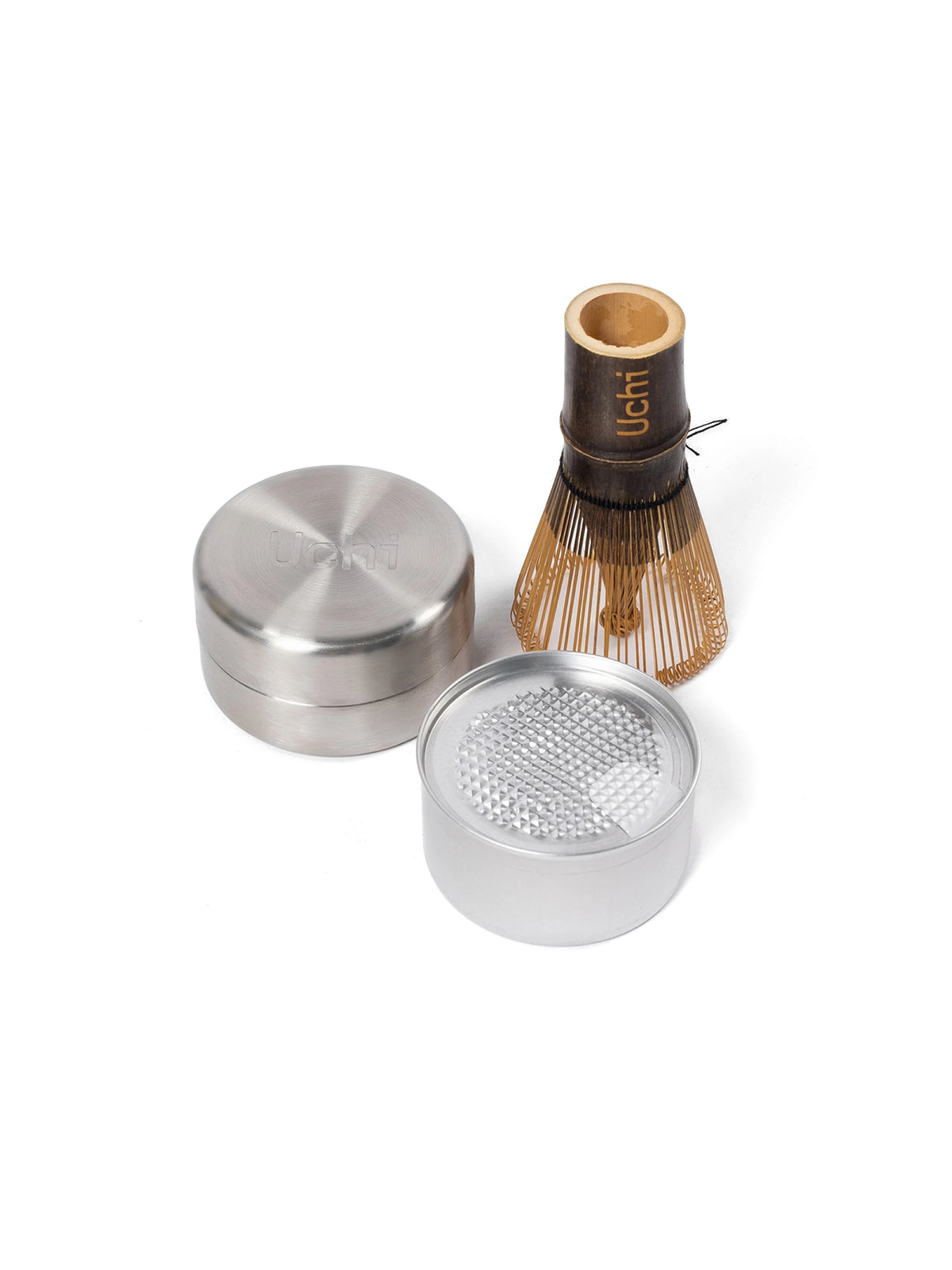
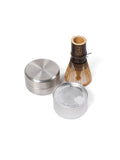
Home is the default matcha gift for someone who already owns preparation tools: about twenty cups, with an airtight stainless steel Base to protect the powder from air and light. Complete adds the preparation accessories; the Pod alone suits someone who already owns a Base.
- Uchi Home is the default matcha gift for someone with preparation tools but no Base.
- Home, Home + Whisk, Complete and Pod each contain 40g of matcha: about twenty cups.
- Complete adds preparation tools, not extra matcha. Sample contains 6g and is described as two servings.
- Choose storage first, then tools. More accessories do not mean more cups.
Why this matters
Air and light affect matcha's freshness, colour and taste. A gift that includes powder but leaves its storage unresolved leaves the recipient with another decision after opening it.
The Base addresses that practical detail. It is an airtight stainless steel matcha canister, kept for life. Close it after taking out the powder, and keep it away from heat and steam. Protection between bowls matters as much as the objects used to prepare them.
This 2026 ranking separates the amount of tea from the number of accessories. Four options share the same approximate cup count. Their order reflects what the recipient already owns, with Home as the starting recommendation rather than a claim that it contains more matcha.
What makes a considered matcha gift
- Tea quantity. Read the weight of the matcha, not the number of objects pictured beside it.
- Portion clarity. A cup count needs a serving basis. A stronger bowl uses more powder and changes the total.
- Storage. An airtight, opaque container protects the powder between uses. It does not replace careful handling.
- Existing tools. A recipient with a chawan and bamboo chasen does not necessarily need another of either.
- Preparation coverage. For someone starting from nothing, check which tools are included rather than assuming the name explains everything.
- Traceable sourcing. A named producer and an accurate account of the blend say more than an unexplained grade label.
For a matcha gift in 2026, the useful distinction is simple: more tea extends the drinking; more tools change the preparation. Neither should be mistaken for the other.
Matcha gifts at a glance
| Gift | Cups included | Suited to |
|---|---|---|
| Home | About 20 | Someone with tools, without a Base |
| Complete | About 20 | Someone beginning at home |
| Home + Whisk | About 20 | Someone missing a chasen |
| Pod | About 20 | Someone who owns a Base |
| Sample | 2 stated servings | Someone exploring the taste |
Home, Complete, Home + Whisk and Pod each include one 40g Pod. The approximate twenty-cup figure corresponds to 2g per cup. It is a portion-based estimate, not a promise about how many drinks every recipient will make.
Sample contains 6g and is described as two servings. That serving description is different from the approximate 2g basis used for the Pod. Keep the distinction visible rather than treating every stated serving as the same quantity.
1. Home: storage and tea for an existing routine
Home contains Base + Pod. It gives someone who already prepares matcha a place to keep the powder, together with 40g of tea: about twenty cups.
The reason to choose Home is storage, not extra equipment. The recipient keeps the Base and replaces the Pod as the matcha is used.
Home advantages:
- Includes the airtight stainless steel Base.
- Includes one 40g Pod.
- Avoids adding preparation tools the recipient already owns.
Home limitations:
- Does not include Whisk, Bowl, Spoon or Sieve.
- Contains the same quantity of matcha as Pod alone.
- Leaves preparation equipment to the recipient.
Suited to: Someone with an established preparation routine but no Base.
Verdict: Choose Home when storage is the missing piece. Uchi Home suits a matcha gift recipient who has the tools but needs somewhere to keep the tea.
2. Complete: tea with the preparation tools
Complete contains Base + Pod + Bowl + Spoon + Sieve + Whisk. The Pod still holds 40g, or about twenty cups. The additional objects support preparation rather than increasing the amount of tea.
Bowl is the chawan. Spoon measures the powder, Sieve is a fine-mesh sifter, and Whisk is a bamboo chasen with 120 prongs. Each has a separate role.
Complete advantages:
- Includes the Base for storage.
- Includes the named preparation accessories.
- Makes the contents explicit for a recipient starting without tools.
Complete limitations:
- Contains no more matcha than Home.
- Duplicates objects for someone who already owns suitable tools.
- Gives the recipient more items to store and care for.
Suited to: Someone making matcha at home for the first time.
Verdict: Choose Complete when the recipient needs both storage and preparation tools. Do not choose it merely to give more cups; its distinction is what surrounds the tea.
3. Home + Whisk: a specific gap filled
Home + Whisk contains Base + Pod + Whisk. It pairs the same storage and matcha quantity as Home with a bamboo chasen.
The Whisk has 120 prongs. That is a concrete description of its construction, not a reason to assume the recipient needs one. Check whether a suitable chasen is already part of their routine.
Home + Whisk advantages:
- Includes the Base and a 40g Pod.
- Adds the Whisk without the other preparation accessories.
- Fits a clearly identified equipment gap.
Home + Whisk limitations:
- Does not include Bowl, Spoon or Sieve.
- Duplicates a chasen if the recipient already owns one.
- Has the same approximate twenty-cup quantity as Home.
Suited to: Someone with a suitable preparation vessel who needs a chasen and storage.
Verdict: Choose Home + Whisk for a known need, not an assumed one. It is a precise choice when the missing object is the Whisk.
4. Pod: tea for someone who owns a Base
Pod is the matcha itself: 40g, about twenty cups, in recyclable aluminium. It is offered as a subscription product. The purchase format deserves attention when arranging a gift.
For an established Uchi drinker, Pod avoids adding another Base or another preparation tool. It replenishes the part that gets used.
Pod advantages:
- Contains the same tea quantity included in Home and Complete.
- Avoids duplicating the Base.
- Adds no preparation accessories to an existing routine.
Pod limitations:
- Does not include a Base.
- Does not include preparation tools.
- Its subscription format needs to suit the intended gift arrangement.
Suited to: Someone who already owns a Base and the tools they use.
Verdict: Choose Pod for an existing owner, after checking the subscription arrangement. The recipient's current equipment matters more than the size of the presentation.
5. Sample: a first taste rather than an extended supply
Sample is a 6g sachet described as two servings. Its purpose is to introduce the tea before committing to a larger quantity.
It ranks below the 40g options on tea quantity. It answers a different question: whether the recipient enjoys this matcha at all.
Sample advantages:
- Offers a small quantity for tasting.
- Does not duplicate storage or preparation objects.
- Keeps the first encounter centred on the tea.
Sample limitations:
- Provides fewer stated servings than the Pod options.
- Does not include preparation tools or a Base.
- Its stated serving basis differs from the Pod's approximate cup count.
Suited to: Someone curious about the taste who has access to preparation tools.
Verdict: Choose Sample for exploration, not as a substitute for an extended supply. A smaller gift can have a clear purpose without pretending to be something else.
How the ranking works
The 2026 ranking starts with included tea quantity. The four 40g options tie on that measure. Home leads the tied group as the default for someone who already owns tools; Complete follows for someone starting without them.
The remaining distinctions are storage, preparation coverage and duplication. No tasting scores or performance scores determine the order. Cup count explains the quantity, while the recipient's existing objects determine the choice.
Count the powder, then consider the recipient
A cup is not a fixed measure of powder. Water volume, milk and the recipient's preferred concentration change the drink, but only the quantity of matcha taken from the Pod determines how quickly it is used.
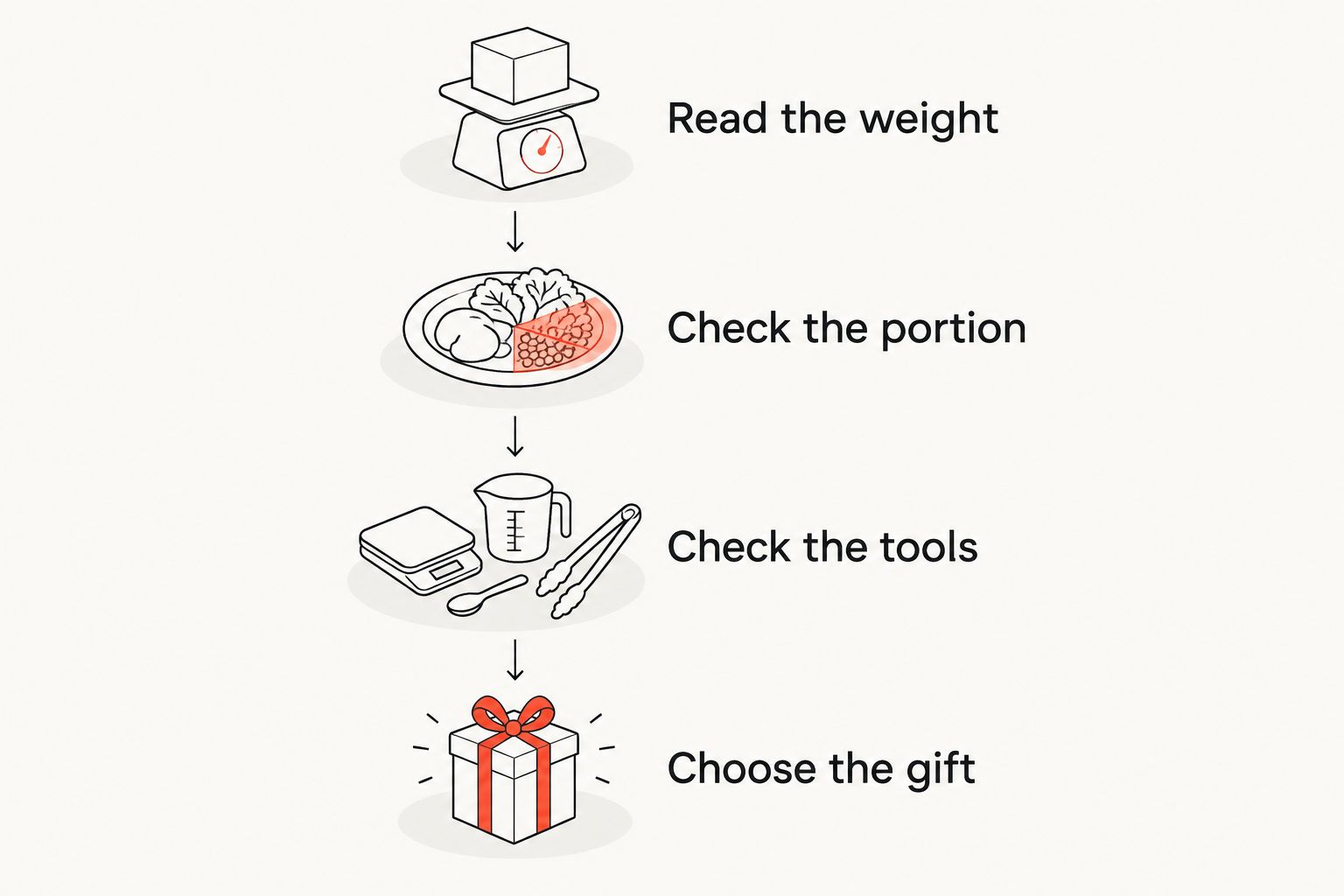
Use this sequence before choosing:
- Read the weight. Home, Home + Whisk, Complete and Pod contain 40g of matcha.
- Check the portion. About twenty cups corresponds to 2g per cup. A larger portion reduces that count.
- Check the tools. Identify what the recipient already owns before adding more objects.
- Choose the gift. Match the contents to the gap, rather than treating the longest contents list as the default.
The distinction between tea gifts with or without cups is a distinction between consumables and equipment. A cup or bowl changes what arrives with the tea; it does not increase the tea itself. Apply the same reasoning here.
The tea inside the gift
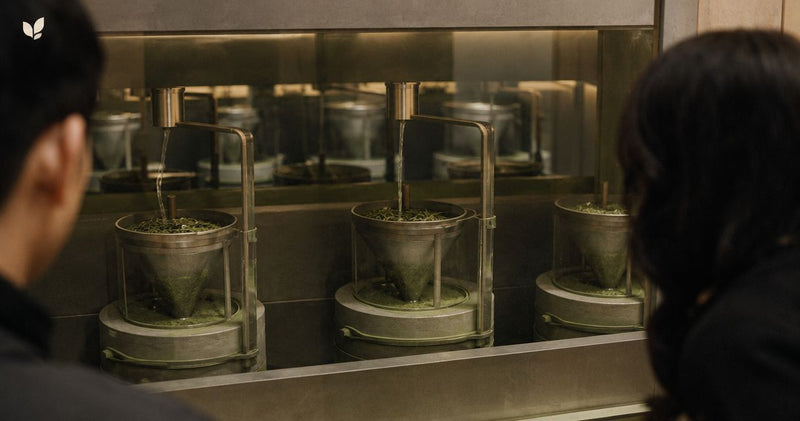
Uchi uses Kaze no Shiro from Horii Shichimeien, founded in Uji, Japan, in 1879. It is a first-flush blend composed by the house tea master, drawing first-harvest tencha from Kyoto, Nara and Shiga and weaving three cultivars: Okumidori, Yabukita and Sayamakaori.
The tea is shaded for 25 days before harvest and stone-milled at 40 grams an hour. These details describe its production. They do not turn the blend into single-origin, single-estate or single-cultivar matcha.
For a 2026 gift, an accurate description is more useful than an elaborate story. The blend's identity stays the same whether it arrives as Pod, Home or Complete. The difference is the accompanying objects.
Storage continues after the wrapping comes off
The Base keeps light out and closes airtight between uses. Daily handling still matters. Open it to take the powder needed, then close it rather than leaving it beside the preparation area.
Keep wet tools and kettle steam away from the powder. If the recipient cleans the Base before refilling, it should be fully dry before matcha goes inside. An airtight closure cannot undo moisture introduced during handling.
Packaging also needs precise language. The Pod uses recyclable aluminium. The packaging includes a foam insert; recyclable aluminium does not describe every material in the presentation. The Base is the object intended to remain in use.
Choosing between the tied options
Choose Home when the recipient has preparation tools but needs a Base. This is the default matcha gift recommendation because it addresses storage without assuming every accessory is missing.
Choose Complete when the recipient is beginning without the listed tools. Choose Home + Whisk when a chasen is the specific gap. Choose Pod when the Base and preparation objects are already in place.
In 2026, the deciding question remains what the recipient will use after opening the gift. The four 40g options do not compete on cup count. They serve different starting points.
FAQ
Which matcha gift should I choose for someone who already has tools?
Choose Home if the recipient has preparation tools but no Base. Home includes Base + Pod, with 40g of matcha described as about twenty cups.
Does Complete make more cups than Home?
Complete and Home contain the same quantity of matcha: one 40g Pod, or about twenty cups. Complete adds Bowl, Spoon, Sieve and Whisk.
How many cups does a 40g Pod make?
A 40g Pod makes about twenty cups at 2g per cup. Larger portions reduce the number of cups; smaller portions increase it.
What is included in Home + Whisk?
Home + Whisk contains Base + Pod + Whisk. It does not include Bowl, Spoon or Sieve.
Can I give Pod to someone who already owns a Base?
Pod suits someone who already owns a Base and preparation tools. It is offered as a subscription product, so check that the purchase arrangement suits the gift.
How many servings are in Sample?
Sample contains 6g and is described as two servings. That stated serving basis differs from the approximate 2g-per-cup calculation used for Pod.
Is Kaze no Shiro single-origin matcha?
Kaze no Shiro is a first-flush blend, not single-origin matcha. The house tea master draws first-harvest tencha from Kyoto, Nara and Shiga, weaving Okumidori, Yabukita and Sayamakaori.
One last thing
One level Uchi Spoon holds 1 gram. The approximate 2g portion behind the twenty-cup estimate therefore corresponds to two level Spoon measures.
That small detail makes the gift easier to understand. Count the powder separately from the objects. Then choose the objects the recipient will actually use.