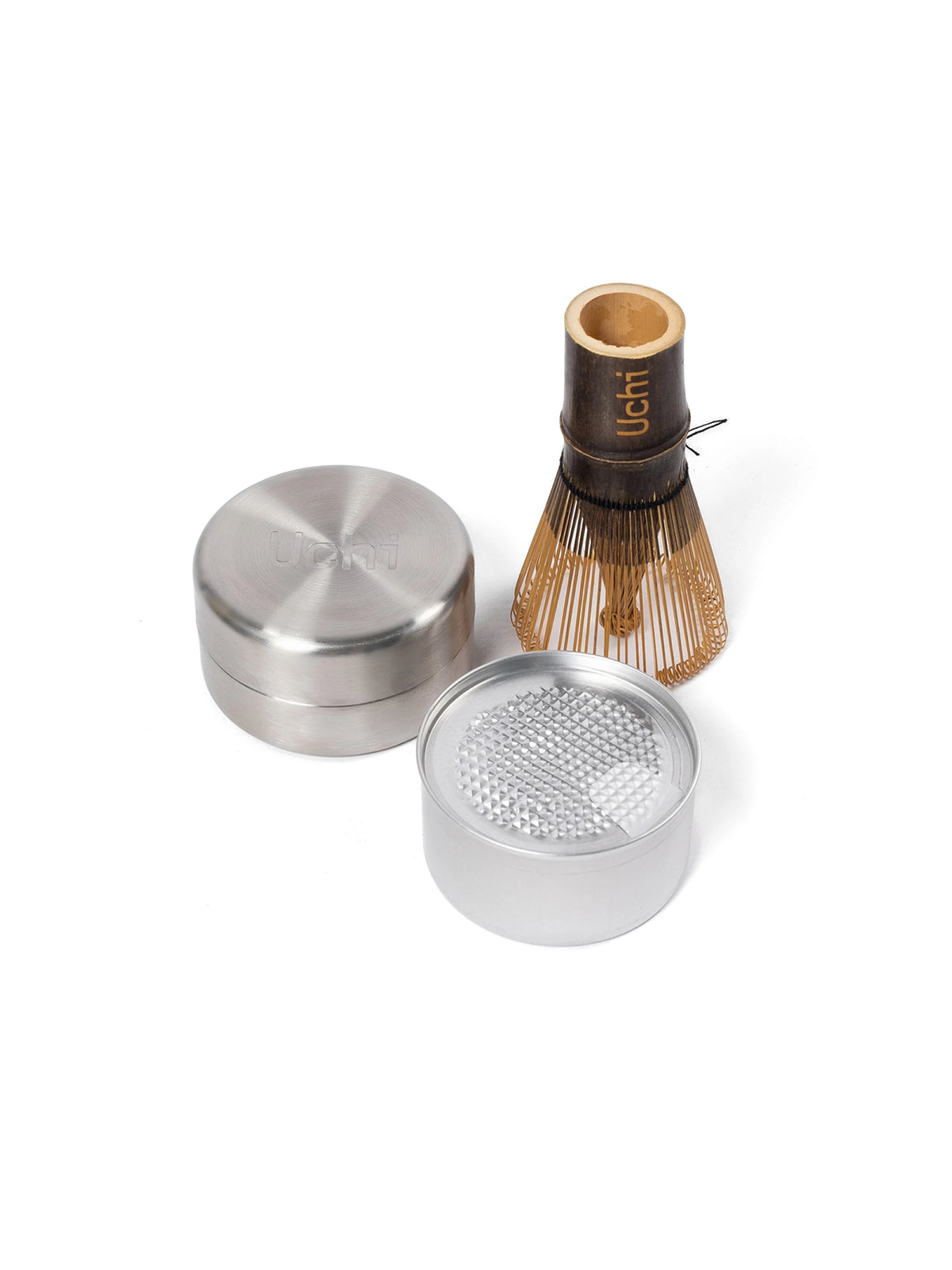
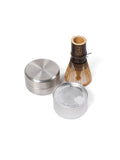
Choose a matcha container around the amount you open, not the amount you might eventually buy. The Uchi Base suits home drinkers using a 40g Pod: an airtight stainless steel canister kept for life, rather than a larger vessel chosen for spare capacity.
- Choose a matcha container around your opened refill, with an airtight closure and protection from light.
- Uchi Base suits home drinkers using the 40g Pod, which contains about twenty cups.
- Below-40g, 40g and above-40g quantities serve different routines; larger capacity is not a freshness advantage.
- Compare powder weight with powder weight. Millilitres describe vessel volume, not a verified matcha capacity.
Why capacity matters
Matcha loses freshness through exposure to air, light, heat and moisture. Container size belongs in that discussion, but size alone does not protect the powder. A small transparent jar still admits light; a large opaque vessel still needs a dependable closure.
For a 2026 home purchase, start with the quantity opened at once. Then consider how often the container will open and where it will stand between uses.
Choose protection first, capacity second. Extra room is not a reason to open more matcha, combine different batches or keep a larger quantity in daily use.
This guide ranks three capacity bands from smaller to larger. These are planning categories, not tested product capacities: below 40g, a 40g refill routine and above 40g. They describe the powder you intend to store, not a universal conversion between grams and container volume.
What makes a suitable matcha container
Use these criteria before comparing sizes. Each addresses a different part of storage.
- Airtight closure. The container needs a closure intended to limit air exchange. A lid that merely rests on top serves a different purpose.
- Light protection. Opaque walls keep light away from the contents. Transparent walls require a consistently dark storage location.
- Capacity fit. Match the vessel to the quantity opened at once. Do not choose spare capacity without a defined use.
- Dry access. The opening should allow a dry scoop to enter without awkward handling near water or steam.
- Repeat use. Consider cleaning, complete drying and ordinary opening and closing. Storage happens every day, not just when the container arrives.
Material is only part of the assessment. Stainless steel blocks light, but the closure still matters. Glass makes the contents visible, but visibility is not a storage benefit when the vessel remains exposed to light.
A useful matcha container brings these requirements together. No single feature compensates for neglecting the others.
Matcha container capacity at a glance
The 2026 comparison below uses intended powder quantities. It does not assign unverified gram capacities to generic jars or claim a measured internal volume for the Base.
| Capacity band | Suited to | Main trade-off |
|---|---|---|
| Below 40g | Occasional preparation | More handling if a larger refill must be divided |
| Uchi Base with a 40g Pod | A regular home refill routine | A dedicated format rather than general bulk storage |
| Above 40g | Shared, higher-use households | A larger opened quantity needs a clear purpose |
Read the table as a decision about the amount kept in use. A household preparing matcha frequently has a different requirement from someone making an occasional bowl. Neither needs to choose the largest vessel by default.
1. Below 40g: for occasional home preparation
A smaller opaque container suits a small quantity kept in active use. Choose one with an airtight closure and enough access for a dry scoop.
This category is useful when the opened quantity is already small. It becomes less straightforward when a larger refill has to be divided solely to fit the container.
Below-40g container advantages:
- Suits a deliberately small working quantity.
- Keeps the daily vessel separate from other unopened matcha.
- Encourages a decision about how much powder actually needs to be accessible.
Below-40g container limitations:
- Splitting a larger refill adds handling and exposure.
- A narrow opening can make scooping awkward.
- Small dimensions do not establish airtightness or light protection.
Suited to: Someone who prepares matcha occasionally and opens a correspondingly small quantity.
Do not decant matcha into several containers simply because each looks compact. Every additional vessel needs a dry interior, a suitable closure and a clear identity. Dividing powder is a storage decision, not an automatic improvement.
Verdict: Choose a smaller vessel when the opened quantity is genuinely small. Skip unnecessary subdivision.
2. Uchi Base: for a 40g home refill routine
The Base is an airtight stainless steel matcha canister, kept for life. The Pod contains 40g of matcha, about twenty cups, in recyclable aluminium.
The relevant capacity reference is the 40g Pod. That is the powder quantity around which the refill routine is organised, not a claim that the Base has a measured internal volume of 40ml or a separately verified maximum powder capacity.
Base advantages:
- Stainless steel keeps light away from the contents.
- The airtight canister provides a defined storage home between preparations.
- The Base remains in use when the matcha is replenished.
- The 40g Pod gives the refill routine a stated powder quantity.
Base limitations:
- It is a dedicated matcha format, not a general-purpose bulk vessel.
- An airtight closure does not remove the need for dry handling.
- The canister cannot reverse exposure that occurred before storage.
Suited to: A home drinker who wants a defined refill quantity and a permanent storage object.
About twenty cups from 40g implies roughly 2g per cup. A leveled Spoon holds 1 gram, so that quantity corresponds to about two leveled measures. These are portion references, not a rule for every preparation.
Keep portion size separate from container size. Choosing a larger bowl or making a different drink does not change the amount of powder supplied in the Pod.
Verdict: Choose the Base for the 40g refill routine, rather than for unspecified spare capacity.
Match grams to grams, not millilitres
Grams measure mass. Millilitres measure volume. They are not interchangeable capacity labels for matcha powder.
Powder packing changes with settling and handling. A vessel's liquid volume therefore does not establish an exact matcha weight without a relevant measurement.
For a 2026 comparison, keep the specifications separate:
- Powder weight: The quantity supplied or intended for storage.
- Vessel volume: The internal space stated by the container maker.
- Refill fit: Whether the intended refill works with that container.
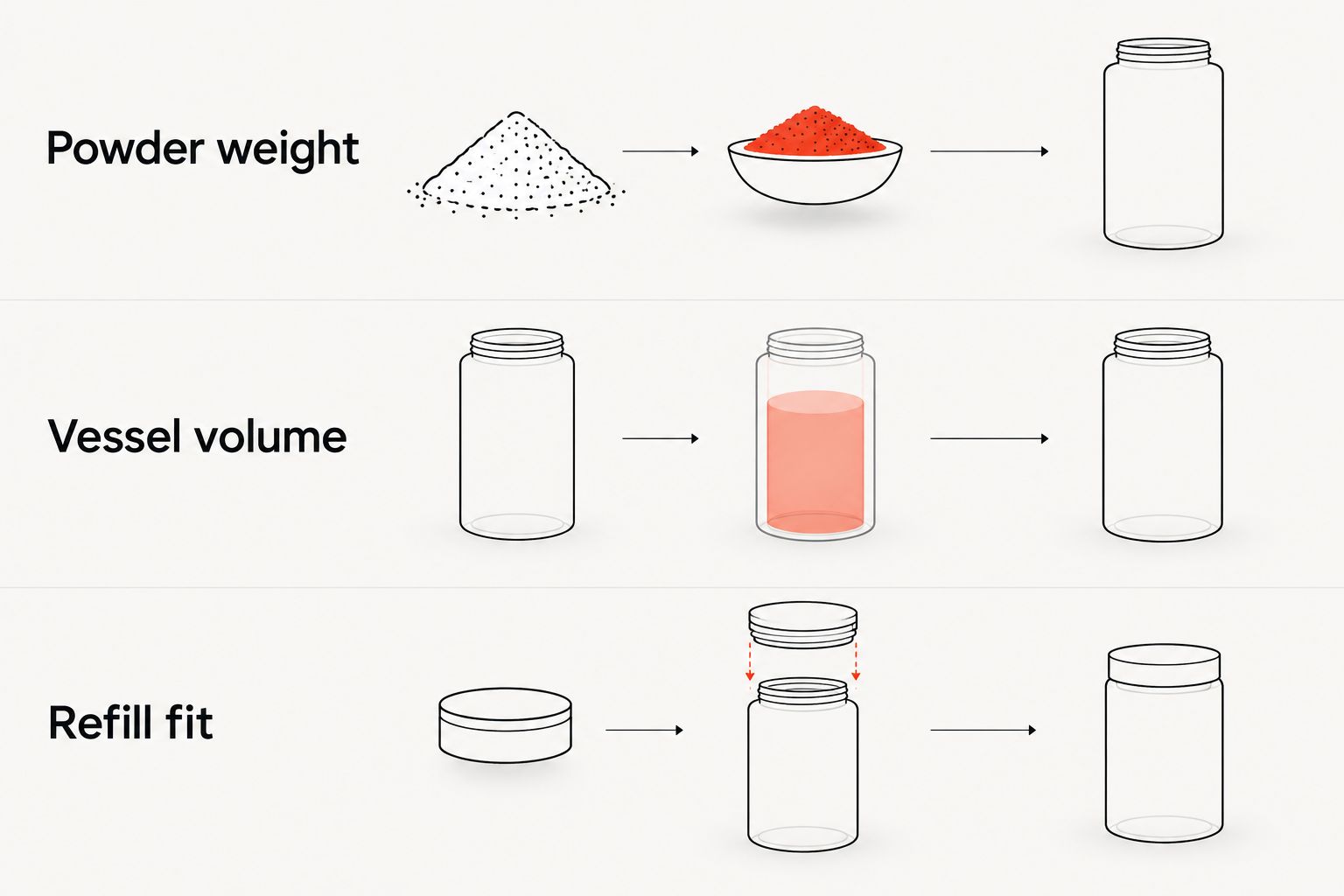
This distinction prevents a common purchasing error: treating a small-looking vessel as the right size without checking the refill. External dimensions are not enough either. Wall thickness, the opening and the closure all affect the usable interior.
Capacity does not replace careful handling
A suitable container still needs a suitable place. Keep matcha away from direct light, heat, steam and strong kitchen odours.
Choose a storage position before choosing the object. A convenient place beside a boiling kettle introduces a different problem from insufficient capacity.
Keep the opening dry
Use a dry scoop. Keep the container away from splashes while preparing the bowl, and close it after measuring the powder.
Do not leave the lid open while heating water, arranging tools or whisking. The container's protective function depends on being closed between uses.
Refill a dry container
When cleaning is needed, allow the container and closure to dry completely before adding matcha. Check seams and recessed areas rather than judging only the visible walls.
Do not add fresh powder to a damp interior. A larger vessel does not compensate for residual moisture.
Keep batches distinct
Finish the working quantity before introducing another batch. Retain the product information needed to identify what is inside.
Opening dates are useful household records. They are not universal expiry calculations, and container size alone cannot establish a guaranteed freshness period.
How the capacity ranking works
The ranking runs from smaller to larger intended powder quantities. It is not a laboratory comparison, a measured seal test or a claim that one capacity suits every household.
The recommendations follow the same criteria: airtight closure, protection from light, fit with the opened quantity, dry access and repeat use. The 40g reference comes from the stated Pod quantity; the smaller and larger bands are decision categories.
For 2026, the useful comparison is between your actual routine and the amount kept open. A numerical capacity ranking without that context encourages a larger purchase without explaining its purpose.
Choosing a matcha container for home
The Uchi matcha container suits home drinkers who want a permanent canister for a defined 40g refill routine. Choose a smaller or larger format only when the opened quantity calls for it.
For a first purchase, separate storage from preparation tools. Home contains Base and Pod. Home + Whisk adds the Whisk. Complete contains Base, Pod, Bowl, Spoon, Sieve and Whisk.
Those choices change what arrives for preparation, not the stated 40g quantity in the Pod. Choose Home when the preparation tools are already covered; choose Complete when those named tools are needed as well.
FAQ
What size matcha container should I choose?
Choose a matcha container around the amount of powder you open at once. Then check the airtight closure, light protection and access for a dry scoop; capacity alone does not establish suitable storage.
Is a larger matcha container better for freshness?
Larger capacity is not a freshness advantage by itself. Choose it when you deliberately keep a larger quantity in use, not simply to leave room for future purchases.
How much matcha is in an Uchi Pod?
An Uchi Pod contains 40g of matcha, about twenty cups. That describes the supplied powder quantity, not a measured internal volume or maximum capacity for the Base.
Can I compare a container's millilitres with matcha grams?
Not directly: millilitres measure volume and grams measure mass. Powder settling and packing affect the weight that fits, so use a relevant powder-capacity specification or a confirmed refill fit.
Is glass suitable for storing matcha?
Glass requires protection from light as well as an airtight closure. A transparent container left on a bright worktop does not provide the same light barrier as an opaque vessel.
Should I divide matcha between several small containers?
Divide matcha only when there is a clear storage purpose. Subdivision adds handling, and every container still needs a dry interior, suitable closure and identifiable contents.
Can I add fresh matcha over older powder?
Finish the working quantity before adding a different batch. Keeping batches distinct makes opening dates and changes in aroma or taste easier to follow.
One last thing
Before choosing a larger container in 2026, count the matcha preparations made in an ordinary week. Use that record to decide how much powder belongs in daily use.
Then inspect the closure and choose its place in the kitchen. A capacity label tells you how much a vessel is intended to hold. It does not tell you how carefully its contents will be kept.