Clean a matcha container before refilling when it has residue, an unwanted smell or signs of moisture, then let every food-contact surface dry completely. Follow the container’s care instructions: washing removes residue, but refilling before the lid, rim and interior are dry puts fresh powder in contact with water.
- A matcha container must be clean, odour-free and completely dry before refilling.
- Follow material-specific care instructions; an airtight lid does not make a container dishwasher-safe.
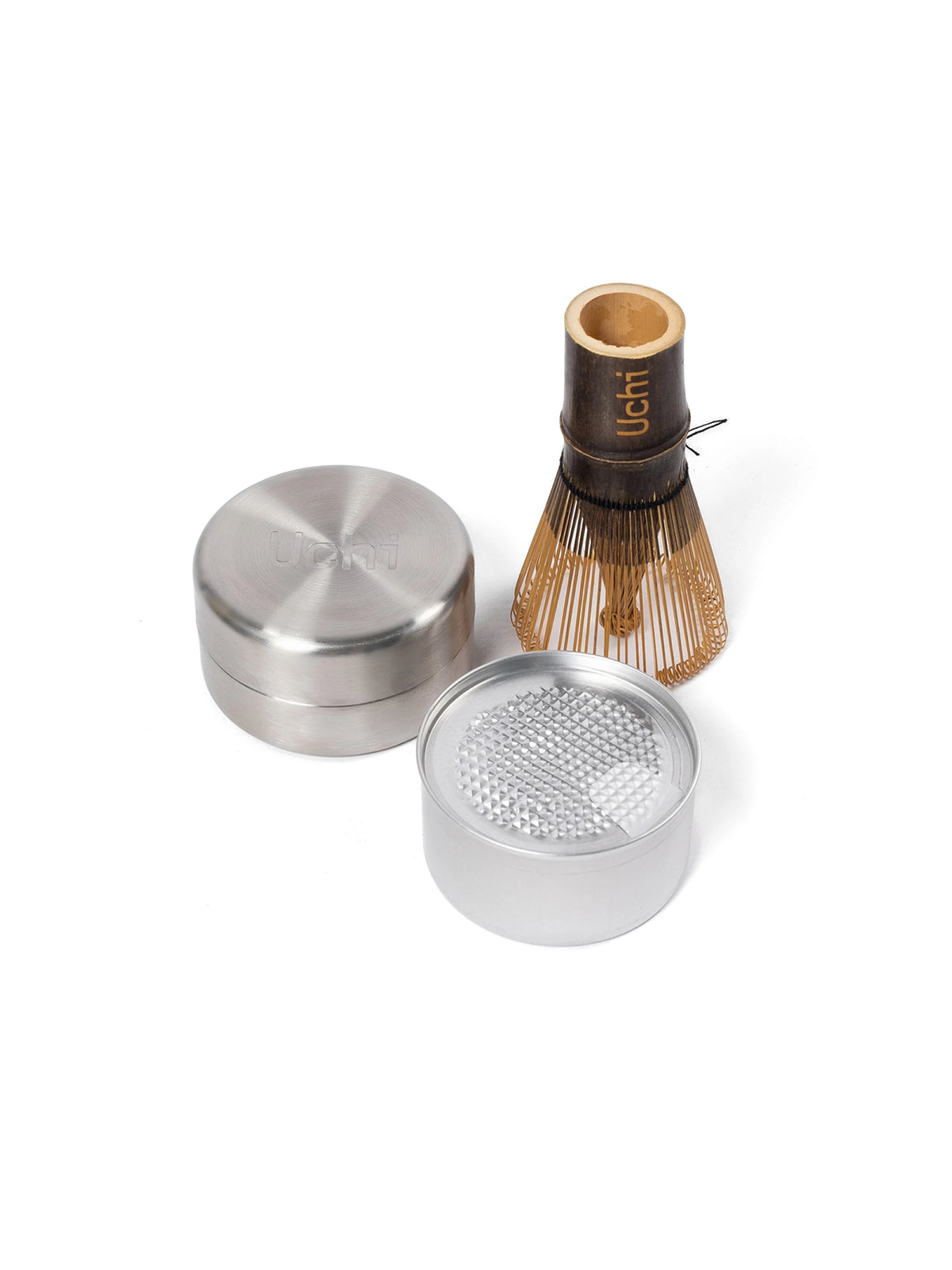
- Uchi Base is an airtight stainless steel matcha canister, kept for life.
- Prepare the container before opening fresh matcha, and keep the powder away from the sink.
Why this matters
Matcha needs protection from air, light, moisture and kitchen odours. Cleaning addresses residue and smells. Drying prevents the cleaning process from introducing a different problem.
A clean container is not ready to refill until it is completely dry. The broad interior often dries before the narrow spaces around a lid or seal. Check those spaces separately rather than judging the whole container by its side walls.
For a storage routine in 2026, start with the closure as well as the material. The guide to choosing a matcha container that keeps out air and light explains what the container needs to protect against between uses.
Prepare the container while the fresh matcha remains closed. Work on a clean, dry surface away from the sink, steam and food preparation. Keep the lid beside the container so both receive the same inspection.
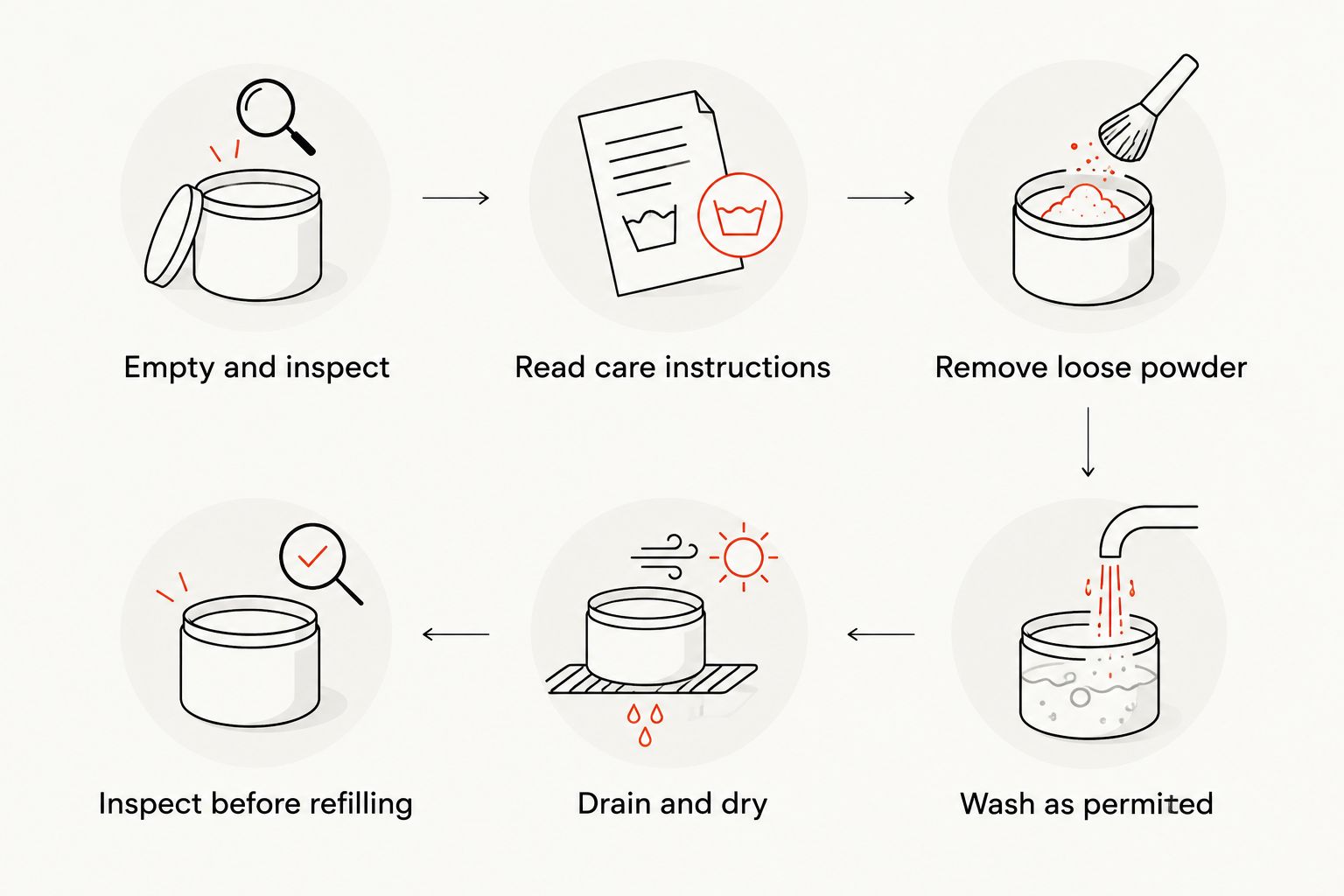
1. Empty and inspect
Remove the remaining powder before deciding how to clean. Look inside the container and around the rim. Check for a green film, compacted residue, damp patches and anything caught in the closure.
Smell the empty container, too. A visible inspection will not identify every lingering kitchen odour. Do not add fresh matcha to a container that still smells of detergent, spices or another food.
2. Read the care instructions
Confirm whether the container can be washed and how its lid should be cleaned. Stainless steel describes a material, not the construction of the whole object. A lid can include components with different care requirements.
Do not assume dishwasher compatibility, soaking suitability or removable seals. Take a closure apart only when the manufacturer identifies those parts as removable. Avoid forcing a seal out to reach a space that was not designed for disassembly.
3. Remove loose powder
For a dry container holding only loose matcha dust, begin with a clean, dry, soft brush or lint-free cloth. This removes powder without adding water. Work gently around the rim rather than pushing residue into the closure.
Dry cleaning has limits. It does not replace washing when the container has sticky residue, an unwanted smell or contamination. Choose the method according to the condition of the container, not habit alone.
4. Wash only as permitted
For a washable container, use mild washing-up liquid, water and a soft cleaning tool according to its care instructions. Avoid abrasive pads that can scratch surfaces. Clean the lid and rim as carefully as the interior.
Rinse away all detergent. Inspect for lingering foam and smell the container again after rinsing. Adding perfume to mask an odour leaves another smell for the matcha to encounter.
5. Drain and dry separately
Drain the container and lid separately on a clean rack. Position each piece so water can escape. Do not close the lid while the interior is drying.
A clean, lint-free cloth can remove accessible droplets, but it cannot confirm that a narrow groove is dry. Leave those areas exposed to air. Do not use an oven, hairdryer or direct heat unless the care instructions expressly permit that method.
6. Inspect before refilling
Examine the interior, base, rim and lid under good light. Touch accessible surfaces with a clean, dry fingertip or cloth to check for remaining moisture. Look for droplets inside recessed areas without inserting anything that could damage them.
Refill only when every accessible food-contact surface is dry and the container has no unwanted smell. If a seal or inaccessible space appears to retain water, leave the container open longer and consult its care instructions.
Dry cleaning and washing serve different purposes
The choice is not between a careful method and a careless one. Each method addresses a different condition. The useful distinction in 2026 remains loose, dry powder versus residue that needs washing.
| Method | Use when | Limitation |
|---|---|---|
| Dry cleaning | Removing loose, dry powder | Does not remove every residue or smell |
| Washing | Removing residue from washable parts | Requires thorough rinsing and complete drying |
A container that looks empty can still hold powder around its rim. Remove that powder before replacing the lid. Residue in the closure can interfere with clean contact between its surfaces.
Washing is not a reason to disregard the container’s construction. If a component cannot be immersed, follow its separate cleaning instructions. A method suitable for the body is not automatically suitable for the lid.
Why drying time varies
There is no single drying time that proves every matcha container is ready. The condition of the container matters more than a timer. These practical factors explain the difference:
- Shape. Narrow openings and recessed bases make inspection and drainage harder.
- Closure design. Grooves and seals provide places where droplets can remain.
- Drainage position. A lid resting flat can hold water that would escape at an angle.
- Air movement. Exposed surfaces dry differently from enclosed spaces.
- Room humidity. Damp air slows evaporation compared with drier conditions.
- Cleaning method. A full wash introduces more water than removing loose powder with a dry cloth.
Do not translate these factors into an invented waiting period. A dry-looking wall does not establish that the lid is ready. The final inspection is the decision point.
For a 2026 care checklist, record the condition to check rather than a fixed number of hours: dry interior, dry closure, no residue and no unwanted smell. That checklist stays useful across different container shapes.
Refilling without undoing the cleaning
Move the dry container away from the washing area before opening fresh matcha. Clear away wet cloths and leave recently washed utensils to finish drying elsewhere. The clean container should not sit beneath steam from a kettle.
Prepare any measuring utensil in advance. It must be clean and dry, including the handle where fingers might carry water towards the powder. Avoid resting it on a damp worktop between uses.
Keep the refill process brief and deliberate. Open only what is needed, follow the packaging instructions and close the container when finished. Do not leave fresh powder exposed while searching for a lid or clearing space.
Do not top up old residue simply to avoid emptying the container. Finishing the previous contents first makes inspection possible. It also keeps the next refill separate from whatever remains at the bottom.
A refillable stainless steel canister at home
Uchi’s Base is an airtight stainless steel matcha canister, kept for life. Its role is to protect stored matcha from air and light. That protection still depends on a clean, dry closure and careful handling during refilling.
Uchi Base suits home matcha drinkers who want to keep their canister between refills. The limitation is practical: a reusable object needs ongoing care. Airtight storage does not remove moisture that is already inside.
The Pod contains 40g of matcha, about twenty cups, in recyclable aluminium. Keep that matcha closed while preparing the container. Follow the product’s refilling instructions rather than assuming every reusable container takes its contents in the same way.
One leveled Uchi Spoon holds 1 gram. Whatever utensil is used for portioning, keep it dry before it touches the stored powder. A washed utensil belongs back in the preparation area only after it has dried completely.
Clumps, moisture and storage decisions
Clumps alone do not prove that a container was damp. Fine matcha powder can gather into clumps during ordinary handling. Look at the whole situation rather than treating every small lump as a cleaning failure.
Visible moisture is different. A wet patch, condensation or damp residue means the container is not ready for dry powder. Do not add fresh matcha and expect the rest of the contents to absorb the water harmlessly.
Sieving belongs to preparation, not storage repair. It can break up dry clumps before whisking. It does not reverse water exposure, remove an absorbed odour or make a contaminated batch suitable to keep.
In 2026, the useful distinction remains simple: dry clumping is a preparation issue; visible dampness is a storage issue. Address the cause before refilling rather than trying to correct it in the bowl.
Cold containers need a separate check
A container brought from a cold environment needs attention before opening. Moist room air can condense on a cold surface. Opening cold storage immediately can therefore introduce moisture during otherwise careful handling.
Let the closed container reach room temperature before opening. Keep it away from steam while it does so. Wiping the outside dry does not establish that the interior is ready to open.
Cleaning and temperature management are separate tasks. A thoroughly washed and dried container can still encounter condensation later. Check both its recent washing history and where it has been stored.
When the closure needs attention
Inspect the rim and lid before every refill. Look for damage, distortion and residue that prevents the closure from meeting cleanly. Do not force a lid that no longer fits as intended.
Cleaning cannot restore a damaged seal. Follow the manufacturer’s guidance on maintenance or replacement rather than improvising with adhesives or household sealants. Anything near the powder needs to be suitable for its intended food-contact use.
A 2026 storage routine does not need more equipment for this inspection. It needs a clear view of the closure and enough time to let washed parts dry. Replace guesswork with those two checks.
FAQ
Do I need to wash my matcha container before every refill?
Washing is not automatically necessary before every refill. Inspect the container for residue, unwanted smells and moisture, then follow its care instructions; dry cleaning can remove loose powder but does not replace washing when residue needs removal.
How long should a matcha container dry after washing?
A matcha container should dry until the interior, rim, lid and any washable seals are completely dry. There is no single waiting period that accounts for every shape, closure and room condition.
Can I put a stainless steel matcha container in the dishwasher?
Use a dishwasher only if the manufacturer says the entire container or the relevant component is dishwasher-safe. Stainless steel alone does not establish whether the lid, seals or finish can tolerate that cleaning method.
Can I refill a matcha container while it is slightly damp?
Do not refill a matcha container while it is damp. Leave the container and lid open to dry, then inspect the rim, base and recessed areas again before adding fresh powder.
Can I add new matcha on top of the old powder?
Finish and empty the previous contents before adding fresh matcha. An empty container makes it possible to inspect the base and remove residue instead of covering it with another refill.
Does clumped matcha mean the container was wet?
Clumped matcha does not by itself prove that the container was wet. Fine powder can form dry clumps; visible droplets, damp patches or condensation require a separate storage check.
How do I remove a detergent smell from a matcha container?
Rinse washable components thoroughly according to their care instructions and let them dry before checking again. Do not refill while a detergent smell remains, and do not cover it with another fragrance.
One last thing
Inspect the lid last. The large interior is easy to see and easy to wipe. A narrow groove is easier to overlook.
Before opening fresh matcha, turn the lid towards the light and check its underside. That small pause belongs at the end of cleaning, not after the refill.