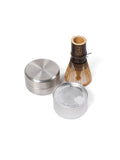
Transferring matcha into a matcha container cannot eliminate air exposure; it can reduce unnecessary handling and leave the powder protected afterwards. For home storage in 2026, prepare a clean, completely dry, opaque container, move the powder directly, and close it promptly. If the existing packaging already seals securely and keeps out light, leaving the matcha there avoids an unnecessary transfer.
- A matcha container protects powder after transfer; it cannot make an open-air transfer exposure-free.
- Prepare the container and lid before opening the matcha. Keep both completely dry.
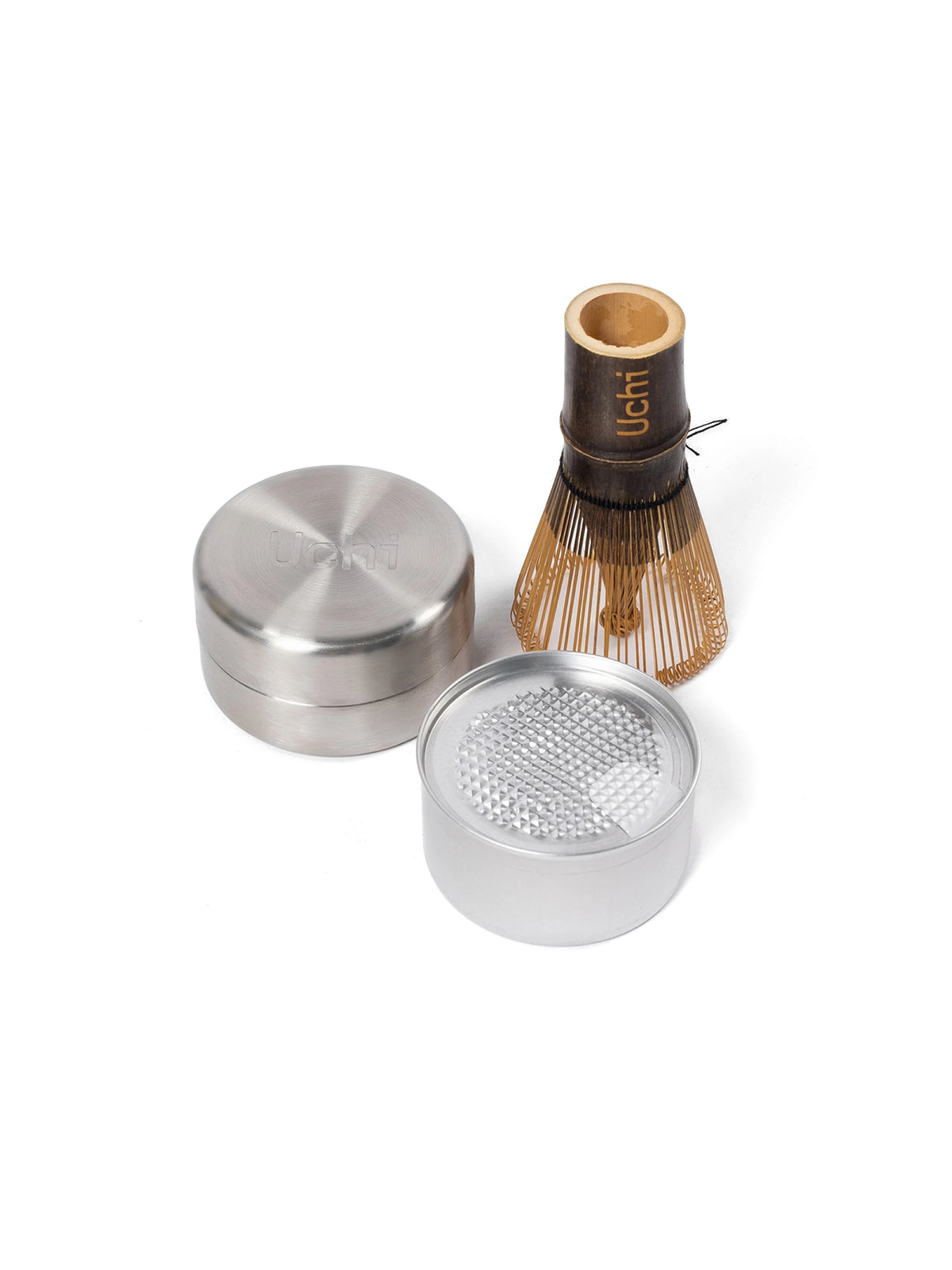
- Uchi Base suits home matcha drinkers who want an airtight stainless steel container to keep.
- Keep matcha away from steam, direct light and wet utensils. Close the container after measuring.
Why this matters
Matcha is finely ground tea. Air, light and moisture affect how it keeps, so transferring it is not simply a matter of choosing a different object for the shelf. The destination needs to protect the powder better than the packaging it replaces.
An opaque body blocks light. A secure closure limits exchange with surrounding air. A dry interior avoids introducing water at the moment the matcha moves. These are separate jobs; an attractive container does not automatically perform all of them.
The Base is Uchi’s airtight stainless steel matcha canister, kept for life. Its purpose is storage, not making an open transfer exposure-free. That distinction matters: the container protects what happens next; preparation controls what happens during the move.
Complete isolation from air is not achievable when powder moves between open containers in a home kitchen. The practical aim is narrower: avoid unnecessary pouring, keep moisture out, and seal the destination as soon as the transfer is finished.
Prepare everything before opening the matcha. Do not open it first and then search for a spoon, dry a container or clear space beside the sink.
Prepare the destination
Choose a container with a closure that seats securely. Check the body, lid and any sealing surfaces for powder residue, water droplets and food odours. A container previously used for another ingredient needs cleaning and complete drying before it holds matcha.
Inspect the parts that are easy to overlook. Water can remain around a lid edge or underneath a removable seal even when the main interior looks dry. Do not fill a container while those areas are still damp.
Set the lid beside the container on a clean, dry surface. Keep the contact surface away from splashes. The lid should be ready to close, not waiting to be washed.
Choose the location
Use a dry worktop away from a boiling kettle, steaming pan or running tap. Matcha does not need a special transfer station. It needs a place where water and steam are not part of the task.
Avoid direct sunlight while working. There is no reason to expose the powder to a bright window when a shaded section of the same worktop is available.
Clear enough space for the source packaging, destination and lid. Moving unrelated objects after the powder is open adds handling without helping the transfer.
Check for condensation
If the unopened matcha has been refrigerated, let the sealed packaging reach room temperature before opening it. Opening cold packaging in warmer, humid air can introduce condensation. Keep it closed during that change.
Do not use a fixed waiting time as proof that the powder is ready. Packaging size and room conditions differ. The relevant condition is that the closed package is no longer cold, not that a timer has finished.
A wet exterior also deserves attention. Dry the outside before opening so that droplets cannot run towards the opening or contact the lid.
Move the powder directly
Bring the source opening close to the destination opening and pour gently. Avoid pouring from height. A short, controlled movement helps keep powder inside the container rather than on the worktop.
If the opening makes pouring awkward, use a clean, completely dry utensil. A funnel is useful only if its shape suits the opening and the powder moves through it without repeated intervention. It is not a requirement.
Do not route the powder through a bowl and then into storage merely to make the process look orderly. Each additional vessel creates another surface to clean and another opportunity to introduce moisture or residue.
Close and put away
Check the rim before closing. Remove loose powder from the sealing surface with a clean, dry cloth, keeping the cloth outside the stored powder. A clean closure is easier to seat correctly.
Close the lid securely and return the container to its storage position. Do not leave it open while preparing the drink. Measure the portion needed for the bowl, close the container, then begin the wet part of preparation.
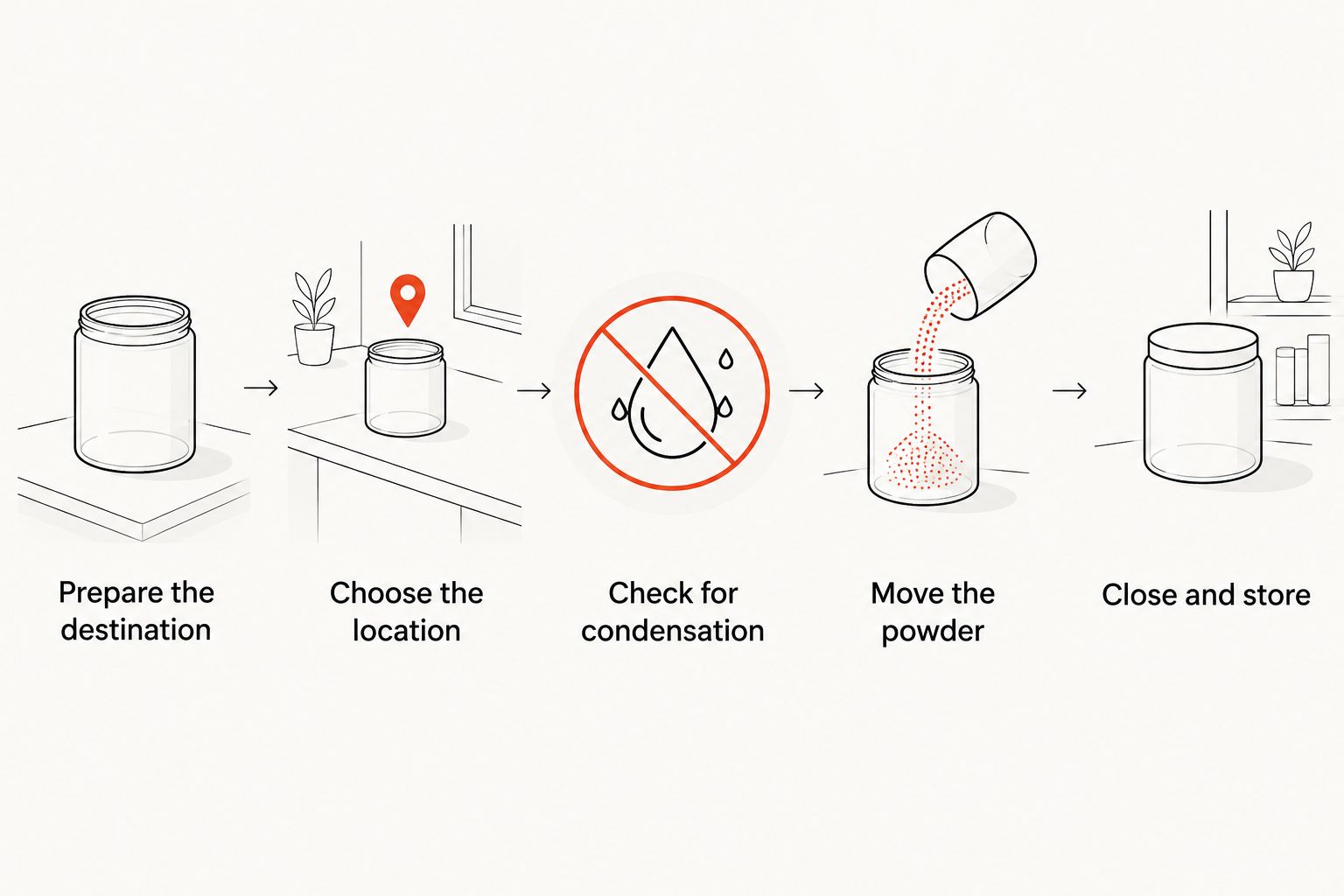
The sequence is deliberately ordinary. It removes avoidable interruptions rather than promising a sealed process that a home kitchen cannot provide.
Matcha container choices for 2026
A transfer is useful only when the destination improves storage or makes daily handling more controlled. Keeping matcha in its existing packaging is also a valid choice when that packaging remains dry, opaque and securely closable.
| Storage choice | Suited to | Limitation |
|---|---|---|
| Original opaque packaging | Avoiding another transfer | Depends on the closure remaining sound |
| Airtight opaque container | Storage protected from light | Requires a clean, dry transfer |
| Clear glass container | Seeing the contents | Needs protection from light |
Original opaque packaging
Retaining the original packaging avoids moving the powder solely for appearance. It also keeps the product information beside the matcha, which makes identification and label instructions easier to retain.
The limitation is the closure. Packaging that cannot be closed properly after opening does not become suitable long-term storage simply because it was the original package. Inspect it rather than assuming it still protects the powder.
Airtight opaque container
An airtight opaque container combines a light barrier with a secure closure. It suits a permanent storage position and a routine in which the container is opened briefly to measure a portion.
The limitation is the transfer itself. The interior must be dry, and the lid must close correctly. Airtight storage also does not remove the air already inside the container, so it should never be described as oxygen-free storage.
Clear glass container
Clear glass makes the contents visible and can be cleaned. It does not block light, so it needs a dark storage position rather than a place on a bright shelf.
A clear container with a secure lid is not automatically unsuitable. Its suitability depends on where it lives and how it closes. Judge the body, closure and storage position together, not the material alone.
Why exposure varies during transfer
The amount of avoidable handling depends on the setup. These factors matter more than a promise to finish within a particular number of seconds.
- Opening size. Openings that align allow a direct pour. A narrow destination can require a utensil or funnel and more handling.
- Container dryness. Residual washing water introduces moisture regardless of how quickly the transfer happens. Dryness comes before speed.
- Temperature difference. Cold packaging opened in warmer, humid surroundings creates a condensation risk. Keep it sealed while it reaches room temperature.
- Nearby steam. A kettle or pan changes the immediate working conditions. Transfer the powder somewhere dry, then prepare the drink elsewhere.
- Extra vessels. Decanting through several containers adds contact surfaces. Use an intermediate vessel only when it solves a real handling problem.
- Closure condition. Powder on the rim, a misplaced seal or an incompletely seated lid can undermine storage after an otherwise careful transfer.
These factors also explain why rushing is the wrong goal. A hurried transfer into a damp container is not an improvement on a calm transfer into a dry one. Preparation is what makes the open part of the task straightforward.
A home storage choice from Uchi in 2026
Uchi suits home matcha drinkers who want an airtight stainless steel container to keep and matcha supplied separately. The Base stays; the Pod is the matcha itself: 40g, about twenty cups, in recyclable aluminium.
Home contains Base and Pod. It suits a household that already has preparation utensils. Complete contains Base, Pod, Bowl, Spoon, Sieve and Whisk, and suits a household choosing those objects together.
| Choice | Suited to | What to consider |
|---|---|---|
| Home | Existing preparation utensils | Contains Base and Pod only |
| Complete | Storage and preparation objects together | Includes more objects to keep and clean |
One leveled Uchi Spoon holds 1 gram. That is a measuring reference, not a requirement to prepare every drink with the same amount. Measure the portion needed, close the storage container, then add water in the Bowl.
The material description has limits too. Recyclable aluminium is not the same as recycled aluminium, and the packaging includes a foam insert. A keep-for-life container does not make every associated material issue disappear.
Keeping the powder in its original packaging
Leave matcha where it is when the packaging protects it from light, remains dry and closes securely. Transferring powder is not an improvement by definition. It is a response to a storage problem or a practical preference.
Keep the product label if moving the powder separates it from its original packaging. Record the identity and opening date without covering the closure or placing loose paper inside the container.
Avoid adding new matcha on top of an older remainder. Finish the existing powder, clean the container when needed, and let it dry completely before the next fill. That keeps different contents and their label instructions from becoming muddled.
Sieving the portion rather than the stored powder
Sieve matcha for the bowl rather than treating the entire container as a preparation batch. Pouring all the powder through a sieve adds handling before storage and does not address the conditions that cause moisture-related problems.
A dry sieve separates clumps for preparation. It does not make damp powder dry or establish that questionable powder is suitable to use. Those are different tasks.
Keep the storage area separate from the wet preparation area. A spoon returned from a bowl containing water should not go back into dry matcha. Clean and dry the utensil before it touches the stored powder again.
Handling spills and a damp destination
If powder lands on a worktop, do not automatically return it to storage. The surface can carry water, cleaning residue or traces of food. Keeping the remaining matcha dry matters more than recovering every trace.
If the destination is damp before filling, stop. Dry it completely or use another suitable dry container. Do not try to compensate by closing it quickly.
If water reaches the powder, do not attempt to restore it by warming it and returning it to the main supply. Dry storage instructions apply to dry matcha; they do not establish the suitability of powder after water has been introduced.
FAQ
Can I transfer matcha without exposing it to air?
An open transfer cannot eliminate air exposure. Prepare a dry destination, move the powder directly and close it promptly to avoid unnecessary handling.
What should I look for in a matcha container in 2026?
Look for an opaque body, a secure closure and an interior that can be kept completely dry. Clear glass needs a dark storage position because it does not block light.
Should I transfer matcha if the original packaging still closes?
A transfer is unnecessary when the original packaging remains dry, opaque and securely closable. Move the powder only when the destination improves storage or handling.
Can I open refrigerated matcha straight away?
Keep refrigerated matcha sealed until the packaging reaches room temperature. Opening cold packaging in warmer, humid air can introduce condensation.
Do I need a funnel to transfer matcha?
A funnel is optional. Use one only when it helps the powder move directly into the container, and make sure it is completely dry.
Should I sieve all my matcha before storing it?
Sieve the portion intended for the bowl rather than all the stored powder. Sieving adds handling and does not remove moisture from damp matcha.
Does an airtight container remove oxygen?
An airtight closure limits exchange with surrounding air; it does not remove the air already inside. Close the container after measuring rather than leaving it open during preparation.
Can a washed container be used as soon as it looks dry?
Check the lid edges and sealing surfaces as well as the main interior. Do not add matcha while any part that contacts the powder remains damp.
One last thing
For a 2026 home storage routine, the useful change is not a faster pour. It is moving water later in the sequence.
Prepare the dry container. Transfer or measure the powder. Close the lid. Only then bring in the kettle, wet bowl and whisking water. This separates storage from preparation without adding another object or inventing a transfer deadline.
An airtight matcha container still needs to be opened. Close it before making the drink, not after finishing the drink. That is the small habit the container cannot perform on its own.