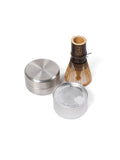
Keep your matcha container in a dry, dark cupboard that stays cool while you cook, away from the hob, oven, kettle and dishwasher exhaust. In a small kitchen, choose the position by what happens during cooking, not by how convenient the shelf looks when everything is switched off. An airtight lid limits air exchange; it does not insulate the powder from heat.
- A matcha container belongs away from cooking heat, direct sunlight and steam.
- Check cupboard conditions while appliances are running, not only when the kitchen is quiet.
- Uchi Base suits home matcha drinkers who want an airtight stainless steel canister; placement still matters.
- Keep powder storage separate from the wet area used for whisking and rinsing.
Why this matters
Matcha is finely ground tea. Heat, air, light and moisture work against the colour, aroma and taste you bought it for. Storage cannot reverse deterioration once it has happened.
An opaque container addresses light exposure. A well-fitting closure addresses air exchange. Neither makes a shelf beside an oven a suitable home for matcha. The guide to choosing a matcha container that keeps out air and light explains the container itself; placement completes the decision.
For a 2026 kitchen storage review, start with the space already available. A different shelf is often the practical change. There is no need to keep the powder beside every tool used to prepare it.
Choose a cool storage position first. Arrange the preparation area around it second. A cupboard across the kitchen can serve the powder better than an attractive shelf directly above the kettle.
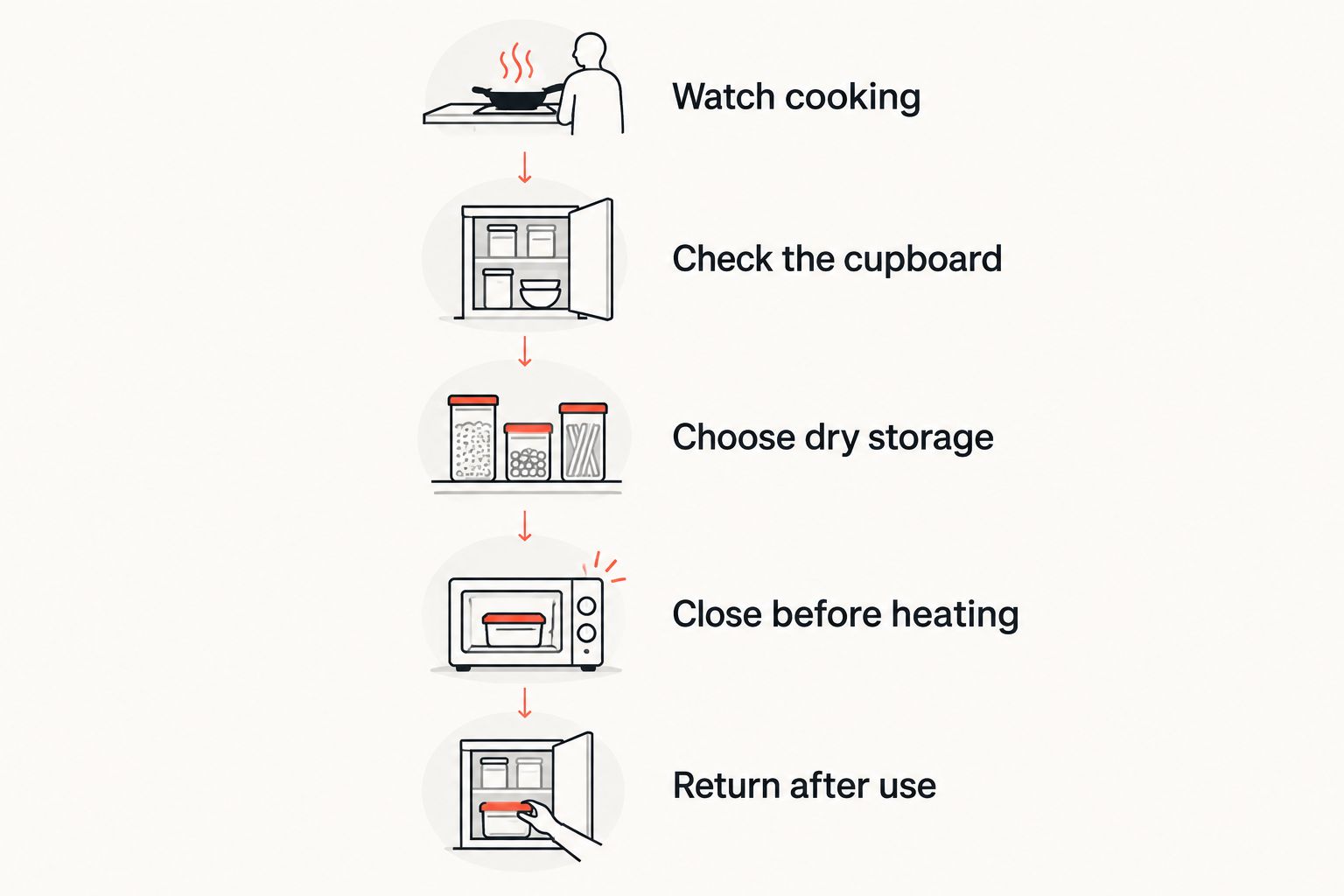
Use this sequence to find a suitable place:
- Watch cooking. Look at where heat and steam travel while the hob, oven, kettle and dishwasher are in use. Include appliances used less often.
- Check the cupboard. Feel the proposed shelf and surrounding surfaces during normal cooking. Notice warmth, dampness and strong food smells. Touch is a screening check, not a temperature measurement.
- Choose dry storage. Select an enclosed position away from direct sunlight and the cooking area. Check that the cupboard does not share a warming wall with an appliance.
- Close before heating. Measure the powder with a dry utensil, replace the lid, then heat water and prepare the drink elsewhere.
- Return after use. Put the closed container back in its chosen position rather than leaving it beside the kettle.
A cupboard door conceals the contents. It does not prove that the contents remain cool. The same applies to a drawer directly beside an oven or a shelf above a built-in appliance.
The useful distinction is between storage and preparation. Powder needs protection while it waits. A bowl and whisk need working space when you make a drink. Those requirements do not have to share a shelf.
Comparing small-kitchen storage positions
The following comparison is a starting point, not a promise about every kitchen. A cupboard beside a hot appliance needs checking even when its door faces away from the cooking area.
| Position | Fit and limitation |
|---|---|
| Interior cupboard away from appliances | Suits daily storage if it stays cool and dry; inspect nearby heat sources. |
| Drawer away from the oven | Suits a clear worktop; check warmth and room for the closed container. |
| Open preparation shelf | Suits access; exposes the container to changing light and nearby cooking conditions. |
| Shelf above the kettle | Convenient for preparation; unsuitable where steam reaches the container. |
| Sunny windowsill | Visible and accessible; direct sunlight makes it unsuitable for storage. |
A closed cupboard away from heat is the first place to assess. Its limitation is visibility: it is easy to overlook warmth coming through a neighbouring panel or from an appliance underneath.
A drawer offers a different advantage. It clears the worktop without putting the powder high above the preparation area. Its limitation is location. A drawer in the cooking zone can still become warm, and a crowded drawer can make the lid awkward to close properly.
An open shelf leaves the container within reach. That convenience is its strength, not evidence of suitable storage conditions. Check the shelf during cooking and at the time of day when sunlight reaches it.
Why storage conditions vary within the same kitchen
Distance alone does not describe exposure. A shelf further from the hob can still sit directly above a kettle. A shaded cupboard can still warm up beside an oven.
These factors explain the differences:
- Appliance position. Ovens, hobs and other hot appliances can warm nearby surfaces and enclosed spaces.
- Steam paths. Kettles, pans and an opened dishwasher introduce moisture where the vapour travels.
- Sunlight. A surface that stays shaded in the morning can receive direct sun later.
- Shared panels. Cupboards and drawers beside appliances need checking while those appliances operate.
- Daily handling. A suitable storage shelf offers little protection if the container spends preparation time open beside steam.
- Nearby contents. Strong-smelling food and household cleaning products do not belong beside loosely protected tea.
The storage question in 2026 is therefore practical rather than decorative: does this position remain suitable during the way the kitchen is actually used?
Check again after moving an appliance. A kettle relocated to clear one worktop can put steam directly beneath a shelf that previously stayed dry. The container has not changed. Its surroundings have.
Separate dry measuring from wet preparation
A small kitchen does not require a permanent matcha station. It requires a short sequence that keeps the powder away from water and steam.
Start with dry hands and a dry utensil. Open the container only when ready to measure. Put the measured powder into the preparation bowl, close the container and return it to storage before pouring hot water.
This order removes the open container from the wet part of preparation. It also avoids reaching over the powder with a warmed bowl or a recently rinsed utensil. Keep the lid away from wet worktops while it is off.
Do not return unused powder from a damp bowl to the container. Keep utensils used for scooping separate from utensils that have already touched water. A utensil that looks clean is not necessarily dry.
For a 2026 cupboard reset, make room for the container and a dry measuring utensil together. Keep rinsed tools elsewhere until fully dry. This is a layout decision, not a reason to add more objects to the worktop.
The same sequence works when several people share the kitchen. Agree on one storage position. Returning the container there is more reliable than leaving each person to choose the nearest available surface.
The container protects against air and light, not kitchen heat
Stainless steel blocks light. An airtight closure limits air exchange when properly closed. These are useful properties, but neither turns a matcha container into an insulated vessel.
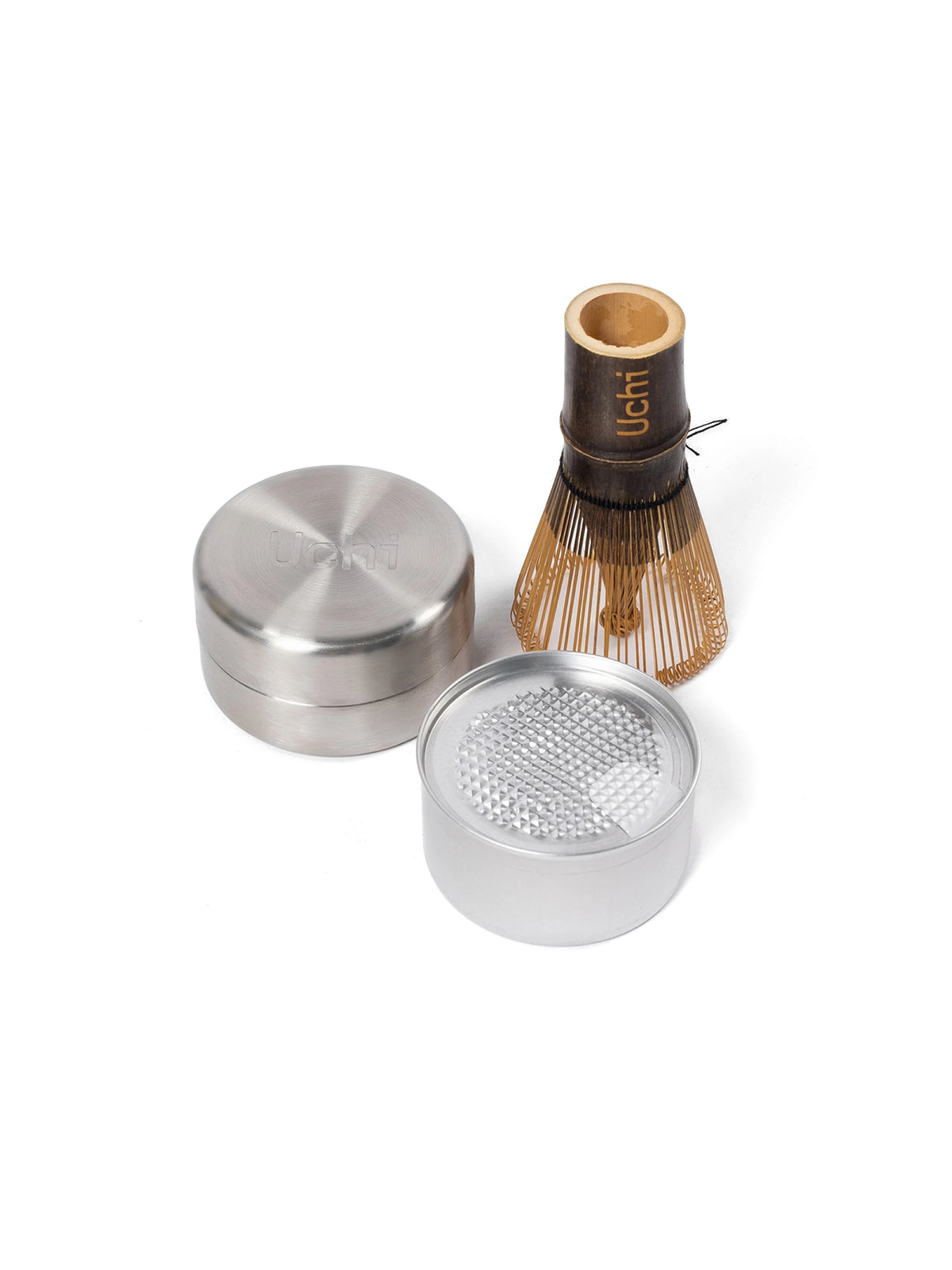
Uchi Base suits home matcha drinkers who want an airtight stainless steel canister. The Base is kept for life. Its practical limitation is the same placement requirement: keep it away from heat, steam and direct sunlight.
The Pod contains 40g of matcha, about twenty cups, in recyclable aluminium. Those figures describe the contents, not a guaranteed freshness period. How the matcha is handled and stored still matters after opening.
One leveled Uchi Spoon holds 1 gram. Measure with it while dry, close the container, then move to the wet preparation area. A clear order is more useful than storing every object together beside the kettle.
For a first purchase, Home contains Base + Pod. Complete contains Base + Pod + Bowl + Spoon + Sieve + Whisk. The choice concerns which objects are needed at home; neither arrangement changes the storage requirements of the powder.
Cupboard storage and refrigeration are separate decisions
A cupboard that stays cool and dry is different from one that becomes warm during cooking. If every available cupboard warms up, do not treat refrigeration as simply moving the same routine into a colder space.
Cold storage introduces a separate handling issue: condensation. Opening a cold container in warmer, humid air allows moisture to collect on cold surfaces. Keep the container sealed while it comes towards room temperature before opening.
There is no useful universal waiting time for every container and kitchen. Container size, starting temperature and room conditions differ. A timed shortcut is less dependable than allowing the sealed container to stop being cold before opening it.
Assess the placement problem first. Sometimes a cupboard outside the immediate cooking area resolves it without changing the storage routine. Refrigeration needs a deliberate routine of its own, not repeated opening beside a steaming kettle.
The cupboard check to repeat in 2026
A storage position deserves another look when seasons change, sunlight moves across the room or the kitchen layout changes. The relevant check is whether conditions have changed, not whether the cupboard still looks tidy.
Inspect the container closure as part of that review. Powder around the rim can interfere with a clean closing surface. Keep the rim and lid clean and dry, following the container's care instructions.
Then assess the tea when preparing it. Changes in aroma, colour and taste deserve attention, but they do not identify heat as the only cause. Air exposure, moisture and the condition of the powder before storage also matter.
Do not assign a freshness deadline from the container material alone. Follow the product's storage guidance and date information. An opaque, airtight container supports careful storage; it does not establish an unlimited shelf life.
FAQ
Where should I keep a matcha container in a small kitchen?
Keep a matcha container in a cool, dry, dark cupboard away from cooking heat and steam. Check the position while appliances are running, because an enclosed cupboard can still become warm.
Can I keep my matcha container next to the kettle?
Keep the matcha container away from the kettle's steam path. Measure the powder with a dry utensil, close the container and return it to storage before heating water.
Does a stainless steel matcha container protect against heat?
A stainless steel matcha container blocks light but does not provide insulation simply because it is metal. Place it away from hot appliances and direct sunlight.
Is a drawer suitable for storing matcha?
A drawer is suitable if it stays cool and dry and allows the container to close properly. Check drawers beside or above an oven while the oven is operating.
Should I refrigerate matcha if my kitchen gets warm?
Refrigeration requires careful handling to avoid condensation. If using cold storage, keep the container sealed while it comes towards room temperature before opening it.
Can I store the matcha container with my whisk and bowl?
Store them together only if the tools are fully dry and the position stays cool and dry. Powder storage does not need to share the wet preparation area.
What should I check when reorganising matcha storage in 2026?
Check heat, sunlight, steam and whether the container closes cleanly. Repeat the check during normal cooking rather than judging the position only when appliances are off.
One last thing
Move the powder before moving the whole routine. The bowl can stay near the water. The whisk can dry where air circulates. The matcha container can live in a separate cupboard.
That small separation removes a false constraint from a small kitchen. The objects used to make one drink do not all need to wait in the same place.