Refrigerate matcha powder in a tightly closed, moisture-resistant container, then let the container reach room temperature before opening it. The rule for 2026 is simple: keep warm, humid air away from cold powder; refrigeration does not replace protection from air, light and moisture.
- Refrigerated matcha powder should reach room temperature in its sealed container before opening.
- Uchi Matcha suits home drinkers who want an airtight stainless steel container they can keep.
- A cool, dark cupboard avoids repeated cold-to-warm transitions, provided it stays away from heat and steam.
- Use dry tools, close the container promptly and never treat sieving as a remedy for damp powder.
Why this matters
Cold storage creates a handling requirement. When a cold container meets warmer, humid room air, water can condense on its surface. Opening it too soon also exposes the cold powder and interior to that air.
The distinction is between keeping matcha cold and keeping matcha dry. A refrigerator addresses temperature. The container and the opening routine address moisture, air and light.
For a home matcha routine in 2026, start with the enclosure rather than the appliance. The guide to choosing a matcha container that keeps out air and light explains that part of storage. Refrigeration adds another step; it does not remove the need for a close-fitting seal.
Keep the container closed during the entire transition from refrigerator to room temperature. Open it only after the contents have warmed, not merely after the outside has been wiped dry.
There is no universal waiting time. Container material, the amount of powder, room temperature and humidity all affect the transition. A fixed timer cannot account for those conditions.
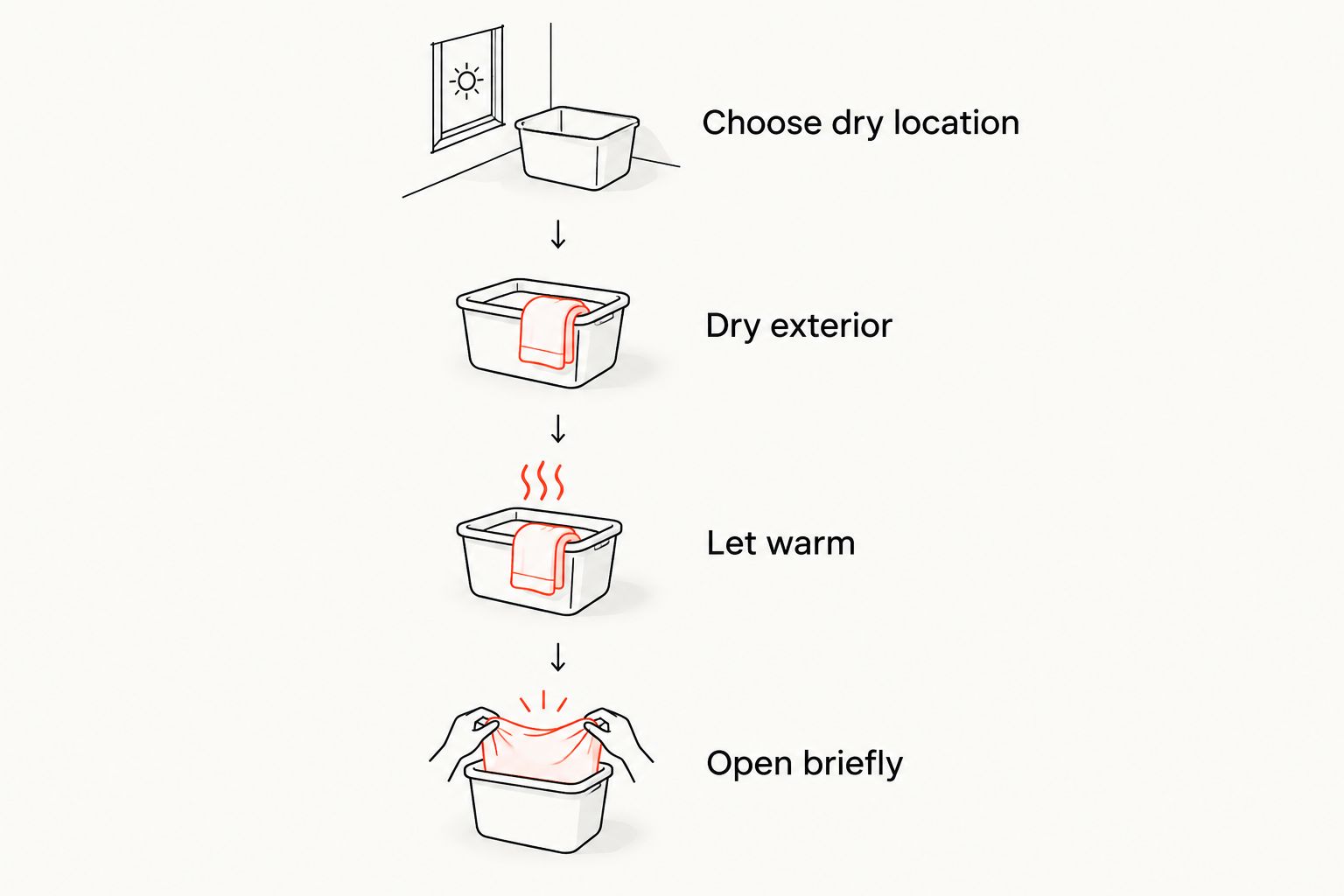
Use this sequence:
- Choose a dry location. Place the closed container away from the kettle, hob, dishwasher and sink. A preparation surface covered in steam is not a suitable warming spot.
- Dry the exterior. Wipe away any condensation with a clean, dry cloth. Leave the lid closed. Surface water should not reach the opening or seal.
- Let warm. Allow the sealed container and its contents to reach room temperature. A dry exterior alone does not show that the powder inside has warmed.
- Open briefly. Measure the powder with a dry utensil, then close the container before preparing the drink. Return it to its chosen storage location with the seal closed.
The important order is warming first, opening second. Opening the lid to help the powder warm defeats the moisture barrier at the moment it is needed.
Wiping and warming serve different purposes. Wiping removes water already on the outside. Warming reduces the temperature difference that causes condensation when humid air reaches a cold surface.
Keep the lid closed while the matcha warms. This is the central step in a reliable 2026 storage routine. Everything else supports it.
Refrigeration and cupboard storage
Choose the storage location according to the conditions in the kitchen and the way the powder is used. Neither location compensates for an open lid, damp utensils or exposure to steam.
| Location | Useful for | Handling limit |
|---|---|---|
| Refrigerator | Keeping sealed powder cold | Warm the sealed container before opening |
| Cool, dark cupboard | Convenient daily preparation | Keep away from heat, light and steam |
Refrigerator storage
Refrigeration keeps the sealed powder in a cold environment. Its limitation is the transition back into the room. Taking the container out and opening it immediately exposes cold contents to warmer air.
A refrigerator also contains food odours and moisture. Keep the matcha enclosed rather than relying on the refrigerator itself as protection. Clean the outside of the container when needed, without allowing water into the opening.
Choose a place where the container remains upright and the lid is protected from spills. Do not leave it beside an uncovered food item or assume that a loosely fitted cover is sufficient.
Refrigeration suits a routine that leaves time for sealed warming. If that step is repeatedly skipped, change the routine rather than treating condensation as unavoidable.
Cool, dark cupboard storage
A cool, dark cupboard removes the refrigerator-to-room transition from daily preparation. Its limitation is the kitchen around it: a cupboard beside an oven, above a kettle or exposed to direct sunlight is not consistently cool.
For daily preparation in 2026, inspect the actual storage spot. Notice whether steam reaches it when cooking and whether it becomes warm during ordinary kitchen use. The word cupboard alone says little about those conditions.
Keep the powder in its closed container even inside a dark cupboard. Darkness addresses light exposure; it does not stop air or moisture entering an inadequately sealed opening.
The practical choice is between a suitable cupboard and a refrigerator with a disciplined opening routine. It is not between careful storage and careless storage.
Why condensation risk varies
Condensation depends on the relationship between temperature and moisture in the surrounding air. The same container behaves differently in a dry room and beside a steaming kettle.
These factors determine how carefully the transition needs to be managed:
- Room humidity. Humid air contains water vapour that can condense when it meets a sufficiently cold surface.
- Temperature difference. A cold container entering a warmer room needs time to warm before its contents are exposed.
- Container and contents. The container material and amount of powder affect how heat moves through the closed package.
- Seal condition. Powder caught around the closure, damage or incomplete closing can interfere with the barrier.
- Opening routine. Repeatedly opening cold powder introduces room air before the contents have warmed.
- Preparation location. Steam from cooking and hot water adds moisture exactly where the container is being handled.
These factors explain why an instruction such as wait a few minutes is incomplete. The useful endpoint is room temperature, reached while the container remains sealed.
Do not use the colour of the powder as a condensation test. Colour and dryness are different observations. Inspect the container, closure and handling conditions rather than expecting one visual cue to answer every storage question.
A container that addresses air and light
An airtight enclosure limits air exchange while an opaque enclosure blocks light. Both matter before refrigeration enters the picture. The opening routine then determines how long the powder is exposed during preparation.
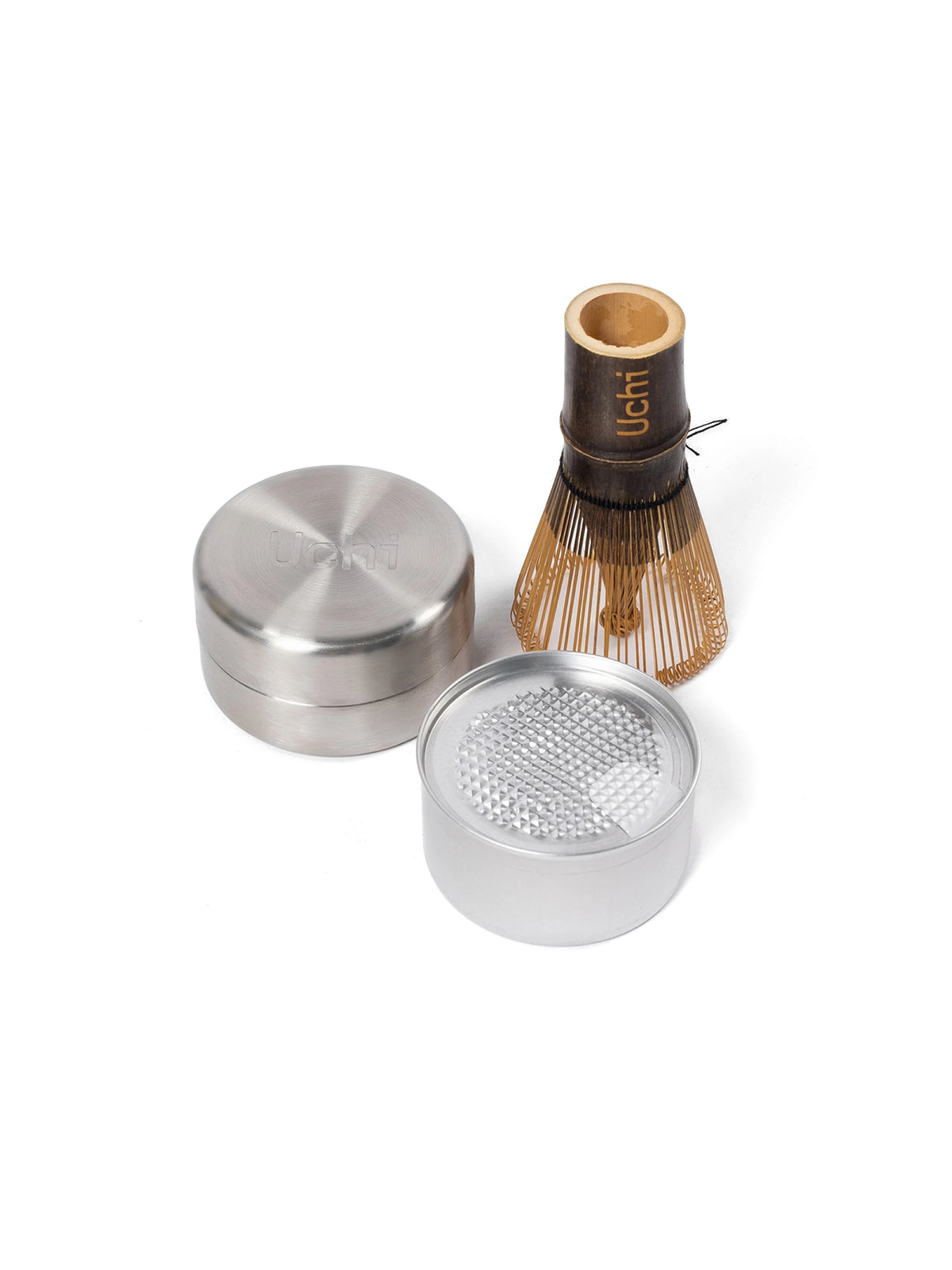
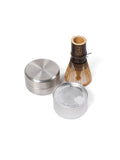
The Base is Uchi’s airtight stainless steel matcha canister, kept for life. Stainless steel blocks light. The closure provides the air barrier when the container is properly shut.
Uchi Matcha suits home drinkers who want an airtight stainless steel container they can keep. The practical limitation remains unchanged: an airtight container cannot protect cold powder while its lid is open.
The Pod contains 40g of matcha, about twenty cups, in recyclable aluminium. That quantity makes daily handling relevant. Storage is not only what happens between purchases; it is also what happens each time the container is opened.
Keep the seal clean and dry. Follow the container’s care instructions, and allow washed parts to dry completely before they come into contact with powder. A clean container that still holds wash water is not ready for storage.
The material protects against light. The seal limits air exchange. Neither removes water introduced by a damp utensil or an opening made too early.
Measuring without bringing moisture back
Prepare the storage area before boiling water. Put the container on a dry surface and keep the measuring utensil separate from the wet preparation tools.
One leveled Uchi Spoon holds 1 gram. That is a measuring reference, not a reason to leave the container open while deciding how much to use. Decide the serving, measure it and close the lid.
If another spoon is used, keep the same boundary: the utensil entering the powder must be dry. Do not return a spoon to the container after it has touched water, milk or the prepared drink.
Keep sieving separate from storage. Powder can be measured into a dry sifter after removal from the container; the storage lid need not remain open throughout preparation.
A simple order avoids overlap:
- Set out dry tools.
- Warm refrigerated matcha while it remains sealed.
- Measure the powder.
- Close the container.
- Add water and prepare the drink.
This order keeps steam and splashes away from the stored powder. It also makes the closure a deliberate step rather than something left until the drink is finished.
Visible condensation and changes in the powder
Condensation on the outside of a closed container does not, by itself, mean that the powder has become wet. Keep the lid closed, dry the exterior and continue the sealed warming process.
Moisture inside the container is a different issue. Do not stir visible droplets into the powder or assume that whisking will correct the problem. Avoid introducing more moisture and inspect what has happened before using it.
Small dry clumps are not conclusive evidence of condensation. Fine powder can collect into clumps without being visibly wet. The relevant distinction is between dry powder that separates and powder showing clear signs of moisture.
Sieving changes texture. It does not remove water, reverse deterioration or establish that damp powder is suitable to consume. Do not dry compromised matcha on a radiator or in an oven as a storage repair.
If the powder shows mould, discard it. If its condition is uncertain, ask the producer for product-specific guidance rather than trying to recover it through preparation.
Common handling mistakes
Opening cold powder immediately
The container has just left the refrigerator, but the room feels dry. That does not make immediate opening a reliable routine. Warm the contents while sealed rather than judging moisture exposure by how the room feels.
Waiting with the lid loosened
A loosened lid lets room air enter while the powder is still cold. Leave the closure fully shut during warming. The container is acting as a barrier, not as a ventilation chamber.
Opening beside boiling water
A kettle is convenient during drink preparation, but its steam changes the immediate environment. Measure away from it and close the storage container before hot water is poured.
Treating an opaque container as airtight
Blocking light and limiting air exchange are separate functions. Check that the closure fits and is fully engaged. An opaque body with a poorly closed lid leaves the powder exposed.
Using sieving to diagnose moisture
A smoother powder texture does not prove that storage conditions were sound. Sieving belongs to preparation. Condensation prevention belongs to temperature control, dry handling and a closed container.
FAQ
Should I refrigerate matcha powder in 2026?
Refrigeration is an option for matcha powder in 2026 when it is kept tightly sealed and allowed to reach room temperature before opening. A cool, dark cupboard is another option if it stays away from heat, light and steam.
How long should refrigerated matcha sit out before opening?
Wait until the sealed container and its contents have reached room temperature. There is no universal waiting time because room conditions, container material and the amount of powder affect warming.
Can I open matcha while the container is still cold?
Keep the container closed while the matcha is cold. Opening it exposes the contents to warmer room air and creates an opportunity for condensation.
Does water on the outside mean my matcha is wet?
Exterior condensation does not by itself mean the powder is wet. Keep the container sealed, wipe the outside dry and let the contents warm before opening.
Does an airtight container prevent all condensation?
An airtight container limits air exchange while it is closed, but it does not protect cold powder after the lid is opened. The Uchi Base still needs the same sealed warming routine if refrigerated.
Can I sieve matcha that has become damp?
Sieving does not restore damp matcha or establish that it is suitable to consume. It separates dry clumps; visible moisture requires a storage assessment rather than a texture fix.
Should I measure matcha before or after boiling water?
Measure matcha with dry tools and close the container before adding hot water. Keep the storage container away from kettle steam and preparation splashes.
One last thing
A dry exterior can conceal a colder interior. The cloth removes visible water, but it does not warm the powder or make early opening safe from condensation.
Make the lid the boundary between storage and preparation. Warm closed. Measure dry. Close before water. That routine protects the powder without turning each cup into a storage exercise.