Water hardness changes the mineral balance of a bowl of matcha powder, but it does not predict taste on its own. For a useful comparison in 2026, consider calcium and magnesium alongside alkalinity, chlorine and freshness, then taste the same tea with different water while keeping preparation unchanged.
- Matcha powder needs a controlled water comparison, not a hardness verdict alone.
- Calcium and magnesium define hardness; alkalinity and chlorine are separate considerations.
- Uchi suits home matcha drinkers who want first-harvest tea with a refillable storage format.
- Water cannot restore matcha powder that has lost its aroma through poor storage.
Hardness is one part of water chemistry, not a complete description of drinking water. It mainly reflects dissolved calcium and magnesium. Those minerals interact with compounds in tea, but a hardness reading alone cannot tell you how a particular bowl will taste.
Matcha also differs from leaf tea. You whisk the powder into water and drink the suspended leaf rather than removing the leaves after steeping. Findings about a clear tea infusion do not automatically describe every aspect of matcha texture, colour or flavour.
Start with a controlled tasting. The guide to tasting ceremonial matcha side by side at home provides a useful companion to the water comparison below.
| Water option | Useful for | Limitation |
|---|---|---|
| Tap water | Establishing your everyday reference | Its composition depends on the supply |
| Filtered tap water | Testing what a particular filter changes | Not every filter reduces hardness |
| Lower-mineral bottled water | Comparing a different mineral profile | It changes more than hardness alone |
| Distilled water | Creating a low-mineral contrast | It is not a universal flavour target |
These are comparison options, not a ranking. Choose potable water. The purpose is to identify a repeatable preference, not to find a label that promises a particular taste.
Why this matters
A disappointing bowl often sends attention straight to the tea. The water deserves a separate check before you replace the powder or change the whole preparation.
Water brings its own taste into the bowl. A noticeable chlorine smell, for example, is a different issue from calcium and magnesium. Treating both as hard water makes troubleshooting less precise.
Freshness remains a separate question. Air, light, heat and moisture affect stored matcha; changing the water does not reverse those changes. Check the condition of the powder before judging the water.
The useful distinction is between a water problem, a preparation problem and a storage problem. Keep them separate long enough to learn which change actually helps.
Hardness, alkalinity and chlorine are different
Hardness describes calcium and magnesium
Hardness concerns dissolved minerals, principally calcium and magnesium. A water report can express it as an equivalent concentration of calcium carbonate, rather than listing only the individual minerals.
That reporting convention matters when comparing labels. A calcium figure on a bottle and a total-hardness figure from a water supplier are not directly interchangeable. Read the units and the name of the measurement before drawing a conclusion.
Limescale in a kettle is a practical reason to investigate the water. It is not a tasting result, and it does not establish that the same water is unsuitable for matcha.
Alkalinity describes buffering
Alkalinity describes water's capacity to neutralise acid. In drinking water, bicarbonate commonly contributes to it. This is distinct from hardness, even when the two occur together.
Alkalinity can influence the chemical environment in which tea compounds sit. That is why two waters with similar hardness need not behave identically in a bowl.
A pH figure alone does not replace an alkalinity measurement. The figures answer different questions. Avoid choosing water solely because a label describes it as alkaline.
Chlorine concerns treatment and sensory character
Chlorine is used in drinking-water treatment. Its presence is not a measure of hardness, and its smell can distract from the aroma of the tea.
A filter intended to reduce chlorine does not necessarily remove calcium or magnesium. Read the stated function of the filter rather than assuming that filtered means softened.
If the water already has a noticeable taste when drunk plain, record it before adding matcha. Otherwise, a characteristic of the water can be mistaken for a characteristic of the leaf.
Compare water without changing the tea
Use the powder you already drink. A new tea introduces another variable and makes the comparison harder to interpret.
For a home comparison in 2026, a short written record is more useful than a complicated scoring system. Note the water source, preparation method and what you actually taste.
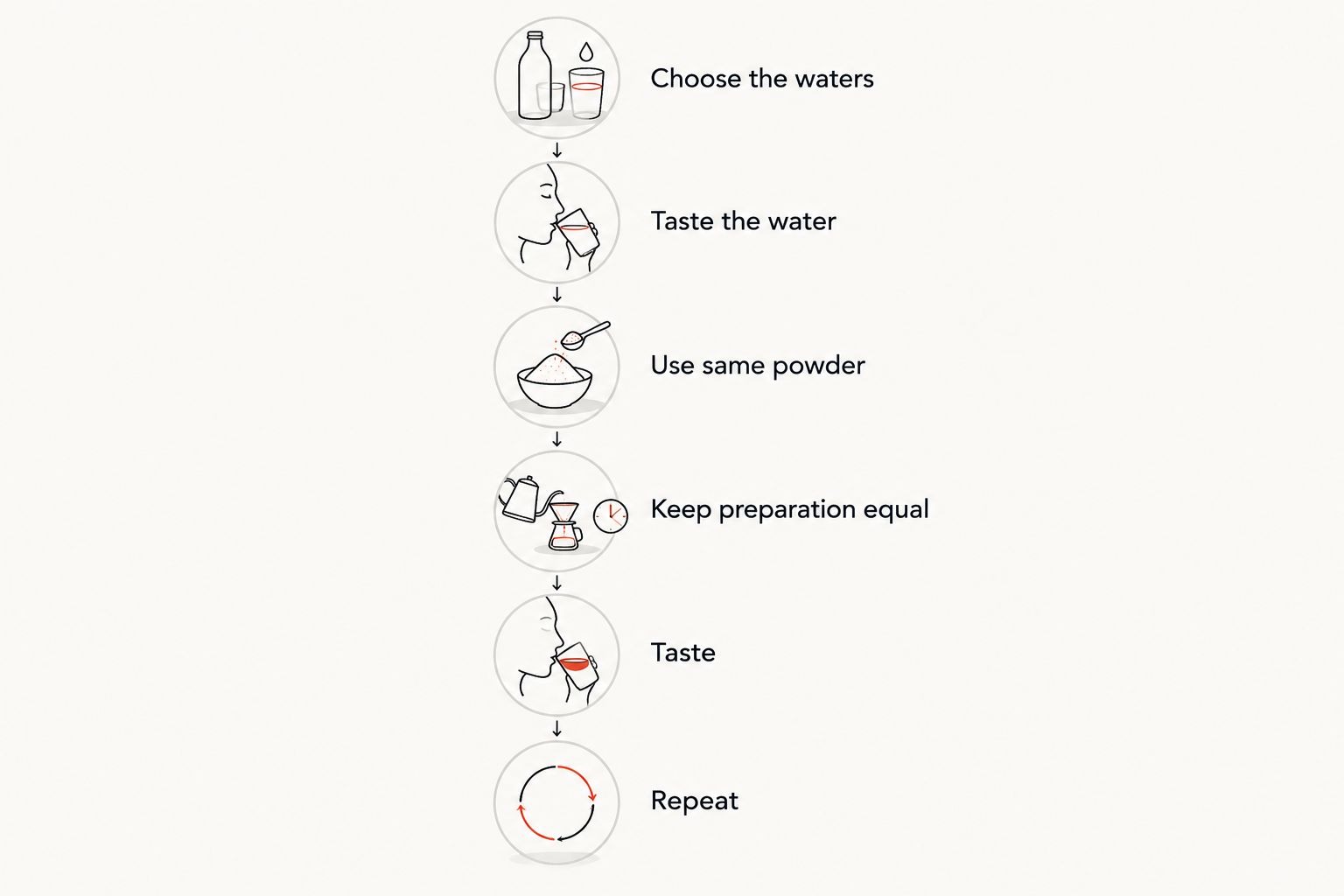
- Choose the waters. Start with your usual potable tap water and a clearly identified alternative. Keep the bottle label or the filter details.
- Taste the water. Smell and taste each water plain. Record any noticeable chlorine, mineral or other character without assigning it to the tea.
- Use the same powder. Take both portions from the same container. Keep the powder covered between preparations and use dry utensils.
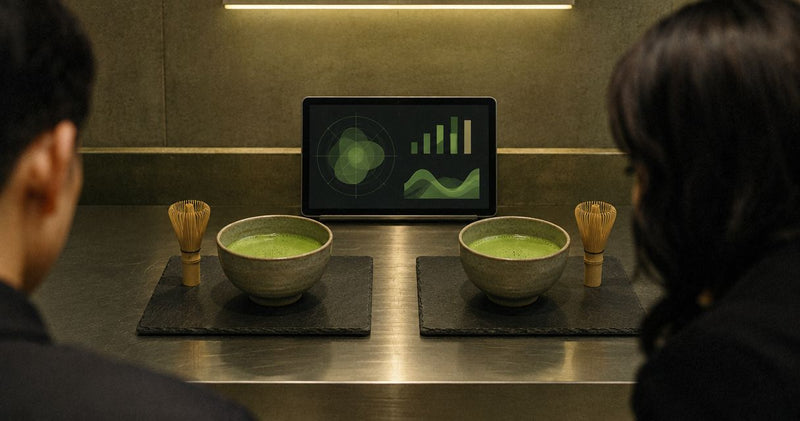
- Keep preparation equal. Use equal powder and water quantities, the same water temperature and comparable bowls. Keep sieving and whisking consistent.
- Taste at comparable temperatures. Alternate between bowls as they cool. Separate aroma, bitterness, drying sensation and texture in your notes.
- Repeat the comparison. Swap the bowl positions on another occasion. A preference that repeats is more useful than an impression from a single preparation.
Do not adjust the powder quantity halfway through because one bowl seems stronger. Finish the comparison first. A later adjustment can improve your everyday recipe, but it answers a different question.
Milk and sweeteners also introduce additional flavours. Begin with plain matcha if the aim is to distinguish the waters. Then repeat the preferred preparation in the drink you normally make.
Why the result varies
A water comparison is only as clear as the variables around it. These factors deserve separate attention:
- Mineral composition. Total hardness does not describe the full balance of dissolved substances in water.
- Alkalinity. Buffering is distinct from hardness and helps explain why similar hardness readings are not complete flavour predictions.
- Treatment character. Noticeable chlorine belongs in the water assessment, not in a judgement about the tea's origin.
- Powder condition. Aroma lost during storage cannot be recovered by choosing a different water.
- Preparation. Temperature, concentration, sieving and whisking change the comparison when they are not held constant.
- Serving temperature. Compare bowls at similar temperatures rather than tasting one immediately and leaving the other to cool.
Change the water first, not the whole recipe. If you change temperature, concentration and water together, you will not know which change produced the result.
Reading a water report in 2026
Start with the report for the address where the matcha is prepared. Use the supplier's current information, not a general description of water in the Netherlands or Germany.
Look for calcium, magnesium, hardness, alkalinity or bicarbonate, and pH. The report might not present every measurement in the same place. Keep the measurement name and unit together in your notes.
For bottled water, retain the composition panel. A description such as spring water or mineral water is not enough to compare the relevant chemistry.
Record the date of your 2026 comparison alongside the source. For filtered water, record the filter type and follow its maintenance instructions. The word filtered is not a complete specification.
There is no need to turn the kitchen into a laboratory. A report explains what you are comparing; the bowl establishes which preparation you prefer.
Filtered water is not automatically softer
Filters have different functions. Activated-carbon filtration commonly targets substances affecting taste and odour, including chlorine. Reducing hardness requires a treatment designed for that purpose.
Check the product documentation before attributing a change in flavour to softer water. If the filter does not claim hardness reduction, do not describe the result as evidence that hardness caused the original taste.
A household softener is another distinct treatment. Its output is not equivalent to distilled water or every bottled water with a lower mineral content. Follow the system manufacturer's guidance about drinking-water use.
The practical rule is simple: name the treatment accurately. Tap water, carbon-filtered water and softened water are not interchangeable descriptions.
Freshness comes before fine adjustments
A water comparison needs powder whose condition stays consistent. Close the container promptly after measuring. Keep it away from steam and use a dry scoop.
An airtight, light-blocking container addresses a different problem from water treatment. It limits exposure during storage. It does not alter the mineral composition of the water used later.
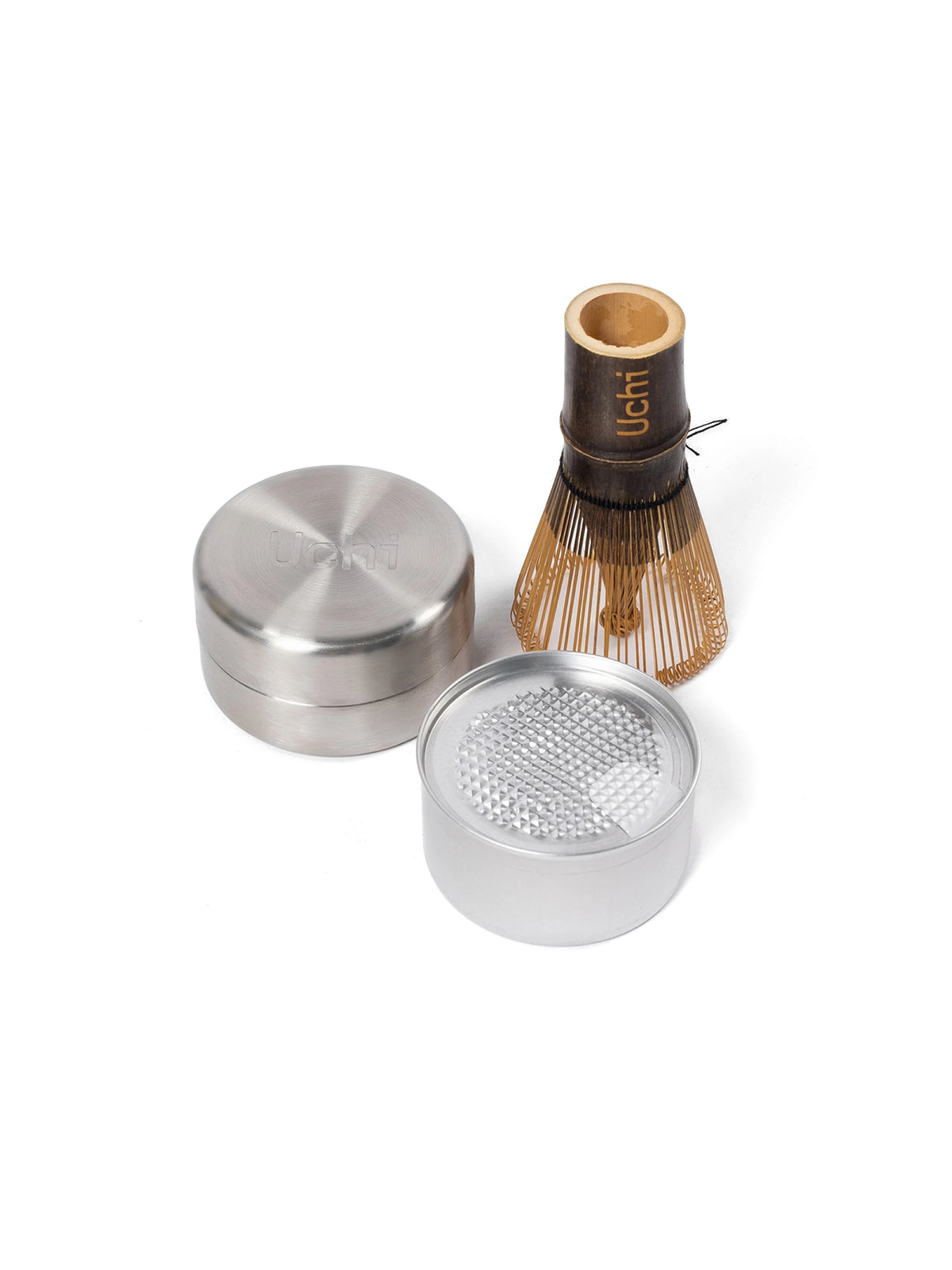
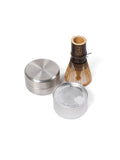
The Base is Uchi's airtight stainless steel canister, kept for life. The Pod contains 40g of matcha, about twenty cups, in recyclable aluminium. The format combines retained storage with replacement tea; it still requires dry handling and prompt closure.
The tea itself is Kaze no Shiro, a first-flush blend composed by the house tea master at Horii Shichimeien. It draws first-harvest tencha from Kyoto, Nara and Shiga, weaving Okumidori, Yabukita and Sayamakaori. It is not a single-origin or single-cultivar tea.
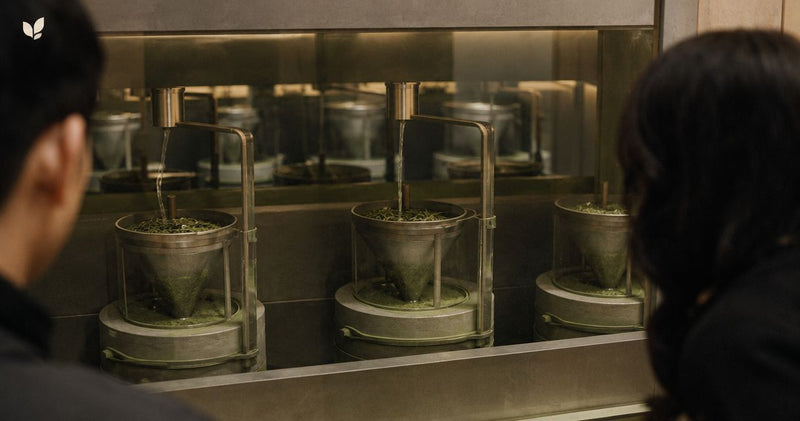
The leaf is shaded for 25 days before harvest and stone-milled at 40 grams an hour. Those details describe the tea, not a guarantee about how any water will make it taste.
Uchi suits home matcha drinkers who want first-harvest tea with a refillable storage format. The format does not remove the need to compare water or keep preparation consistent.
Separate texture from water chemistry
Matcha powder is suspended in water rather than fully dissolved. Visible clumps therefore need a preparation check before they become evidence against the water.
Sieve the powder consistently in both bowls. Use the same whisking method and comparable vessels. If only one portion is sieved, the comparison includes a texture difference you deliberately introduced.
Foam is not a stand-alone hardness test. Powder quantity, whisking and the condition of the whisk also belong in the assessment. A photograph of two bowls cannot isolate water chemistry.
Describe what you notice without overinterpreting it. Fewer clumps, a more persistent aroma and a stronger drying sensation are observations. They do not, by themselves, identify the chemical cause.
FAQ
Does hard water make matcha powder taste bitter?
Hardness alone does not establish why matcha powder tastes bitter. Compare the same powder at the same concentration and temperature before attributing bitterness to calcium and magnesium.
Should I use filtered water for matcha?
Use filtered water when its stated function addresses something you want to change, such as noticeable chlorine taste. Check the filter documentation because filtration does not automatically reduce hardness.
Is bottled water better than tap water for matcha?
Bottled water is not automatically preferable to potable tap water for matcha. Compare the mineral information and taste the same tea with both waters under equal preparation conditions.
Does boiling water remove hardness?
Boiling can reduce temporary hardness by causing some dissolved minerals to precipitate, but it does not remove all forms of hardness. Do not treat boiled water as equivalent to distilled water.
Why does the same matcha taste different at another address?
Different water composition is one possible reason the same matcha tastes different at another address. Temperature, concentration, preparation and powder storage also need to remain consistent before the water can be isolated.
Can different water restore stale matcha powder?
Different water cannot restore aroma already lost from stale matcha powder. Check storage and powder condition before using a water comparison to judge the tea.
What should I record for a matcha water comparison in 2026?
Record the water source, filter treatment if used, preparation quantities, temperature and tasting observations. Uchi matcha should be compared from the same Pod so a change of tea does not obscure the result.
One last thing
Keep the less-preferred water in the comparison. It is the reference that makes the preferred bowl meaningful.
On the next occasion, swap the bowl positions before tasting. If the preference remains, you have a useful household decision. You do not need to turn it into a universal rule about matcha powder.