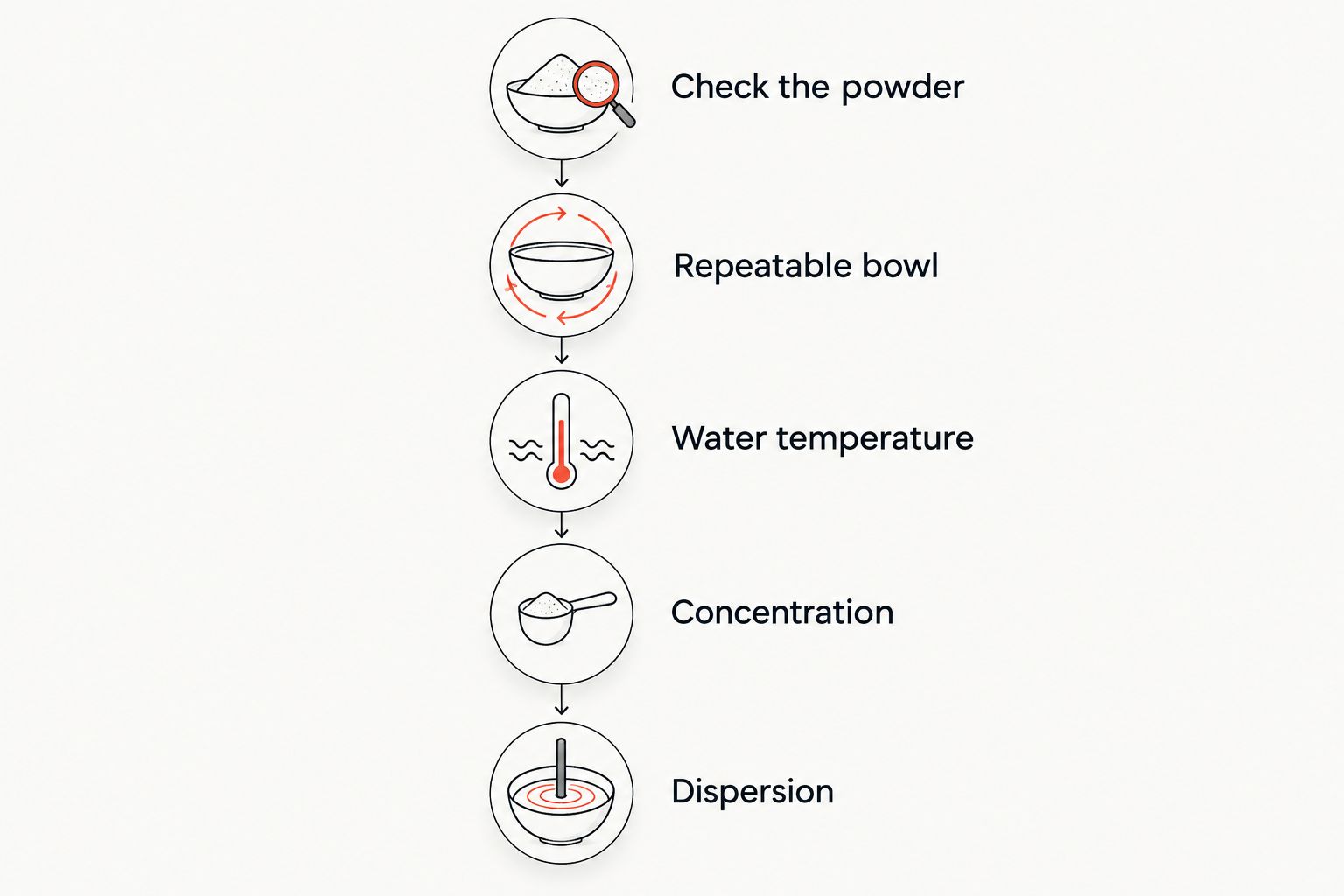
Bitter matcha powder needs a controlled check of storage, water temperature and concentration, not an immediate change of tea. Start with a dry, light-protected container, then change one preparation variable at a time; some bitterness belongs to tea, while stale flavour, clumps and an overly concentrated bowl need separate attention.
- Bitter matcha powder needs a storage check before a new recipe.
- Change water temperature and concentration separately so the tasting result means something.
- Sieving improves dispersion; it does not restore stale tea.
- Uchi suits home matcha drinkers who want a keep-for-life container and matching preparation tools.
Why storage comes first
Air and light change matcha after opening. The powder that reaches the bowl reflects both the tea itself and what happened between opening the container and preparing it. A careful recipe cannot reverse deterioration in storage.
Start with the guide to choosing a matcha container. An airtight closure limits air exchange when the container is closed. An opaque container keeps light away from the powder. Neither removes the need to close it promptly after measuring.
Storage protects flavour; preparation reveals it. That distinction matters when troubleshooting in 2026. If the tea has become flat or stale, changing the water will not return its earlier character. If the powder still smells fresh but the bowl tastes harsh, preparation deserves the next check.
Colour offers a clue, not a verdict. Compare the powder with how it looked when first opened, rather than treating a particular shade of green as proof of quality. Smell, storage history and the prepared bowl belong in the same assessment.
Troubleshooting matcha powder that tastes bitter
Begin by describing the problem precisely. Bitter, drying, gritty and stale are different observations. They can appear together, but they do not point to the same adjustment.
Bitterness is a taste. Astringency is the drying or puckering sensation left in the mouth. Grit is a texture problem. A flat aroma is another signal again. Calling all of these bitter makes the diagnosis less useful.
Use this narrow comparison as a starting point. It identifies the next check, not a guaranteed cause.
| Observation | First check | What it tells you |
|---|---|---|
| Harsh but aromatic | Cooler water | Whether heat changes the balance |
| Heavy and intense | Lower concentration | Whether the bowl is too concentrated |
| Gritty or uneven | Sieve and whisk | Whether dispersion is the problem |
| Flat or stale | Storage history | Whether preparation is the wrong place to intervene |
| Drying after swallowing | Repeat consistently | Whether astringency is being called bitterness |
Do not change everything at once. A cooler, weaker, sweetened bowl made with different water gives no clear explanation of what helped. The point of the test is not merely to make the next bowl easier to drink. It is to make the following bowl repeatable.
Check the powder before preparing it
Look at the closure, the container and the utensils used to measure the tea. Check whether the powder has been exposed to light, left open during preparation or touched with a damp spoon. These are practical observations, not reasons to assign a shelf life from appearance alone.
Smell the powder before adding water. Then smell the prepared tea. If both seem tired compared with earlier bowls from the same container, treat storage as part of the problem.
Visible mould or an abnormal smell is not a tasting challenge. Do not try to correct it with milk, sweetener or a hotter preparation. Troubleshooting flavour applies to tea that remains suitable to consume.
Establish a repeatable bowl
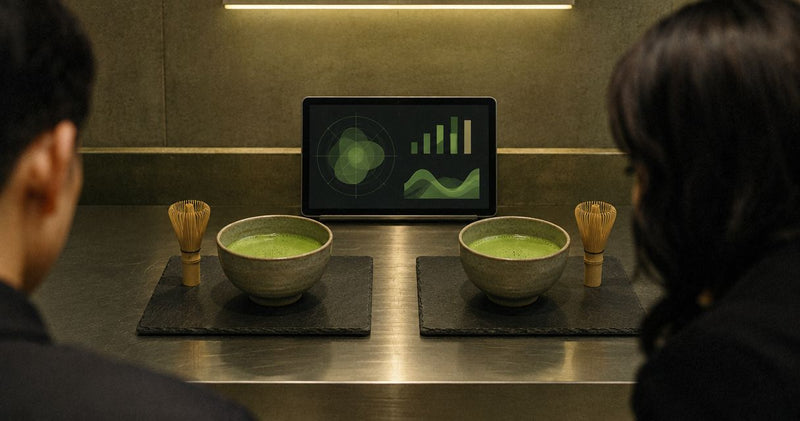
Write down the amount of powder and water used. Keep the bowl, water source and preparation method consistent. A kitchen scale makes the powder amount easier to repeat than an unmeasured spoonful.
For a 2026 tasting note, record the preparation before recording the verdict. A short description such as aromatic but drying is more useful than bad. It gives the next adjustment a purpose.
Taste without additions first if the aim is diagnosis. There is no requirement to drink matcha plain afterward. Milk and sweetener simply make it harder to isolate the original flavour during the test.
Change water temperature
Repeat the same preparation with cooler water. Keep the powder amount and water quantity unchanged. Let both bowls reach a comparable drinking temperature before judging them.
Water temperature affects the way tea tastes. A cooler preparation is a useful test when a bowl seems harsh, but it is not a repair for stale powder. Avoid turning that test into a universal temperature rule: the tea and the intended drink still matter.
If the cooler preparation produces a balance you prefer, record the setting or method used. Repeat it before changing anything else. One pleasant bowl is an observation; a repeatable method is a practical solution.
Change concentration
Next, test concentration separately. Use less powder with the same amount of water, or more water with the same amount of powder. Choose one adjustment, not both.
A concentrated bowl carries more of the tea's flavour, including bitterness and astringency. Dilution changes intensity. It does not establish that the original tea was defective.
The trade-off is body. A lighter preparation can feel less substantial even when the harsh edge becomes less prominent. Stop at the balance that suits the drink rather than continuing until the tea loses its character.
Check dispersion
Sieve the powder and whisk it thoroughly. Matcha is dispersed in water rather than dissolved like sugar. Lumps create an uneven bowl and can leave concentrated pockets of powder.
A fine-mesh sifter helps break up dry clumps before water is added. Whisking then distributes the powder through the bowl. These steps address texture and consistency, not storage damage.
A smoother bowl is not necessarily a fresher bowl. If the texture improves but the flavour remains stale, return to the storage assessment instead of adding more preparation steps.
Why matcha bitterness varies
The same word can describe several different experiences. For home preparation in 2026, these five factors make a useful checklist.
- The tea itself. Matcha has its own balance of bitterness, astringency, aroma and savoury flavour. Not every bitter note indicates a fault.
- Air and light. Exposure changes the powder after opening. Storage deterioration is not the same thing as a naturally bitter tea.
- Water temperature. Changing temperature changes preparation conditions. Test it without changing the dose at the same time.
- Concentration. More powder relative to water makes the bowl more intense. That includes the notes you enjoy and those you do not.
- Dispersion. Clumps and uneven mixing affect texture and consistency. Sieving and whisking address this part of the problem.
These factors overlap. Powder stored poorly can also be prepared too strongly. A well-stored tea can still be whisked unevenly. The sequence works because it separates the checks rather than asking one adjustment to solve every problem.
Avoid using colour alone to rank the tea or a label alone to predict sweetness. The relevant question is how this powder tastes under a preparation you can repeat.
Keeping the next bowl consistent
Close the container after measuring, before heating water or arranging utensils. Keep the measuring tool dry. Place the container away from direct light and steam.
A useful storage habit is deliberately uneventful. The powder comes out, the container closes, and preparation continues elsewhere. Leaving it open throughout the process adds exposure without helping the drink.
Refrigeration introduces a separate moisture consideration. A cold container opened in warmer air can collect condensation. If refrigeration is part of the routine, let the closed container come to room temperature before opening it.
For a 2026 home routine, consistency matters more than an elaborate checklist. Choose a storage position that makes closing and returning the container easy. A container that is technically suitable but repeatedly left open does not solve the practical problem.
Keep a simple note when opening new powder. Record its aroma, appearance and the preparation used for the first bowl. That creates a reference for later changes without requiring a tasting vocabulary or a quality score.
A storage-led approach at home
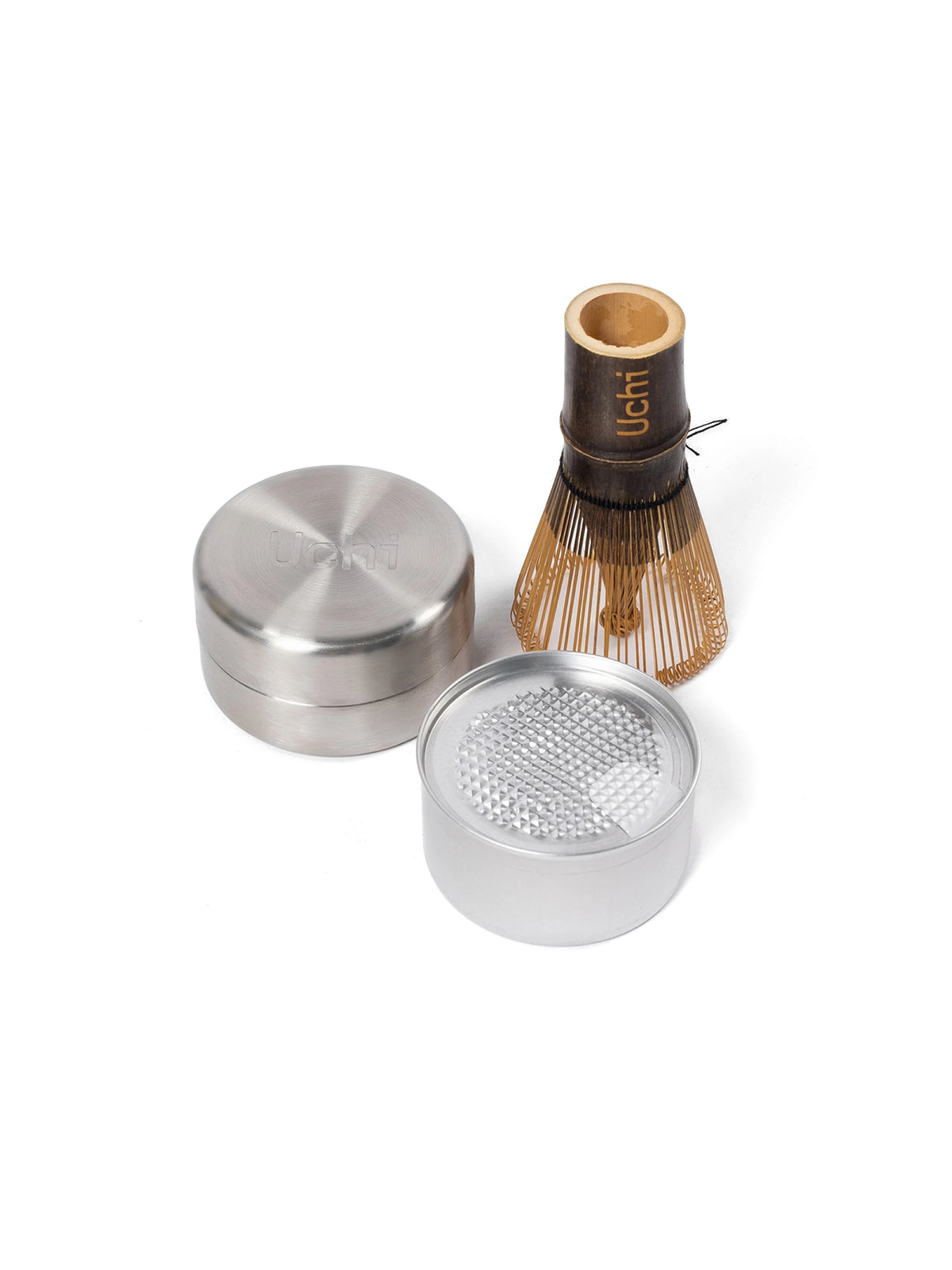
Uchi's Base is an airtight stainless steel canister, kept for life. The opaque material keeps light away from the powder; the airtight closure limits air exchange while closed. It still needs a dry measuring tool and a promptly replaced lid.
Uchi suits home matcha drinkers who want a keep-for-life container and matching preparation tools. The limit is straightforward: a container protects the powder between preparations. It does not correct water temperature, concentration or uneven whisking.
The Pod contains 40g of matcha, about twenty cups, in recyclable aluminium. That cup count describes the product, not a required troubleshooting dose. Changing the amount of powder changes how many bowls it makes.
One levelled Uchi Spoon holds 1 gram. The Whisk is a bamboo chasen with 120 prongs. These details describe measuring and preparation; neither is a promise that every bowl will taste the same regardless of method.
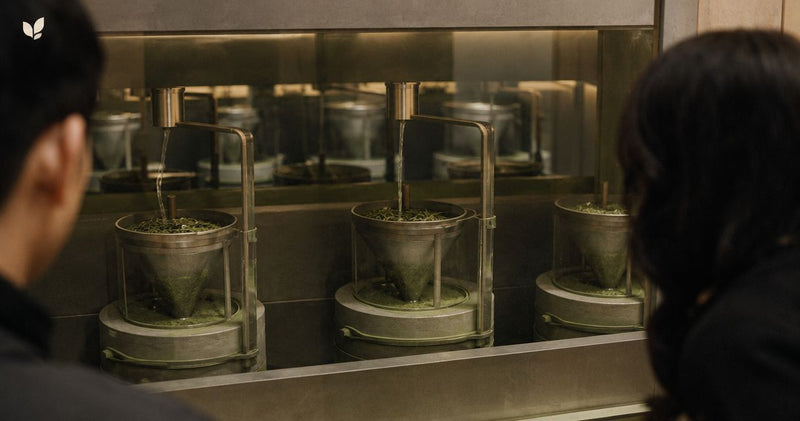
Kaze no Shiro is a first-flush blend composed by the house tea master at Horii Shichimeien. It draws first-harvest tencha from Kyoto, Nara and Shiga and combines Okumidori, Yabukita and Sayamakaori. The tea is shaded for 25 days before harvest and stone-milled at 40 grams an hour.
Those sourcing details describe the tea, not a guarantee of bitterness-free flavour. A blend can have a deliberate character. Storage and preparation still determine how that character reaches the bowl.
The recyclable aluminium also does not make every packaging material recyclable. The foam insert remains a separate material consideration. Keep that distinction clear rather than treating one material description as a claim about the whole package.
Milk and sweetener during troubleshooting
Milk changes the texture and flavour balance of the finished drink. Sweetener changes the perception of bitterness. Both belong to preparation preferences, but neither reveals why the original bowl tasted harsh.
For diagnosis, taste a small amount of the prepared tea before adding either. Then finish the drink in the way you enjoy. This keeps the test useful without turning plain matcha into a rule.
If a bowl only becomes acceptable after additions, repeat the storage and concentration checks. There is no need to interpret that preference as failure. The purpose is to understand the tea, not to adopt someone else's drinking style.
Deciding whether to change the powder
A different powder becomes a sensible next step after repeatable preparation still produces a flavour you do not enjoy. Separate preference from deterioration. Fresh tea with a drying finish and tea that has become stale call for different decisions.
In 2026, keep purchasing criteria concrete: named producer, clear sourcing information and a storage plan for after opening. Broad grade language does not replace those details or predict your preferred bowl.
Do not keep adjusting indefinitely. Once temperature, concentration and dispersion have been checked consistently, the remaining character belongs more clearly to the tea. Choosing another flavour profile is a preference decision, not proof that either tea is wrong.
FAQ
Why does my matcha powder taste bitter?
Matcha powder can taste bitter because of its own flavour profile, preparation temperature or concentration. Check storage first, then change one preparation variable at a time to distinguish harsh preparation from stale flavour.
Does bitter matcha mean the powder has gone bad?
Bitterness alone does not mean matcha has gone bad. Consider aroma, storage history and signs of spoilage separately; do not taste powder with visible mould or an abnormal smell.
Will cooler water make matcha less harsh?
Cooler water is a useful test when matcha tastes harsh. Keep the powder amount and water quantity unchanged, then compare the bowls at a similar drinking temperature.
Can I fix bitter matcha by using less powder?
Using less powder lowers the concentration of the bowl. It also reduces body and flavour intensity, so test the adjustment separately from changes to water temperature.
Does sieving remove bitterness from matcha?
Sieving breaks up clumps; it does not remove the tea's inherent bitterness or reverse deterioration. A smoother bowl can still have the same underlying flavour.
Should I refrigerate opened matcha powder?
Refrigeration requires care with condensation. Let a refrigerated container come to room temperature while still closed before opening it, and keep measuring utensils dry.
Does milk fix bitter matcha?
Milk changes the flavour balance of matcha but does not diagnose the cause of bitterness. Taste the prepared tea before adding milk when troubleshooting, then finish the drink to your preference.
How much matcha does a Uchi Spoon hold?
One levelled Uchi Spoon holds 1 gram of matcha. Keep the water quantity consistent when using that measure to compare preparations.
One last thing
The most useful result is sometimes that the tea is not stale at all. It is simply more concentrated, more drying or different in character from what you enjoy.
Describe the sensation before changing the recipe. Bitter tells you less than aromatic but too intense, smooth but drying, or flat after weeks of careless storage. A precise description turns the next bowl into a deliberate adjustment.