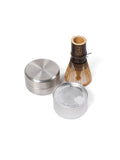
A 40g Pod makes about 20 cups at 2g per cup. Measured portions give 40 cups at 1g or 13 full cups at 3g, before allowing for powder left on the Spoon, Sieve or Bowl.
- 40g matcha how many servings: about 20 cups at 2g each, before handling losses.
- Uchi matcha suits home drinkers who want measured portions and permanent airtight storage.
- A larger drink does not use more matcha unless the powder dose increases.
- Count grams per preparation, not the capacity of the cup.
The Pod contains 40g of matcha. Divide that weight by the grams used for each preparation to calculate the number of cups. The stated yield of about twenty cups corresponds to 2g per cup.
| Powder per cup | Full cups from 40g | Powder remaining |
|---|---|---|
| 1g | 40 | 0g |
| 2g | 20 | 0g |
| 3g | 13 | 1g |
These are calculated yields, not separate product sizes or promised results. They assume the full contents reach the cup without loss.
For a 2026 home routine, use 20 cups as the planning figure when each preparation contains 2g. Choose a different dose for taste, then calculate the yield from that dose rather than keeping the twenty-cup assumption.
Why this matters
The cup count tells you how much matcha is present. Storage determines how you care for it between preparations. Air and light matter from the first opening, even when plenty of powder remains.
The Base is an airtight, light-proof stainless steel canister, kept for life. Close it after measuring and keep it away from heat. An opaque container blocks light; it does not make a warm place cool.
There is no reason to stretch a Pod by making a drink you do not enjoy. Equally, a larger glass does not automatically require more powder. Decide on the preparation first. Let the arithmetic follow.
A 2g serving: about 20 cups
At 2g per preparation, 40g provides twenty measured portions. This is the calculation behind the Pod’s stated yield of about twenty cups. It is the clearest starting point for understanding the quantity.
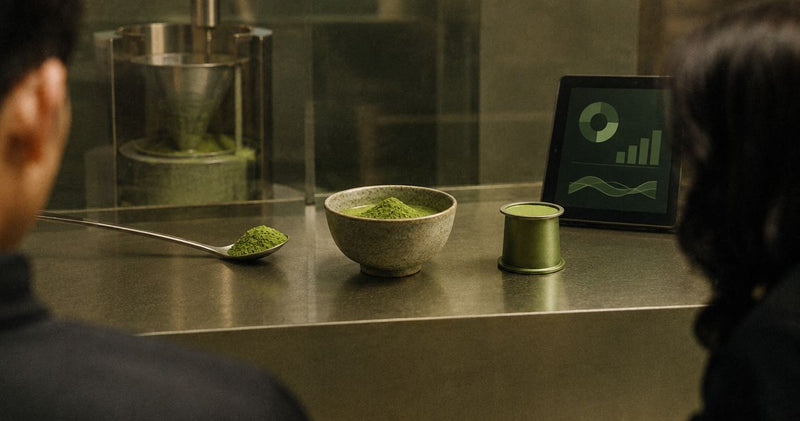
One leveled Uchi Spoon holds 1 gram. Two leveled measures therefore correspond to the 2g serving used here. A heaped measure is not the same measure and should not be counted as one.
Use the 2g calculation for a repeatable twenty-cup routine. Its limitation is equally clear: the count changes as soon as the amount of powder changes. Extra powder added after tasting belongs in the total for that preparation.
For example, adding another 1g turns a 2g preparation into a 3g preparation. It does not remain one of twenty equal servings simply because it occupies the same cup.
A 1g serving: 40 cups by weight
At 1g per preparation, 40g divides into forty portions. This is a mathematical alternative, not a statement that every drink should use 1g. The amount of water or milk still determines how concentrated the finished drink tastes.
A 1g dose suits a deliberately lighter preparation when the other ingredients stay unchanged. Its limitation is dilution: doubling the cup count by halving the powder does not preserve the same drink.
Keep the distinction visible when planning. Forty cups at 1g and twenty cups at 2g contain the same total amount of matcha, distributed differently.
If the aim is to repeat a drink already enjoyed, retain its measured dose. Changing the dose solely to reach a larger serving count changes the preparation as well.
A 3g serving: 13 full cups, with 1g remaining
At 3g per preparation, 40g gives thirteen full portions and leaves 1g. Thirteen portions use 39g. The remaining gram is not enough for another identical preparation.
A 3g dose suits someone deliberately choosing more powder in the same amount of liquid. The trade-off is a lower cup count. It is not an upgrade or a quality measure.
Count only complete portions when planning identical drinks. Calling the remainder a fourteenth cup would conceal the smaller dose in that final preparation.
The remaining 1g can be measured into a different preparation. Keep its quantity explicit rather than assuming that the last cup matches the first thirteen.
Why the serving count varies
The weight is fixed. The way it is measured and used is not. Four practical factors explain the difference between the calculated count and the cups actually made:
- Powder dose. A 1g, 2g or 3g preparation draws a different share from the same 40g.
- Level or heaped measures. The stated 1g Spoon measure is leveled. A heap changes the amount without changing the number of scoops counted.
- Extra powder. Any addition after the first measurement belongs to that drink’s total dose.
- Handling loss. Powder left on tools, spilled during measuring or not transferred into the drink reduces the usable total.
For 2026 planning, record the dose actually used rather than the dose intended. A preparation that begins with 2g and receives another gram uses 3g, regardless of the recipe name.
Water, milk and ice change the finished drink’s volume. They do not change the quantity of powder remaining in the Pod unless more matcha is added.
A repeatable measuring routine
Consistency starts before water touches the powder. Keep the measuring tool dry and separate the measuring step from the wet preparation area.
- Measure dry. Use a scale for the chosen gram weight, or leveled measures with the Spoon’s stated 1g capacity. Do not assume another scoop has the same capacity.
- Close promptly. Close the Base after taking out the required powder. There is no need to leave it open while preparing the drink.
- Sift separately. Pass the measured portion through a dry Sieve. This breaks apart clumps before water is added.
- Prepare the drink. Add liquid and whisk. Keep wet tools away from the stored powder.
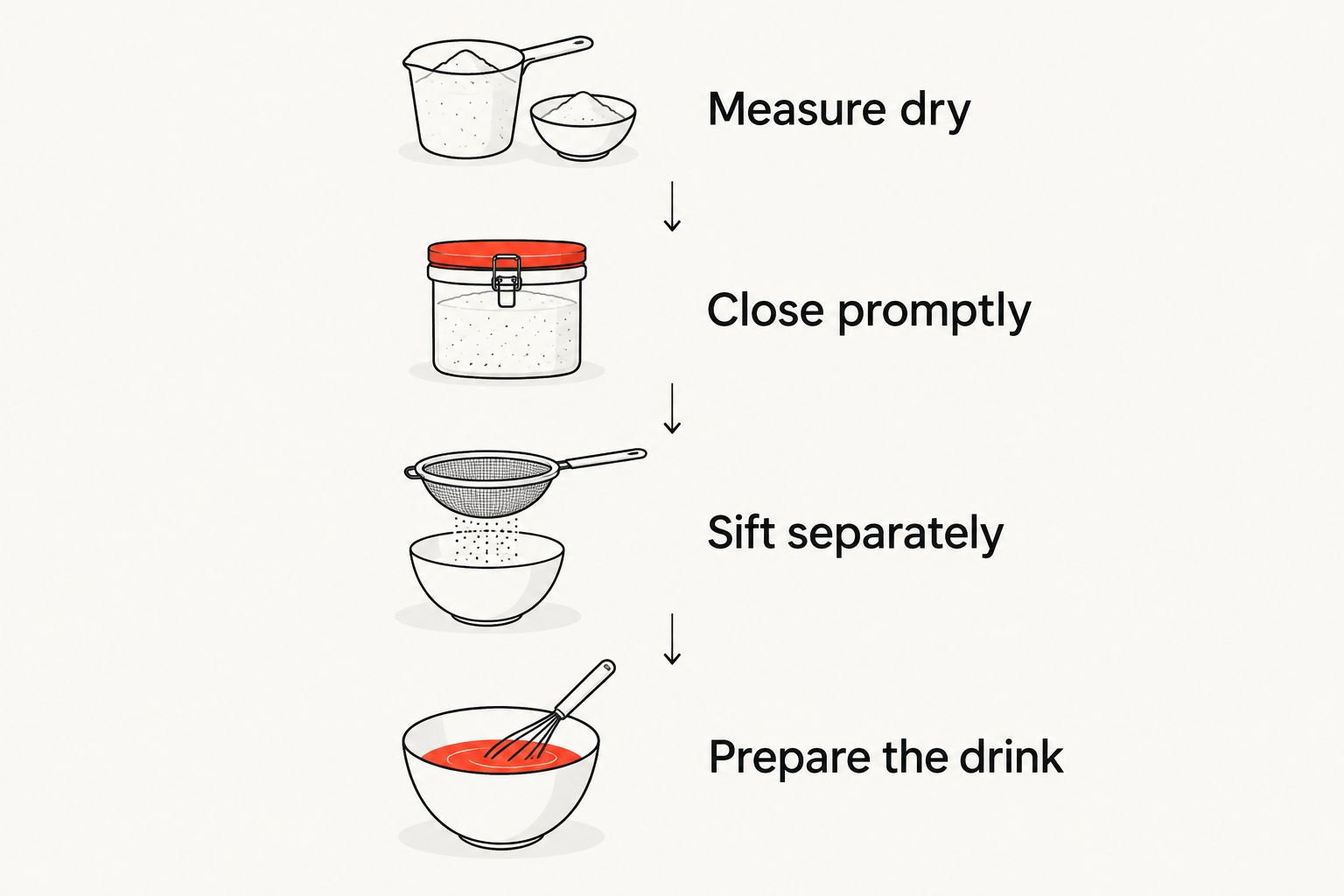
This routine separates two tasks that are easy to blur: measuring a portion and making a drink. It also makes the cup count easier to understand. When the portion stays consistent, there is less guesswork about what remains.
A Sieve does not create additional servings. A Whisk does not change the powder dose. These tools affect preparation; the serving calculation remains a question of grams.
Cup size and serving size are different
A cup is a vessel. A serving, for this calculation, is the amount of matcha used in one preparation. The two are not interchangeable.
Consider two drinks that each contain 2g of powder. One uses less liquid; the other uses more. Both draw the same amount from a 40g Pod, so both belong to the twenty-serving calculation.
Now consider two drinks in identical glasses, one containing 2g and the other 3g. The glasses look like equal units, but the second preparation uses more matcha. Counting glasses alone will not explain how quickly the powder is used.
Measure powder to count servings. Measure liquid to repeat the drink. Keeping both quantities consistent makes taste comparisons more useful than changing the cup, dose and liquid together.
How long does a 40g Pod last at one cup a day?
Twenty days is the calculated duration at one 2g cup per day. This assumes daily use, consistent measuring and no handling loss. It describes consumption, not a freshness guarantee.
For a 2026 household routine, distinguish between drinking days and calendar days. Skipping a preparation leaves more powder; it does not pause the time since opening.
Storage still needs attention throughout. Keep the Base closed, use dry tools and choose a position away from heat. A serving calculation cannot supply a shelf-life date.
How long does a 40g Pod last for two people?
Ten days is the calculated duration when two people each drink one 2g cup daily. The household uses 4g per day, so 40g supplies ten days of those preparations.
This assumes both people use the same dose. If their preparations differ, add the actual daily amounts before calculating how long the contents will last.
The relevant unit is total grams used by the household. The number of people matters only through the drinks they make.
Does a matcha latte use more of the Pod?
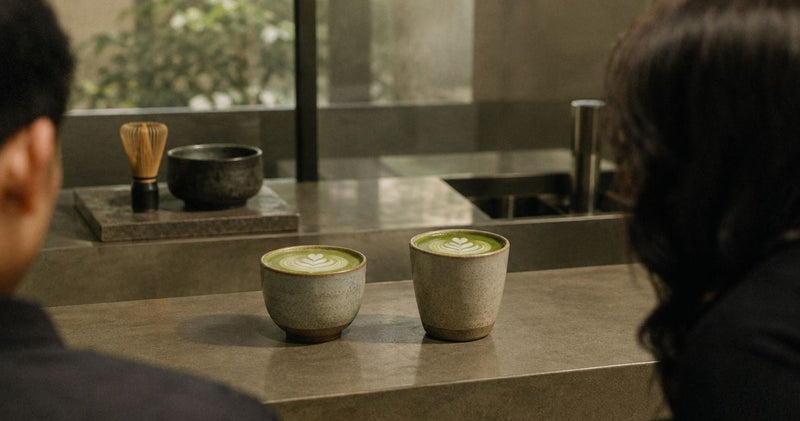
Twenty servings remains the count for a latte made with 2g of matcha. Milk does not use additional powder. A latte made with 3g follows the thirteen-full-serving calculation instead.
There is no single latte serving count independent of the recipe. Choose the powder dose and liquid quantity together, then keep them consistent when comparing preparations.
Choosing the first purchase without changing the cup count
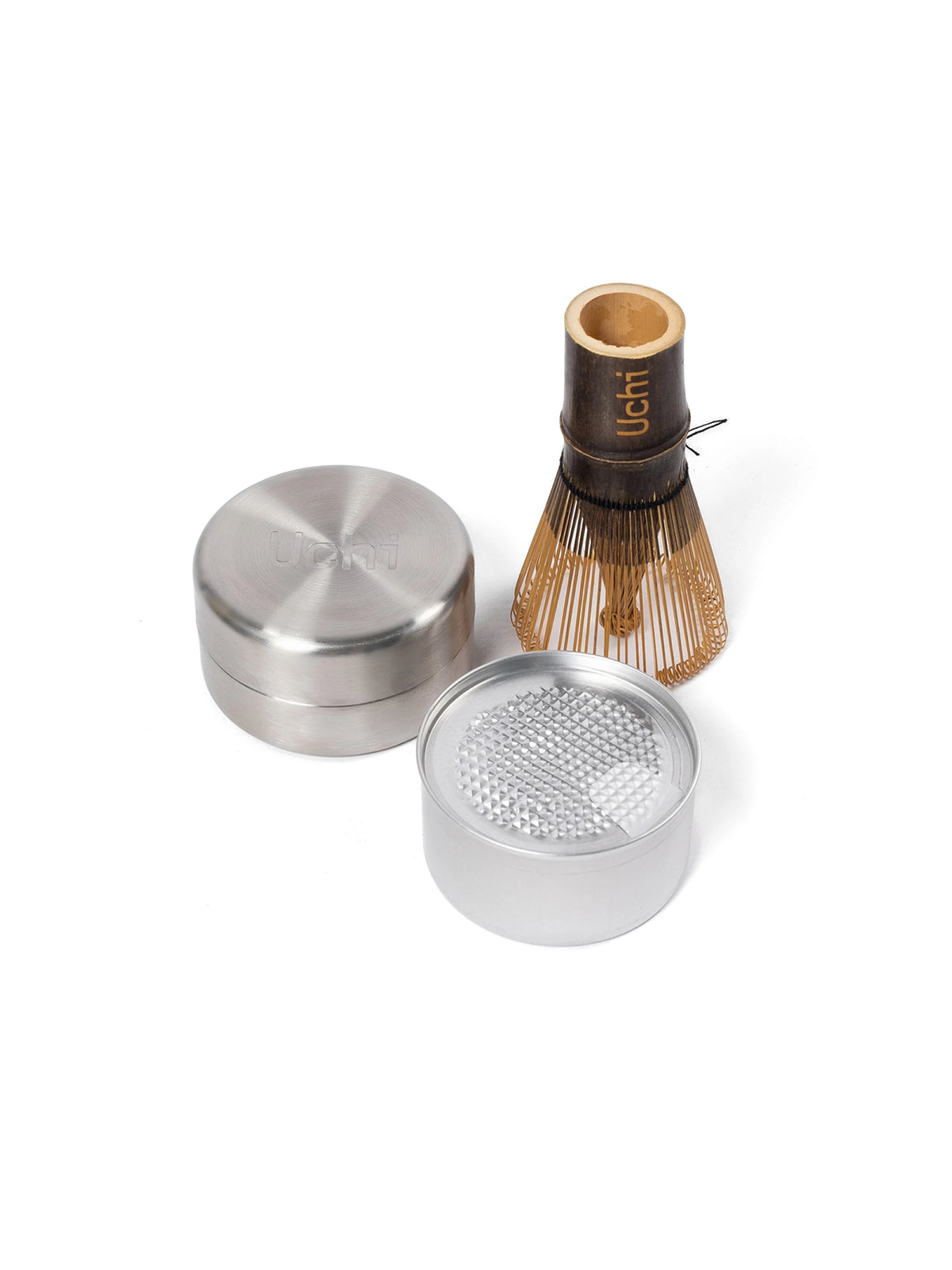
Home contains the Base and a Pod. Complete contains the Base, Pod, Bowl, Spoon, Sieve and Whisk. Both include 40g of matcha; the tools do not increase that quantity.
| Choice | Suits | Limitation |
|---|---|---|
| Home | A first purchase with tools already owned | No preparation tools included |
| Complete | A first purchase needing the named tools | Duplicates tools already owned |
| Pod | An existing Base owner | Does not include the Base |
Uchi matcha suits home drinkers who want measured portions and permanent airtight storage. The useful choice is the one that fits the objects already in the kitchen, not the one with a different imagined serving count.
For a 2026 first purchase, separate storage from preparation. The Base handles storage. The Bowl, Spoon, Sieve and Whisk serve distinct preparation tasks. Neither choice removes the need to measure the powder.
FAQ
How many servings are in 40g of matcha?
40g of matcha makes about 20 servings at 2g each. It also divides into 40 portions at 1g or 13 full portions at 3g, with 1g remaining.
How many spoonfuls make a 2g serving?
Two leveled Uchi Spoon measures make a 2g serving because one leveled Spoon holds 1 gram. Do not apply that capacity to an unrelated scoop or a heaped measure.
Will a larger cup use more matcha?
A larger cup uses more matcha only when more powder is added. Two drinks containing 2g each use the same share of a 40g Pod, regardless of their liquid volume.
How many days does a Pod last if I drink matcha daily?
A 40g Pod provides twenty days at one 2g preparation daily, before handling losses. That is a consumption calculation, not a shelf-life statement.
Does sifting change the number of servings?
Sifting does not change the measured amount of matcha. Powder left on the Sieve or other tools reduces the amount that reaches the drink.
Do Home and Complete contain different amounts of matcha?
Home and Complete each contain a 40g Pod. Complete adds the Bowl, Spoon, Sieve and Whisk; Home contains the Base and Pod.
Is twenty cups the serving estimate to use in 2026?
Twenty cups remains the calculation for 40g used at 2g per preparation in 2026. A different dose changes the count; the calendar does not.
One last thing
The last gram deserves an accurate count. After thirteen 3g preparations, 1g remains, not another matching serving.
Keep a simple record of the dose that tastes right. That single measurement tells you more about the next Pod’s cup count than the size of the glass or the number of scoops remembered afterwards.