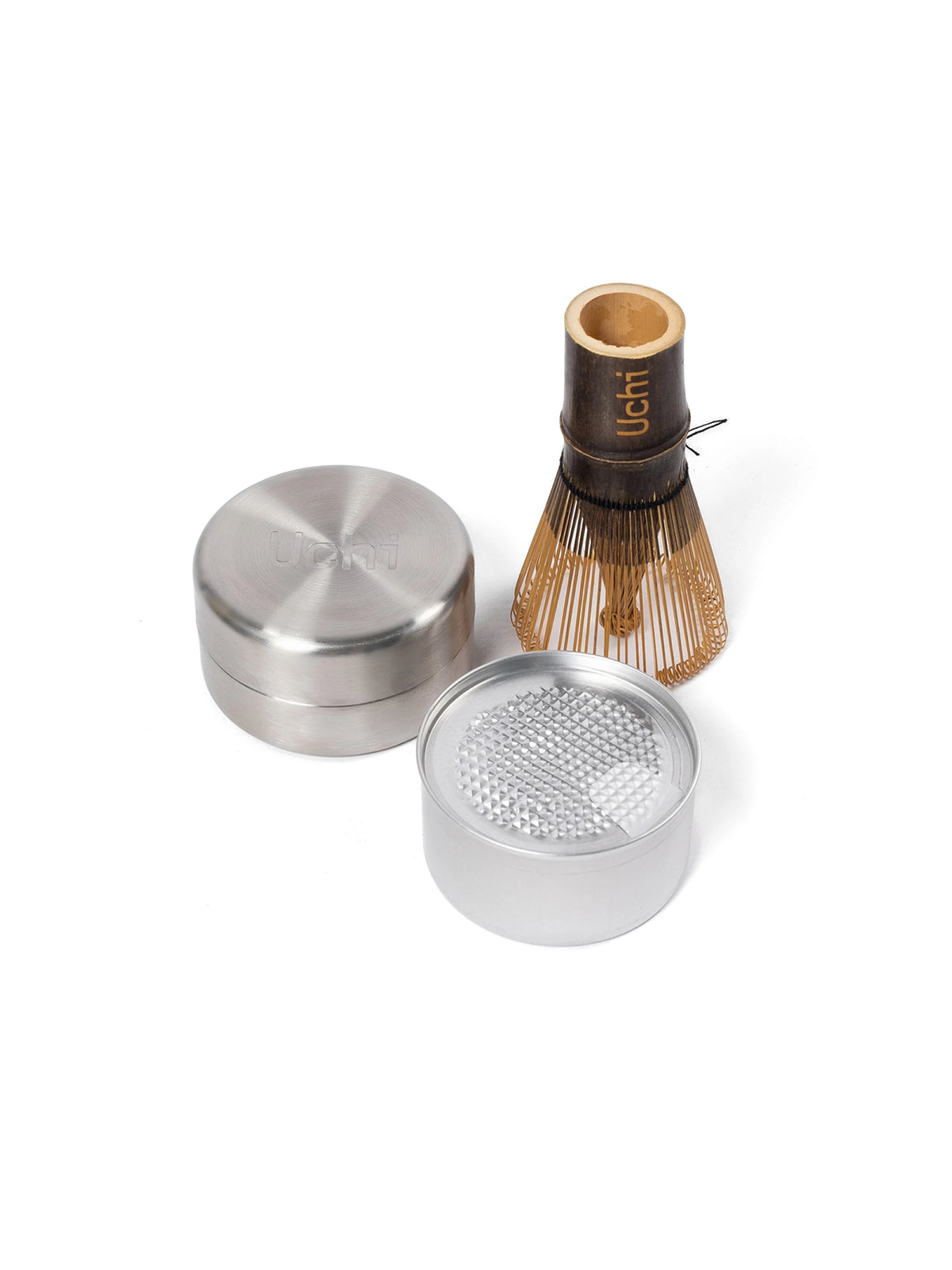
Portion matcha powder just before preparation, then close the container before adding water or whisking. For a shared household, 2g per cup is a useful planning quantity: a 40g Pod provides about twenty cups, and one leveled Uchi Spoon holds 1 gram. Keep the measuring tool dry; a consistent portion is only useful if the remaining powder stays protected from air, light and moisture.
- Portion matcha powder immediately before preparation, rather than leaving measured servings exposed.
- A 40g Uchi Pod provides about twenty cups; use 2g per cup for household planning.
- Measure everyone's powder before adding water, then close the shared container.
- Keep the scoop dry and agree on portions so different people can repeat the same preparation.
Why this matters
A shared container gets opened by different people, often at different times. The small habits matter: whether the scoop is dry, whether the lid stays off during preparation, and whether everyone means the same thing by a spoonful.
Agree on the portion, not on one person's preferred strength. A common measuring method makes individual preferences easier to repeat without leaving the powder exposed while someone decides.
The Spoon gives that method a defined reference: one leveled scoop holds 1 gram. A heaped scoop does not represent the same measure. Keep the distinction clear when several people share the container.
The practical sequence is simple. Prepare the dry tools, measure the powder for everyone drinking now, close the container, then begin the wet preparation.
- Prepare dry tools. Set out a dry scoop, a dry sieve and the receiving bowls. Keep them away from rising steam.
- Confirm the portions. Establish who is having matcha now and how much powder each person wants.
- Measure separately. Weigh each portion, or use a consistent leveled scoop with a known measure.
- Close the container. Do this before heating water nearby, prewarming bowls or whisking.
- Prepare each drink. Keep any tool that touches water away from the stored powder.
Measuring several portions together does not require mixing all the drinks together. Separate bowls preserve individual choices about strength and the finished drink.
If someone is drinking later, leave that portion inside the closed container. Setting powder aside in an open bowl adds exposure without helping the person who is not yet ready.
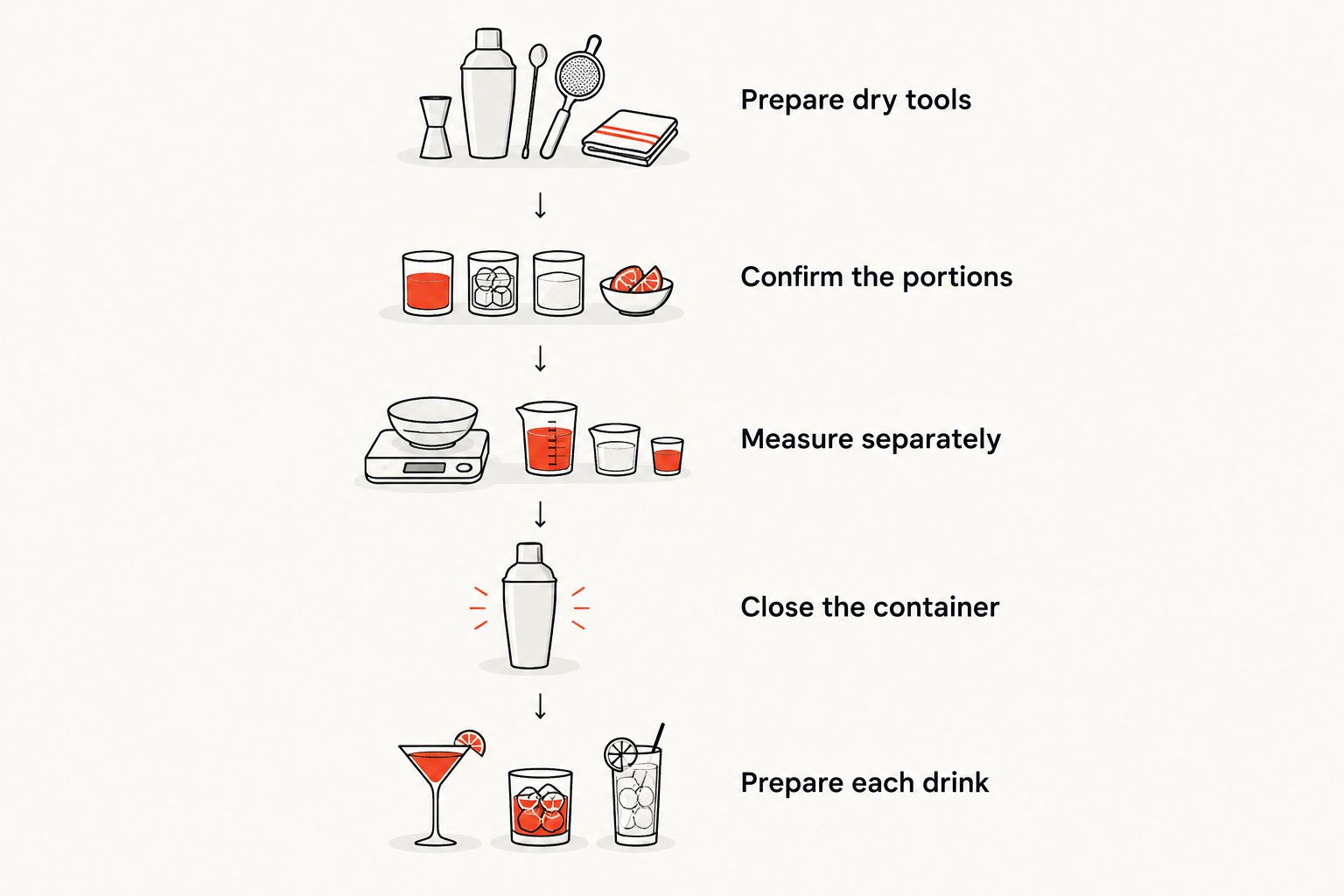
The useful boundary is between dry handling and wet preparation. Once that boundary is clear, several people can share the same powder without sharing the same bowl or recipe.
Choosing when to portion
There are several workable arrangements. The difference is how they handle timing, exposure and responsibility for measuring.
| Approach | Useful when | Limitation |
|---|---|---|
| Measure together | People drink at the same time | Everyone's dry bowl must be ready |
| Measure individually | People drink at different times | Each person must close the container promptly |
| Portion ahead | A later serving needs preparing in advance | Requires separate airtight storage and more handling |
Measure together when the household is ready together. Measure individually when schedules differ. Neither approach needs an open bowl of powder waiting on the counter.
Portioning ahead adds a transfer and another container to keep clean and dry. Reserve it for a practical need, rather than treating it as an automatic improvement.
For a 2026 household routine, fewer handling steps are a sensible starting point. Add a step only when it solves a real problem, such as someone needing a separately stored portion.
Why household matcha quantities vary
The number of drinkers is only part of the calculation. These factors determine how quickly the shared powder is used:
- Portion size. The 2g example is a planning reference. A different weighed portion changes the number of cups.
- Cups per person. Count drinks, not just people living in the home.
- Shared timing. Drinking together allows portions to be measured during one opening; staggered schedules require separate handling.
- Measuring method. Leveled and heaped scoops are not interchangeable. Neither are unrelated household spoons.
- Powder left behind. Spills and powder remaining on utensils reduce the amount that reaches the cup.
For 2026 planning, write down the household's actual pattern before estimating how long a container will last. Two people who drink occasionally do not use powder at the same rate as two people who each prepare several cups.
The calculation is straightforward: multiply the grams in each person's portion by the cups they expect to prepare. Add those quantities for the household total.
Keep the result separate from freshness guidance. Knowing when the powder will run out does not establish how long it should be stored after opening.
Keep dry handling separate from water
A scoop that has touched a wet bowl should not return to the powder. Use a clean, dry tool instead. Do not wipe a visibly wet scoop and assume it is ready for storage contact.
Prewarming bowls belongs after the powder container is closed, or in a separate preparation area. Steam and stored matcha should not share the same working space.
If a bowl has already been prewarmed, do not use it to hold powder unless it has been thoroughly dried. The simpler shared routine is to measure into dry bowls before beginning any wet preparation.
The same rule applies to the sieve. Keep it dry while handling powder, and allow washed tools to dry fully before the next preparation.
Consistent portions without identical drinks
A shared measure does not require a shared preference. One person can use a different portion while everyone follows the same dry-handling routine.
Record that difference in grams. A note saying that someone prefers a stronger drink is less useful than a repeatable measure, because different people interpret strength differently.
When adjusting a preparation, change one element at a time. Keep the powder quantity steady while adjusting the liquid, or keep the liquid steady while adjusting the powder. That makes the next cup easier to repeat.
For a routine established in 2026, the useful record is small: the person's name, powder quantity and preparation preference. There is no need to record every cup unless the household wants to track consumption.
FAQ
How much matcha powder should I measure for each person?
Use 2g per person as the planning reference for the examples here. A 40g Pod provides about twenty cups; individual preparations can use a different measured portion.
How many scoops make a 2g portion?
Two leveled Uchi Spoon measures make a 2g portion, because one leveled Spoon holds 1 gram. This measure does not apply to unrelated scoops or heaped spoonfuls.
Should I measure everyone's matcha at the same time?
Measure everyone's matcha together when everyone is ready to drink. Keep the portions in separate dry bowls and close the container before adding water.
Can I leave a measured portion out for someone drinking later?
Leave a later portion inside the closed container rather than exposed in an open bowl. If advance portioning is necessary, use a clean, dry, airtight container.
How long does 40g last for two people?
A 40g quantity supplies ten shared rounds for two people using 2g each. That equals ten days only when both people have one cup daily; it is not a storage-life recommendation.
Can the same scoop touch the bowl and then return to the powder?
Keep any scoop that has touched water out of the stored powder. Use a clean, fully dry scoop for measuring.
One last thing
Do not divide the remaining powder by eye to make one final round stretch across the household. Weigh it first. That reveals whether there is enough for the usual portions or whether the final preparation needs a deliberate adjustment.
A useful 2026 kitchen rule is easy to remember: dry tools, measured portions, closed container. The routine protects what remains, not just what is being prepared.