Shade-grown ceremonial matcha gets part of its character from reduced sunlight before harvest, which influences the leaf’s colour and flavour. Shade alone does not determine the finished tea: harvest, cultivar, blending, milling and storage also matter. Once the powder reaches home, protection from air, light and moisture helps preserve the character developed in the leaf.
- Ceremonial matcha needs more than a grade label: look for a named producer, harvest information and clear storage guidance.
- Uchi ceremonial matcha uses Kaze no Shiro, a first-flush blend shaded for 25 days before harvest.
- Shade influences the leaf; blending shapes the finished flavour, and storage protects it after opening.
- Green colour is useful evidence, not a complete judgement of freshness or taste.
Why this matters
A green powder reveals less than it appears to. Lighting changes its appearance. A photograph cannot show its aroma, and a grade description cannot explain how it has been kept since milling.
For a ceremonial matcha purchase in 2026, start with traceable information rather than an adjective. A named producer, an identified tea and a clear account of harvest and processing give something concrete to assess. The guide to ceremonial matcha labels and producer details explains how to read those distinctions.
Freshness connects that information to the bowl. Careful growing and milling do not remove the need for careful storage. Choose the leaf with attention, then give its storage the same attention.
Shade-grown matcha comes from tea plants whose sunlight is reduced before harvest. This changes how the leaf develops, including its chlorophyll and flavour-related compounds. The result is part of matcha’s characteristic green colour and savoury taste, not a guarantee that every shaded tea will taste alike.
Matcha is made by milling tencha into powder. Shade belongs to the growing stage; milling belongs to the processing stage. Keeping those stages separate makes product descriptions easier to understand.
The word ceremonial does not replace either explanation. It is not a universally standardised grade with a single specification across producers. Two teas carrying that word can have different harvests, blends and sensory characters.
| Detail | What it explains |
|---|---|
| Shade | How sunlight was managed before harvest |
| Harvest | Which picking the leaves came from |
| Cultivars | The plant varieties contributing to the tea |
| Blend | How selected teas form the finished flavour |
| Milling | How tencha becomes powder |
| Storage | How the powder is protected afterwards |
Read these details together. A shade duration is meaningful, but it cannot stand in for the identity of the tea, its handling or its taste in water.
What shade changes in the leaf
Reduced sunlight influences the balance of compounds within tea leaves. Chlorophyll contributes to green colour. Amino acids contribute to flavour, including the savoury character often described as umami. These are descriptions of the tea, not promises about what drinking it does to the body.
Shade is therefore relevant to both appearance and taste. It is not a finishing treatment applied to powder. Its effects begin while the leaf is still on the plant, before picking and processing.
A duration also needs context. A statement that leaves were shaded for 25 days describes one part of cultivation. It does not, by itself, establish the shading method, the conditions in the field or the character of the finished blend.
More shade is not a standalone buying rule. Look for a coherent account of the tea rather than treating a longer duration as an automatic improvement.
The same restraint applies to colour. A vivid powder deserves attention, but colour should be assessed alongside aroma and taste. Screen settings, photography and room lighting make online colour comparisons especially limited.
A specific example: Kaze no Shiro
Kaze no Shiro gives these distinctions a concrete form. Its producer is Horii Shichimeien, founded in Uji, Japan, in 1879. It is a first-flush blend composed by the house tea master, drawing first-harvest tencha from Kyoto, Nara and Shiga.
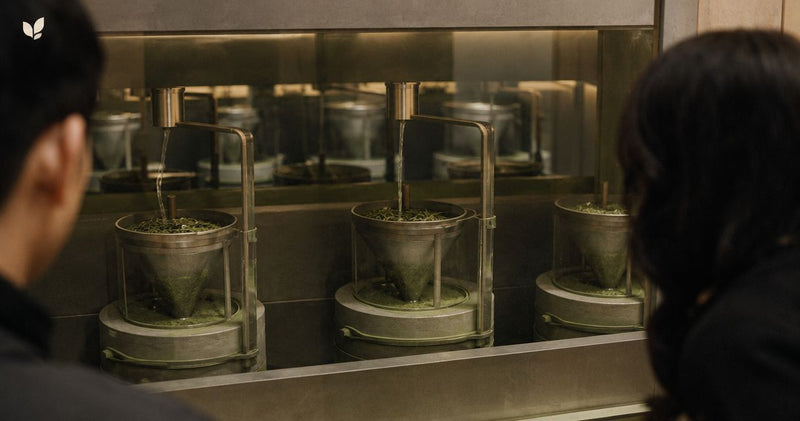
The blend weaves three cultivars: Okumidori, Yabukita and Sayamakaori. The tea is shaded for 25 days before harvest and stone-milled at 40 grams an hour. Those details describe different stages of its making; none should be used as shorthand for all the others.
The cultivar names identify the components, but they do not disclose the proportions. There is no reason to assume equal shares or assign a fixed tasting note to each component in the finished bowl.
Blending is central to this tea’s identity. The house tea master composes a flavour from selected material rather than presenting a single cultivar on its own. That distinction matters when reading origin language: Kaze no Shiro is not a single-origin, single-estate or single-cultivar tea.
A 2026 product description should preserve that precision. Uji identifies the producer’s home, while Kyoto, Nara and Shiga describe the stated sources of the blend’s first-harvest tencha. Both facts belong in the account.
Why ceremonial matcha varies
Shade explains part of the leaf’s character. The finished powder reflects a sequence of decisions, and changing one part does not leave the others unchanged.
- Harvest. First-harvest information identifies when the source leaves were picked. It does not establish how the powder was stored afterwards.
- Cultivars. Different tea plant varieties contribute different characteristics. Their names identify material, not a complete flavour prediction.
- Blending. The selection and balance of component teas shape the finished profile. A blend should be judged as a deliberate composition.
- Milling. Milling turns tencha into powder. A stated milling rate describes production, not how long an opened container will retain its character.
- Storage. Exposure to air, light, heat and moisture affects the powder after processing. Home handling remains part of the final result.
These factors explain why a single grade word cannot describe an entire tea. They also explain why an impressive growing detail does not excuse unclear handling information.
For home drinking, the useful question is whether the description connects the field, the producer and the powder. A clear account does not need to turn every detail into a claim of superiority.
Reading a ceremonial matcha description in 2026
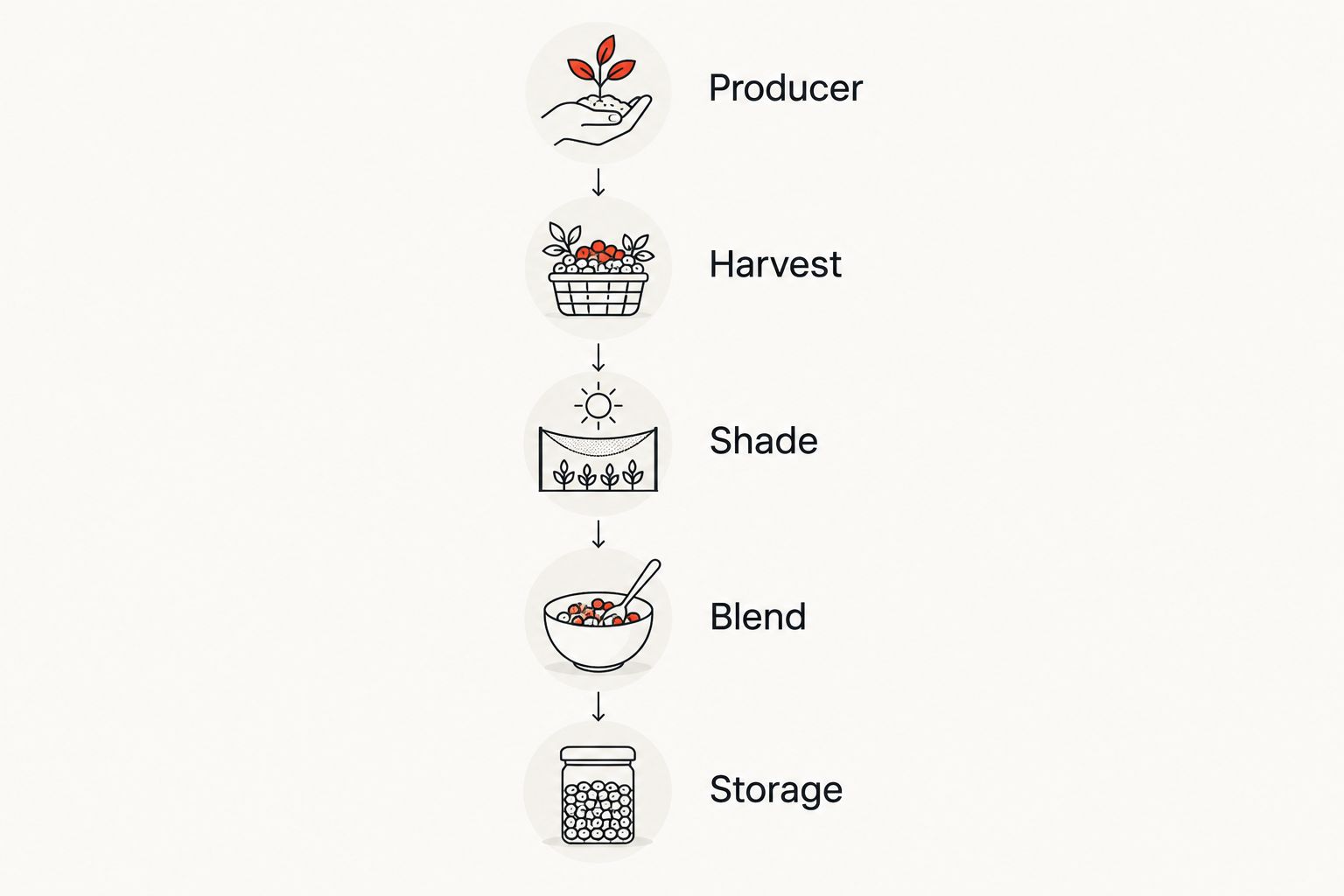
A product page should make the tea easier to identify. Read its details in a consistent order, separating statements about cultivation from statements about processing and storage.
- Producer. Find the name of the tea producer. A retailer’s name alone does not identify who made the tea.
- Harvest. Read the harvest wording literally. First harvest describes the picking; it does not mean recently milled or recently packed.
- Shade. Look for a stated cultivation detail. Do not turn a duration into a ranking without understanding the rest of the tea.
- Blend. Check whether the description names a blend, a cultivar or an estate. These terms are not interchangeable.
- Storage. Read how the powder should be kept, including what changes once it is opened.
This sequence keeps the decision grounded. It also prevents one attractive detail from carrying more meaning than it supports.
A precise description still cannot choose a personal taste preference. It gives a sound basis for tasting. The bowl remains the place to decide whether the tea’s aroma, texture and flavour belong in a daily routine.
Protecting the character after opening
Matcha is finely ground leaf. Keeping it exposed while preparing everything else adds an avoidable part to its handling. Open the container when needed, remove the portion and close it again.
Light protection matters too. An opaque container keeps light away from the powder; an airtight closure limits exchange with the surrounding air. Neither feature reverses deterioration that has already happened.
Moisture requires separate attention. Keep utensils dry before they touch the powder. Do not open a cold container immediately in a warm, humid room, where condensation can form on cold surfaces. If the tea is refrigerated, let the closed container reach room temperature before opening.
Keep matcha away from strong kitchen odours. A place beside spices or coffee is convenient, but convenience is not the same as protection. Clean, dry storage avoids introducing another influence into the tea’s aroma.
For an opened container in 2026, record the opening date rather than relying on memory. That date is a reference for observing change, not a universal expiry rule. Notice whether the aroma becomes less distinct or the flavour loses definition over successive preparations.
A storage-led choice for home
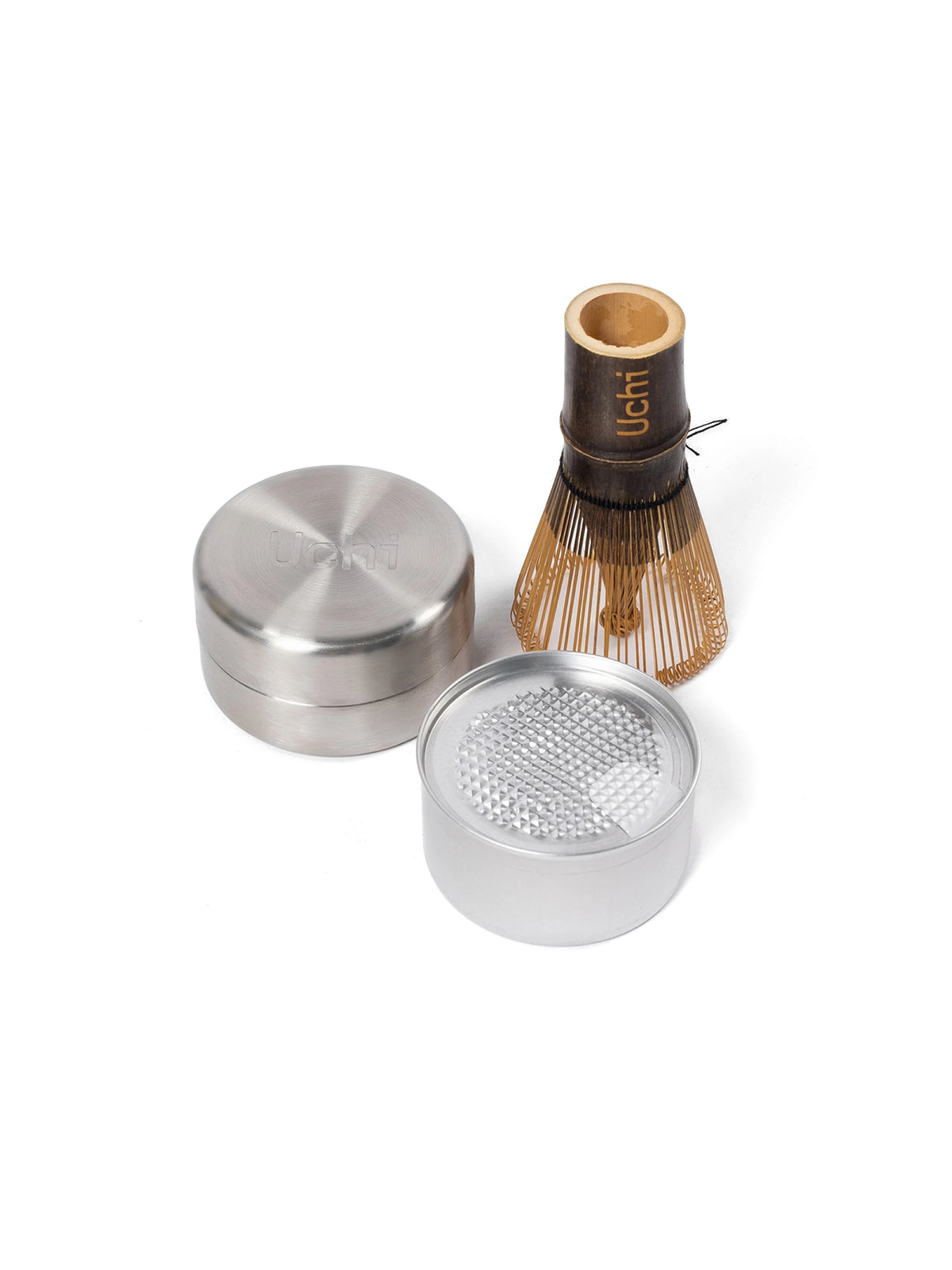
Air and light protection come before the idea of a refillable system. The Uchi Base is an airtight stainless steel matcha canister, kept for life. Its purpose is concrete: provide a durable, light-blocking place to keep the tea closed between preparations.
The Pod is the matcha itself: 40g of Kaze no Shiro, about twenty cups, in recyclable aluminium. The quantity describes the product, while the approximate cup count depends on the portion used. Neither should be read as a promise of identical servings for every preparation.
Uchi ceremonial matcha suits home drinkers who want a named first-flush blend and dedicated airtight storage. The limitation is equally clear: a protective container still depends on careful use. Leaving it open, introducing damp utensils or exposing cold powder to condensation works against its purpose.
Refillable does not mean that every material question is resolved. The aluminium is recyclable, and the packaging also includes a foam insert. Those are separate facts; one does not cancel the other.
Choose storage for what it does between cups. The object matters because the powder spends far more of its life closed away than being whisked.
Shade duration and flavour
The stated 25 days of shade for Kaze no Shiro describe its cultivation, not a universal threshold for ceremonial matcha. Duration belongs alongside cultivar, harvest and blending information. It cannot independently predict how much sweetness, savouriness or bitterness a person will perceive.
Taste the tea without assuming that one production number must explain the whole bowl. Water and preparation also influence the result, so keep the method consistent when judging changes in the powder.
Milling speed and freshness
The stated 40 grams an hour describes how Kaze no Shiro is stone-milled. It does not provide a milling date, a packing date or an opened-storage duration. Slow production and recent production are different statements.
In 2026, keep those distinctions intact when comparing descriptions. A precise rate is useful production information. Freshness still requires attention to the tea’s handling and the way it is kept at home.
FAQ
Does ceremonial matcha always mean shade-grown tea?
Matcha is made from shade-grown tencha, but ceremonial is not a universally standardised grade. Read the producer, harvest and processing details rather than relying on the grade word alone.
How long is Kaze no Shiro shaded before harvest?
Kaze no Shiro is shaded for 25 days before harvest. That duration describes cultivation and should be read alongside its first-harvest sourcing and blend information.
Does greener matcha always taste better?
Greener matcha does not automatically taste better. Colour is one observation; aroma, flavour, storage and the conditions under which the colour is viewed also matter.
Is Kaze no Shiro a single-origin matcha?
Kaze no Shiro is a first-flush blend drawing first-harvest tencha from Kyoto, Nara and Shiga. It combines Okumidori, Yabukita and Sayamakaori and should not be described as single origin, single estate or single cultivar.
How much matcha is in the Pod?
The Pod contains 40g of matcha, about twenty cups. The cup count is approximate because the amount used for each preparation varies.
Can an airtight container restore stale matcha?
An airtight container cannot restore stale matcha. It helps protect the powder from further exposure, but it does not reverse changes that have already occurred.
Should I open matcha straight from the refrigerator?
Keep refrigerated matcha closed until the container reaches room temperature. Opening it while cold in warm, humid air risks introducing condensation.
One last thing
A growing detail and a storage habit belong in the same conversation. Twenty-five days of shade happen before harvest. Closing the container happens at home, every time the tea is prepared.
For the next Uchi bowl, make that small sequence deliberate: prepare the dry utensils, open the container, take the portion and close it. Protect the powder before making the drink. There is no elaborate ritual to add. Just less unnecessary exposure between the leaf’s making and its taste in water.