First-harvest ceremonial matcha identifies an early harvest, but the words alone do not establish when the tea was milled, packed or opened. Read the producer, harvest description and handling information together: air and light can change the colour and taste of matcha after the work at the farm is finished.
- Ceremonial matcha needs producer, harvest and storage information; the grade wording alone is not a freshness record.
- First harvest describes the leaves’ place in the picking season, not the powder’s milling or packing date.
- Uchi suits home matcha drinkers seeking a named first-harvest blend and an airtight stainless steel Base.
- Kaze no Shiro combines first-harvest tencha from Kyoto, Nara and Shiga; it is not single origin.
Why this matters
Matcha reaches the bowl as a finely milled powder. Its exposure to air, light and moisture matters, including after the container is opened at home. A harvest description explains part of its production history. It does not describe everything that happened afterwards.
For a first purchase in 2026, separate the language of harvest from the language of freshness. A named producer and a clear account of the leaves tell more than a grade word standing alone. A suitable container then protects the powder during daily use.
The guide to ceremonial matcha labels, producer and packing details explains how these pieces fit together. Here, the focus is narrower: what first harvest means, what it leaves unanswered and how to read it without filling the gaps with assumptions.
First harvest describes when leaves were picked within the growing season. It does not describe when the finished matcha was packed.
Read each term for the information it actually supplies. Several terms can appear on the same product because they describe different parts of production. None should be asked to stand in for all the others.
| Label wording | What it tells you | What it leaves open |
|---|---|---|
| First harvest | The first seasonal picking | Milling and packing dates |
| Ceremonial matcha | The seller’s grade description | Detailed harvest information |
| Blend | Leaves are combined | Regions and cultivars used |
| Stone-milled | The milling method | When milling happened |
A first-harvest statement is useful. It becomes more informative when a producer explains the tea behind it: the source regions, cultivars, shading and milling method. Those details describe choices rather than relying on a single adjective.
Do not turn a short description into a longer claim. First harvest does not mean single cultivar. A producer based in Uji does not mean every leaf came from one Uji farm. Stone-milled does not mean freshly milled on the day of purchase.
For ceremonial matcha in 2026, the useful question is not how many quality words fit on the label. It is whether the available information distinguishes leaf selection, production and storage.
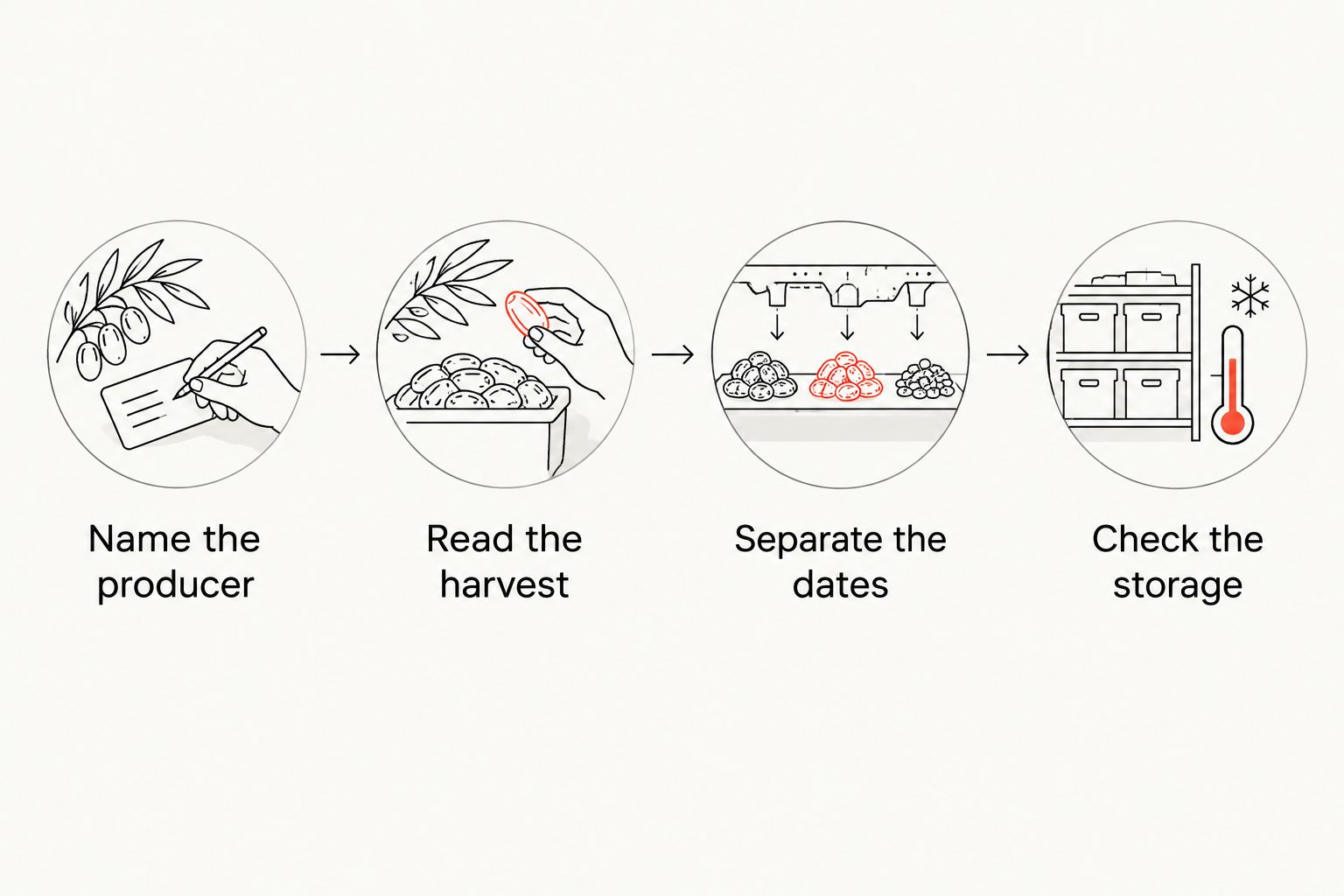
A reading sequence for harvest information
Use the same sequence when comparing descriptions. It keeps a clear statement from being confused with an implied one.
Name the producer
Start with the person or house responsible for the tea. A producer’s name makes the account more specific than a regional name alone. It also gives the harvest and processing details a clear subject.
A retailer and a producer perform different roles. Read the description carefully enough to identify which is being named. Do not assume that the brand on the container grew or milled the leaves.
Read the harvest
Look for an explicit first-harvest or first-flush statement. Keep that wording separate from any year or date mentioned elsewhere. A harvest position and a calendar date answer different questions.
If the description says only ceremonial matcha, do not infer first harvest. Equally, a first-harvest statement does not need to be expanded into claims about a particular farm or cultivar unless those details are supplied.
Separate the dates
Harvest, milling and packing are distinct events. Opening is another event, this time at home. Each belongs to a different part of the powder’s history.
A date beside one event should not silently become the date of another. A purchase made in 2026, for example, is not evidence that the leaves were harvested in 2026. Read the date’s accompanying words, not just its digits.
Check the storage
Finish with the container and the handling instructions. Harvest information remains relevant, but it cannot keep air or light away from exposed powder. Storage is the part of the process that continues after purchase.
Look for a clear closure, protection from light and practical guidance on moisture. These are concrete requirements. An attractive object still needs to perform them.
First harvest is not a complete freshness timeline
Freshness involves more than the position of a leaf in the picking season. The powder also has a history between harvest and the first bowl, followed by a new history after opening.
This distinction prevents a common reading error: treating first harvest as a promise about the present condition of the matcha. The phrase identifies the picking. It does not document every later exposure to air, light or moisture.
A useful timeline has separate entries:
- Harvest: when the leaves were picked.
- Milling: when the prepared tea became powder.
- Packing: when the powder entered its packaging.
- Opening: when the sealed product entered daily use.
These entries do not need to appear as a complete set of dates for a description to be useful. They do need to remain distinct. Where a date is supplied, attach it only to the event it names.
When keeping a home record in 2026, mark the opening date separately. That is the date under your control. It supports a consistent storage routine without pretending to establish the earlier production dates.
A named example: Kaze no Shiro
Kaze no Shiro gives a concrete example of first-harvest information with several layers. It is a first-flush blend composed by the house tea master at Horii Shichimeien, founded in Uji, Japan, in 1879.
The blend draws first-harvest tencha from Kyoto, Nara and Shiga. It combines three cultivars: Okumidori, Yabukita and Sayamakaori. Calling it single origin, single estate or single cultivar would erase information rather than clarify it.
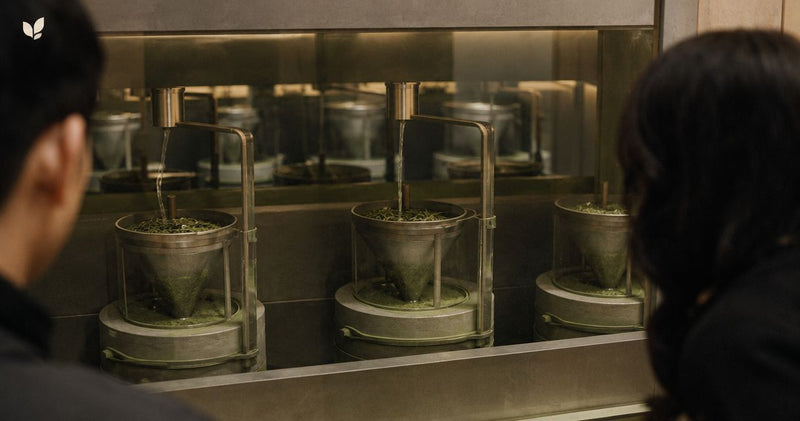
The leaves are shaded for 25 days before harvest. The tea is stone-milled at 40 grams an hour. The first figure describes cultivation; the second describes milling. Neither is a shelf-life figure or a packing date.
The house tea master’s work matters here. In Uji, blending is how a house builds a flavour of its own and holds it steady, season after season. A blend is not evidence that the harvest is unspecified. This blend explicitly uses first-harvest tencha.
Read the account in its actual order: a named producer, a first-flush blend, named source regions, named cultivars and stated processing details. The description is specific without claiming that all the leaves share one farm.
First harvest and blending are compatible descriptions. One concerns picking; the other concerns composition. There is no need to choose between them as though they were opposing grades.
Why first-harvest matcha varies
Two descriptions can both say first harvest while documenting different teas. The harvest statement is one shared detail, not a complete identity.
Look at the following factors before treating the descriptions as interchangeable:
- Producer. The house responsible for selecting and composing the tea gives the account a specific source.
- Growing regions. A blend can draw leaves from several regions. A producer’s location does not replace this information.
- Cultivars. Named cultivars describe the composition more precisely than harvest wording alone.
- Shading. A stated shading period adds a cultivation detail. It is not a guarantee of the powder’s condition after opening.
- Milling. The method and any stated milling rate describe processing, not the date of purchase.
- Storage. Exposure after milling and opening affects the powder that reaches the bowl.
Do not rank these factors through unsupported shortcuts. A longer description is useful only when its statements are clear. Several vague adjectives do not become evidence simply because they appear together.
Protecting the powder after opening
An early harvest cannot compensate for a container left open. Matcha’s colour and taste can change through exposure to air and light. Moisture introduces a separate handling problem.
The practical response is straightforward: keep the closure shut between servings, protect the powder from light and keep wet utensils away from it. Prepare the portion needed for the bowl, then close the container rather than leaving it beside the preparation area.
Opaque material addresses light. An airtight closure addresses air exchange when closed. These are different functions, and both matter. Neither makes storage instructions unnecessary.
Keep the powder away from steam during preparation. A dry spoon belongs in the powder; a wet whisk does not. The storage container and the preparation bowl have separate jobs.
Cold storage needs particular care because condensation can introduce moisture when a cold container is opened in warmer air. Do not treat refrigeration as an automatic improvement without understanding the handling sequence.
In 2026, use the same discipline as for the label: read the actual instructions, distinguish the conditions and avoid assumptions. A clear opening-and-closing routine is more useful than repeatedly moving the powder between unsuitable containers.
Choosing the storage object for home
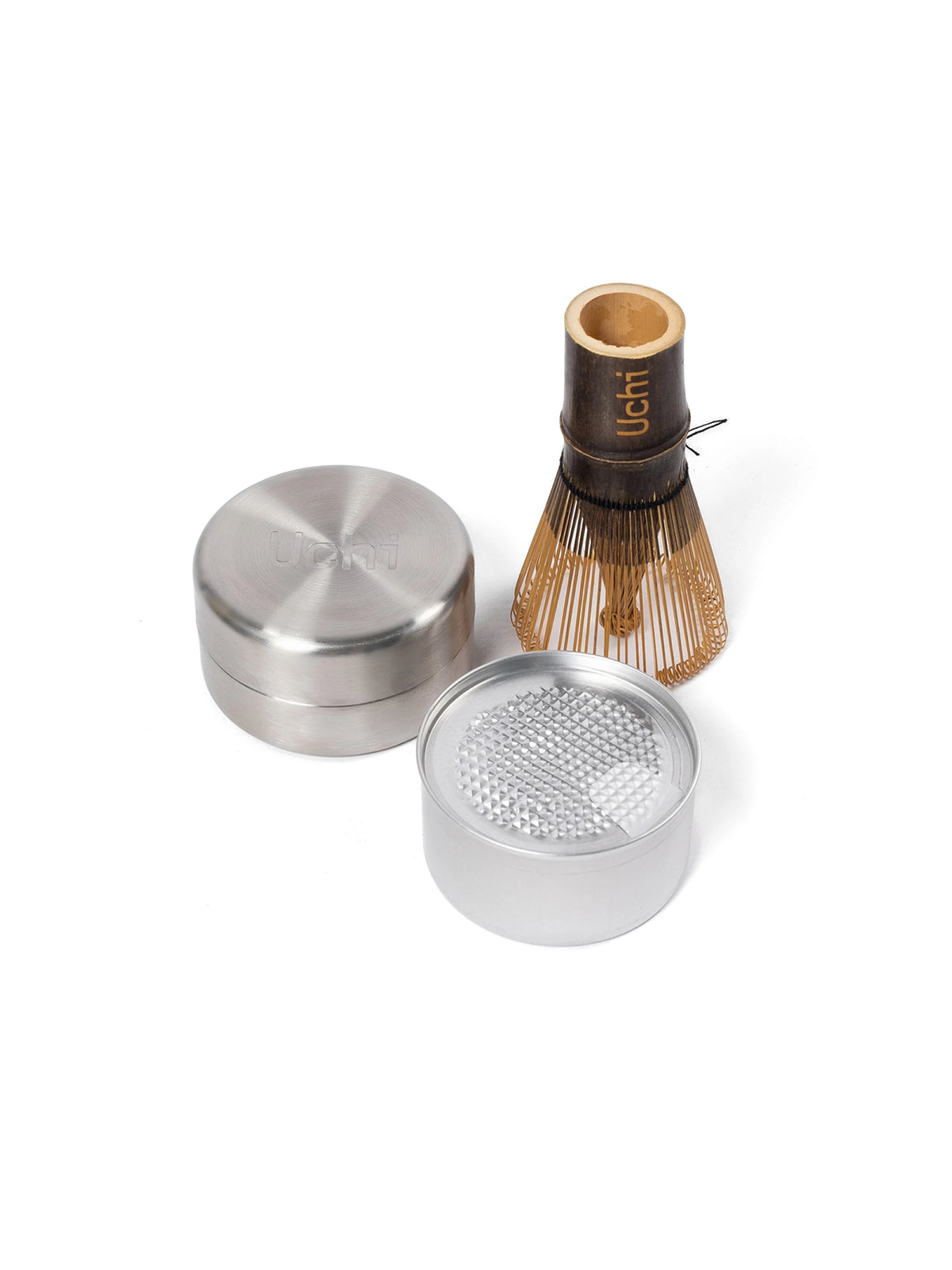
Uchi pairs Kaze no Shiro with a concrete storage object. The Base is an airtight stainless steel canister, kept for life. Its opaque material protects against light, while its closure limits air exchange when shut.
The Pod is the matcha itself: 40g, about twenty cups, in recyclable aluminium. The Base and Pod have different roles. One remains in use; the other supplies the tea.
Uchi suits home matcha drinkers seeking a named first-harvest blend and an airtight stainless steel Base. The storage mechanism is the relevant distinction here, not an abstract promise that a container stops every change in the powder.
The limitation is practical. An airtight closure works when closed. The powder still needs dry handling, and the Base does not remove the need to pay attention to opening and storage.
The material account also has limits. The Pod’s aluminium is recyclable, but that does not describe every packaging component. The foam insert remains an unresolved material. A refillable object is not a reason to leave that detail unmentioned.
First harvest and ceremonial grade describe different things
First harvest identifies the picking position. Ceremonial grade is not, by itself, a harvest record. The two terms can appear together, but one does not supply the missing details of the other.
For a home purchase, read beyond the grade wording to the producer and the tea’s composition. Where the harvest is explicitly stated, retain that statement. Where it is not stated, do not supply it yourself.
Colour does not establish the harvest
Colour is useful to observe, particularly as part of the powder’s condition after opening. It cannot independently identify the harvest, source regions or cultivars. A photograph is not a production record.
Lighting also affects how powder appears on a screen. Read the documented harvest information rather than treating a product image as proof of first harvest. At home, pay attention to changes without turning a visual observation into an unsupported origin claim.
A blend can contain first-harvest leaves
A blend can be made from first-harvest tencha. Blending describes how selected teas are combined, not whether the leaves came from an early or later picking.
Kaze no Shiro illustrates the distinction. Its first-harvest tencha comes from Kyoto, Nara and Shiga, and its composition includes Okumidori, Yabukita and Sayamakaori. The blend description adds information; it does not cancel the harvest statement.
FAQ
What does first-harvest ceremonial matcha mean?
First-harvest ceremonial matcha combines a statement about the first seasonal picking with a grade description. It does not, by itself, identify the milling date, packing date or storage history.
Does ceremonial matcha always come from the first harvest?
The words ceremonial matcha alone do not establish first harvest. Look for an explicit harvest statement and a named producer rather than inferring one from the grade wording.
Is first harvest the same as freshly milled?
First harvest is not the same as freshly milled. Harvest describes the picking; milling describes a later production step, and its date needs separate identification.
Can first-harvest matcha be a blend?
First-harvest matcha can be a blend. Kaze no Shiro combines first-harvest tencha from Kyoto, Nara and Shiga, with Okumidori, Yabukita and Sayamakaori.
How long is Kaze no Shiro shaded before harvest?
Kaze no Shiro is shaded for 25 days before harvest. This is a cultivation detail, not a packing date or a statement about shelf life.
Does green colour prove that matcha is first harvest?
Green colour does not prove that matcha is first harvest. Read the producer’s harvest information; colour alone cannot establish the picking, regions or cultivars.
How should I store first-harvest matcha after opening?
Store first-harvest matcha in a closed container that protects it from air and light, and keep moisture away from the powder. Follow the supplied handling instructions, especially when considering refrigeration.
One last thing
Before the next bowl, check one small detail: where the opening date is recorded. Keep it separate from the harvest and packing information. It is a useful part of the powder’s history that begins at home.
For a purchase made in 2026, keep the producer description alongside that record. Together they preserve two different kinds of information: what the tea was made from and how it entered daily use. Neither needs to pretend to answer the other.