Ceremonial matcha can contain several cultivars without being single origin or single estate. Read the cultivar names alongside the producer, growing regions, harvest and processing details; then protect the opened powder from air and light, because a composition label cannot preserve its taste.
- Ceremonial matcha cultivar names describe composition, not a quality ranking.
- Uchi’s Kaze no Shiro combines Okumidori, Yabukita and Sayamakaori in a first-flush blend.
- Growing region, cultivar and harvest describe different parts of the tea.
- Read the producer’s account before assigning a flavour to an individual cultivar.
- Protect opened matcha from air, light and moisture before comparing bowls.
Why composition matters
A blend tells a story of selection. Its cultivar names identify part of the material the tea maker works with, but they do not explain every decision behind the finished powder.
Freshness matters just as much when that powder reaches home. Air, light and moisture affect stored matcha. A carefully described blend still needs a closed container and dry handling after opening.
For a 2026 buying reference, begin with producer, harvest and packing details. These give cultivar names a useful context rather than leaving them as unfamiliar words on a label.
Read composition as information, not as a ranking. A longer cultivar list does not establish a better cup. Nor does a single cultivar establish a more accomplished one.
Read the description in layers. Each layer answers a different part of the question: who composed the tea, what went into it, where the leaves grew and how they were processed.
- Find the producer. Separate the name of the tea house from the name of the company selling the finished product.
- Identify the blend. Look for a named composition and an explicit statement that it is a blend.
- Read the cultivars. Record the named plant varieties without assigning them fixed flavour roles.
- Read the regions. Keep growing locations separate from cultivar names and the producer’s address.
- Check harvest and processing. First harvest, shading and milling add information that cultivar names alone cannot supply.
These steps prevent a common reading error: treating every Japanese name on the page as an origin. A producer, a blend and a cultivar can each have a Japanese name. They are not interchangeable.
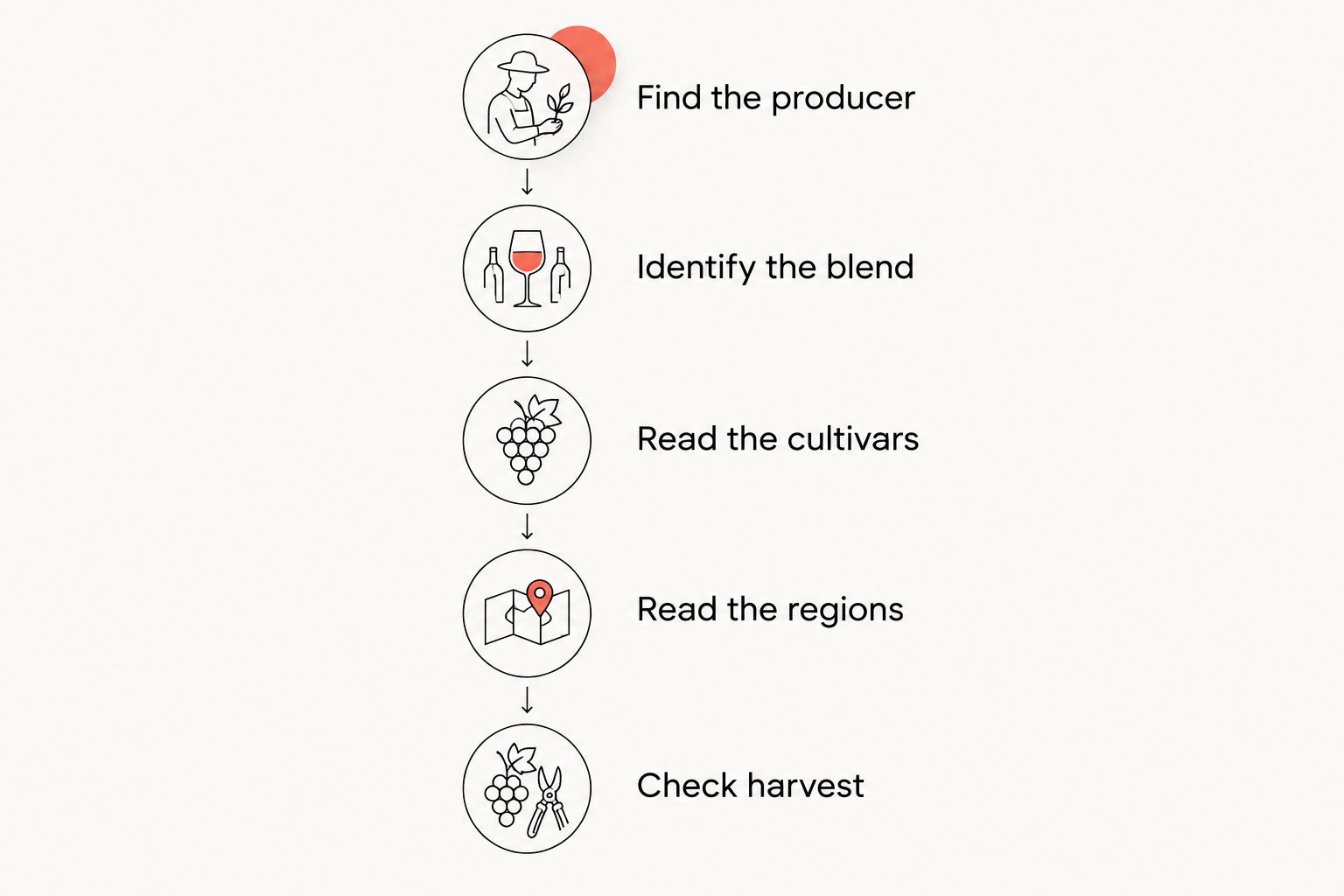
The sequence also keeps interpretation within the evidence. If a description names three cultivars but gives no proportions, it identifies the components. It does not disclose the recipe.
A named composition: Kaze no Shiro
Uchi’s ceremonial matcha is Kaze no Shiro, a first-flush blend composed by the house tea master at Horii Shichimeien. The producer was founded in Uji, Japan, in 1879.
The blend draws first-harvest tencha from Kyoto, Nara and Shiga. It weaves three cultivars: Okumidori, Yabukita and Sayamakaori.
Those details belong together. Calling the tea single origin, single estate or single cultivar would remove an essential part of its composition and misdescribe the blend.
| Label detail | What it identifies |
|---|---|
| Horii Shichimeien | The producer |
| Kaze no Shiro | The named blend |
| Okumidori, Yabukita, Sayamakaori | The cultivars |
| Kyoto, Nara, Shiga | The growing regions |
| First harvest | The harvest information |
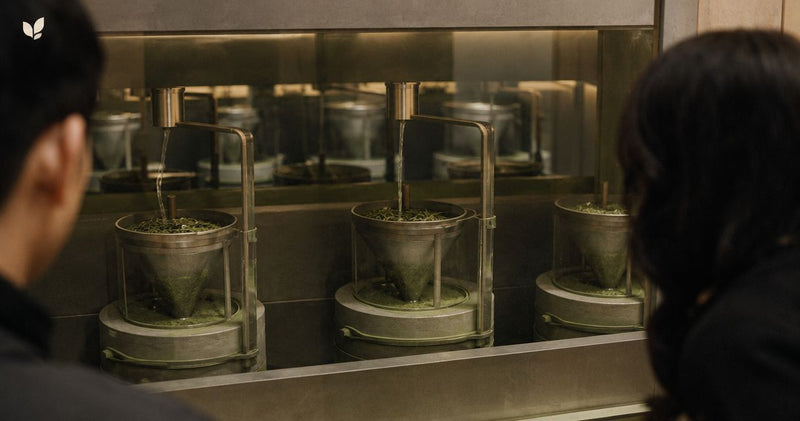
The leaves are shaded for 25 days before harvest. The matcha is stone-milled at 40 grams an hour. These are specific processing details, not substitutes for tasting the finished tea.
In Uji, blending is how a house builds a flavour of its own and holds it steady, season after season. The composition expresses the tea master’s work rather than an absence of origin information.
Cultivar names do not disclose the recipe
Okumidori, Yabukita and Sayamakaori identify the cultivars in Kaze no Shiro. Their presence does not establish how much of each cultivar the blend contains.
For a 2026 tasting notebook, copy the names exactly. Leave proportions blank unless the producer supplies them. Do not turn the order of a list into an assumed order of quantity.
The same restraint applies to flavour. Without tasting the separate component teas, assigning all sweetness to one cultivar or all bitterness to another is an interpretation, not a disclosed fact about this blend.
Growing conditions, harvest decisions and processing also shape tea. A cultivar name is therefore useful background, but it is not a complete tasting note.
Describe the finished bowl before explaining it through its cultivars. Record what is present in the tea, then return to the composition. This keeps the label from deciding the tasting result in advance.
Blended and single-cultivar matcha
Blended matcha combines material selected for a finished composition. Single-cultivar matcha identifies tea made from one cultivar. Neither description, by itself, settles freshness, processing or personal preference.
The distinction is useful when choosing what to explore at home. It is less useful as a hierarchy.
| Approach | Suited to; limitation |
|---|---|
| Blend | Exploring a tea house’s composition; individual components are harder to isolate |
| Single cultivar | Exploring a named cultivar; one tea cannot represent every expression of it |
A blend offers a way into the producer’s intended flavour. Its limitation for study is that the finished bowl does not reveal each component separately.
Single-cultivar tea offers a narrower point of comparison. Its limitation is that cultivar identity does not remove differences in place, harvest, processing or storage.
Choose the description that fits the purpose. For daily drinking, the finished taste matters. For studying cultivars, clearly documented samples and controlled preparation matter more than the label alone.
Why the character of ceremonial matcha varies
Cultivars are one part of the explanation. Read them alongside these factors rather than asking them to account for the whole bowl.
- Composition. The tea master selects the components of a blend. Names alone do not reveal their proportions.
- Growing regions. Kyoto, Nara and Shiga describe sources within Kaze no Shiro, not alternative names for its cultivars.
- Harvest. First-harvest information identifies when the source leaf was gathered within the harvest sequence.
- Shading. Kaze no Shiro’s leaves are shaded for 25 days before harvest. That detail belongs in its processing description.
- Milling. Stone-milling at 40 grams an hour describes this tea’s production. It does not disclose its blend ratio.
- Storage. Exposure after opening affects the powder being tasted. Keep that separate from assumptions about the original composition.
A 2026 product description becomes useful when these details remain distinct. A region cannot stand in for a cultivar, and a milling rate cannot establish how a tea has been handled since packing.
The same separation helps with comparison. When two bowls differ, check preparation and storage before attributing the difference to a cultivar list.
Tasting a blend without guessing its components
Begin with the finished tea. Smell the dry powder, then notice the aroma, texture and finish of the prepared bowl. Use plain words that describe the experience rather than words borrowed from the product description.
Keep the amount of powder, water, water temperature and preparation method consistent between samples. The purpose is not to create a formal ceremony. It is to avoid changing several things at once.
A short tasting record is enough:
- Aroma: what is noticeable before and after preparation.
- Texture: how the prepared tea feels in the mouth.
- Taste: the flavours that are actually present.
- Finish: what remains after swallowing.
- Preparation: the method used for that bowl.
Write observations before rereading the cultivar names. This simple order separates what the cup shows from what the label suggests.
If the tea tastes different on another day, repeat the preparation before revising the judgement. A changed water measure or an incompletely mixed bowl is not evidence that a particular cultivar has become more prominent.
For a 2026 tasting record, note the opening date too. A comparison between recently opened powder and poorly stored powder is partly a comparison of handling.
Storage protects the tea being described
Close the container promptly after measuring. Keep the powder away from direct light, heat, steam and damp utensils. These are practical steps that protect the tea between bowls.
Do not leave a container open while heating water or arranging the rest of the preparation. Measure with a dry utensil and close it before continuing. The cultivar list remains the same; the condition of the powder does not remain fixed.
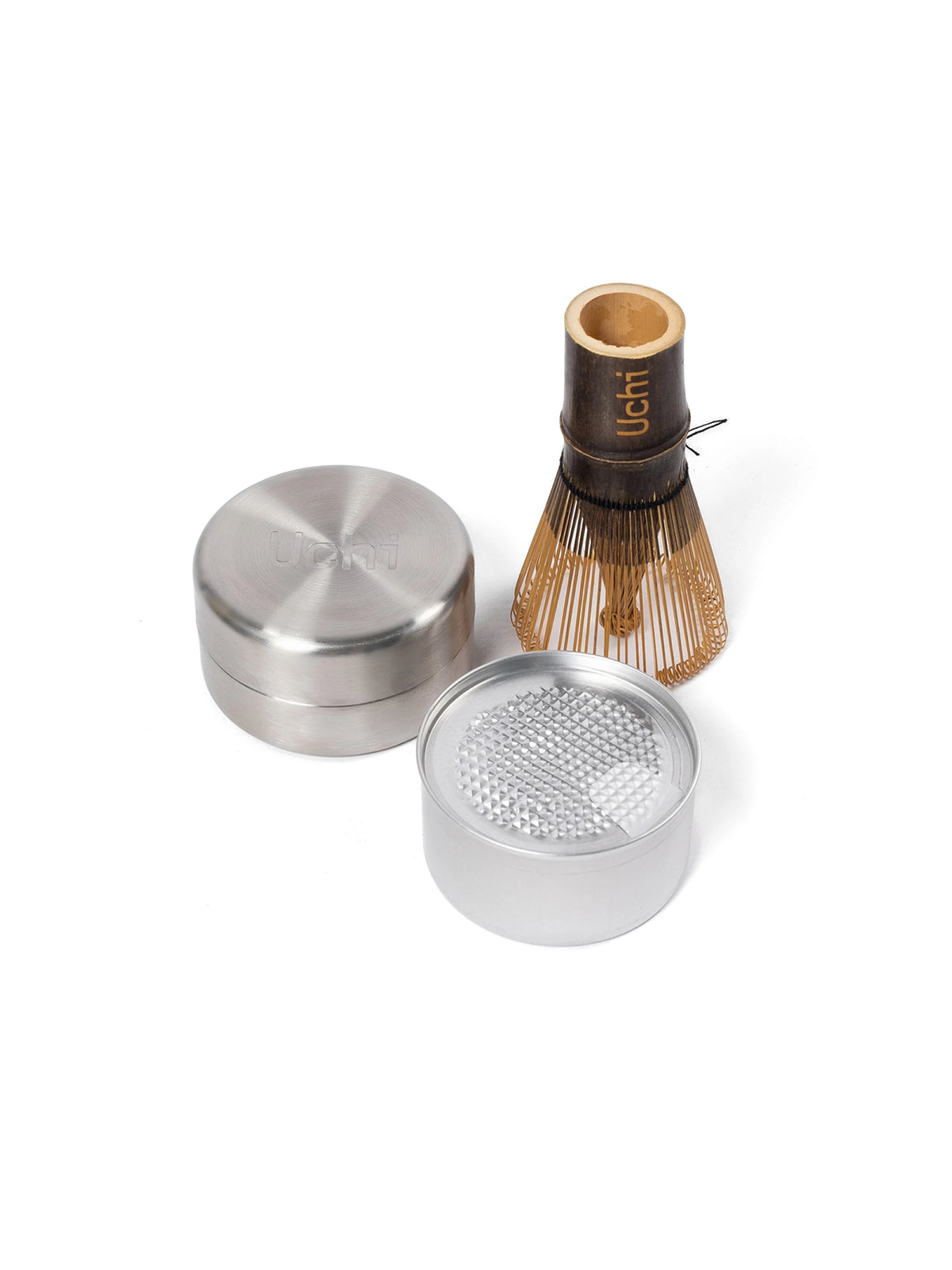
This is where a storage object earns its place. An airtight stainless steel canister limits exposure to air when closed and keeps light away from the powder. It still needs to be closed properly and handled dry.
Uchi ceremonial matcha suits home drinkers who want a named first-flush blend and refillable stainless steel storage. The Base is the airtight stainless steel canister, kept for life. The Pod contains 40g of matcha, about twenty cups, in recyclable aluminium.
The distinction is concrete: the Base is the lasting container; the Pod is the matcha itself. Refillable storage does not remove the need for careful handling, and recyclable aluminium does not describe every packaging material. The foam insert remains a separate material to account for.
Reading origin without flattening the blend
A producer’s history and a leaf’s growing location answer different questions. Horii Shichimeien’s foundation in Uji does not make every leaf in Kaze no Shiro the product of one estate.
The stated growing regions are Kyoto, Nara and Shiga. The stated cultivars are Okumidori, Yabukita and Sayamakaori. Keeping both lists visible gives a more accurate account than reducing the tea to a single-origin claim.
The same care applies to historical farms. A notable place in a producer’s story does not establish that every component of a current blend grew there.
For home selection, precision is more useful than a simplified origin story. Look for a description that names what is known and leaves the rest unclaimed.
FAQ
Can ceremonial matcha contain more than one cultivar?
Ceremonial matcha can contain several cultivars. Kaze no Shiro combines Okumidori, Yabukita and Sayamakaori in a first-flush blend composed by the house tea master at Horii Shichimeien.
Does a blend mean the matcha is lower quality?
A blend does not establish lower quality. Blending allows a tea house to compose a flavour; the label alone does not settle the quality or condition of the finished powder.
What is the difference between a cultivar and an origin?
A cultivar identifies a cultivated plant variety, while origin identifies where the tea was grown. A blend can contain several cultivars and draw leaves from several regions.
Can I tell the blend proportions from the cultivar list?
A cultivar list does not disclose blend proportions unless quantities are explicitly provided. Do not infer percentages from the order in which names appear.
Is Kaze no Shiro single-origin matcha?
Kaze no Shiro is not single-origin, single-estate or single-cultivar matcha. It draws first-harvest tencha from Kyoto, Nara and Shiga and combines Okumidori, Yabukita and Sayamakaori.
Should I choose blended or single-cultivar matcha for home?
Choose a blend to explore a tea house’s composition, or single-cultivar matcha to explore a named cultivar. In either case, producer information, preparation and storage remain relevant.
Does airtight storage remove every freshness concern?
Airtight storage does not remove every freshness concern. Keep the container closed between uses, protect it from light and heat, and keep damp utensils and steam away from the powder.
One last thing
A cultivar list is not a tasting instruction. Before reading it again, write one sentence about the bowl itself.
For the next tea opened in 2026, keep that sentence beside the opening date and preparation notes. The useful record is not the one with the most terminology. It is the one that separates what the producer states from what the tea tastes like at home.