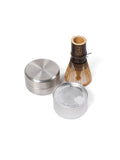
Choose the Pod for repeat cups and the Sample for a first tasting. In this 2026 matcha sample vs pod comparison, the difference is 40g versus 6g; protecting that matcha from air and light matters as much as counting the servings.
- Uchi matcha sample vs pod: choose the Sample for a first tasting and the Pod for repeat preparation.
- The Sample contains 6g and is described as two servings; the Pod contains 40g, about twenty cups.
- Serving counts depend on the dose: the stated Sample and Pod counts use different amounts per cup.
- The Pod is intended for existing Base owners; Home includes both Base and Pod.
Why freshness belongs in the comparison
Matcha is finely ground tea. Air and light affect its colour, aroma and taste after opening. A larger quantity needs a storage routine, not simply a place on the counter.
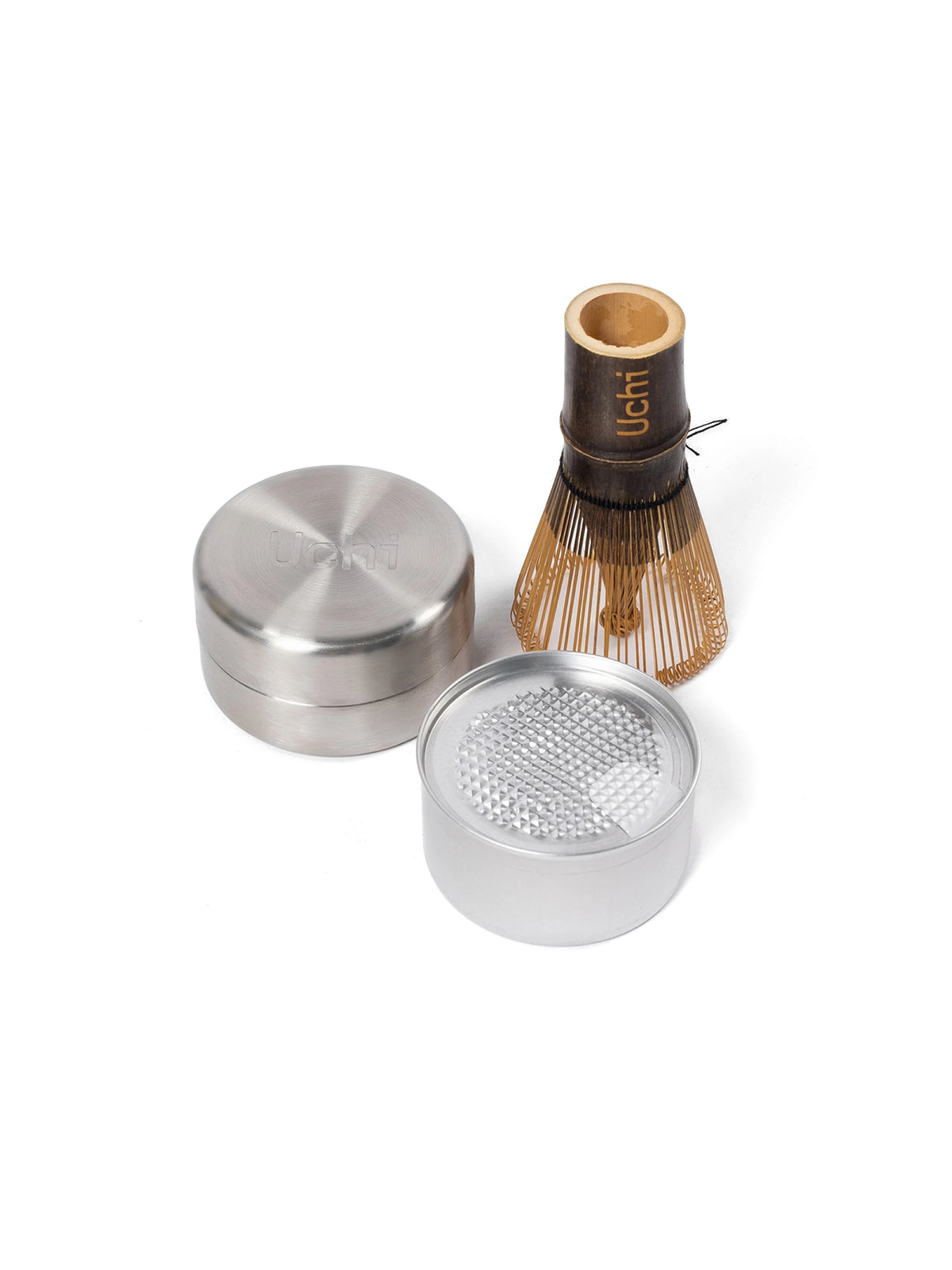
The Base is an airtight stainless steel matcha canister, kept for life. Its opaque body keeps light away from the powder. Closing it between preparations limits exposure to air; opening it still introduces fresh air, so handling remains part of storage.
Uchi matcha suits home drinkers who want first-harvest tea with a refillable storage arrangement. The Sample answers a narrower question: whether the taste belongs in your daily routine. The Pod is the matcha itself, intended to replenish an existing Base.
Neither format determines the strength of a bowl. The amount of powder you measure does that.
What matters when comparing Sample and Pod
Use these criteria for a serving-led choice in 2026. They separate the amount purchased from the amount prepared.
- Powder weight. Compare grams before comparing cups. The Sample contains 6g; the Pod contains 40g.
- Dose per preparation. A serving count only makes sense alongside the grams used for each bowl.
- Purpose. A first tasting and a repeated morning preparation call for different quantities.
- Storage already owned. The Pod is intended for existing Base owners. It does not include the Base.
- Preparation consistency. Keep the dose, water and method steady when deciding whether you enjoy the tea.
- Handling after opening. Dry tools and a closed container belong in the decision, particularly when the powder will be used across several preparations.
The order below follows repeat use first, then a first tasting. It is not a ranking of flavour or quality. Quantity alone cannot establish either.
Sample and Pod at a glance
| Format | Quantity and stated yield | Suited to |
|---|---|---|
| Pod | 40g; about twenty cups | Repeat preparation with a Base |
| Sample | 6g; two servings | A first tasting |
The stated yields are not based on the same dose. Dividing 40g by twenty gives 2g per cup. Dividing 6g by two gives 3g per serving.
That distinction changes the comparison. The Pod holds more powder, but dividing twenty cups by two servings does not describe the difference in quantity. Compare both formats at the same dose instead.
1. Pod: for repeat cups with an existing Base
The Pod contains 40g of ceremonial grade matcha in recyclable aluminium. Its stated yield is about twenty cups, which corresponds to a 2g dose. It is the refill for someone who already owns a Base.
The Pod belongs in a repeated preparation routine. Measure the powder, close the Base and prepare the bowl. The larger quantity allows repeated cups without changing the tea being assessed.
Pod advantages
- More preparations from one quantity. At 2g per bowl, 40g provides twenty bowls.
- A defined refill role. The Pod replenishes the Base rather than replacing the permanent canister.
- Adjustable serving count. The powder can be measured to the dose used in your own preparation.
- Named packaging material. The aluminium is recyclable; that describes the material, not the outcome of every local collection process.
Pod limitations
- Storage is a separate requirement. The Pod does not include the Base.
- Twenty cups is dose-dependent. A larger measure produces fewer complete servings.
- It is a larger first commitment. Someone still deciding whether they enjoy the tea has 40g to work through rather than 6g.
Suited to: an existing Base owner preparing matcha repeatedly at home.
Verdict: choose the Pod for replenishment. For a first purchase that also needs the permanent canister, Home is the relevant configuration.
2. Sample: for a first tasting before repeat use
The Sample is a 6g sachet described as two servings. That stated count corresponds to 3g per serving. It provides a small amount for tasting before choosing a larger quantity.
The Sample is not a smaller storage system. It is a small quantity of matcha. Its role is to make the first tasting possible without beginning with 40g.
Sample advantages
- A focused first tasting. The quantity suits an initial preparation rather than an established routine.
- Enough powder for comparison. At the stated serving size, it provides two preparations.
- A measured introduction. Weighing each portion makes the tasting easier to repeat.
Sample limitations
- Limited room for experimentation. Changing several preparation variables uses the small quantity quickly.
- Its serving claim differs from the Pod's. Two Sample servings and twenty Pod cups do not use the same implied dose.
- It does not establish a storage routine. A first tasting does not replace choosing how to protect a larger quantity after opening.
Suited to: someone deciding whether to make this matcha part of home preparation.
Verdict: choose the Sample for a first tasting. Keep the preparation consistent so that the second bowl answers the same question as the first.
Serving counts at the same dose
For a useful 2026 comparison, divide each format's weight by the same number of grams per bowl. The arithmetic describes quantity only. It is not a claim that one dose suits every drinker or every preparation.
| Powder per bowl | Sample: 6g | Pod: 40g |
|---|---|---|
| 2g | 3 bowls | 20 bowls |
| 3g | 2 bowls | 13 bowls, with 1g remaining |
At a consistent dose, the Pod contains enough powder for roughly 6.7 times as many preparations as the Sample. That ratio comes from 40g divided by 6g, not from the two stated serving claims.
The remaining 1g in the 3g example is not another full 3g serving. It remains powder to account for in a later preparation. Counting partial servings as full bowls makes a quantity comparison misleading.
A cup is also not a fixed measure of matcha. Adding more water changes the drink's concentration and volume, but it does not change how many grams leave the container.
Measure powder before counting cups
One leveled Uchi Spoon holds 1 gram. A 2g preparation therefore uses two leveled measures; a 3g preparation uses three. A scale provides a direct weight check when comparing doses.
Use the same measuring method throughout a tasting. A heaped measure and a leveled measure are not interchangeable. If the dose changes between bowls, the serving count changes with it.
A first tasting that gives a clear answer
A small quantity is more informative when the preparation stays steady. The purpose is to notice the tea, not to change every part of the method between bowls.
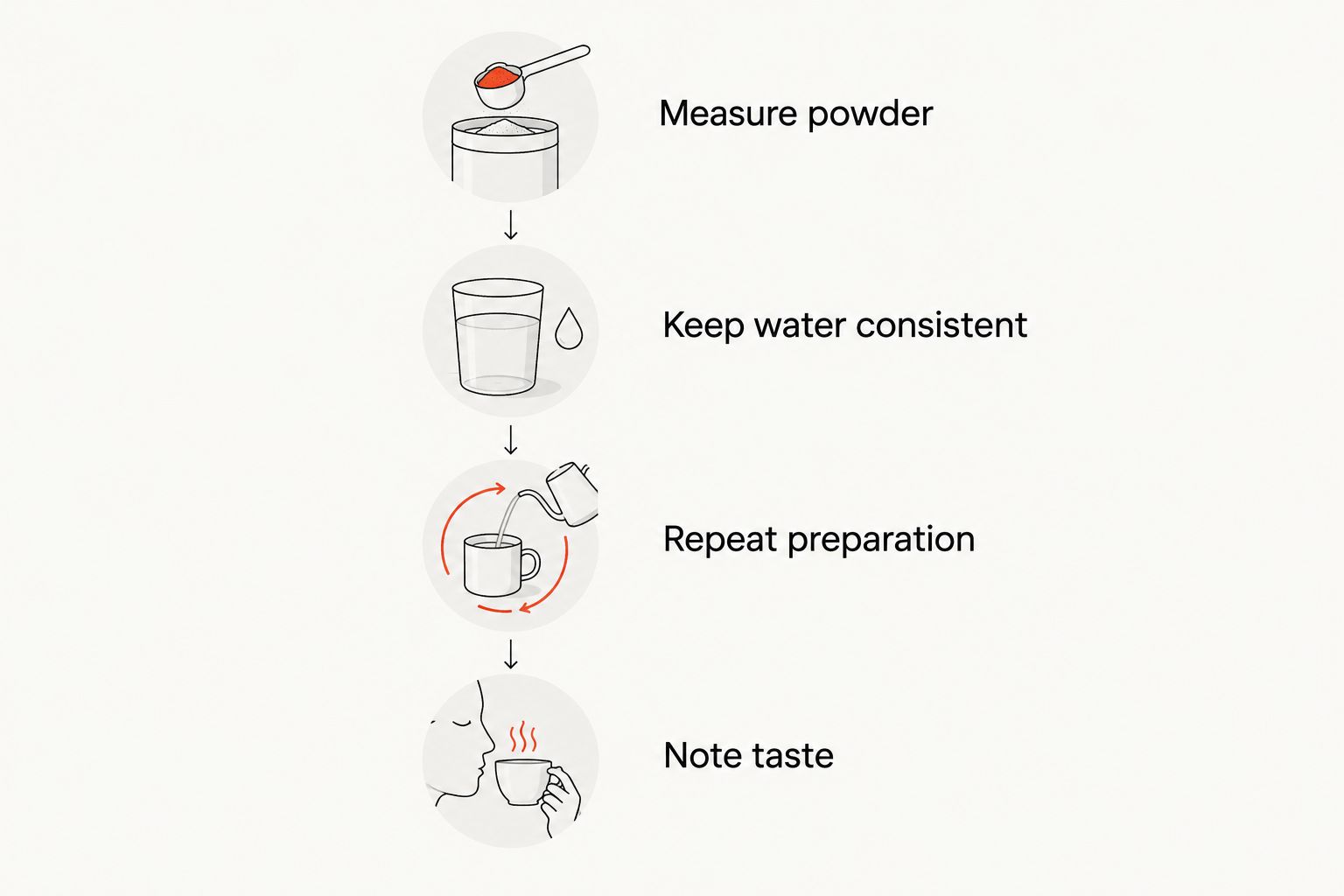
- Measure powder. Choose a dose and record it before preparing the first bowl.
- Keep water consistent. Use the same water and amount for the comparison.
- Repeat preparation. Keep the preparation method consistent between the first and second bowl.
- Note taste. Record aroma, texture and flavour in plain language.
Taste the first preparation before introducing other ingredients if the aim is to assess the tea itself. Milk or other additions become part of the flavour being judged. They are a separate preparation choice, not evidence of the powder's quantity.
The Sample provides limited material for this exercise. Decide what you want to learn before opening it. Two comparable preparations give a clearer answer than several small bowls made with changing doses and methods.
Storage after the first opening
The serving arithmetic remains the same in 2026, but the experience of the final bowl depends on handling between preparations. An airtight container works when it is closed. Leaving it open during preparation defeats that purpose.
Keep the powder away from steam. Use dry utensils, take the required measure and close the container before preparing the drink. Store it away from direct light and heat.
The Base addresses air and light through an airtight closure and stainless steel body. It does not make opening and handling irrelevant. No container turns repeated exposure into no exposure.
Recyclable aluminium describes the Pod's packaging. It does not mean every part of the wider packaging is aluminium or recyclable. The packaging also includes a foam insert; that unresolved material belongs in an honest account of the format.
The tea behind the quantity
Uchi's matcha is Kaze no Shiro, a first-flush blend composed by the house tea master at Horii Shichimeien. It draws first-harvest tencha from Kyoto, Nara and Shiga, weaving Okumidori, Yabukita and Sayamakaori.
The leaves are shaded for 25 days before harvest. The matcha is stone-milled at 40 grams an hour. These details describe the tea's production, not a different way to calculate servings.
The blend is not single origin, single estate or single cultivar. Its composition is deliberate. Choosing a smaller or larger quantity should not be confused with choosing between those sourcing categories.
How the formats are assessed
This comparison uses stated powder weights, stated serving counts, equal-dose arithmetic and the role of the Base. It does not assign tasting scores or infer flavour from package size.
The Sample serves a first tasting. The Pod serves replenishment. The distinction is purpose, not a claim that the larger format produces a different standard of bowl.
Choose by the next preparation
Choose the Sample when the next step is tasting. Choose the Pod when the next step is replenishing a Base. Those are different decisions, even when both involve the same home routine.
For a first purchase beyond tasting, Home includes Base + Pod. Home + Whisk adds the Whisk. Complete includes Base + Pod + Bowl + Spoon + Sieve + Whisk.
Choose among those configurations by the objects already in the kitchen. None of the added accessories changes the Pod's 40g weight or its dose-dependent serving count.
FAQ
What is the difference between a matcha Sample and a Pod?
The Sample contains 6g for a first tasting; the Pod contains 40g for repeat preparation with an existing Base. The Sample is described as two servings, while the Pod is described as about twenty cups.
How many cups does the Sample make?
The Sample is described as two servings from 6g, equivalent to 3g per serving. At a measured 2g per bowl, the same quantity makes three bowls.
How many cups does a Pod make?
A Pod makes about twenty cups at 2g per cup. At 3g per preparation, 40g provides thirteen complete servings with 1g remaining.
Why do the Sample and Pod serving counts use different doses?
The stated counts correspond to different amounts of powder per preparation: 3g for the Sample and 2g for the Pod. Compare both formats at the same dose to understand the quantity difference.
Does the Pod include the Base?
The Pod does not include the Base. Home includes Base + Pod, while the Pod alone is intended to replenish an existing Base.
Which format should I choose for a first tasting?
Choose the Sample for a first tasting. Its 6g quantity allows a small, measured introduction before choosing a larger quantity.
Does adding more water increase the number of servings?
Adding more water does not increase the amount of matcha powder. Serving count depends on the grams used per preparation, while water changes the drink's volume and concentration.
One last thing
For a 2026 purchase, write down the intended dose before deciding on quantity. Two stated servings versus twenty stated cups is not a like-for-like comparison. Six grams versus forty grams is.
That small distinction makes the choice straightforward. Taste first with the Sample, or replenish an existing Base with the Pod. Count powder, then protect it.