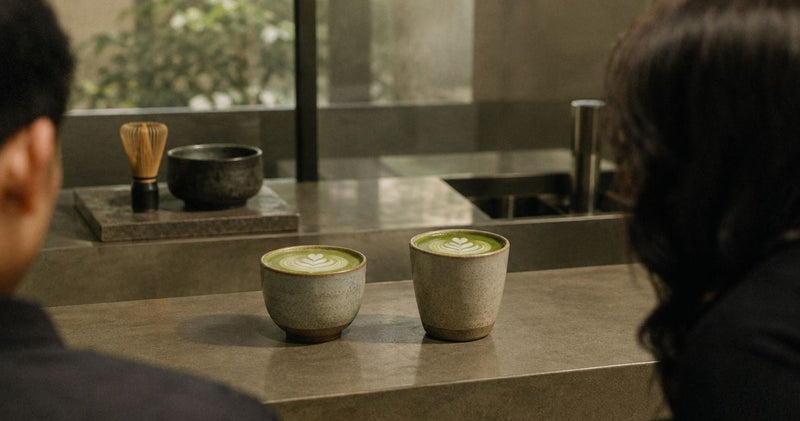
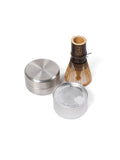
Instead of chasing dry clumps around a mug, sift matcha into a little warm water, blend it with a handheld milk frother, then add milk. This milk frother matcha latte workflow keeps the powder separate from the milk until the matcha is evenly dispersed.
- For a milk frother matcha latte, sift the powder and blend with water before adding milk.
- Uchi suits home matcha drinkers who want airtight, light-proof storage between daily servings.
- Use a handheld frother for the matcha concentrate; follow the appliance instructions for heating or frothing milk.
- Matcha stays suspended rather than dissolving. Some settling is normal.
Why this matters
Matcha is finely ground tea leaf. It does not dissolve like sugar. Water and movement disperse the particles; milk does not remove the need to break up dry clumps first.
A frother makes that movement convenient. It also introduces air, so technique matters. Running the coil at the surface creates bubbles and splashes rather than mixing the powder below it.
Freshness comes before foam. Keep matcha away from air, light, heat and moisture between servings. Close the container after measuring, before the kettle or milk begins steaming nearby.
For home preparation in 2026, the useful distinction is simple: prepare the matcha first, then build the latte. A fine-mesh Sieve breaks up clumps before water touches them. The frother then has less work to do.
Before you start
- Gather the materials. Have matcha, drinking water, milk, a fine-mesh sifter, a scale or measured scoop, and a tall vessel with room above the liquid. Use a handheld milk frother intended for mixing drinks.
- Check the appliance instructions. A handheld frother and an automatic milk-frothing jug are different tools. Do not assume a jug accepts matcha powder or that its heating base can be immersed for cleaning.
- Keep water away from stored powder. Measure with dry utensils, then close the container. If matcha has been refrigerated, let the sealed container reach room temperature before opening to avoid introducing condensation.
Choose the tool for the task
The comparison below separates mixing matcha from frothing milk. These are adjacent tasks, not interchangeable appliance settings.
| Tool | Suited to | Strength and limitation |
|---|---|---|
| Handheld frother | A quick latte concentrate | Convenient in a tall vessel; shallow liquid splashes easily. |
| Automatic frothing jug | Preparing milk separately | Handles milk as directed; powder use depends on the manual. |
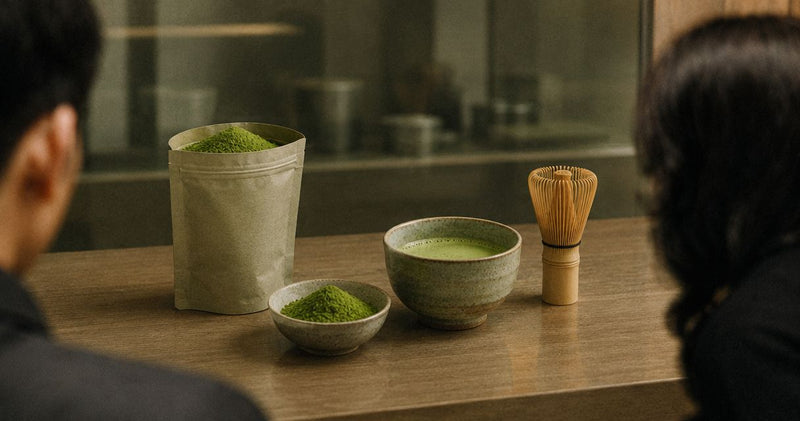
| Bamboo chasen | Whisking matcha in a bowl | Gives direct control; needs room and drying after use. |
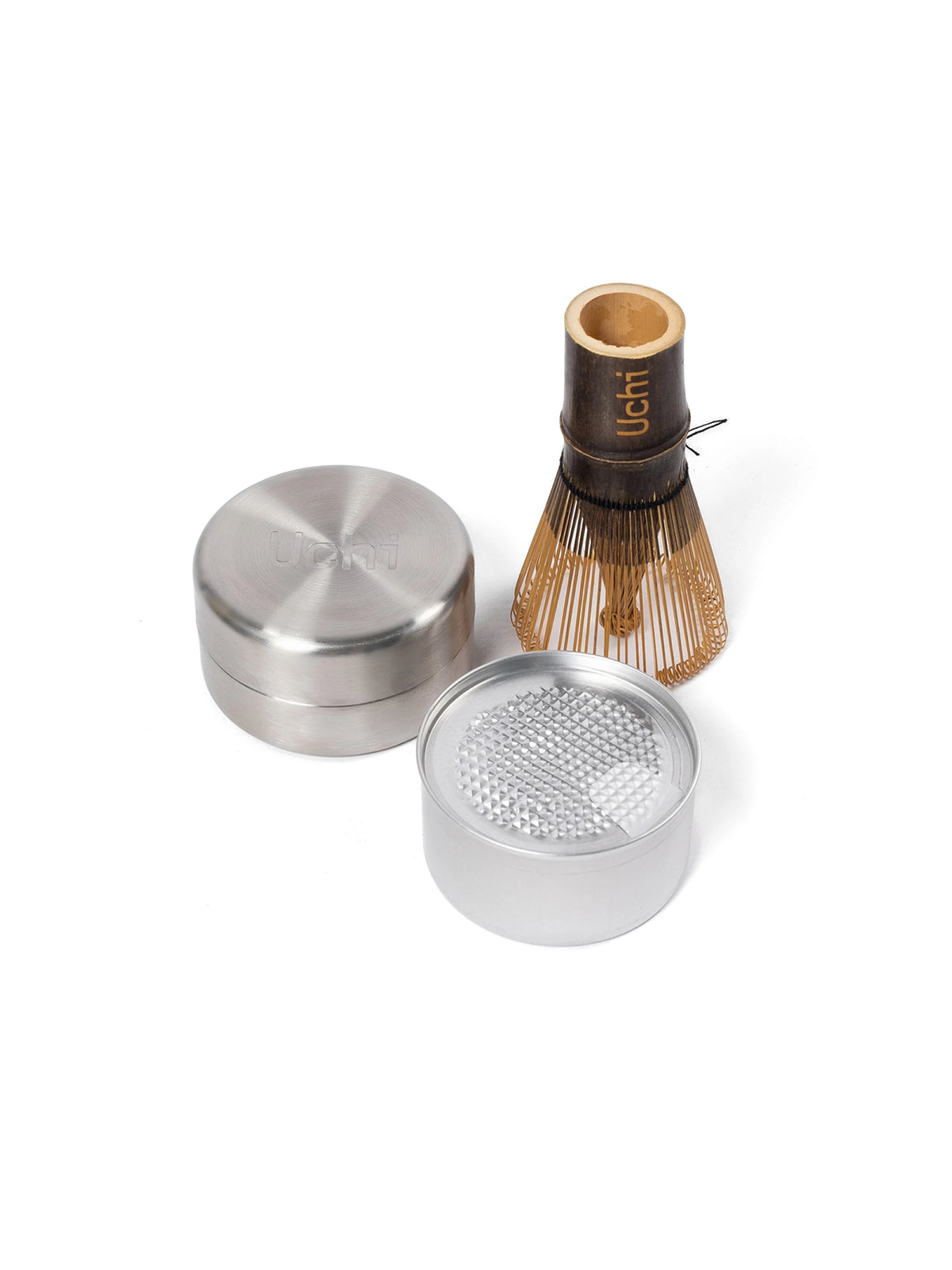
A bamboo Whisk is an alternative to the motorised tool, not an extra step the latte requires. The Uchi Whisk has 120 prongs. Use it in a bowl with enough room for a back-and-forth motion.
For the workflow below, use the handheld frother. Keep the automatic jug, if present, for milk unless its instructions explicitly allow powdered ingredients.
Matcha concentrate preparation
Use this as a starting recipe, not a fixed rule: 2 grams of matcha, 40 millilitres of warm water and 120 millilitres of milk. Taste the finished drink before changing the proportions.
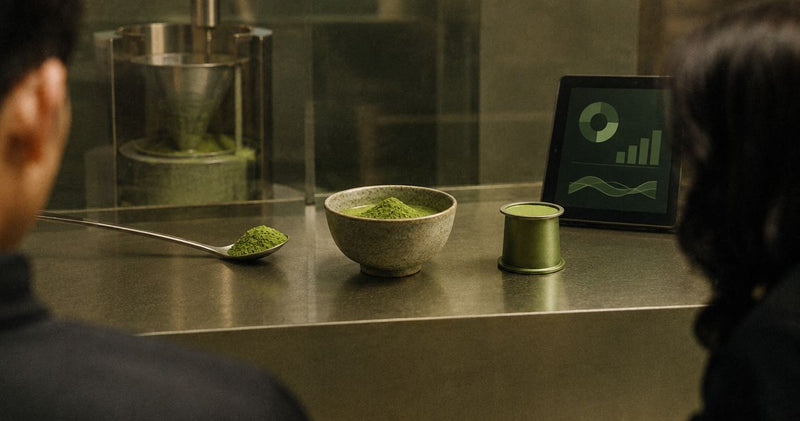
A scale makes the recipe repeatable. One leveled Uchi Spoon holds 1 gram, so two leveled Spoon measures provide the starting quantity. A household teaspoon is not an equivalent measure.
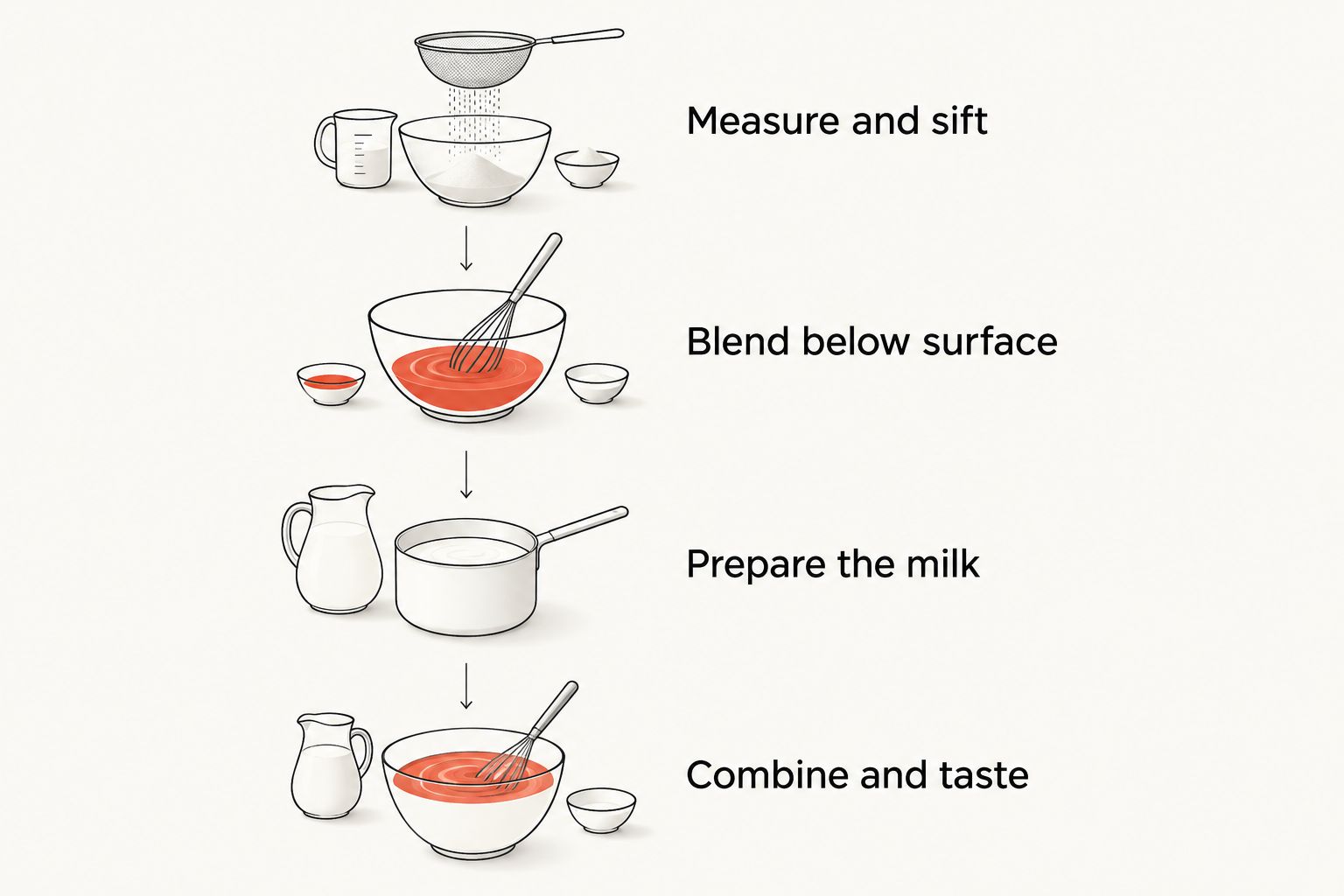
Measure and sift
- Dry the mixing vessel and sifter. Keep both away from kettle steam.
- Measure 2 grams of matcha. Return the powder container to its storage place and close it fully.
- Sift the powder into the vessel. Gently press remaining soft clumps through the mesh with a dry utensil.
- Add a little of the measured water and stir to wet the powder. Add the remaining water before using the frother.
Expected result: the powder is wet throughout, with no dry mound floating on the surface. It does not need to be foamy yet.
Choose a vessel deep enough to cover the frother coil without bringing the liquid close to the rim. A broad, shallow bowl suits a chasen; it is less forgiving with a spinning coil.
Blend below the surface
- Use warm water rather than boiling water. Around 70–80°C is a practical starting range for this recipe.
- Lower the coil into the liquid before switching on the frother. Keep it clear of the vessel’s base and sides.
- Blend in short bursts, moving through the liquid without lifting the spinning coil into the air.
- Switch off while the coil is still submerged. Lift it out only after it stops.
- Inspect the concentrate. Stir around the vessel’s edge if powder remains there, then blend again briefly.
Expected result: an evenly green concentrate without visible dry clumps. A little surface foam is normal. A deep cap of bubbles is not the goal at this stage.
Milk preparation and assembly
Prepare the milk
- Measure 120 millilitres of milk for the starting recipe. Use dairy milk or a plant-based drink according to taste.
- Warm the milk separately if making a hot latte. Follow the heating appliance’s instructions and do not boil it.
- If using the same handheld frother, rinse its food-contact parts as directed before moving from matcha to milk.
- Froth the milk only if a foamed finish is wanted. Keep within the vessel’s capacity and the appliance’s permitted fill level.
Expected result: warm milk with the texture you want, ready to combine with the prepared matcha.
Milk changes the finished flavour and texture. Plant-based drinks also differ by formulation. Keep the matcha recipe constant while trying a different milk, rather than changing both at once.
More foam is not automatically a smoother drink. For a latte that pours easily, stop before the milk becomes a stiff layer sitting above the liquid.
Combine and taste
- Stir the matcha concentrate once more if it has stood while the milk warmed.
- Pour the milk into the concentrate, or pour the concentrate into the milk. Stir to distribute it through the drink.
- Taste before adding any sweetener. If using one, stir it through rather than leaving it beneath the foam.
- Record the proportions if the result suits you. Change only one ingredient quantity for the next cup.
Expected result: a latte with matcha distributed through the milk, rather than a concentrated green layer at the bottom.
For a stronger tea flavour, reduce the milk first. For a gentler drink, add milk gradually. This keeps the adjustment clear without changing powder, water and milk together.
The useful home habit in 2026 is repeatability, not extra equipment. Keep the vessel and measures consistent until the drink tastes right.
Iced milk frother matcha latte
An iced latte uses the same concentrate. The difference is the assembly: cold milk and ice replace the warmed milk, while the powder is still mixed separately.
- Sift and blend the matcha with warm water using the concentrate method above.
- Put ice into a glass with enough room for the finished drink. Leave space for stirring.
- Add cold milk. Pour in the matcha concentrate and stir before drinking.
- Taste after mixing. Ice adds water as it melts, so judge the drink as a whole rather than tasting the concentrate alone.
Expected result: a cold latte without pockets of dry powder caught between the ice cubes.
Do not put ice into a vessel with a spinning handheld frother. Prepare the concentrate first, with the coil unobstructed, then assemble the drink.
Cold milk does not have to be foamed. If you want cold foam, check that the appliance supports it. A heating jug’s functions depend on the model; there is no universal setting to select.
For iced preparation in 2026, the same rule holds: ice belongs in the serving glass, not in the matcha-mixing step.
Troubleshooting
Dry clumps remain after blending
Sift before adding water. A spinning coil moves liquid quickly, but that does not guarantee every dry clump will break apart.
Stop the motor before inspecting the drink. Break up remaining clumps with a spoon, then blend again with the coil submerged. Next time, wet the sifted powder evenly before adding the rest of the water.
The frother splashes matcha onto the counter
Use a taller vessel and leave more space above the liquid. Lower the coil before switching it on, then stop it before lifting it out.
If the measured concentrate cannot cover the coil in that vessel, change the vessel rather than tilting a nearly full mug towards the motor. Keep the handle and electrical parts dry.
There is foam, but the drink still feels gritty
Foam shows that air entered the liquid. It does not confirm that dry clumps have dispersed.
Keep the coil below the surface during mixing and inspect the concentrate before adding milk. Matcha contains leaf particles, so some texture remains even when the preparation is even.
A green layer settles at the bottom
Some settling is normal because matcha is a suspension. Stir the finished latte again, especially if it has stood while you were doing something else.
Do not keep frothing solely to prevent all settling. That adds air without turning the leaf particles into a dissolved ingredient.
The latte tastes flat or harsh
Taste a small amount of the concentrate before adding milk. Then check the powder’s storage, the water temperature and the milk quantity separately.
Do not treat added sweetener as the only correction. If aroma and colour have changed during storage, frothing cannot restore them. If the tea disappears beneath the milk, reduce the milk in the next serving.
Customize your workflow
Keep a short recipe note for 2026: powder quantity, water quantity, milk quantity and the milk used. Add a plain tasting note such as too milky or too concentrated. Change one variable next time.
Put the dry tools near the powder and the wet tools near the sink. This keeps the preparation simple without leaving an open container beside steam.
Uchi matcha comes in a Pod containing 40 grams, about twenty cups. The Base is an airtight, light-proof stainless steel canister kept for life. It protects stored powder from air and light; it still belongs away from heat, and it must be closed between uses.
Uchi suits home matcha drinkers who want protected storage between daily servings. The limitation is straightforward: storage cannot correct an uneven concentrate or an unsuitable milk ratio.
A frother workflow does not require every dedicated accessory. Choose the tools that solve a task you actually repeat. If considering Home or Complete, compare their contents against what is already in the kitchen rather than treating more pieces as a better drink.
FAQ
Can I make a matcha latte with a milk frother?
Yes. Use a handheld milk frother to blend sifted matcha with a little warm water, then add milk. Keep the coil submerged during mixing and stop it before lifting it out.
Can I put matcha powder straight into an automatic milk frother?
Only if the appliance instructions explicitly permit powdered ingredients. Otherwise, prepare the matcha concentrate separately and use the automatic frother for milk.
Do I need a bamboo whisk if I already have a handheld frother?
No. A handheld frother can prepare the concentrate for a latte. A bamboo chasen offers a different mixing method and needs a bowl with room for its motion.
How much matcha should I use in a milk frother latte?
Start with 2 grams of matcha, 40 millilitres of warm water and 120 millilitres of milk. These are starting recipe proportions; adjust the milk after tasting the finished drink.
Why does my matcha latte have clumps?
Dry powder has not been evenly wetted and dispersed. Sift before adding water, wet the powder throughout, then blend before adding milk.
Can I use the same method for an iced matcha latte?
Yes. Prepare the concentrate separately, then pour it into cold milk and ice. Keep ice away from the spinning frother coil.
Why does matcha settle even after I froth it?
Matcha contains ground leaf particles that remain suspended rather than dissolving. Some settling is normal; stir the latte again before drinking.
How should I clean a milk frother after making matcha?
Follow the appliance’s cleaning instructions and remove residue before it dries. Clean only the parts approved for washing, keep electrical components dry and let food-contact parts dry before storing.
One last thing
Close the matcha container before turning on the kettle. It is a small change with a clear purpose: the stored powder stays away from the steam generated while preparing the drink.
For a 2026 kitchen routine, that order matters more than another frothing attachment. Measure, close, then make the latte.