Matcha powder settles because ground tea leaf remains suspended in water rather than dissolving completely. Fine sediment after the cup stands is normal; dry lumps and an uneven first sip point to a preparation problem. Sieving, thorough whisking and a gentle swirl before drinking help keep the texture even.
- Matcha powder forms a suspension; some settling is normal after whisking.
- Sieving breaks up clumps. Whisking disperses particles. Neither makes ground tea leaf dissolve completely.
- Uchi suits home matcha drinkers who want airtight storage and dedicated preparation tools.
- Judge freshness by storage, aroma and taste, not by sediment alone.
A smooth cup is an evenly dispersed suspension, not a completely dissolved solution. Some compounds in tea dissolve in water. The ground leaf also contains material that does not. Whisking distributes those particles through the liquid, where they remain visible as the green drink.
When the cup stands, particles settle towards the bottom. A darker layer beneath a lighter upper layer is therefore not, by itself, evidence of poor matcha. It shows that the suspension has separated while undisturbed.
Clumps are different. These are groups of particles that have not dispersed properly, sometimes with dry powder inside. The guide to matcha powder clumps and sieving explains that separate preparation issue.
| What appears | What it means |
|---|---|
| Fine sediment after standing | Suspended particles have settled. |
| Dry-centred lumps | Powder has not wetted evenly. |
| Foam above the drink | Whisking has introduced air. |
These observations can occur together. Foam does not prove that all the powder underneath it has dispersed. A bowl can look well whisked at the surface while retaining a small pocket of dry powder against its side.
Why this matters
For home preparation in 2026, the useful distinction is between an expected change and a correctable one. Sediment that appears after standing does not need the same response as lumps present from the first sip.
Trying to eliminate all settling encourages unnecessary changes. More vigorous whisking can break up remaining clumps, but it cannot turn insoluble leaf material into a dissolved ingredient. Adding more water changes the concentration, not the underlying distinction.
Correct the preparation before judging the powder. Start with dry tools, sieve the portion and check the bowl before pouring. Then notice whether the drink begins evenly mixed and separates only after it rests.
A practical preparation method for 2026
The aim is to wet and distribute the powder evenly. Work in a bowl with enough room for the whisk to move, rather than trying to reach the bottom of a narrow drinking glass.
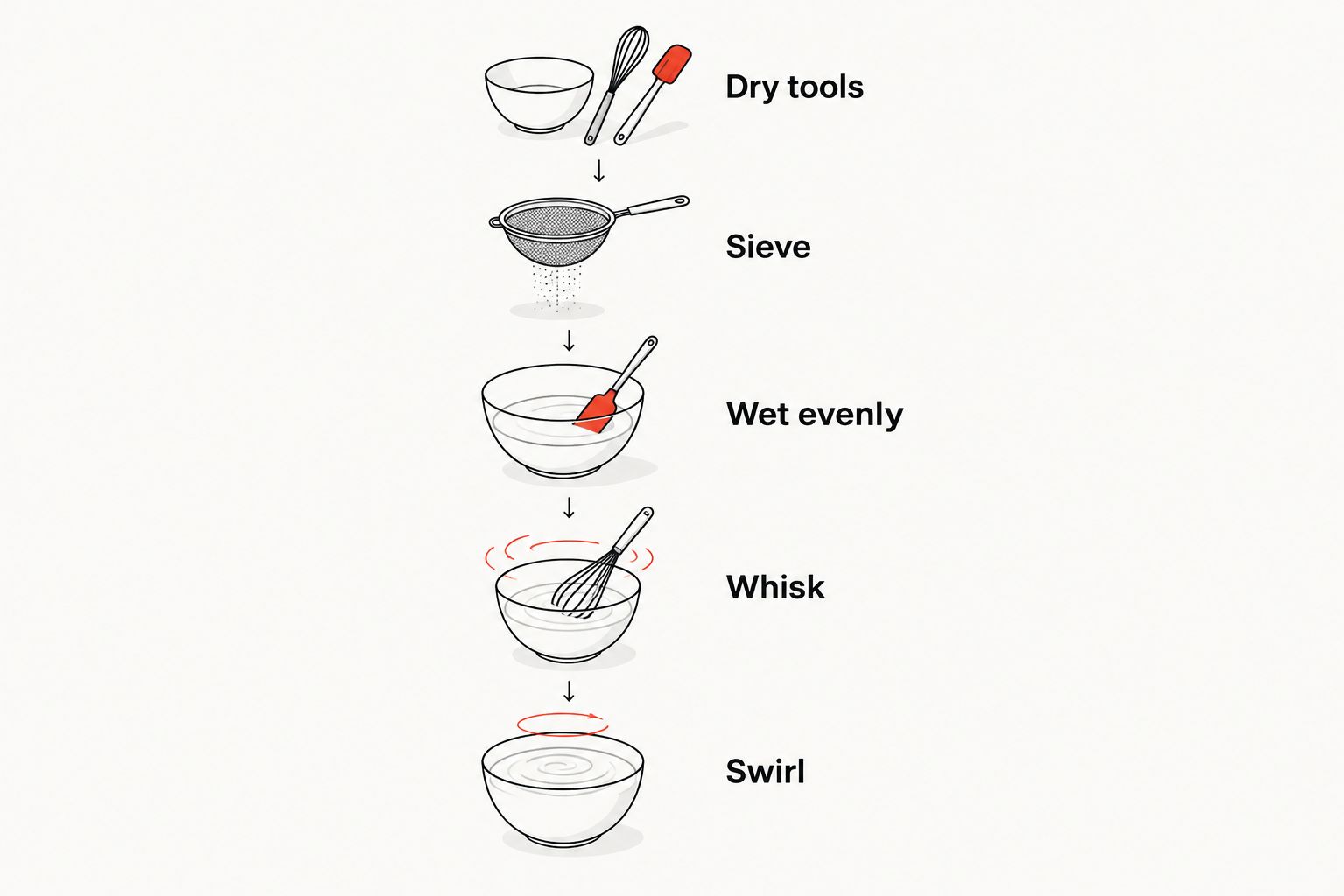
- Dry tools. Measure with a dry scoop and sieve into a dry bowl. Keep the open matcha container away from rising steam.
- Sieve. Pass the portion through a fine-mesh sieve. Break up loose clusters before adding water rather than chasing them around the finished drink.
- Wet evenly. Add water and work through any visible dry pockets. Check the sides and bottom of the bowl, where powder can remain untouched.
- Whisk. Disperse the powder through the liquid. Look beneath the foam as well as at the surface.
- Swirl. If the prepared drink has stood, move the liquid gently before the next sip. This redistributes settled particles.
The sequence addresses different problems. Sieving handles clusters before wetting. Whisking distributes wetted particles. Swirling brings settled material back through the drink without treating normal separation as a fault.
Keep the check practical. Before pouring, tilt the bowl slightly and look for unmixed powder along its inner surface. If there is a visible lump, work through it while the drink is still in the preparation bowl.
There is no need to keep whisking simply because a few particles remain visible. Matcha is ground leaf. The useful endpoint is an evenly mixed drink without dry pockets, not water that behaves as though nothing solid was added.
Why matcha powder settles differently
Different cups do not always separate in the same way. These factors explain the distinction without turning the sediment into a quality score.
- Particle size. Larger particles generally settle faster than smaller ones under comparable conditions. The visible result does not reveal a precise milling specification.
- Clumping. Particles grouped into a larger cluster behave differently from individually dispersed particles. Sieving helps address those clusters before preparation.
- Mixing. Powder left against the bowl or beneath the liquid has not joined an even suspension. Thorough wetting matters before the drink rests.
- Time undisturbed. Standing gives particles an opportunity to settle. Movement redistributes them; leaving the cup still allows separation to resume.
- The liquid used. Water and milk differ in viscosity and composition. A drink prepared with milk need not show the same settling pattern as one prepared with water.
Compare like with like when troubleshooting. Keep the powder, portion, liquid and method consistent, then change the step being investigated. Otherwise, a different-looking cup reveals little about what caused the change.
Sediment, clumps and freshness are separate checks
Sediment describes what happens in the prepared drink. Freshness concerns the condition of the powder before preparation. One does not provide a complete answer about the other.
Air and light affect stored matcha. An airtight, light-blocking container limits those exposures between uses. It does not prevent particles from settling once the powder has been mixed with water.
The reverse is also true. A drink that remains visually uniform is not proof that the powder was stored well. Milk, movement and preparation can change its appearance without answering questions about its aroma or taste.
For a 2026 home storage routine, choose a dry, closed container and a place away from direct light and kitchen steam. The guide to choosing a matcha container that keeps out air and light covers that decision separately.
Keep observations specific. Note a muted aroma, a changed flavour or damp clumps rather than using a layer at the bottom of the cup as a verdict on freshness. Storage history gives those observations context.
Tools have different jobs
A sieve and a whisk are complementary, not interchangeable. The sieve separates clusters in the dry powder. The whisk distributes powder through water after wetting.
A sieve alone cannot prepare the drink. Its benefit is a more manageable starting texture; the powder still needs mixing. A whisk can work through some clusters, but visible dry pockets need attention rather than more surface foam.
| Tool | Role and limit |
|---|---|
| Fine-mesh sieve | Breaks up dry clusters; does not suspend powder. |
| Bamboo whisk | Disperses powder; does not make leaf dissolve. |
| Drinking spoon | Remixes settled particles; does not replace initial preparation. |
Choose the tool for the problem in front of you. Use the sieve before preparation, the whisk during preparation and a gentle stirring or swirling motion after the drink has stood.
The bowl matters too. Space around the whisk makes it easier to reach powder and inspect the mixture. A narrow glass conceals the bottom and restricts movement, even when it works well as the vessel for drinking.
Airtight storage and measured preparation at home
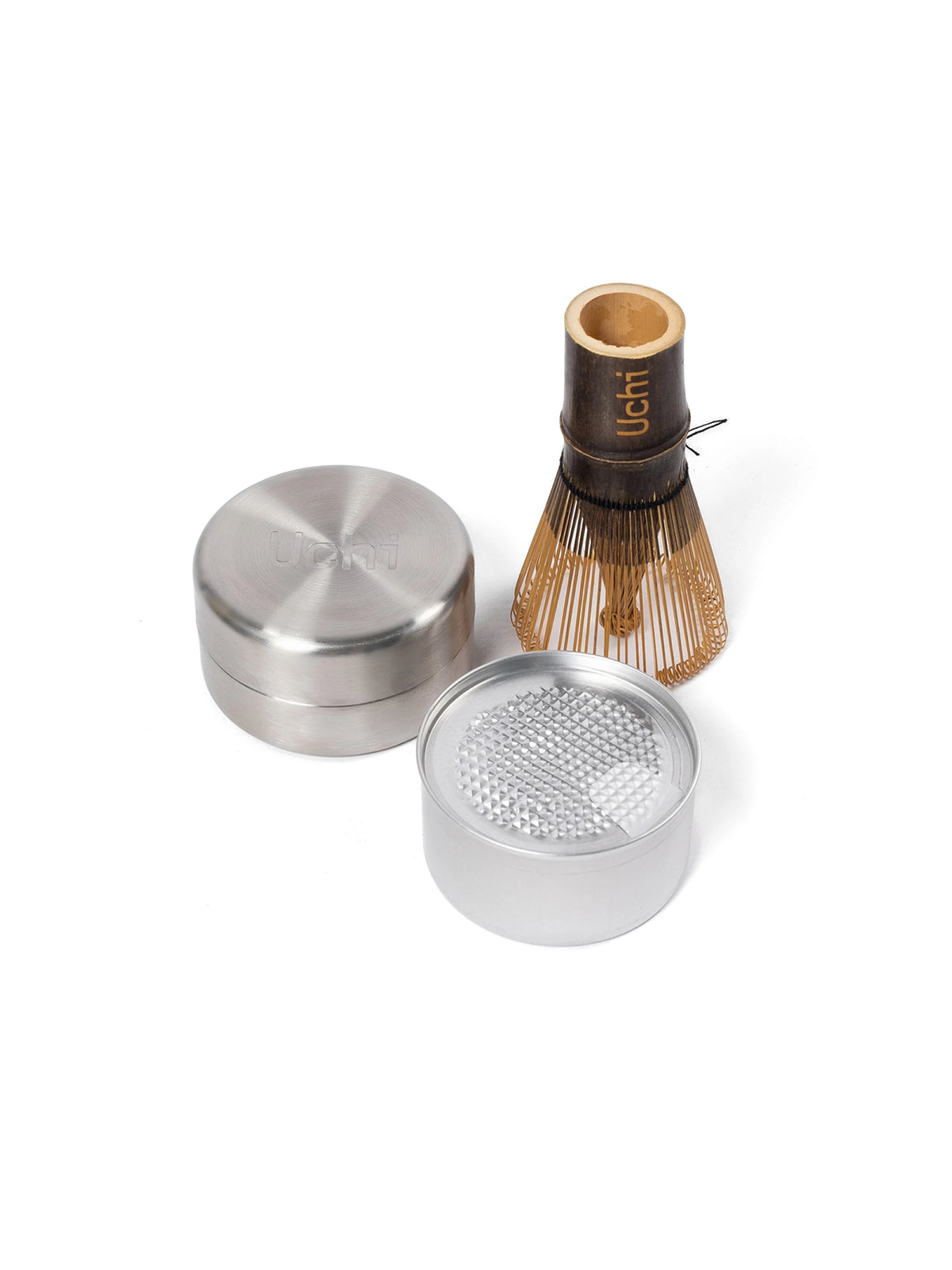
Uchi Matcha separates storage from preparation. The Base is an airtight stainless steel canister, kept for life. Its role is to protect stored powder from air and light between uses, not to change how ground leaf behaves in the cup.
The Pod contains 40g of matcha, about twenty cups, in recyclable aluminium. That format describes the amount and packaging. It is not a promise that a prepared drink will remain uniformly suspended.
For measured preparation, one leveled Uchi Spoon holds 1 gram. The Sieve is a fine-mesh sifter, and the Whisk is a bamboo chasen with 120 prongs. Each addresses a concrete part of making the drink.
Uchi suits home matcha drinkers who want airtight storage and dedicated preparation tools. The limit is equally clear: neither storage nor tools eliminate the natural settling of ground tea leaf.
The preparation principle remains unchanged in 2026. Protect the powder before opening the container. Disperse it carefully when making the drink. Remix gently when the cup has stood.
Reading matcha labels in 2026
A label describes the tea, but it does not replace observing the prepared drink. Harvest information, producer details and milling descriptions answer different questions from whether a cup separates after standing.
Do not use normal sediment as a shortcut for assessing those claims. Even finely milled matcha remains ground leaf. A promise that the powder completely disappears into water would confuse dispersion with dissolution.
The more useful question is whether the preparation starts evenly mixed. If it does, and a fine layer appears after resting, the observation fits ordinary settling. If dry lumps remain immediately after whisking, revisit wetting and mixing first.
Keep taste in the assessment. The appearance of the bottom of a cup does not describe the whole drinking experience. Aroma, flavour, texture and storage condition deserve separate attention rather than a single visual verdict.
FAQ
Why does my matcha powder sink after I whisk it?
Matcha powder sinks because insoluble ground leaf particles settle when the drink stands. Whisking distributes those particles through the liquid; it does not dissolve them completely.
Is it normal to have matcha sediment in the last sip?
Fine matcha sediment in the last sip is normal after the cup has stood. A gentle swirl before drinking redistributes settled particles and helps keep the texture more even.
Will sieving stop matcha powder from settling?
Sieving does not stop matcha powder from settling. It breaks up dry clusters before preparation, which helps distinguish preventable lumps from the normal settling of dispersed particles.
Does more foam mean my matcha is mixed properly?
More foam does not prove that matcha is mixed properly. Foam contains air introduced by whisking, while dry pockets can still remain against the sides or bottom of the bowl.
Why does my matcha separate after I add milk?
Matcha can separate after milk is added because the ground leaf still forms a suspension rather than dissolving completely. Disperse the powder before combining the drink, then stir or swirl again if it stands.
Should I add more powder when the top of my drink looks pale?
Do not add more powder solely because the top looks pale after standing. Remix the existing drink first; settled particles can leave the upper liquid looking lighter.
Can airtight storage prevent sediment in matcha?
Airtight storage does not prevent sediment in prepared matcha. It limits air exposure while the powder is stored, whereas sediment results from particles settling after preparation.
One last thing
The last sip is not a reliable sample of the whole cup. Once particles settle, it contains a different concentration from the liquid above it.
Swirl before judging texture. Then compare the first and last sips of an evenly mixed drink. This small change separates a preparation habit from a conclusion about the tea.