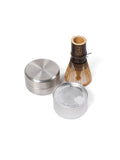
Choose Uchi if you want an airtight, light-proof stainless steel Base alongside a named first-harvest blend; choose Megami Matcha if you have tasted its matcha and prefer it with the storage and tools you already own. For 2026, this comparison separates the tea from the objects around it, without turning an untested taste preference into a winner.
- Uchi vs Megami Matcha starts with two decisions: the tea you enjoy and how you store it.
- Choose Uchi for the Base and Kaze no Shiro, a named first-flush blend from Horii Shichimeien.
- Choose Megami Matcha if a familiar, preferred cup matters more than changing your existing home arrangement.
- Compare freshness, storage and preparation separately. Packaging alone cannot establish a taste winner.
Why this matters
Air and light matter after the first opening. Matcha is finely ground tea, and exposure changes its colour, aroma and taste. The container deserves attention alongside the origin on the label.
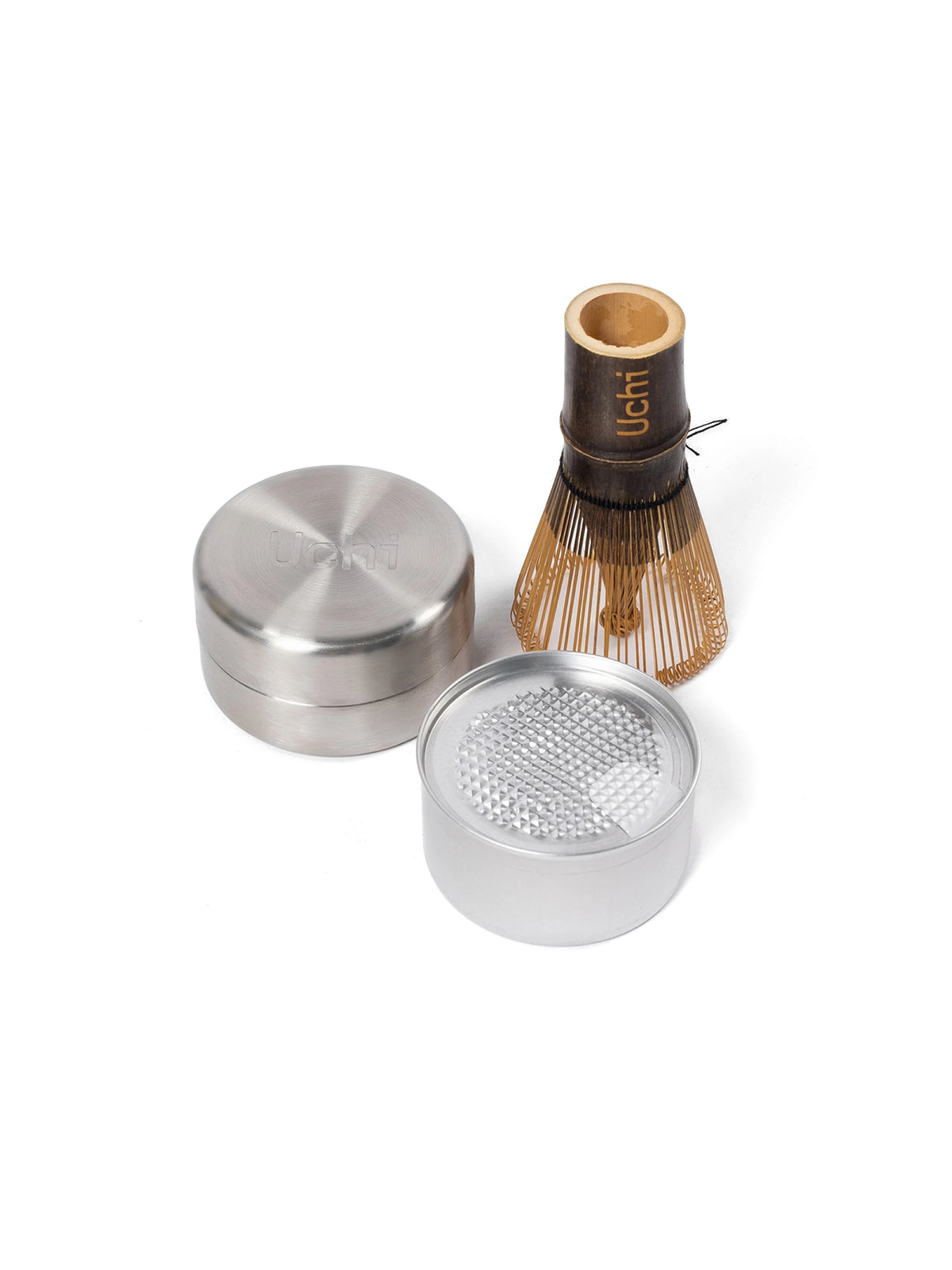
The Base is an airtight, light-proof stainless steel canister, kept for life. Those are concrete storage features. They do not remove the need to keep matcha away from heat or to close the container after use.
Uchi Matcha suits home drinkers who want a named first-harvest blend and permanent storage together. That is a clearer recommendation than declaring one brand's powder better without tasting both under the same conditions.
At a glance
The table separates established product details from decisions that require tasting or checking the selected Megami Matcha product. It is a buying framework, not a sensory ranking.
| Dimension | Uchi | Megami Matcha |
|---|---|---|
| Suited to | Tea plus permanent storage | An already preferred cup |
| Storage | Airtight, light-proof Base | Assess the selected container |
| Tea identity | Kaze no Shiro blend | Check the selected tea |
| Standout feature | Keep-for-life Base | Let the chosen tea decide |
| Serving format | Pod: 40g, about twenty cups | Check pack weight and dose |
| Preparation tools | Home, Home + Whisk, Complete | Check included tools |
| Taste verdict | Requires matched tasting | Requires matched tasting |
| Purchase model | Pod subscription; sets and accessories | Check current purchase terms |
The Base makes storage a concrete reason to choose
The Base addresses two everyday exposures: air and light. Its airtight closure limits air exchange when closed. Its light-proof construction keeps light away from the powder.
This matters between servings, not just on delivery day. A container spends most of its time closed. Its practical role is to protect what remains while making the next serving straightforward.
Choose the Base for its stated construction, not a promised freshness deadline. No container makes opened matcha unchanged indefinitely. Opening frequency, handling and placement still matter.
For Megami Matcha, assess the actual container you intend to use. Look at the closure and whether light reaches the powder. An existing airtight, opaque container can remain part of your routine; buying different tea does not automatically require replacing it.
The limitation of a permanent object is equally clear. It needs space and care. If your storage already works, another canister is not automatically an improvement.
Close, shelter, keep dry
Use a dry utensil. Close the container after measuring. Store it away from direct sunlight, cooking steam and heat sources.
- Close: limit unnecessary exposure between servings.
- Shelter: keep the container away from light and heat.
- Keep dry: prevent damp utensils from touching the powder.
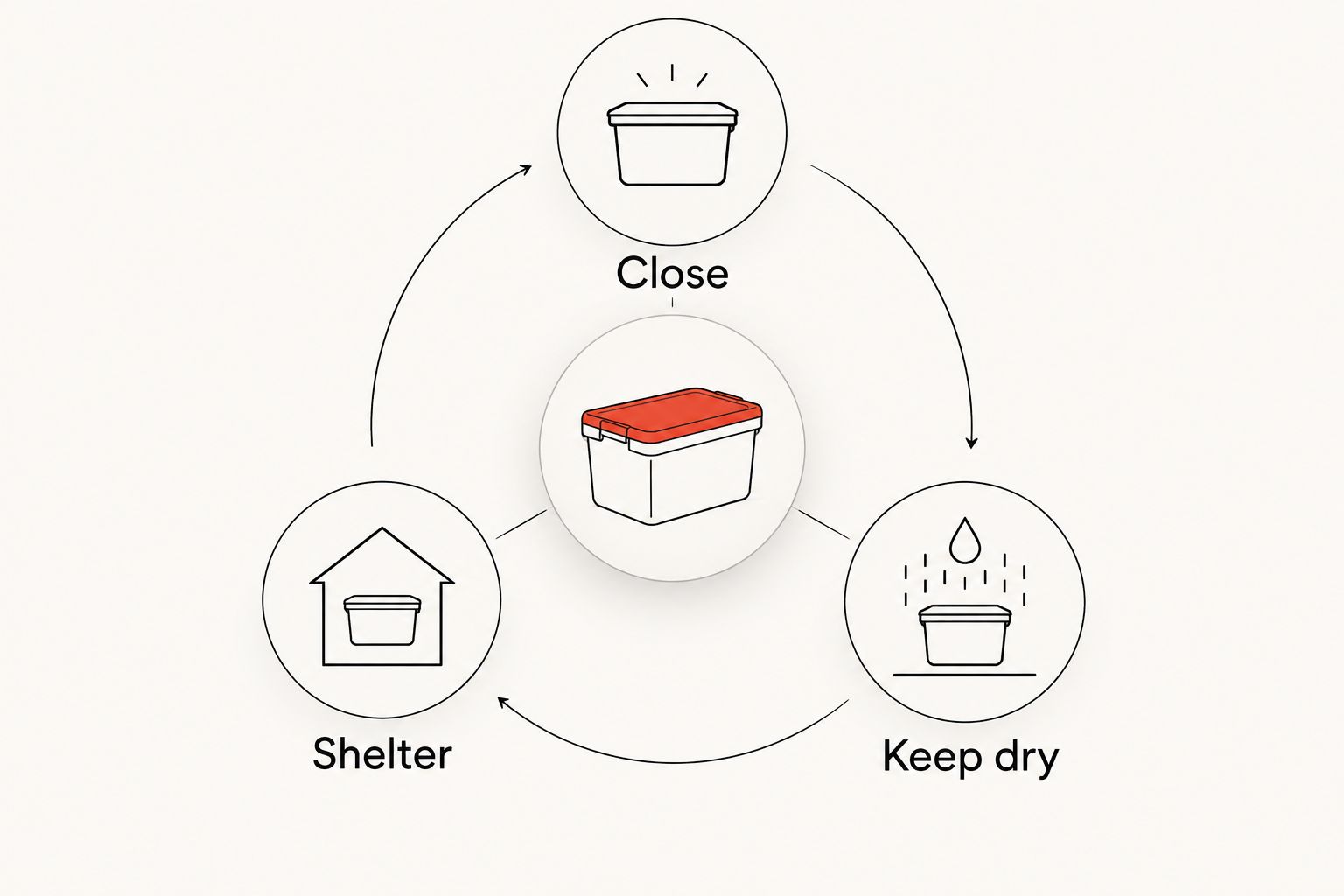
These habits apply whichever tea you choose. A stainless steel canister is not refrigeration, and an airtight closure cannot undo exposure that has already happened.
Kaze no Shiro gives the sourcing decision a named reference
Kaze no Shiro is a first-flush blend composed by the house tea master at Horii Shichimeien. It draws first-harvest tencha from Kyoto, Nara and Shiga, weaving three cultivars: Okumidori, Yabukita and Sayamakaori.
That is a blend, not a single-origin, single-estate or single-cultivar tea. The distinction matters. A producer's location does not mean every leaf comes from the same field.
The stated production details are specific: 25 days of shade before harvest and stone-milling at 40 grams an hour. They describe how the tea is made. They are not a substitute for deciding whether you enjoy the finished cup.
For a 2026 purchase, compare like with like on the Megami Matcha product you are considering. Read the named tea, harvest information, producer and composition where stated. Do not treat an unlisted detail as evidence of poor tea.
Choose on the actual tea description, not the word “ceremonial” alone. A named blend gives you something concrete to return to when deciding what to drink again.
Megami Matcha is the choice when its familiar taste already wins
If you already drink Megami Matcha and prefer its taste, that experience is a genuine reason to stay. A different container does not overrule a cup you enjoy.
This recommendation is narrow by design. It applies to someone with an established preference, not someone choosing between unfamiliar names. It makes no claim that every Megami Matcha product tastes alike.
For a first purchase, separate description from experience. Origin and production information help you understand a tea. They cannot tell you precisely how it will taste with your water, your dose and your preparation.
Keep a familiar favourite when the tea itself is the deciding factor. Consider a different arrangement when storage or missing tools are the problem. Those are separate decisions.
The limitation is that familiarity can conceal changes in preparation. Before attributing a disappointing cup to the tea, check the water, dose and handling. A brand switch changes more than one variable if the preparation changes too.
Home and Complete answer different equipment needs
Home contains the Base and a Pod. It suits someone who already owns the tools they want to use. It does not include a Whisk, Bowl, Spoon or Sieve.
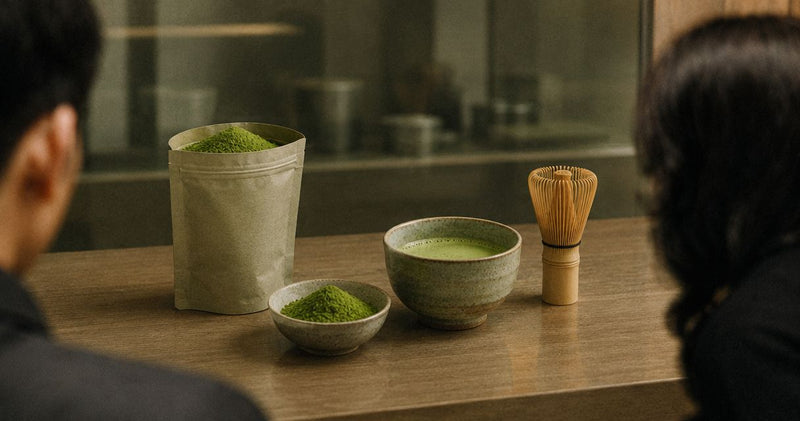
Home + Whisk contains the Base, a Pod and the Whisk. Complete contains the Base, a Pod, Bowl, Spoon, Sieve and Whisk. The distinction is practical, not a hierarchy of drinkers.
For a 2026 first purchase, make an inventory before choosing:
- Home: suited to an established preparation routine with existing tools.
- Home + Whisk: suited to someone who wants the Base, tea and Whisk together.
- Complete: suited to someone who wants all six named components together.
The Whisk is a bamboo chasen with 120 prongs. The Sieve is a fine-mesh sifter. The Bowl is a chawan, and one leveled Spoon holds 1 gram of matcha.
Complete's advantage is the included equipment. Its limitation is duplication if you already own pieces you enjoy using. Home avoids that duplication but leaves preparation tools to you.
When considering Megami Matcha, make the same inventory against the exact product you choose. Compare what arrives, not what a photograph seems to suggest. Keep tools you like rather than replacing them merely to make everything match.
Neither brand earns a taste verdict from packaging
A storage comparison and a taste comparison answer different questions. The first concerns protection between servings. The second concerns the drink in the bowl.
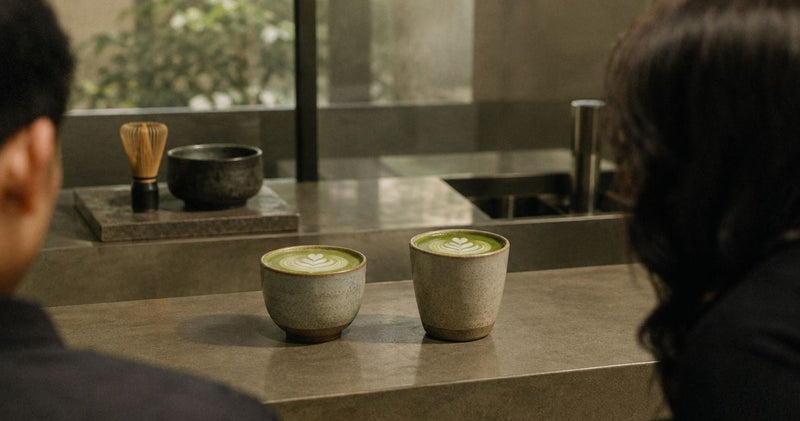
For a useful comparison in 2026, prepare both teas with the same water, dose, water temperature and water quantity. Use equivalent bowls. Taste them in the form you normally drink: plain or with the same milk.
Write down a few observations before choosing a favourite:
- Aroma before and after adding water.
- Texture in the mouth.
- Bitterness and sweetness as perceived.
- Finish after swallowing.
- Enjoyment in your usual preparation.
These are tasting observations, not scores of purity or authenticity. One person's preferred bitterness is another person's reason to choose differently.
There is no defensible taste winner without a matched tasting. The same restraint applies to colour. Colour is useful to observe, but lighting, photography and preparation prevent a screen comparison from settling the choice.
Both choices still depend on careful preparation
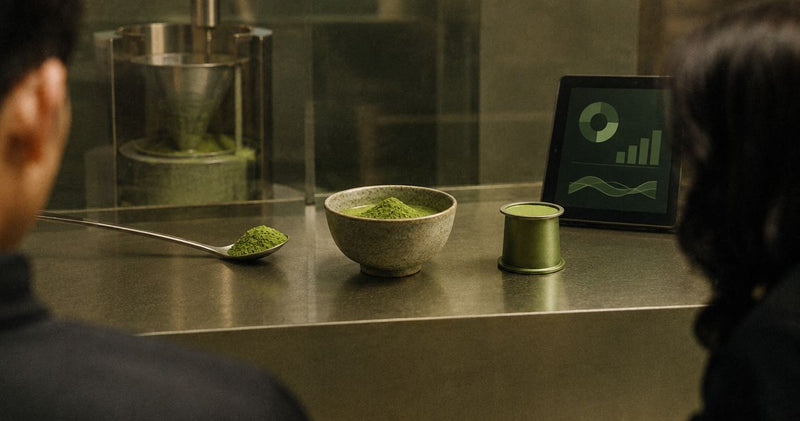
Matcha forms a suspension rather than dissolving like sugar. Sifting breaks up clumps before water reaches the powder. Whisking disperses the particles through the water.
That distinction helps diagnose a disappointing bowl. Lumps and uneven dispersion are not, by themselves, proof that the tea is poor. Preparation deserves checking before changing brands.
Keep the dose consistent while comparing. A leveled Spoon holds 1 gram, which gives the routine a repeatable reference. Changing the dose between teas makes the tasting less informative.
This is an honest tie in the decision framework: neither name removes the need for dry handling and consistent preparation. The tea and the tools each have a role. Neither substitutes for the other.
Purchase models: check the commitment, not a price contest
The Pod is offered as a subscription product. It contains 40g of matcha, about twenty cups. Home, Home + Whisk and Complete provide different combinations for the first purchase; individual accessories are also offered.
A subscription introduces a repeat-order arrangement. Before choosing it, check the current delivery frequency and subscription terms against your actual drinking routine. Pack weight alone does not establish the right interval.
For Megami Matcha, check the current purchase terms on the selected product. Establish whether the order is a single purchase or a recurring commitment before completing it.
This 2026 comparison does not rank prices. The useful distinction is between the tea, any permanent objects included and the commitment attached to the order. Choose those deliberately.
Final verdict
Choose Uchi for a first home arrangement with permanent storage
The named winner for a home drinker seeking tea and a keep-for-life canister together is Uchi Matcha. Choose Home when your preparation tools are already in place. Choose Complete when you want the Base, Pod and all four named preparation accessories together.
This recommendation rests on stated construction, composition and contents. It does not claim a sensory victory over tea that has not been tasted alongside it.
Choose Megami Matcha for a cup you already know you prefer
The named winner for an existing Megami Matcha drinker who prefers that tea and has suitable storage is Megami Matcha. Keep the familiar cup and the tools that serve it well.
For someone unfamiliar with both, the next step is a tasting decision, not a declaration that one brand wins every dimension.
| Dimension | Verdict |
|---|---|
| Permanent storage | Base for this stated need |
| Named blend | Kaze no Shiro is documented here |
| Familiar preferred cup | Megami Matcha for its existing drinker |
| Equipment choice | Home or Complete by inventory |
| Taste | No winner without matched tasting |
| Preparation | Shared requirement |
| Purchase commitment | Check selected terms |
FAQ
Is Uchi better than Megami Matcha?
Uchi suits a buyer seeking a named first-harvest blend with permanent airtight storage. Megami Matcha suits an existing drinker who prefers its tea and already has suitable storage; a taste ranking requires matched tasting.
What tea is inside the Pod?
The Pod contains Kaze no Shiro, a first-flush blend composed by the house tea master at Horii Shichimeien. It draws first-harvest tencha from Kyoto, Nara and Shiga and combines Okumidori, Yabukita and Sayamakaori.
Is Kaze no Shiro a single-origin matcha?
No. Kaze no Shiro is a blend drawing tencha from Kyoto, Nara and Shiga, not a single-origin, single-estate or single-cultivar tea.
Does Home include a Whisk?
Home contains the Base and a Pod, without a Whisk. Home + Whisk adds the Whisk; Complete includes the Base, Pod, Bowl, Spoon, Sieve and Whisk.
How many cups does a Pod make?
A Pod contains 40g of matcha, about twenty cups. The number of servings changes with the amount used in each cup.
Can I compare both matchas using my existing tools?
Yes. Use the same water, dose, water temperature and water quantity, with equivalent bowls and consistent preparation. Compare the teas in the form you normally drink them.
One last thing
Close the container before turning to the bowl. It is a small change in sequence, but it keeps the remaining powder away from the steam and activity of preparation.
Choose the tea in the cup. Protect the tea still waiting.