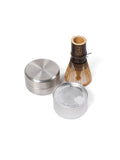
Uchi and Yu Tea both sell matcha for people who make it at home. Choose Uchi if you want a named Uji producer and a stainless steel Base that keeps the matcha airtight and out of the light; choose Yu Tea if you would rather judge its matcha on its own label and your own first bowl before committing to a system. This page compares the two in 2026 on storage, sourcing, tools and ordering.
- Uchi is the choice if storage and a named producer decide it for you.
- Yu Tea suits a buyer who wants to read its label first and decide on format later.
- Uchi sells matcha, Base and tools as one system; check Yu Tea's range for the same.
- Uchi vs Yu Tea in 2026 comes down to how much of the routine you want settled for you.
Why this comparison matters in 2026
Matcha oxidises fast. Air, light and heat dull the colour and flatten the taste within weeks of opening. Most matcha is stored badly after it reaches the kitchen.
That makes the container as important as the leaf. When you compare Uchi vs Yu Tea, you are comparing two answers to the same question: what happens to the powder after you open it.
This page states what Uchi sells and what it does not. It makes no claims about Yu Tea that cannot be read on Yu Tea's own pages. Where a Yu Tea detail matters, the table says what to confirm there.
At a glance
| Dimension | Uchi | Yu Tea |
|---|---|---|
| Best for | Counter storage and one routine | Buyers who read the label first |
| Format | Base plus Pod | Confirm on its site |
| Storage | Airtight, light-proof steel | Confirm on its site |
| Producer | Horii Shichimeien, Uji | Confirm on its label |
| Blend or single | First-flush blend | Confirm on its label |
| Tools | Whisk, Bowl, Sieve, Spoon | Confirm on its site |
| Trial | Sample, two servings | Confirm on its site |
| Standout | The Base is kept for life | Its own range |
The rows follow the sections below.
Uchi is built around storage
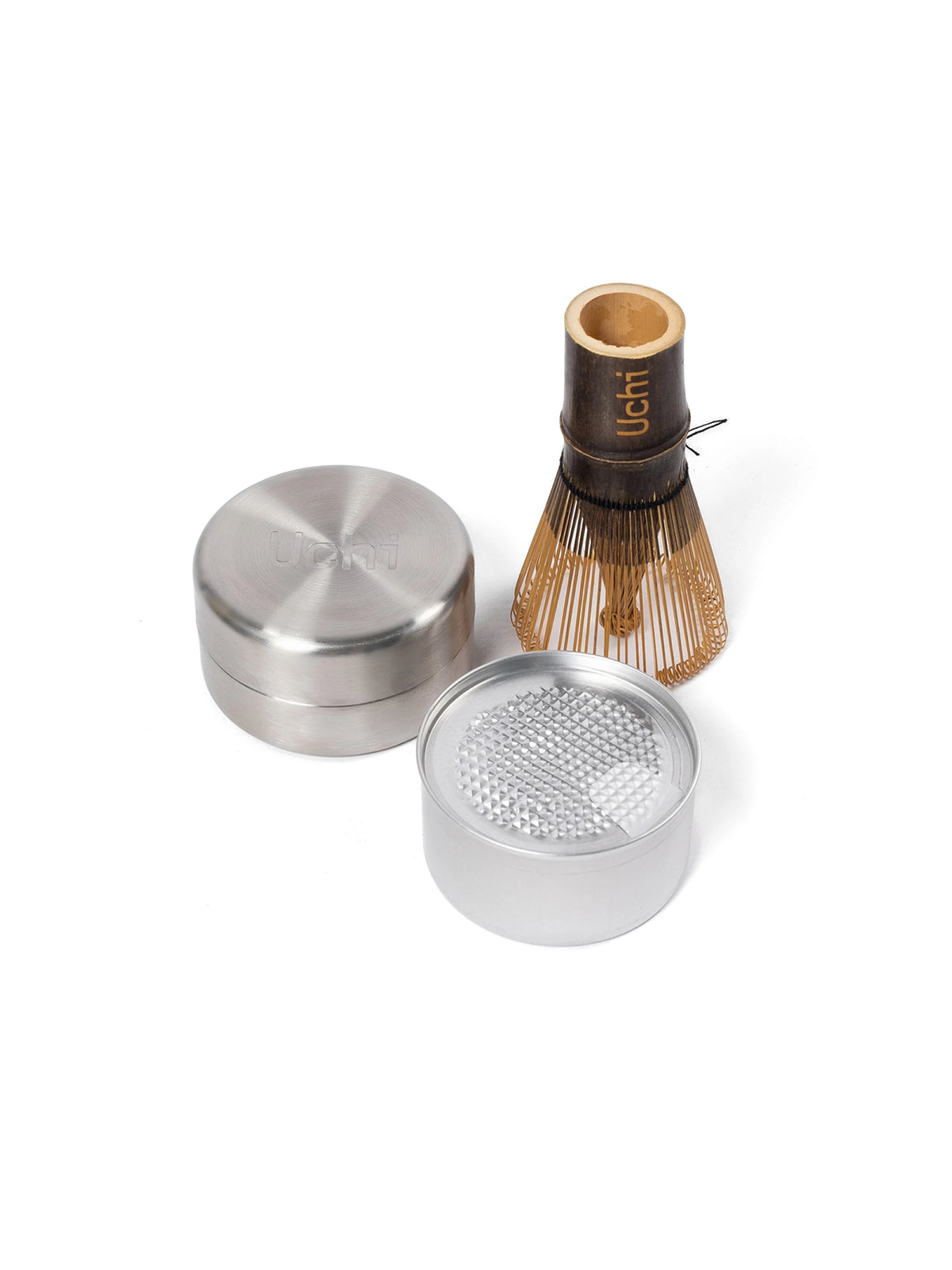
The Base is an airtight stainless steel canister, kept for life. It is light-proof. Matcha has three enemies: light, air and heat. The Base stops the first two at the door and keeps the powder away from the third when it sits out of direct warmth.
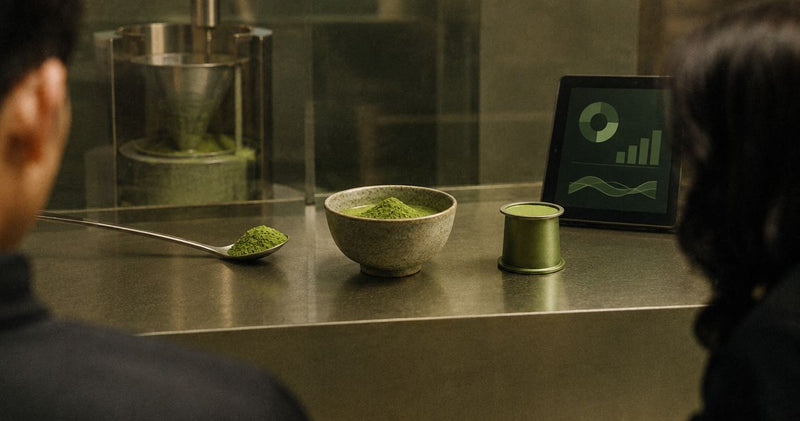
The matcha arrives separately as the Pod: forty grams, about twenty cups, in recyclable aluminium. You open the Pod into the Base once and the matcha lives there.
The design has a cost. The Base is a permanent object on the counter, and the Pod is a refill, not a standalone product you can taste without it. If you do not want a canister, Uchi is not built for you.
There is one disclosure. The foam insert in the packaging is not solved. It is named here rather than glossed.
For Yu Tea, read how the matcha is packed and how it is meant to be kept after opening. Check whether the container blocks light and seals against air. Those two answers settle this section for you.
Sourcing: Uchi names the producer
Uchi matcha is Kaze no Shiro, from Horii Shichimeien, founded in Uji, Japan, in 1879. It is a first-flush blend composed by the house tea master. The tencha is first-harvest and drawn from Kyoto, Nara and Shiga. Three cultivars are woven together: Okumidori, Yabukita and Sayamakaori.
It is not single origin and not single cultivar. In Uji, blending is how a house builds a flavour of its own and holds it steady, season after season.
The leaf is shaded for 25 days before harvest. It is stone-milled at 40 grams an hour. Slow milling keeps the powder fine without heating it.
What to read on Yu Tea's label:
- The producer, by name.
- The harvest, first flush or later.
- Whether the matcha is a blend or a single cultivar.
- The growing region.
- How the leaf is milled.
A label that answers all five tells you more than any description. A label that answers none is an answer too. Our guide to how a house tea master composes a ceremonial blend explains why the blend question matters.
Tools: Uchi sells the full set
Uchi sells the tools as parts of the same system. Each has a fixed job:
- Whisk: bamboo chasen, handmade, 120 prongs.
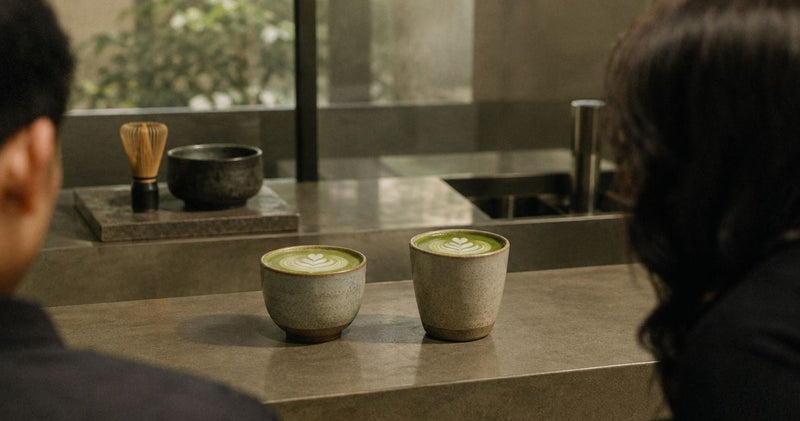
- Bowl: a chawan with a wide base and high walls, so the Whisk moves in a full W motion.
- Sieve: a fine-mesh sifter that breaks clumps before water touches the powder.
- Spoon: one leveled Uchi Spoon holds one gram, so the ratio needs no scale.
There are four ways in. The Home set is Base plus Pod. Home + Whisk adds the Whisk. The Complete set is Base, Pod, Bowl, Spoon, Sieve and Whisk. The Sample is a six gram sachet, two servings.
That is the advantage of Uchi in this comparison: nothing is left to assemble. It is also the limit. If you already own a chawan and a chasen you like, the Complete set repeats what you have.
For Yu Tea, check whether tools are sold at all, and whether they are specified: prong count, bowl dimensions, mesh. If they are not, you will source them elsewhere and match them yourself.
Taste is a tie until you taste both
No page can settle taste. Colour, aroma and finish are personal, and a product description is not a cup.
Uchi matcha is a first-flush blend. It is meant to taste the same in every season. Whether that is the flavour you want is a call only your own bowl can make.
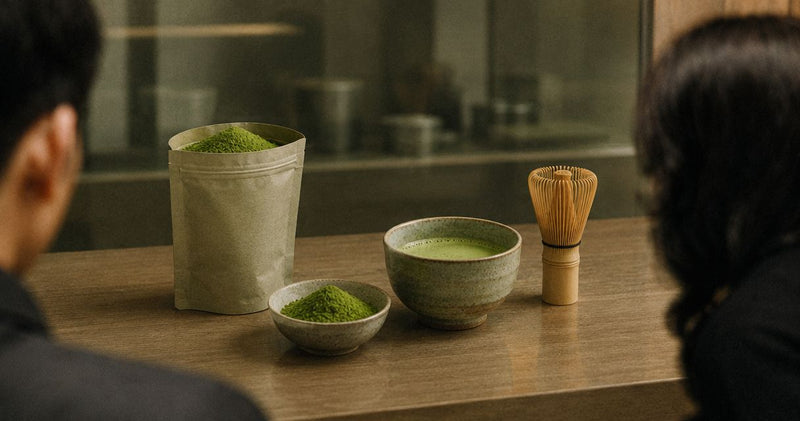
The way to settle it is a side-by-side tasting. Use the same water, the same gram of powder, the same bowl. Our walkthrough on tasting ceremonial matcha side by side at home covers the method. The Uchi Sample gives you two servings to start with.
Treat this row as a tie. Anyone who tells you otherwise before tasting is guessing.
Ordering and trial
Uchi offers the Sample for a first taste. It exists because matcha is hard to judge through a phone: the colour, the smell and the texture do not travel. Two servings is enough for a fair first read.
The Pod is also offered as a subscription product for existing Base owners. If you are new, start with Home or Complete.
For Yu Tea, look for the same thing: a small format that lets you taste before you buy in volume. If none exists, the first purchase is the trial.
Prices change, so none are written here. Check the current price on each site, then divide by the number of cups to compare like with like.
Where each one wins
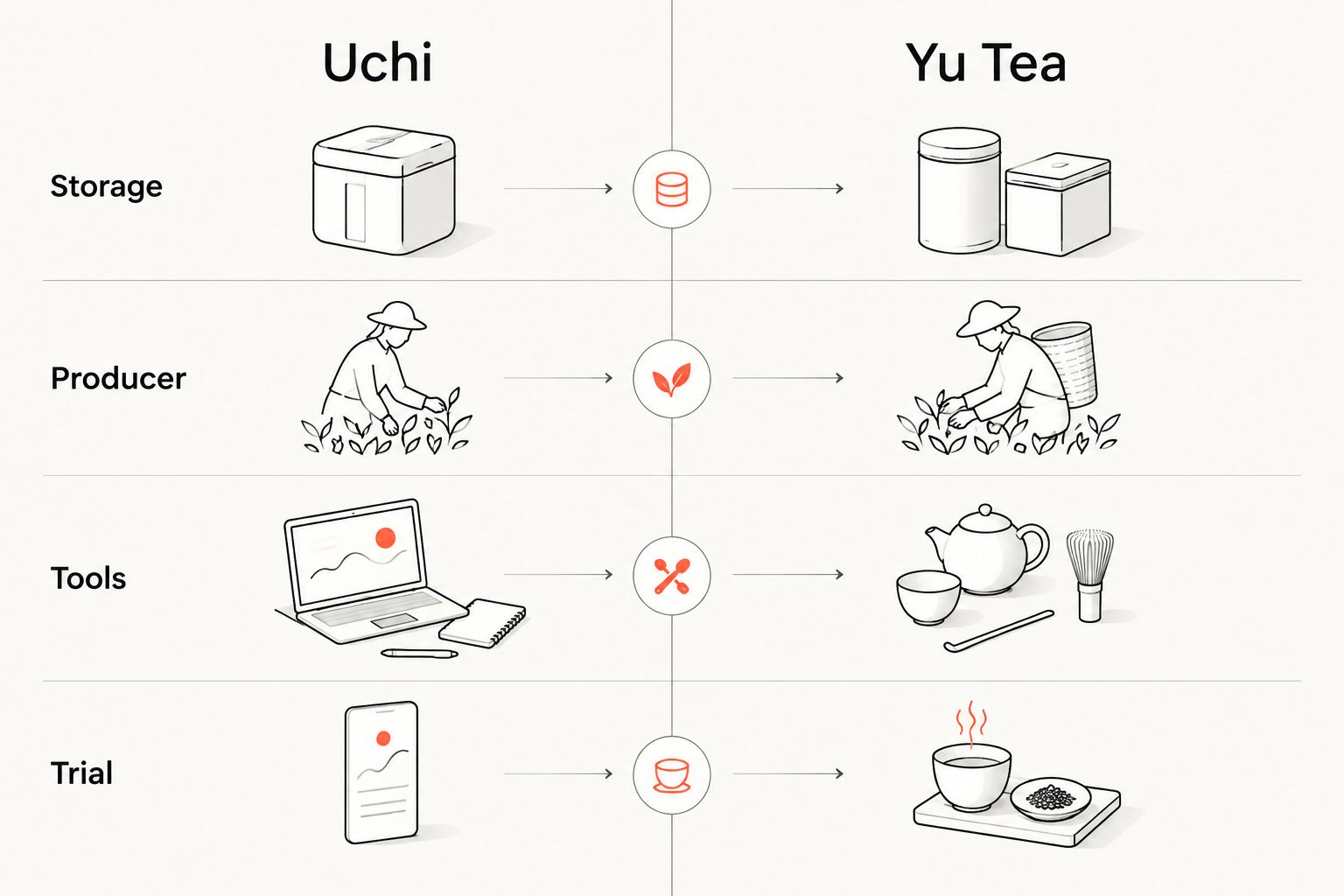
The scorecard below recaps each verdict.
| Dimension | Winner |
|---|---|
| Storage design | Uchi |
| Named producer | Uchi |
| Matched tools | Uchi |
| No canister needed | Yu Tea, if sold loose |
| Taste | Tie |
| Trial size | Confirm both |
The Yu Tea rows depend on facts that sit on its own pages. Uchi wins the rows it can document. A row marked confirm is one where the answer is yours to read.
Choose Uchi if
- You want a named Uji producer and a first-flush blend.
- You want the matcha stored in stainless steel, not left in its original packing.
- You prefer one routine with the tools matched to it.
- You are building a counter you will keep for years.
The Home set fits a first purchase. The Complete set fits someone starting from nothing.


Choose Yu Tea if
- Its label names a producer, a harvest and a blend, and you like the answers.
- You already own a Bowl, a Whisk and a storage container you trust.
- You want to judge the matcha first and decide on a system later.
- You prefer not to commit counter space to a canister.
If you are weighing more options, the guide to Yu Tea alternatives lists other places to look.
FAQ
Is Uchi or Yu Tea better in 2026?
Neither wins on every row. Uchi leads on documented storage, a named producer and matched tools. Yu Tea's rows depend on what its own label states.
What is the main difference between Uchi and Yu Tea?
Uchi sells matcha inside a system: a stainless steel Base, a Pod and matched tools. The Yu Tea comparison depends on its format and storage, which you confirm on its pages.
Where does Uchi matcha come from?
It comes from Horii Shichimeien in Uji, Japan, founded in 1879. The matcha is Kaze no Shiro, a first-flush blend of tencha from Kyoto, Nara and Shiga.
Is Uchi matcha single origin?
No. It is a blend composed by the house tea master from three cultivars: Okumidori, Yabukita and Sayamakaori.
How many cups are in one Uchi Pod?
One Pod holds 40 grams, about twenty cups. One leveled Uchi Spoon holds one gram.
Can I try Uchi matcha before buying a set?
Yes. The Sample is a six gram sachet with two servings, made for tasting before you choose Home or Complete.
What should I check on a matcha label in 2026?
Check the producer, the harvest, the cultivars and the milling. A label that names all four lets you compare any two matchas fairly.
One last thing
Run the comparison with a stopwatch on the second week, not the first. Open both, store both as directed, and taste each again after fourteen days. Colour and aroma show what the storage did. The first bowl only shows what the leaf was.