Instead of guessing how long boiled water should cool each morning, use a measured kettle temperature for matcha and repeat the same powder dose, water volume and bowl preparation. Start your 2026 routine at 75°C with 2g of matcha and 40ml of water, then adjust one variable at a time.
- For kettle temperature matcha preparation, start at 75°C and keep powder dose, water volume and bowl preparation consistent.
- Uchi suits home matcha drinkers who want airtight, light-proof storage between daily bowls.
- A kettle setting is not a measurement of the water temperature inside your bowl.
- Sift dry powder, close its container before pouring, and change only one recipe variable between bowls.
Why this matters
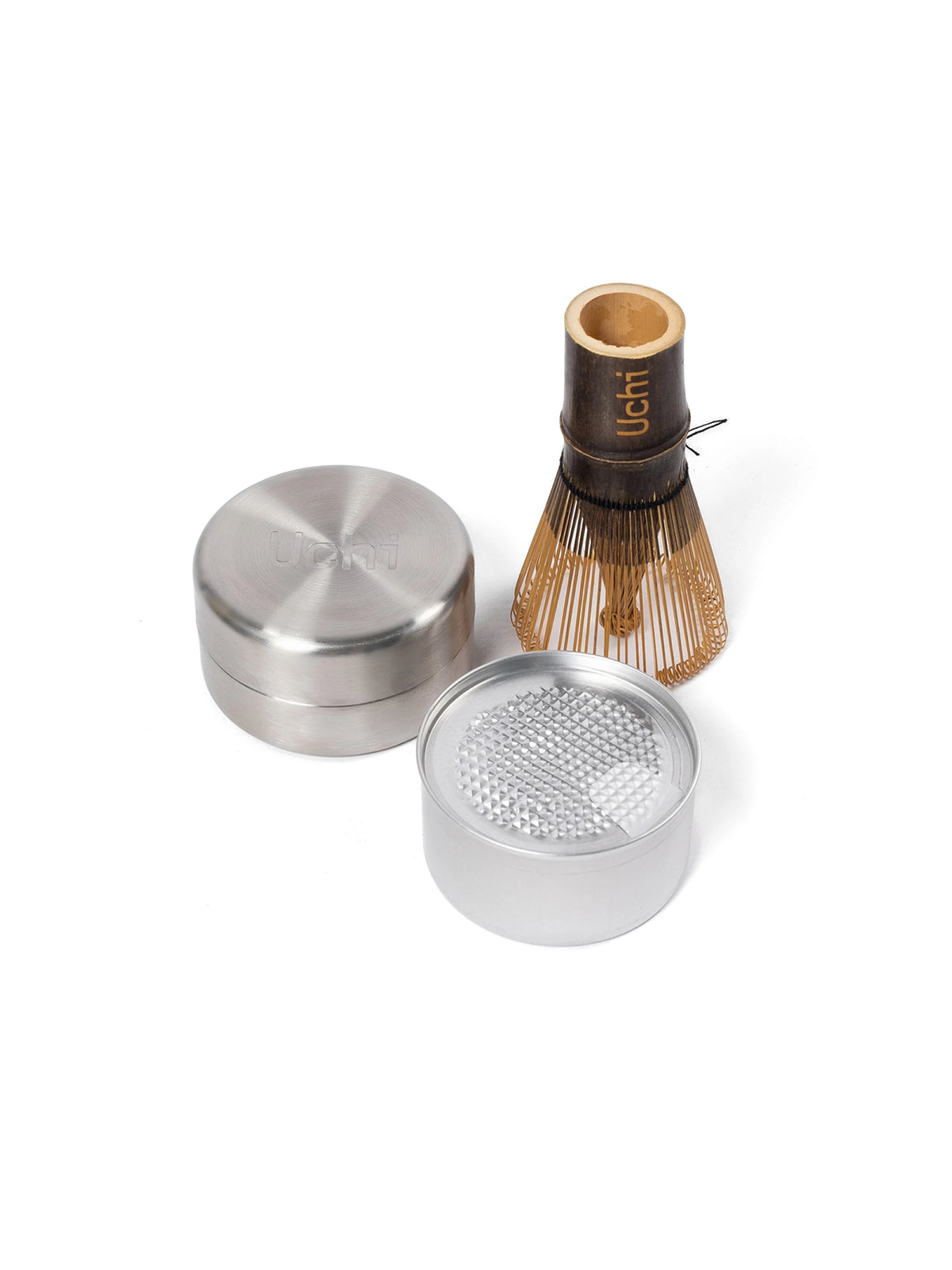
Air, light and heat affect stored matcha. Before changing a recipe, protect the powder between bowls. The Base is an airtight, light-proof stainless steel canister. Keep it closed and away from the kettle's steam and surrounding heat.
Uchi suits home matcha drinkers who want airtight, light-proof storage between daily bowls. Storage and preparation solve different problems. A controlled water temperature cannot restore aroma already lost during storage.
Temperature also changes between kettle and bowl. Water loses heat during pouring, and a cold bowl absorbs heat from it. The number on the kettle is therefore a starting condition, not a guarantee of the temperature touching the powder.
For a repeatable 2026 workflow, control the whole sequence. Use the same bowl, dose, water volume and preparation order before deciding that temperature needs changing.
Before you start
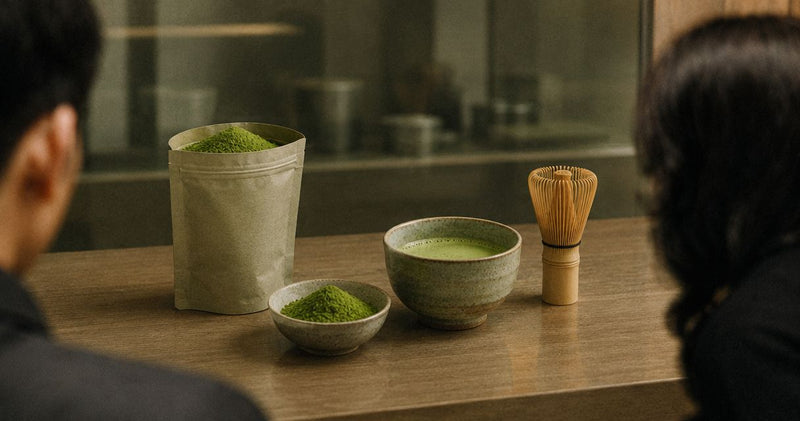
- Gather the materials. Use matcha, drinking water, a kettle, a bamboo whisk, a fine-mesh sifter and a bowl with room for whisk movement. A scale helps you repeat the powder dose and water quantity.
- Choose a temperature check. Use a temperature-controlled kettle or a food thermometer suitable for hot water. Kettle controls differ; follow the appliance manual rather than assuming every model has the same settings or buttons.
- Keep the powder station dry. Prewarming leaves water behind. Empty and dry the bowl before sifting, and keep the scoop and sifter away from steam. Close the powder container before handling hot water.
The gotcha is the bowl. A wet bowl turns sifted powder into damp patches before the measured brewing water arrives. A cold bowl creates a different starting temperature from a warmed one. Choose a preparation method and repeat it.
Choose your temperature-control method
Both methods below support the same recipe. The difference is where you check the water and how much attention that check requires.
| Method | Use and limitation |
|---|---|
| Temperature-controlled kettle | Suits daily repetition. Convenient, but its setting does not establish the temperature in the bowl. |
| Standard kettle and thermometer | Suits an existing kettle without temperature control. Measures cooling water directly, but adds a manual check. |
Choose the method you can repeat without guessing. Neither removes the need to keep the bowl preparation consistent. A thermometer also helps you understand the difference between a kettle setting and the water after pouring.
Do not substitute a fixed cooling time for a measurement. The starting volume, kettle construction and room conditions affect cooling. A wait that works for one kettle is not a universal instruction.
Powder and bowl preparation
- Set the dry station. Place the closed matcha container, dry scoop and sifter away from the pouring area. Leave enough space to return the container without passing it through steam.
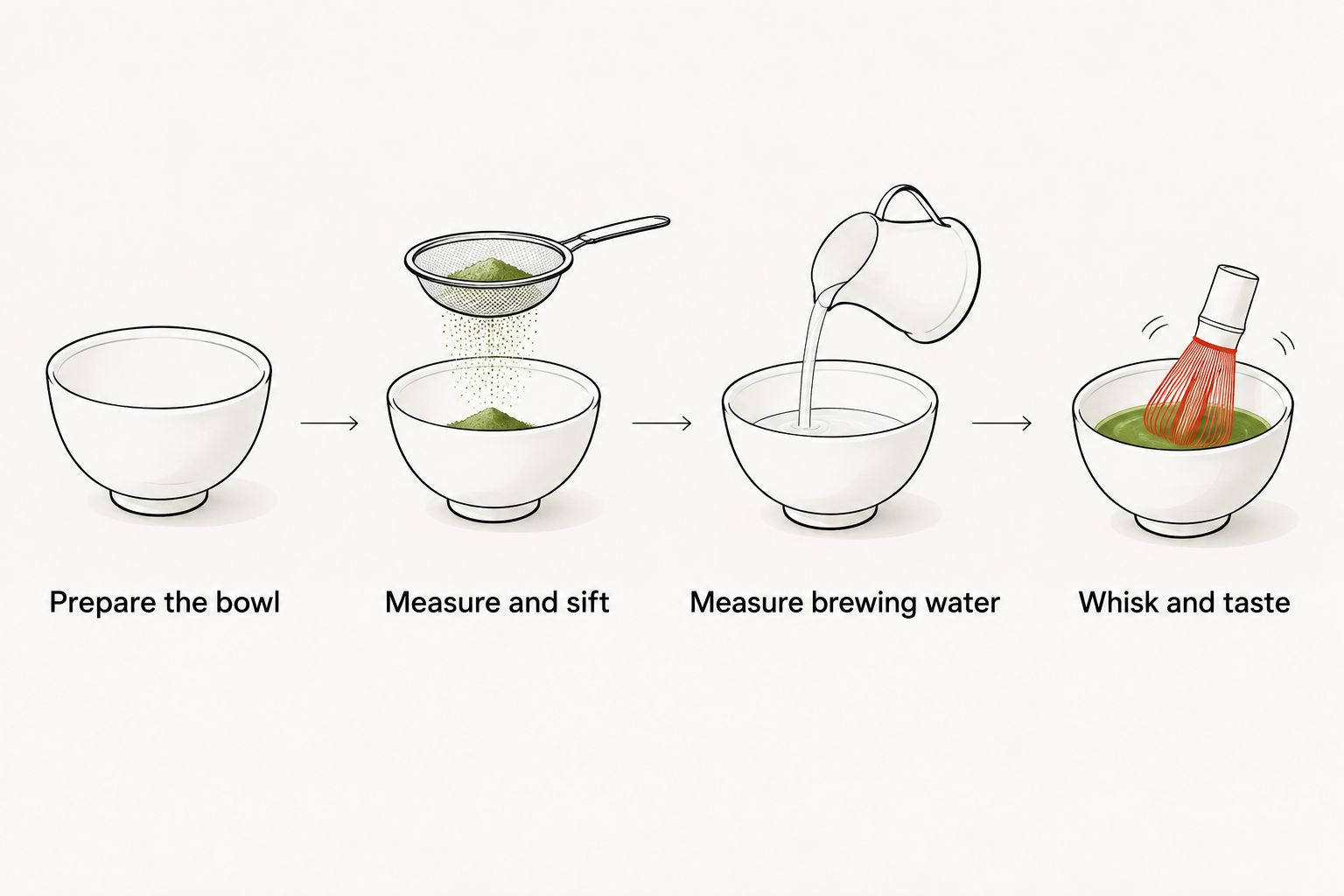
- Prepare the bowl. Warm the bowl with hot water, then empty it completely. Dry the inside before adding powder. Use the same warming sequence for subsequent bowls.
- Measure and sift. Weigh 2g of matcha into the sifter and gently work it into the dry bowl. Close the matcha container immediately after measuring.
Expected result: loose, sifted powder sits in a dry, warmed bowl. The remaining matcha is closed away before the kettle is poured.
One leveled Uchi Spoon holds 1 gram. Two leveled measures provide a practical starting dose; a scale makes comparisons between bowls easier to interpret.
Sifting separates clumps before water reaches them. It does not make matcha soluble. Matcha consists of finely ground leaf suspended in water, so some settling after preparation is normal.
For a closer look at the bowl step, read the guide to prewarming a matcha bowl before whisking.
Kettle and water preparation
- Set the starting temperature. On a temperature-controlled kettle, select 75°C if the appliance supports it. Otherwise, heat water and check it with a suitable thermometer as it cools.
- Measure the brewing water. Prepare 40ml for the measured powder. Keep any water used for warming the bowl separate from this brewing quantity.
- Repeat the transfer. Pour from the same vessel and use the same sequence each time. If you measure temperature after transferring water, record that measurement separately from the kettle setting.
Expected result: the recipe has a defined water quantity and a clearly identified temperature checkpoint.
The 75°C starting point sits within the commonly used 70–80°C range for preparing matcha. It is a trial recipe, not a claim that every blend requires the same temperature. Follow a producer's preparation directions when provided.
Do not describe a bowl as prepared at 75°C merely because the kettle displayed that number. Write down what was actually controlled: the kettle setting, or a thermometer reading at a specified point.
Whisking and tasting
- Add the measured water. Pour it onto the sifted powder once the bowl and tools are ready. Avoid leaving the prepared water standing while looking for equipment.
- Whisk with short movements. Move the bamboo whisk back and forth in a W pattern. Keep the movement within the bowl rather than pressing the prongs firmly against its base.
- Inspect and taste. Look for remaining dry pockets or visible clumps. Taste when the bowl is comfortable to drink, and note texture, aroma, bitterness and strength separately.
Expected result: the powder is dispersed without dry pockets, and the tasting note identifies a specific characteristic rather than simply calling the bowl good or bad.
Foam is a useful observation, not a verdict on the matcha. Do not keep changing water temperature solely to produce a deeper foam layer. First establish whether the bowl tastes and feels as intended.
The Uchi Whisk is a bamboo chasen with 120 prongs. Its role is preparation, not measurement. The powder dose and water quantity still need their own controls.
Recipe record and adjustment
- Record the baseline. Note the powder, dose, brewing-water quantity, kettle setting, bowl preparation and water source. Add a short tasting description.
- Choose one change. If the texture is smooth but the taste is harsher than intended, test a lower water temperature while keeping the other conditions unchanged.
- Repeat before adopting. Prepare the revised recipe again. Keep the version that gives the taste you prefer under the same preparation conditions.
Expected result: each adjustment answers a specific question. The next bowl follows a recorded recipe rather than a memory of yesterday's pour.
A useful 2026 recipe record distinguishes strength from bitterness. A bowl that feels too concentrated does not automatically need cooler water. Review the powder-to-water ratio separately, after the temperature comparison.
Avoid changing the water source, dose and temperature together. That produces a different drink, but it does not reveal which change mattered.
A second workflow for an iced bowl
For iced matcha, prepare a warm concentrate before adding ice or cold water. This keeps the initial sifting and whisking sequence familiar. The additional dilution becomes a separate part of the recipe.
- Prepare and dry the bowl as above.
- Sift the same measured powder dose and close the container.
- Whisk with the same measured warm-water quantity used in the baseline recipe.
- Transfer to a drinking glass, then add a measured quantity of cold water and a consistent quantity of ice.
- Record the additions separately from the warm concentrate.
Expected result: the warm preparation remains comparable with the original bowl, while the final drink has a recorded dilution step.
The limitation is melting ice. A drink tasted immediately after pouring is not the same concentration as one left standing. Compare iced recipes at the same stage, rather than changing the concentrate because a later sip tastes lighter.
Keep the dry powder station separate from the cold glass. Condensation on the glass should not reach the scoop, sifter or open matcha container.
Troubleshooting
The bowl tastes different despite the same kettle setting
Check the bowl preparation and water quantity first. A cold bowl and a warmed bowl do not create identical conditions. Confirm that the kettle reached its selected setting before pouring, then repeat the same transfer sequence.
If the difference persists, measure the water at a consistent checkpoint. Do not correct an unmeasured temperature difference by changing the powder dose.
The matcha has clumps despite careful whisking
Check whether the powder was sifted into a dry bowl. Damp tools and residual warming water create clumps before whisking begins. Reset with a dry scoop, dry sifter and fully emptied bowl.
Whisking harder is not the first correction. Fix the dry preparation stage, then repeat the original recipe.
The texture is smooth but the taste is harsh
Test a lower brewing-water temperature while keeping the dose and volume unchanged. Compare the bowls at a similar drinking temperature. Also check the powder's aroma and storage conditions.
Temperature is not the only explanation for bitterness. Avoid treating a lower setting as a repair for powder that has changed during storage.
Powder settles after the bowl stands
Matcha is a suspension, not a dissolved drink. Some settling is expected. Gently re-disperse it before drinking rather than repeatedly raising the kettle temperature.
Persistent dry lumps are a different issue. Return to sifting and whisking if those are present from the first sip.
A cooling timer gives inconsistent results
Replace the timer with a thermometer check. Different starting water quantities and kettle conditions change cooling. Once measured, record the temperature checkpoint rather than treating elapsed time as the recipe.
A timer can help organise preparation. It cannot establish water temperature on its own.
Customize your workflow
Keep a short recipe card beside the preparation area. For your 2026 record, include the date, powder name, dose, water quantity, temperature checkpoint and one tasting note. A compact record is easier to repeat than a paragraph of impressions.
For Uchi matcha, the Pod contains 40g, or about twenty cups. It holds Kaze no Shiro, a first-flush blend composed by the house tea master at Horii Shichimeien, drawing first-harvest tencha from Kyoto, Nara and Shiga and weaving Okumidori, Yabukita and Sayamakaori.
That identity belongs on the recipe card. A different powder deserves a fresh comparison rather than an assumption that the previous setting will taste identical.
Once the baseline is stable, expand one part of the workflow. Test the water source, adjust concentration, or compare a warmed bowl with an unwarmed one. Keep everything else fixed. Consistency comes from fewer simultaneous changes, not more equipment.
FAQ
What kettle temperature should I use for matcha?
Start at 75°C, within the commonly used 70–80°C preparation range. Treat this as a trial setting and keep the dose, water quantity and bowl preparation consistent while adjusting to taste.
Can I make matcha without a temperature-controlled kettle?
Yes. Use a food thermometer suitable for hot water to check the water as it cools. A fixed waiting time does not reliably establish temperature across different kettles and water quantities.
Does the kettle display show the temperature in my matcha bowl?
No. Water loses heat during transfer, and the bowl absorbs heat. Record the kettle setting separately from any temperature measured after pouring.
Should I warm the bowl before making matcha?
Warming the bowl helps establish a repeatable starting condition. Empty and dry it before sifting powder, then use the same preparation sequence for each comparison.
How much matcha and water should I start with?
Use 2g of matcha and 40ml of water as a starting recipe. Adjust concentration separately from temperature so each comparison reveals which change affected the bowl.
Why does matcha settle even when I use warm water?
Matcha is finely ground leaf suspended in water, not a substance that fully dissolves. Some settling is normal; gently re-disperse it before drinking.
Can I use the same workflow for iced matcha?
Yes. Prepare the measured warm concentrate first, then record the cold water and ice added afterward. Compare drinks at the same stage because melting ice changes dilution.
One last thing
For your next 2026 temperature comparison, prepare the bowl before opening the matcha. Then measure, sift and close the container before pouring water. This small change separates the dry powder from steam without adding another tool.
The kettle attracts attention because it has a number on it. The less visible controls matter too: a dry scoop, a closed container and the same bowl preparation each morning.