Prewarm a matcha bowl by adding warm water, letting the vessel warm through, then emptying it and drying the interior before adding powder. For a 2026 home routine, this limits the heat a cold bowl draws from the mixing water; it does not replace careful water temperature, dry powder or steady whisking.
- Prewarm a matcha bowl, empty it, then dry the interior before adding powder.
- A warm chawan draws less heat from mixing water than a cold one.
- Prewarming does not remove matcha clumps; sieving and whisking address those separately.
- Uchi suits home matcha drinkers who want a Bowl with room for the Whisk.
Why this matters
A cold vessel absorbs heat from the water poured into it. That matters when the water is only a small part of the preparation. Warming the vessel first reduces that initial temperature change.
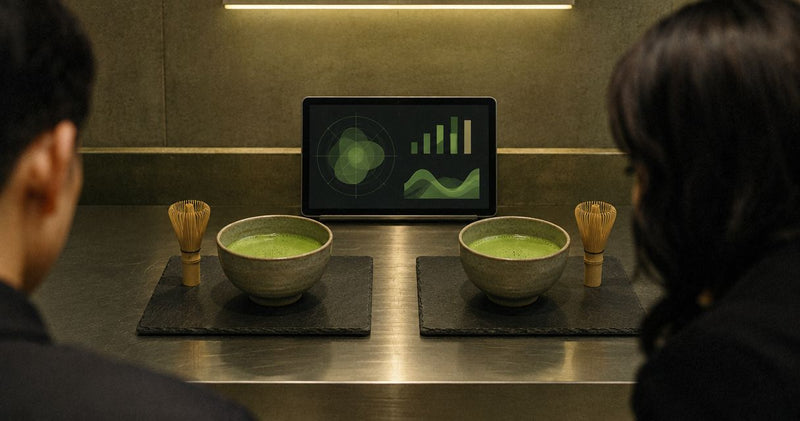
The Bowl is a chawan with a wide base for the Whisk’s W motion and high walls to contain the liquid. Uchi suits home matcha drinkers who want a Bowl with room for the Whisk. Its shape gives the whisk space; prewarming serves a separate purpose.
Neither replaces the condition of the powder. Air, light and moisture affect stored matcha before it reaches the bowl. Begin with dry powder, then treat bowl warmth as one controlled part of preparation rather than a remedy for every disappointing cup.
Warm the bowl first. Add the matcha only after the warming water is gone and the interior is dry. This keeps the warming step separate from the measured water used to prepare the drink.
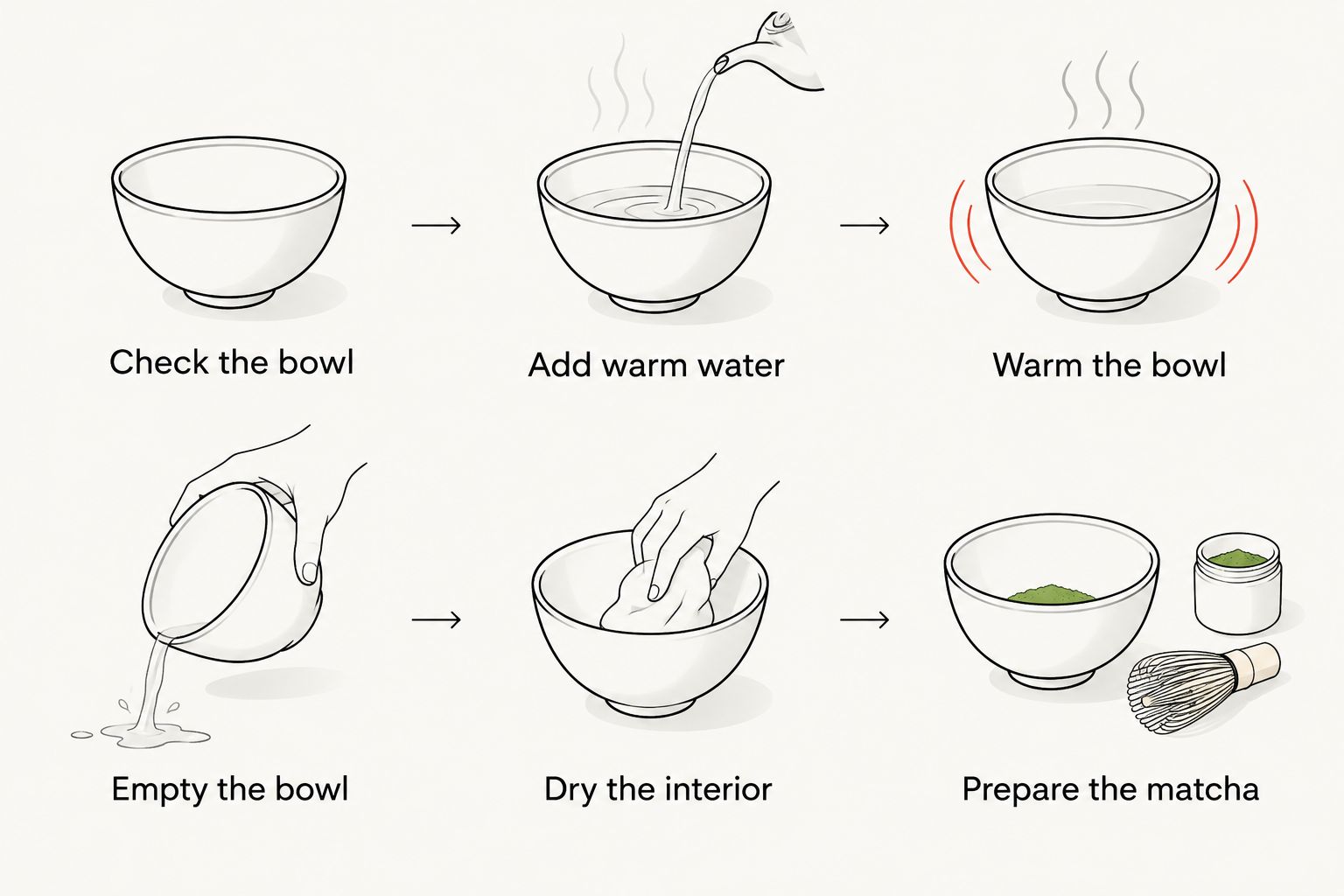
The sequence is straightforward:
- Check the bowl. Start with a clean vessel. Check for cracks or damage, and follow its care instructions.
- Add warm water. Pour it into the bowl gradually. Avoid an abrupt change from a very cold vessel to very hot water.
- Warm the bowl. Let the water transfer heat to the vessel. There is no universal waiting time for every material, thickness and starting temperature.
- Empty the bowl. Discard the warming water completely. It is not part of the drink.
- Dry the interior. Use a clean, lint-free cloth. Remove droplets from the base and sides before adding powder.
- Prepare the matcha. Sift the measured powder, add the preparation water and whisk. Do not leave the warmed bowl standing while gathering the rest of the utensils.
Drying is not an optional finishing detail. Powder touching a wet patch begins to hydrate there, before the rest of the water is added. A dry interior gives the powder a more consistent starting point.
Work in sequence rather than chasing a hot vessel. The aim is a warmed bowl that is safe to handle, not one that requires hurried movements or uncomfortable contact.
A warmed bowl and an unwarmed bowl
Both approaches allow you to prepare matcha. Their difference is the vessel’s starting temperature, not whether one preparation is authentic and the other is not.
| Approach | Use and limitation |
|---|---|
| Prewarmed bowl | Useful when the vessel starts cold. Adds an emptying and drying step. |
| Unwarmed bowl | Keeps preparation shorter. A cold vessel draws more heat from the mixing water. |
A warmed bowl is useful when you want to reduce the effect of a cold vessel. The trade-off is another handling step. Incomplete drying also introduces water that has not been included in the preparation.
An unwarmed bowl is a simpler route when you are content with the resulting drinking temperature. Its limitation is that changes in the bowl’s starting temperature become part of the preparation.
Choose a repeatable method, then keep it consistent. Changing the vessel, water and powder quantity together makes it difficult to understand which change affected the drink.
Why bowl warming varies
There is no single warming duration that describes every matcha bowl. Heat transfer depends on the vessel and the conditions around it.
- Starting temperature. A bowl from a cold cupboard begins differently from one already sitting in a warm room.
- Material. Different materials transfer and retain heat differently. Follow the vessel’s own care guidance rather than assuming every bowl tolerates the same treatment.
- Wall thickness and mass. More material requires more heat to produce the same temperature change.
- Warming water. The amount and temperature of the water affect how much heat it can transfer to the bowl.
- Delay before preparation. A warmed vessel starts cooling after it is emptied. Gathering utensils afterwards adds an avoidable pause.
These factors explain why a fixed timer is less useful than a consistent sequence. Keep the vessel and method steady. Adjust only what needs changing.
A bowl that feels very hot is not evidence of a better preparation. It is a handling concern. Let it become safe to hold before continuing, and use a gentler warming approach next time.
What prewarming changes in the cup
Prewarming changes the starting thermal conditions. A warm vessel takes less heat from the preparation water than the same vessel when cold.
That does not establish a promised taste improvement. Matcha flavour also depends on the powder, its storage, the amount used and the water used to prepare it. A warm bowl cannot restore powder that has deteriorated in storage.
Keep the distinction clear when comparing cups. If a drink seems cooler than intended, bowl temperature belongs in the check. If it contains dry clumps, inspect powder handling and whisking instead.
Prewarming controls the vessel. It does not correct the ingredient. This is why the step belongs before measuring and mixing, rather than becoming an explanation for every difference in the finished drink.
Do not compensate for a cold bowl by automatically making the preparation water hotter. That changes another part of the process. Warm the vessel separately, then use the preparation method appropriate to the matcha.
Dry powder, a dry bowl and a separate warming step
Moisture has different roles before and during preparation. It is unwanted in stored powder. It becomes necessary when that powder is deliberately mixed into a drink.
The boundary between those stages matters. Keep the powder container away from splashes, steam and the wet cloth used around the bowl. Close it after measuring rather than leaving it open through the warming and whisking sequence.
A damp bowl blurs that boundary. Matcha falling onto droplets sticks and begins forming small wet patches. Drying the interior first removes that avoidable variable.
Sieving serves another purpose. It breaks up dry clumps before water is added; it does not remove moisture already absorbed by stored powder. The guide to matcha clumps, moisture and sieving separates those problems more closely.
Use a clean cloth that does not leave fibres behind. Check the bottom of the vessel, where residual water collects. The outside can also need drying before the bowl is placed on a work surface or lifted.
Bowl warmth and whisk preparation are separate
Warming the vessel and preparing a bamboo chasen are related handling tasks, but they are not interchangeable. One changes the bowl’s starting temperature. The other concerns the utensil that moves through the matcha.
Follow the whisk’s care instructions. Do not force the tines flat against the base or use the whisk to scrape powder from a damp patch. A damaged utensil is not repaired by hotter water.
Once the drink is being prepared, leave room for the whisk to move. A cramped vessel restricts movement regardless of how carefully it was warmed. Bowl shape and bowl temperature answer different needs.
If the matcha remains uneven, check those needs separately. Confirm that the powder was sifted, the bowl was dry and the whisk had space. Repeating the warming step does not address a restricted whisking motion.
The relevant tools for a 2026 home routine
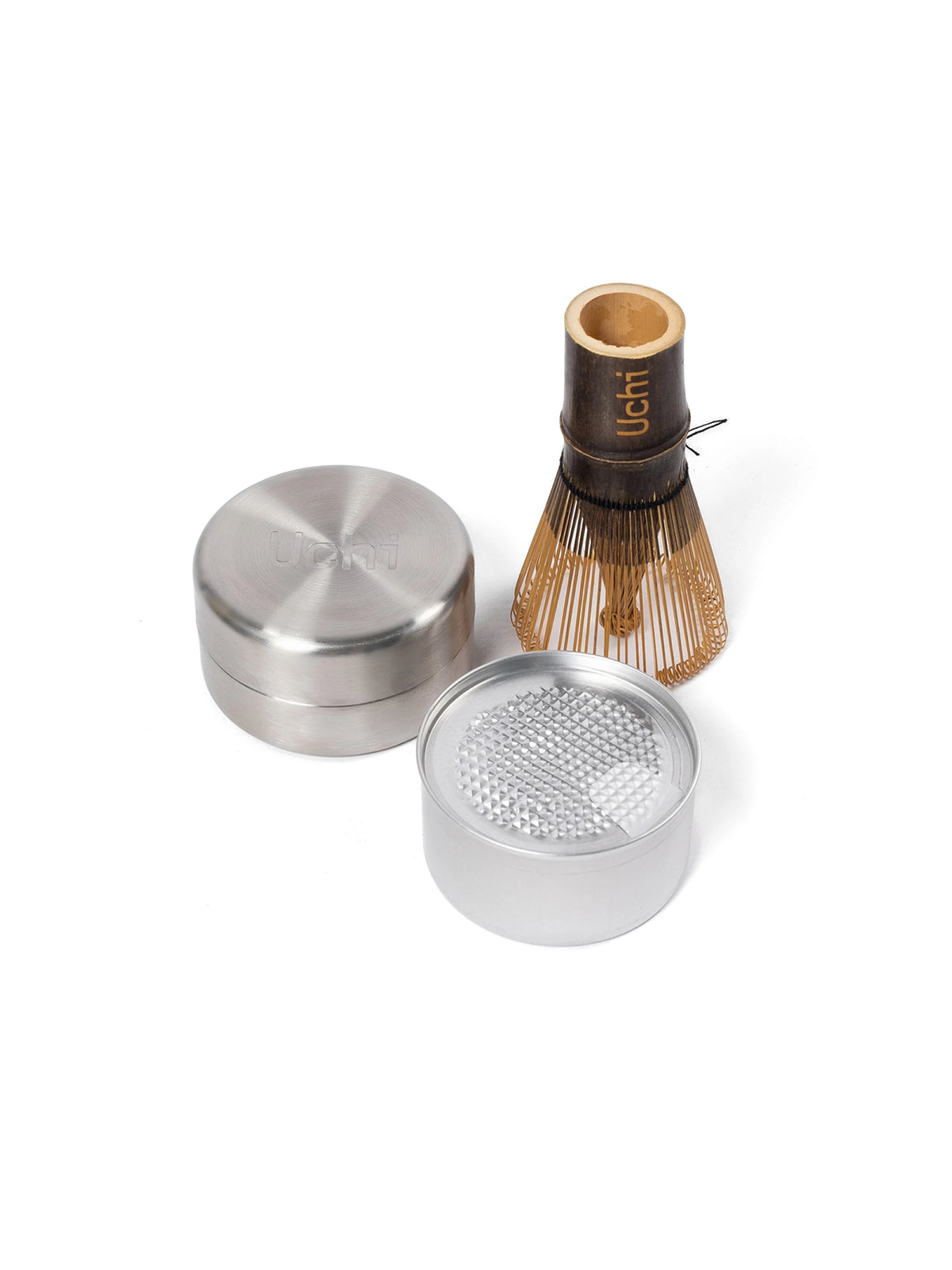
The Uchi Matcha Bowl and Whisk have distinct roles. The Bowl provides the vessel and working space. The Whisk is a bamboo chasen with 120 prongs.
The Spoon measures powder: one leveled Uchi Spoon holds 1 gram. The Sieve is a fine-mesh sifter. Neither measurement nor sieving requires the bowl to remain wet after warming.
The Pod contains 40g of matcha, about twenty cups, in recyclable aluminium. The Base is an airtight stainless steel canister, kept for life. Storage protects the ingredient between preparations; prewarming happens only when a drink is about to be made.
For Uchi Matcha preparation, keep those jobs separate. Store dry. Measure deliberately. Warm the vessel separately. The limitations are equally clear: an airtight canister does not whisk the drink, and a warmed bowl does not protect powder left exposed on the counter.
A useful arrangement puts the dry utensils within reach before water enters the bowl. This reduces the pause between drying and preparation without turning the process into a race.
A home preparation checklist for 2026
Before warming the vessel, lay out the utensils needed for the drink. Leave the powder closed until it is time to measure it. Keep a dry cloth nearby.
Check the following:
- The bowl is clean and undamaged.
- Its care instructions permit the intended use with warm water.
- The whisk has room to move without being forced against the vessel.
- The warming water can be discarded safely.
- The interior will be dried before powder is added.
- The preparation water is separate from the discarded warming water.
This is a preparation checklist, not a requirement to add more objects to the counter. Each item removes a specific interruption or uncertainty.
After drinking, clean the vessel according to its care instructions. Let it dry before putting it away. The next preparation begins more simply when the bowl is already clean and ready.
Does a matcha bowl need boiling water to warm it?
A matcha bowl does not need boiling water merely to become warm. Warm water transfers heat to the vessel without making boiling water a requirement of the step.
Respect the bowl’s care instructions and avoid sudden temperature changes. Prewarming should leave a vessel that can be handled safely, not one that complicates the rest of the preparation.
Can you use the warming water to make the matcha?
Discard the warming water before preparing matcha. Its temperature changes while it heats the bowl, and retaining it makes the amount of preparation water less deliberate.
Emptying and drying also creates a clear point at which preparation begins. Add the measured powder and preparation water only after that point.
Should a matcha bowl be completely dry before powder goes in?
The interior should be dry before matcha powder is added. Residual droplets hydrate the powder unevenly and leave wet patches before the main water addition.
Drying does not mean letting the vessel stand until it is cold. Empty it, wipe it cleanly and proceed with the utensils already nearby.
FAQ
How do I prewarm a matcha bowl in 2026?
Prewarm a matcha bowl in 2026 by adding warm water, letting the vessel warm through, then emptying and drying it. Add matcha powder only after the interior is dry.
Do I have to prewarm my matcha bowl every time?
You do not have to prewarm a matcha bowl every time. The step reduces the heat a cold vessel takes from the preparation water; an unwarmed bowl remains usable.
How long should I leave warming water in the bowl?
There is no universal warming time for every matcha bowl. Material, thickness, starting temperature and the warming water all affect heat transfer.
Will prewarming get rid of matcha clumps?
Prewarming does not remove matcha clumps. Sift dry powder and dry the bowl before adding it; warming controls the vessel’s temperature, not the powder’s condition.
Should I dry the matcha bowl after warming it?
Dry the matcha bowl after discarding the warming water. Droplets cause powder to hydrate in patches before the preparation water is added.
Does prewarming replace choosing a suitable water temperature?
Prewarming does not replace choosing a suitable preparation-water temperature. Warm the bowl separately, then prepare the matcha according to its guidance.
Can I warm a damaged matcha bowl?
Do not use a damaged matcha bowl without checking whether it remains safe for its intended use. Inspect cracks or other damage and follow the vessel’s care guidance.
One last thing
Prepare the counter before warming the bowl. A warm vessel loses heat while you look for a cloth, fetch a sieve or open a cupboard.
The useful change is often the order, not another utensil. Have the dry tools ready, warm the bowl, empty it, dry it and begin.