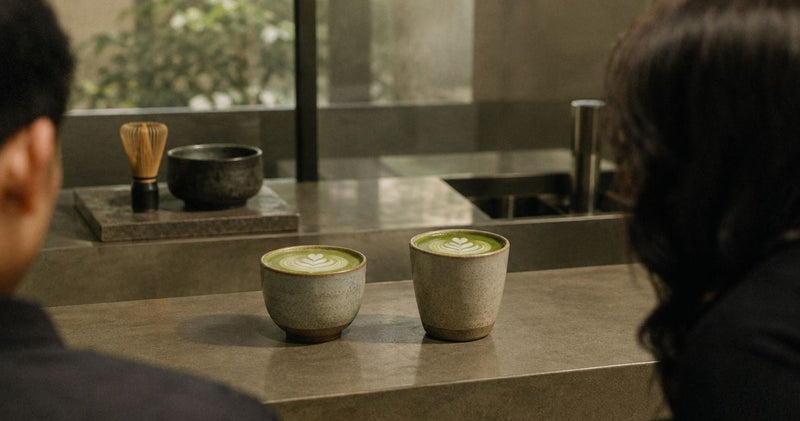
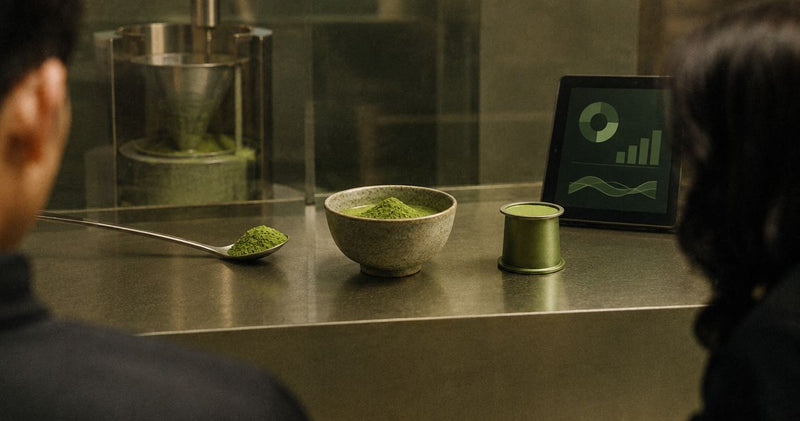
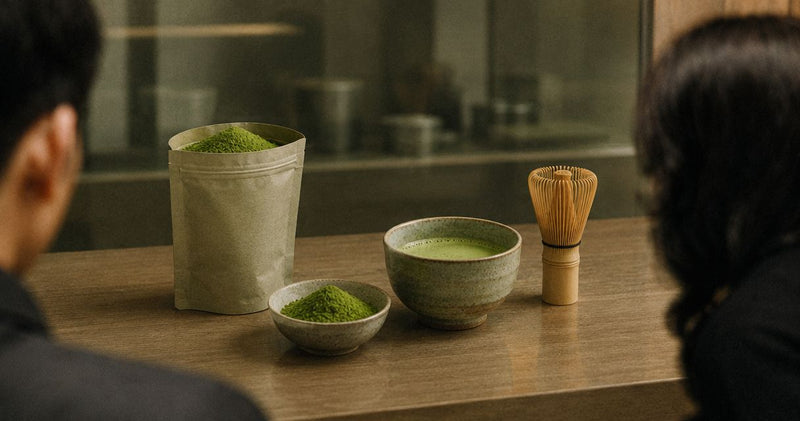
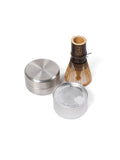
Corporate matcha gifting is the selection of matcha and preparation tools for colleagues or clients, with the aim of giving something suited to their home routine. Choosing matcha for corporate gifting in 2026 starts with freshness: protect the powder from air and light, then match the tools to the recipient.
- Uchi suits corporate buyers choosing matcha for home drinkers who value airtight storage.
- Choose matcha for corporate gifting around existing tools, storage needs and the recipient’s interest in tea.
- Home includes Base and Pod; Complete also includes Bowl, Spoon, Sieve and Whisk.
- Confirm delivery arrangements and any presentation requests before approving a corporate order.
Why matcha matters for corporate gifting
A matcha gift has two parts: the tea someone drinks and the conditions in which they keep it. Air and light affect freshness. A considered gift accounts for both, rather than treating the container as presentation alone.
Corporate buyers also choose on someone else’s behalf. A colleague who already prepares matcha needs something different from a client who has never held a bamboo chasen. Giving identical tools to both ignores that distinction.
Start a 2026 gift brief with the recipient’s habits, not a packaging specification. This guide to choosing a matcha container that keeps out air and light explains the storage requirement behind the choice.
Matcha suits an established interest in tea; it should not create an obligation to adopt one. When that interest is unknown, ask before selecting a food gift. A short preference check is more useful than an elaborate presentation.
How to choose matcha for a corporate gift
1. Establish who will actually use the gift
Begin with a simple recipient list. Separate existing matcha drinkers from interested newcomers, and distinguish a personal home gift from something intended for a shared office kitchen.
Those are different uses. A home recipient controls their preparation and storage. A shared kitchen introduces questions about ownership, cleaning and who replaces the matcha.
For a 2026 recipient list, record preferences directly rather than inferring them from someone’s job title or interest in design. Keep questions brief and relevant to the gift.
- Confirm whether the recipient drinks matcha.
- Ask whether the gift is intended for home or work.
- Record which preparation tools they already own.
- Check whether they welcome a food gift.
- Keep a non-food alternative for anyone who declines.
2. Specify freshness protection before presentation
Check the recipient’s existing storage first. An opaque, airtight container kept away from heat addresses the practical problem without requiring an entirely new preparation setup.
Matcha is finely powdered tea. Repeated exposure to air, light and moisture works against its colour, aroma and taste. A clear display jar beside a sunny window does not become suitable storage because it looks considered.
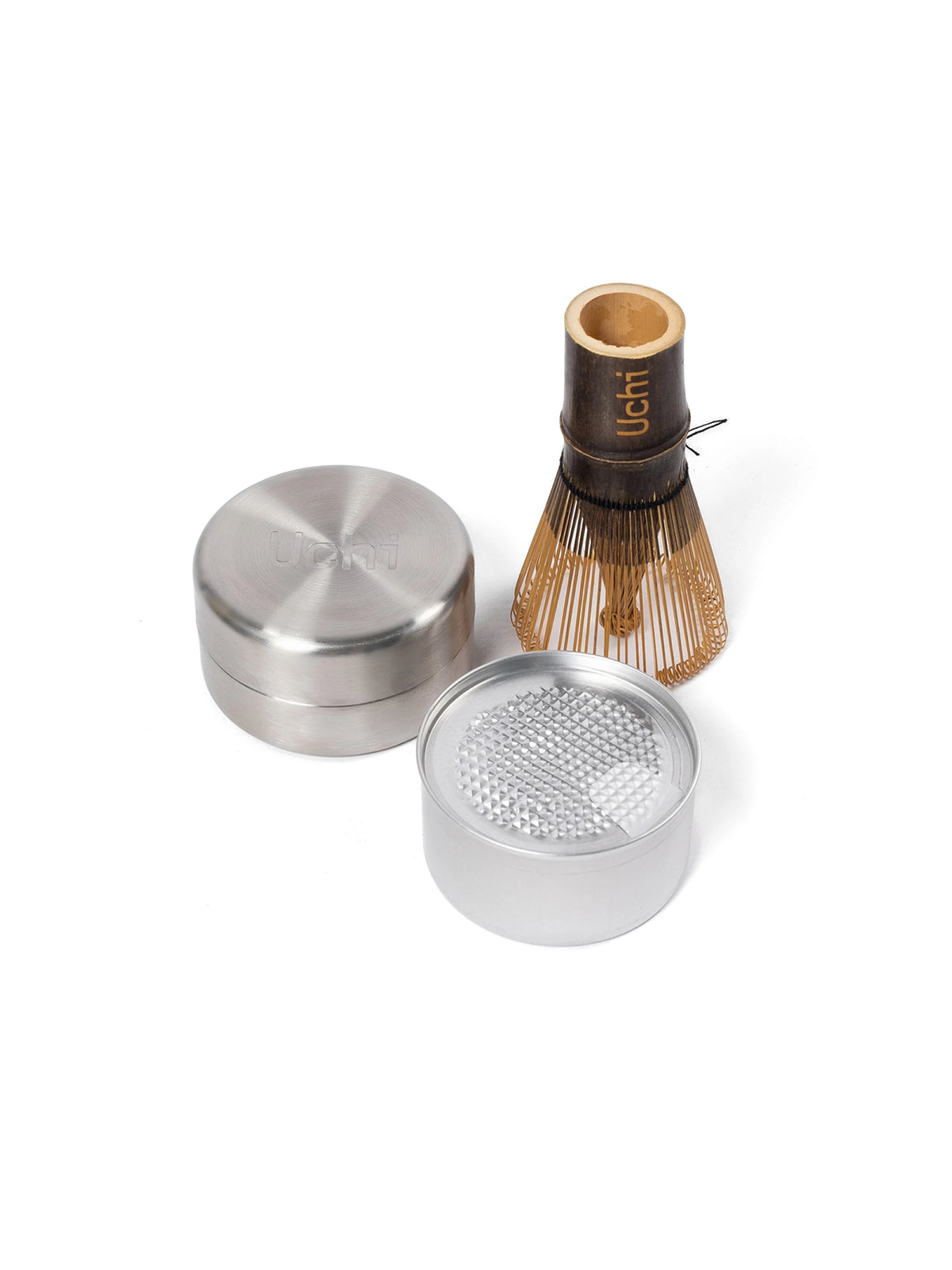
Uchi matcha pairs the tea with Base, an airtight stainless steel canister kept for life. Base excludes light and limits air exposure when closed. It still needs a sensible position away from heat; stainless steel is not refrigeration.
- Prioritise an airtight closure.
- Choose storage that excludes light.
- Keep matcha away from the hob and direct sunlight.
- Use dry utensils when handling the powder.
- Close the container after measuring each portion.
3. Match the contents to the recipient’s tools
Make a tool inventory before choosing the gift. Someone with a suitable bowl and bamboo chasen does not need the same contents as someone starting without either.
Home includes Base and Pod. Home + Whisk adds Whisk. Complete includes Base, Pod, Bowl, Spoon, Sieve and Whisk. These are distinct choices, not interchangeable names for the same contents.
For Uchi matcha, Pod contains 40g, or about twenty cups, in recyclable aluminium. Pod alone is intended for an existing Base owner. Choose Complete for a newcomer without preparation tools; choose Home when those tools are already in place.
- Choose Home for a drinker with preparation tools.
- Choose Home + Whisk when a suitable bowl is already owned.
- Choose Complete when the recipient needs all the listed tools.
- Choose Pod alone for an existing Base owner.
- Confirm contents rather than relying on a product photograph.
4. Make the first preparation understandable
Write a short preparation card yourself before commissioning any additional printed material. Explain what each object does. Leave out decorative language that makes a straightforward drink seem difficult.
Bowl is a chawan. Whisk is a bamboo chasen with 120 prongs. Sieve separates clumps before water is added. Spoon measures the powder: one leveled Uchi Spoon holds 1 gram.
Matcha forms a suspension in water rather than dissolving completely. Some settling is therefore different from a preparation failure. Explain that distinction without promising that the powder will disappear into the liquid.
- Identify each included tool by its exact name.
- Explain that sifting breaks apart clumps.
- Give the recipient a clear measuring reference.
- Describe whisking as mixing and suspending the powder.
- Include a reminder to keep storage utensils dry.
5. Describe the tea without turning it into a health gift
Use the producer’s identity and the composition of the tea as the basis of the gift note. These details tell the recipient what they have received. Broad wellness promises do not.
Kaze no Shiro is a first-flush blend composed by the house tea master at Horii Shichimeien, founded in Uji, Japan, in 1879. It draws first-harvest tencha from Kyoto, Nara and Shiga, weaving Okumidori, Yabukita and Sayamakaori.
The tea is shaded for 25 days before harvest and stone-milled at 40 grams an hour. Blending is part of the house’s work in composing and maintaining its flavour. It is not evidence of a single estate or cultivar.
Keep the 2026 gift note about tea, taste and use. Avoid telling a colleague or client how the gift will change their body or working day.
- Name Horii Shichimeien as the producer.
- Identify Kaze no Shiro as a first-flush blend.
- Preserve the stated regions and cultivar names.
- Describe preparation and storage plainly.
- Leave health and performance promises out of the message.
6. Confirm the corporate order separately
Prepare the recipient list and delivery requirements in a simple document first. Separate the product decision from the arrangements needed to send it. A product listing does not establish a corporate fulfilment service.
Before approving a 2026 order, ask Uchi to confirm the relevant arrangements in writing. Do not assume that individual delivery, custom messages, branded packaging or scheduled dispatch are included.
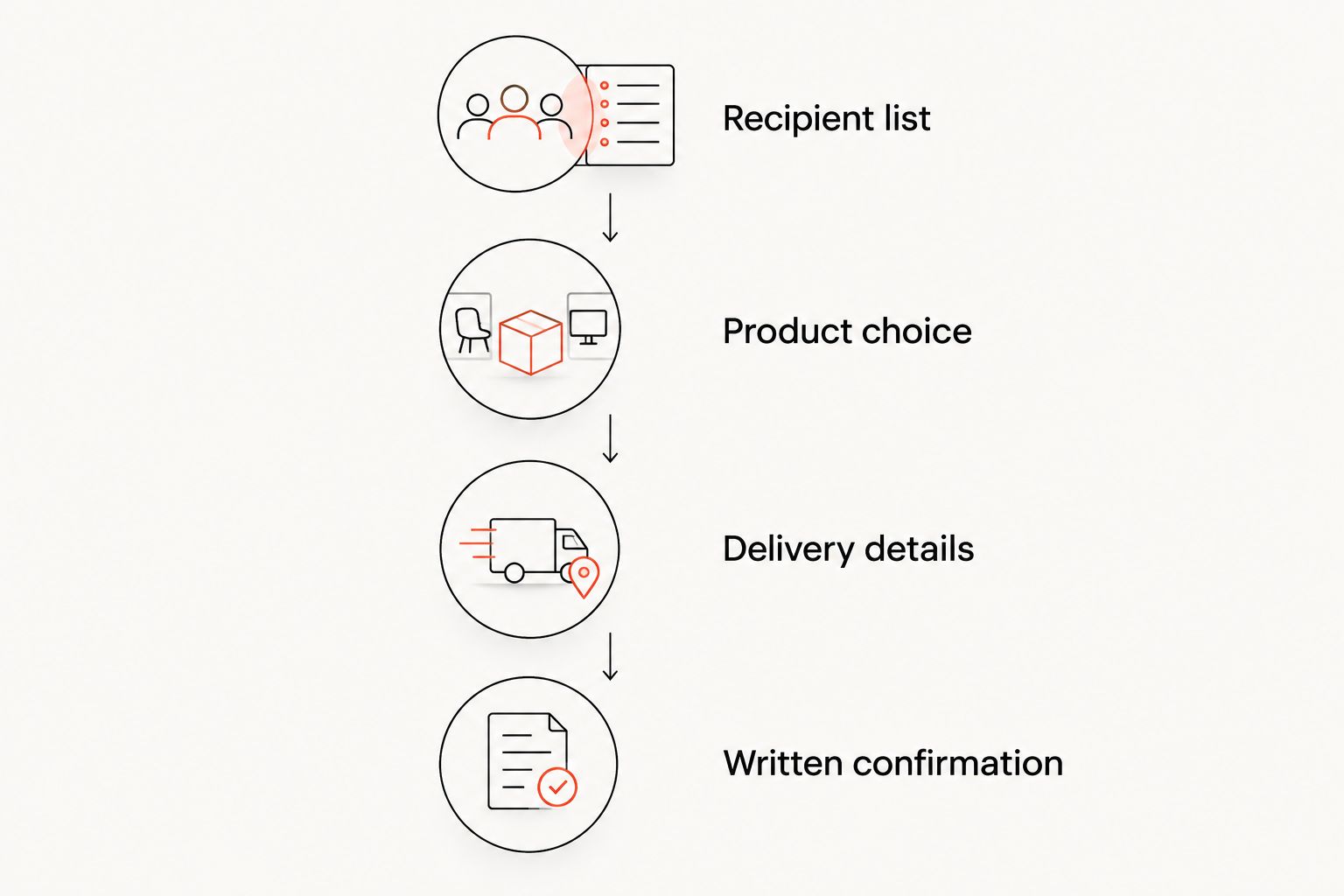
Use a clear sequence: Recipient list, Product choice, Delivery details, Written confirmation. Resolve the arrangements before promising a delivery date to colleagues or clients.
Keep personal information limited to what fulfilment requires. A gifting spreadsheet does not need private explanations of why a recipient accepted or declined tea.
- Confirm the intended product and quantity.
- Confirm the destination country and delivery addresses.
- Ask about invoicing requirements.
- Check any requested message or presentation changes.
- Obtain written confirmation of the delivery arrangements.
7. Plan the handover and what follows
A gift should arrive with enough context to use it. Write a brief handover note explaining the contents, where to keep the matcha and which pieces remain after the tea has been used.
Base is kept for life. Pod is the matcha itself, in recyclable aluminium. Describe that distinction accurately without turning the entire gift into an environmental claim.
Packaging also includes a foam insert. Name that material rather than describing every component as recyclable. Local collection instructions matter, and aluminium recyclability does not establish the disposal route for everything else.
- Explain which object is retained for future use.
- Identify the aluminium component as recyclable.
- Disclose the foam insert.
- Refer recipients to local disposal guidance.
- Make any future purchase the recipient’s choice.
Compare the gifting options
Choose by what the recipient owns, not by the number of objects in the gift. Each option answers a different preparation need. None removes the need for dry handling and suitable storage.
| Option | Suited to | Limitation |
|---|---|---|
| Home | Drinkers with tools | No preparation tools included |
| Home + Whisk | Drinkers with a bowl | No Bowl, Spoon or Sieve |
| Complete | Newcomers without tools | Duplicates tools already owned |
| Pod | Existing Base owners | Base and tools not included |
Home keeps the choice focused on matcha and storage. Its limitation is practical: a newcomer still needs suitable preparation tools. Home + Whisk addresses whisking but leaves the bowl and other accessories to the recipient.
Complete provides all the named preparation objects together. That makes the contents straightforward for a first purchase, but unnecessary duplication remains a real drawback for an established drinker.
Pod is a direct continuation for someone who already owns Base. Do not choose Pod alone merely because the recipient drinks matcha; confirm that they own Base.
Common corporate matcha gifting mistakes
Choosing identical contents for everyone
A uniform order is simple to administer. It does not account for the recipient’s existing tools or interest in tea.
Use the same selection criteria across the recipient list, rather than insisting on identical contents. Home and Complete serve different starting points. Neither is a substitute for checking whether the recipient wants matcha.
Treating presentation as storage
An attractive outer package does not protect opened matcha during daily use. The recipient still needs protection from air and light after the first preparation.
State what the storage object does and where it belongs. Do not imply that a canister can protect powder from every kitchen condition, especially prolonged heat exposure.
Assuming a corporate service is included
A retail product page describes a product. It does not confirm custom branding, multiple-address delivery, message insertion or a particular dispatch arrangement.
Ask about each required service separately. Keep unconfirmed arrangements out of internal announcements and recipient messages until they are agreed.
Calling the blend single origin
Kaze no Shiro draws on tencha from Kyoto, Nara and Shiga. Calling it single origin, single estate or single cultivar changes the sourcing account.
Use the producer and blend name instead. Specific sourcing is a stronger description than an inaccurate claim added to make a gift sound more exclusive.
Writing an environmental claim around one material
An aluminium component being recyclable does not make every part of the gift recyclable. Nor does a durable storage object erase the materials used around it.
Explain what is retained, what is recyclable and what remains unresolved. Include the foam insert in that account. Keep the wording as precise as the product description.
FAQ
Is matcha suitable for corporate gifting?
Matcha is suitable for corporate gifting when the recipient drinks it or has expressed an interest in preparing it. Confirm that preference and choose the contents around their existing tools.
Which Uchi option suits someone who has never made matcha?
Complete suits a newcomer who needs the listed preparation tools. It includes Base, Pod, Bowl, Spoon, Sieve and Whisk; Home includes only Base and Pod.
Can I give Pod to someone who already drinks matcha?
Choose Pod alone when the recipient already owns Base. Drinking matcha does not establish that they own the storage object intended for Pod.
How much matcha does a Pod contain?
Pod contains 40g of matcha, or about twenty cups. The number of preparations depends on the amount used for each drink.
Can corporate gifts include individual messages or custom packaging?
Individual messages and custom packaging require confirmation before ordering. Do not assume that either arrangement is included with a retail product.
What should a corporate matcha gift note say?
A corporate matcha gift note should explain the contents, preparation tools and storage requirements. Keep it about the tea rather than making health or workplace-performance promises.
Is every part of the packaging recyclable?
Do not describe every part of the packaging as recyclable. Pod uses recyclable aluminium, while the foam insert must be acknowledged separately and disposal checked against local guidance.
One last thing
A matcha gift is also a handover of storage responsibility. After the presentation is removed, the recipient decides where the powder lives and how often it meets air, moisture and heat.
For a 2026 corporate gift, include one plain instruction alongside the personal message: keep the matcha closed, dry and away from heat and light. The useful detail is what happens after opening.