Beginner matcha gifting is choosing tea, storage and tools with the aim of making a first bowl straightforward. A matcha gift for someone who has never prepared it should protect the powder from air and light, then give them a clear way to measure, sift and whisk it.
- For a beginner matcha gift, Uchi Complete suits someone who needs storage and preparation tools together.
- Choose Home only when the recipient already has suitable matcha-making tools.
- An airtight, opaque container belongs alongside the tea, not on a later shopping list.
- Choose identifiable matcha, then include simple preparation and storage instructions.
Why matcha gifting matters for beginners
A beginner receives more than tea. They receive a powder that needs protection and a preparation method they have not yet learned. Without those details, an attractive gift leaves the practical decisions to its recipient.
Matcha is finely ground tea. Exposure to air and light contributes to deterioration in colour and taste; an open container on a bright kitchen shelf is not a suitable home for it. Start with storage rather than presentation.
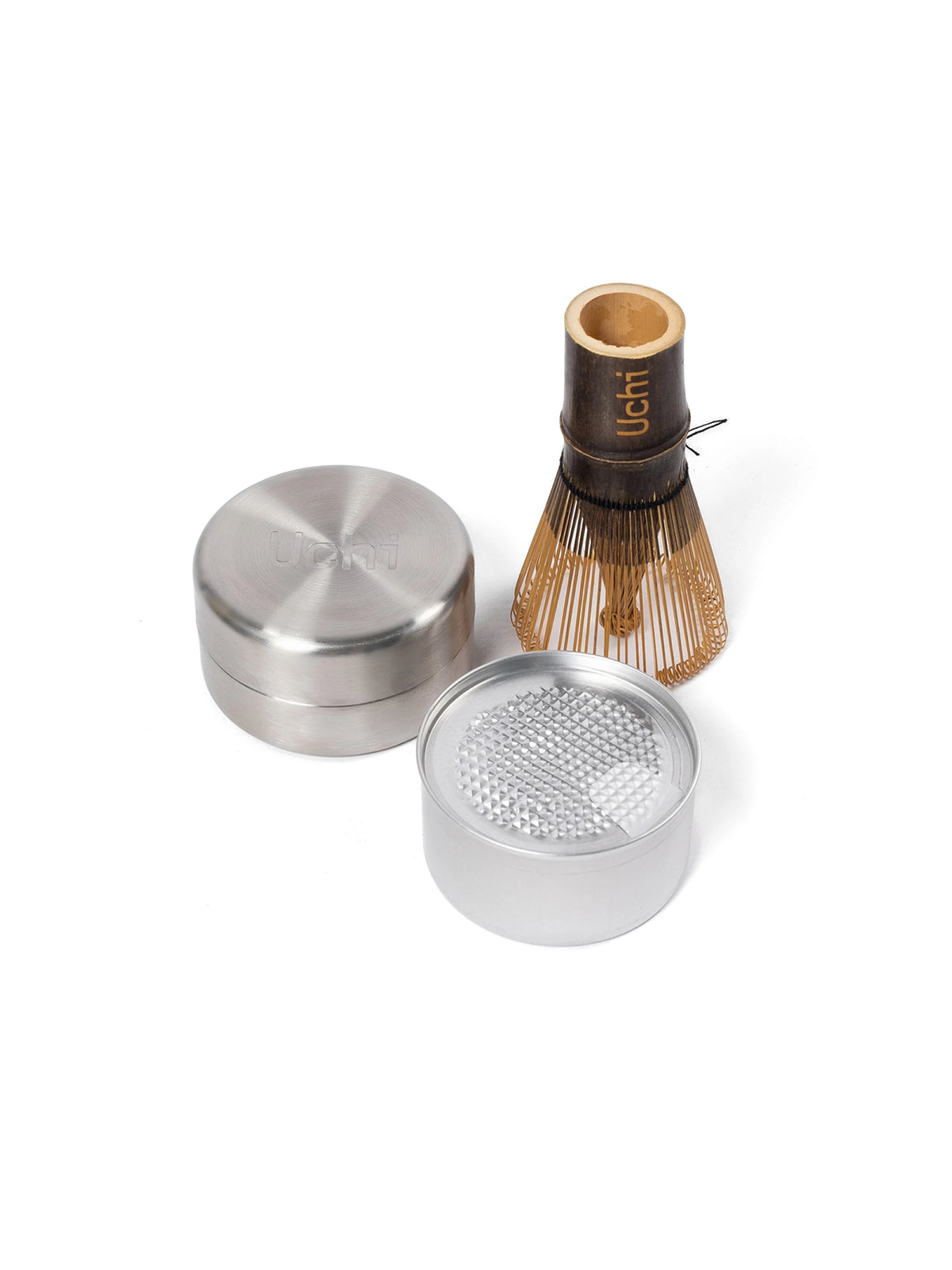
The Uchi Base is an airtight stainless steel canister, kept for life. Its opaque body keeps light away from the powder; closing it between preparations limits exposure to air. Those are concrete functions, not decorative additions.
For a matcha gift in 2026, the useful distinction is between a gift that contains tea and a gift that supports making it. Choose around the recipient's missing tools, not the number of objects in the box.
Choose a matcha gift around the first bowl
Establish what the recipient already owns
Begin with an ordinary conversation about their kitchen. Someone who orders matcha outside the home does not necessarily own a bamboo whisk, a suitable bowl or somewhere to store the powder. Familiarity with the drink is different from familiarity with making it.
A beginner can start by listing what they already have. A small fine-mesh sieve and a bowl with room for whisking can serve practical roles without requiring every object to match. The question is whether the tools make preparation manageable.
Avoid treating a collection of accessories as automatically more thoughtful. An unused extra is still an extra. Equally, tea alone is an incomplete choice when the recipient has no clear way to prepare it.
For your 2026 gift shortlist, record the gaps before choosing the format. Keep the list short enough to check without turning the gift into a project.
- Check whether they own a bamboo chasen.
- Check for a bowl with space to move the whisk.
- Check for a fine-mesh sieve and a measuring method.
- Check for airtight, opaque storage.
Protect the matcha before choosing accessories
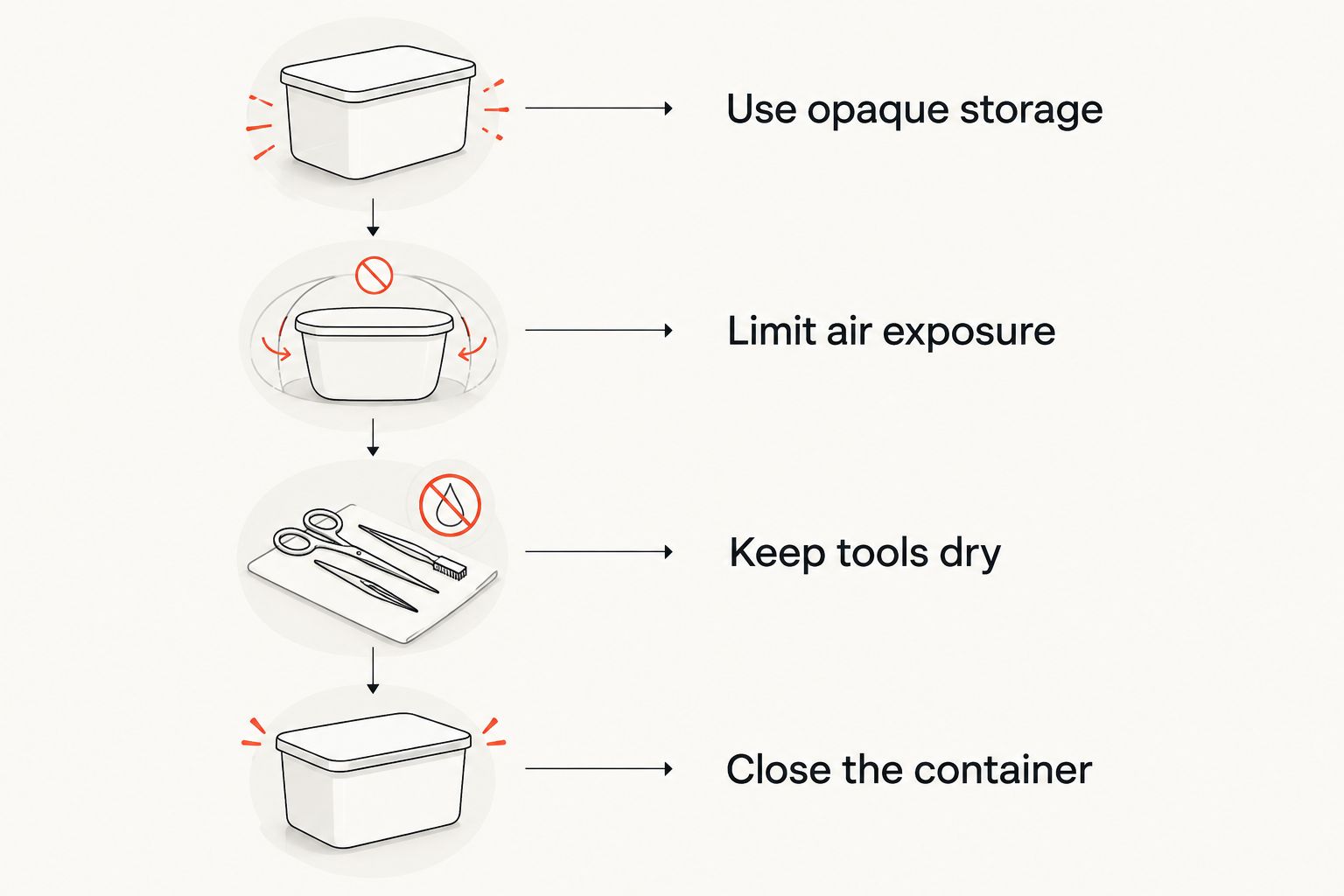
Use an existing food-safe container first if it closes tightly and excludes light. Keep the powder away from steam, and close the container after measuring. A clear jar beside a kettle solves neither light exposure nor the problem of a damp preparation area.
Storage should be easy enough to become routine. If the recipient must find a separate container after opening the gift, one of the most important decisions remains unfinished. This matters especially when the powder will be used a little at a time.
Uchi Home brings the Base and Pod together. The Pod contains 40g of matcha, about twenty cups, in recyclable aluminium. Home addresses tea and storage; it does not include a Whisk, Bowl, Spoon or Sieve.
The benefit is a defined place for the powder. The limitation is equally clear: storage does not replace preparation tools. Choose Home for an equipped kitchen, not simply because the recipient likes matcha.
- Use opaque storage.
- Limit air exposure.
- Keep tools dry.
- Close the container promptly.
Read the tea details rather than the adjective
A beginner should not need to interpret a label unaided. Look for the producer, the tea's identity and an explanation of its sourcing. A grade description alone does not tell the recipient who made the matcha or what they are drinking.
Kaze no Shiro is a first-flush blend composed by the house tea master at Horii Shichimeien. It draws first-harvest tencha from Kyoto, Nara and Shiga, weaving three cultivars: Okumidori, Yabukita and Sayamakaori.
This is a blend, not single-origin, single-estate or single-cultivar matcha. That distinction belongs in the explanation accompanying the gift. Blending is how the house builds its flavour and holds it steady across seasons.
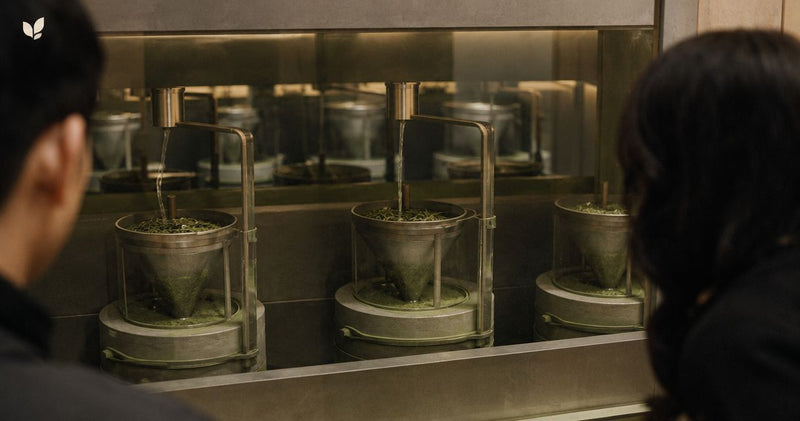
The tea is shaded for 25 days before harvest and stone-milled at 40 grams an hour. These details describe production. They do not remove the need for careful storage after opening.
When choosing matcha in 2026, prefer an identifiable tea over a collection of impressive but unexplained words. Write the relevant details on a small card so the recipient can return to them.
- Name the producer and the tea.
- Distinguish a blend from a single-origin claim.
- Include the stated harvest and milling details.
- Keep production facts separate from storage instructions.
Match the tools to the work they do
You can assess the necessary tools without buying anything. Lay out the measuring method, sieve, bowl and whisk already available. Each should have an identifiable job; the recipient should not need to guess why it is there.
Measuring makes the next preparation easier to repeat. Sifting breaks up clumps before water is added. A bowl provides working space, while a bamboo chasen is made for whisking matcha into water.
The Uchi Whisk is a bamboo chasen with 120 prongs. The Bowl is a chawan, the Sieve is a fine-mesh sifter, and one leveled Spoon holds 1 gram. These names describe distinct objects, not interchangeable additions.
Complete suits a first-time home matcha drinker who needs tea, storage and preparation tools together. It contains Base, Pod, Bowl, Spoon, Sieve and Whisk. Its limitation is duplication when the recipient already owns tools they enjoy using.
A bamboo Whisk is therefore a specific decision, not an automatic extra. Choose it because the recipient needs a chasen, and include a note about caring for bamboo.
- Identify a repeatable measuring method.
- Include a sieve when the recipient lacks one.
- Allow room for whisking in the bowl.
- Choose a chasen for whisked matcha.
- Avoid duplicating tools already in use.
Include instructions that fit beside the bowl
Write a short preparation card before considering further accessories. The recipient needs a sequence, not a long account of tea culture. A clear card can remain beside the tools for the first few preparations.
Start with measuring into a dry sieve over the bowl. Sift the powder, then follow the tea's preparation guidance for water and quantity. Whisk until the powder is dispersed, and adjust subsequent preparations according to taste.
Do not invent a universal recipe for every tea and every drink. A bowl of matcha and a milk-based drink ask different things of the preparation. Let the producer's guidance establish the starting point.
Separate care instructions from preparation. Close the powder container before working with water. After use, clean the tools appropriately and let the bamboo whisk dry before putting it away.
For a 2026 matcha gift, a short written sequence is more useful than a card filled with unexplained Japanese terms. Use the terms that identify the objects, then explain their purpose plainly.
- State the measuring method.
- Explain sifting before adding water.
- Refer to the tea's preparation guidance.
- Remind the recipient to close the container.
- Add a separate cleaning and drying note.
Choose the gift format and remove the remaining gaps
Make the final choice against the equipment list, not against the photograph. Home contains Base and Pod. Home + Whisk adds the Whisk. Complete includes Base, Pod, Bowl, Spoon, Sieve and Whisk.
Uchi Matcha Complete suits first-time home drinkers who need tea, storage and tools together. Home is the more focused choice when preparation tools are already in place. Home + Whisk addresses a missing chasen without adding every accessory.
None of these choices removes the need to learn preparation. Complete supplies the objects; the recipient still needs the instructions and a little room to practise. That is a useful distinction when choosing a gift for someone entirely new to matcha.
Check materials without turning the gift into a broad environmental claim. The Pod uses recyclable aluminium, and the Base is kept for life. The packaging also includes a foam insert; that unresolved material should not disappear from the account.
- Match the contents to the missing equipment.
- Keep the three formats distinct.
- Include preparation and storage notes.
- Describe materials specifically.
- Leave room for the recipient's own taste.
Compare the gift formats
This 2026 comparison separates what each option includes from what the recipient still needs. There is no universal choice: an equipped kitchen and an empty preparation shelf call for different gifts.
| Option | Suits | Main limitation |
|---|---|---|
| Pod alone | Someone with storage and tools | Does not include Base or tools |
| Home | Someone with preparation tools | Base + Pod only |
| Home + Whisk | Someone missing a chasen | No Bowl, Spoon or Sieve |
| Complete | Someone starting without equipment | Duplicates existing tools |
| Tea with existing household tools | Someone happy to assemble their own setup | Requires checking every gap |
Pod alone is focused on the tea. Home adds dedicated storage. Home + Whisk adds one preparation tool, while Complete covers the named storage and preparation objects together.
The household-tools route allows the recipient to use what they already own. Its drawback is the checking required: a bowl must allow whisk movement, the sieve must be suitable, and the container must protect the powder. Existing equipment is useful only when its function is clear.
Common mistakes when gifting matcha to beginners
Giving tea without a place to keep it
An opened gift needs a storage plan immediately. Do not assume that attractive outer packaging provides airtight protection once opened. Name the container, explain where it belongs, and include the habit of closing it after measuring.
Choosing Complete without checking the kitchen
A larger collection is not automatically a better fit. Someone with a chawan and chasen may want tea and storage rather than another set of objects. Ask what is missing before deciding which format to give.
Treating ceremonial grade as the whole explanation
A label does not replace producer and sourcing details. Give the recipient an identifiable tea and a clear description of it. For Kaze no Shiro, that means preserving the distinction between a composed blend and a single-origin tea.
Adding accessories instead of instructions
More objects do not explain how to use the first ones. A beginner needs a readable sequence and care notes. Keep those close to the gift rather than expecting the recipient to search for an unfamiliar method.
Describing the gift through promised effects
Choose the gift around preparation, taste and the objects the recipient will use. Do not turn tea into a promise about the body. A precise description of the powder, storage and tools gives the recipient something tangible to understand.
FAQ
What should a matcha gift for a beginner include?
A beginner matcha gift should include identifiable tea, suitable storage and a clear way to measure, sift and whisk it. Check existing equipment before adding tools, and include brief preparation instructions.
Is Home or Complete more suitable for someone new to matcha?
Complete suits someone who needs both storage and preparation tools; Home suits someone who already owns suitable tools. Home contains Base and Pod, while Complete adds Bowl, Spoon, Sieve and Whisk.
Can I give the Pod on its own?
The Pod alone suits a recipient who already has appropriate storage and preparation tools. It contains 40g of matcha, about twenty cups, in recyclable aluminium.
Does Home include a bamboo whisk?
Home does not include a Whisk. Home contains Base and Pod; Home + Whisk adds the bamboo chasen, and Complete includes the Whisk alongside Bowl, Spoon and Sieve.
How should a beginner store matcha after opening?
Store matcha in an airtight, opaque container and close it after measuring. Keep the powder away from steam and use dry tools to handle it.
Is Kaze no Shiro single-origin matcha?
Kaze no Shiro is a first-flush blend, not single-origin matcha. The house tea master composes it from first-harvest tencha from Kyoto, Nara and Shiga, weaving Okumidori, Yabukita and Sayamakaori.
What instructions should I put with a matcha gift?
Include a short sequence for measuring, sifting and whisking, using the tea's preparation guidance for quantities and water. Add separate reminders to close the powder container and let cleaned bamboo tools dry.
One last thing
Close the powder container before adding water to the bowl. It is a small change in the order of preparation, but it keeps the open matcha away from the wet part of the process.
Put that instruction on the gift card. The useful part of a first matcha gift is not only what arrives; it is knowing what to do when the wrapping is gone.