Private members' club matcha service is the preparation and storage of powdered green tea for members, with the aim of serving a consistent cup across shifts. For your 2026 service plan, begin with air, light and dry handling: choosing the tea is only part of protecting its taste.
- Matcha for private members clubs starts with airtight storage, dry tools and a repeatable recipe.
- Uchi matcha suits clubs planning a small, staff-prepared service with refillable storage.
- Choose Home for storage and tea; choose Complete when the preparation tools are also needed.
- Test the service at one station before extending it across the club.
Why matcha matters for private members' clubs
A club's matcha service needs to work beyond the first tasting. Your written recipe, storage position and shift handover should preserve the decisions made when the tea was selected.
Matcha is finely powdered tea. Air, light, heat and moisture affect how it keeps; an attractive counter position is not automatically a suitable storage position. Start with storage that keeps out air and light, then decide what members will see.
Treat storage as part of the recipe. A carefully measured drink cannot restore aroma lost through poor handling.
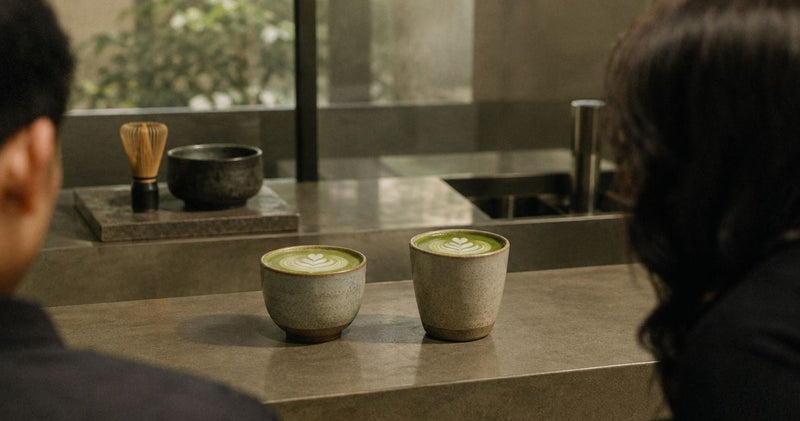
For a 2026 menu, define the role of matcha before adding variations. A plain preparation lets staff assess the tea directly. A milk-based preparation needs its own recipe, rather than an improvised addition to the same cup.
The aim is a service that another trained colleague can repeat. Neither elaborate presentation nor a long sourcing description replaces that requirement.
Build a matcha service around the working counter
1. Define the service before ordering tea
Write a short service brief using a shared document or a printed sheet. Specify where matcha will be prepared, who will prepare it and which drinks you intend to offer. Keep the first version narrow enough to test without changing the whole beverage operation.
Separate a member tasting from routine service. A tasting can accommodate explanation and adjustment. A repeat order needs a settled recipe and an obvious preparation sequence.
For your 2026 opening brief, record decisions rather than aspirations. Replace phrases such as an elevated tea experience with observable instructions: the serving vessel, the ingredients and the point at which the drink is handed over.
Do not assume every service point needs matcha immediately. Begin where staff have space to measure, sift, whisk and clean without crossing a wet working area.
- Name the preparation station and the person responsible for it.
- Specify plain matcha, milk-based matcha or both.
- Record the intended serving vessel for each drink.
- Separate tasting sessions from routine orders.
- Define what must be checked before extending the service.
2. Place storage away from the wet station
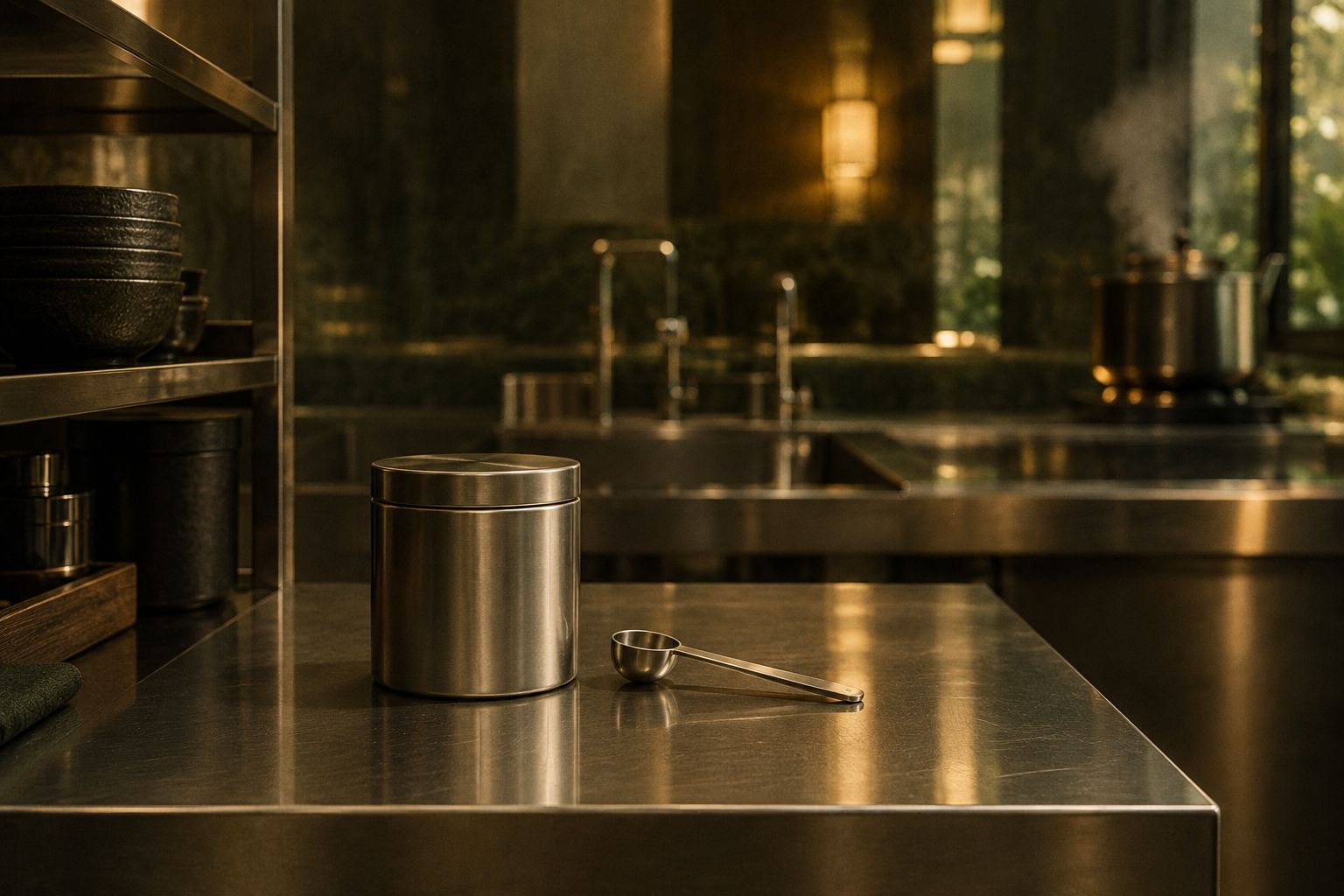
Inspect the counter before buying additional equipment. Use an existing opaque, airtight food container if it is suitable, clean and completely dry. Position it away from steam, direct sunlight and equipment that gives off heat.
Keep powder handling separate from bowl rinsing. A damp scoop or steam rising into an open container introduces moisture where it is not wanted. Close the container after measuring, not after finishing the drink.
A display position and a storage position can be different. Your members do not need to see an open supply of powder to understand what is being served. Keep the tea protected while making the preparation itself legible.
Assign a dry landing place for the measuring tool. That small decision makes the correct action easier during a busy handover.
- Choose a cool position away from direct sunlight.
- Keep the container clear of steam and splashes.
- Use a clean, dry measuring tool.
- Close the container immediately after portioning.
- Check that cleaned containers are dry before refilling.
3. Match the equipment to the service scope
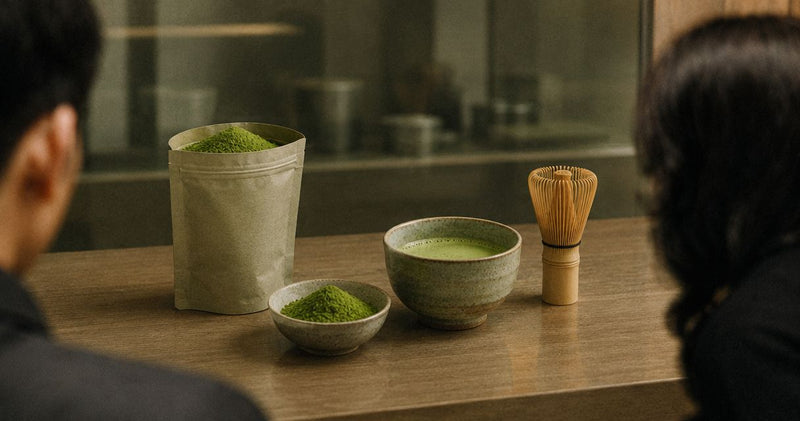
List the tools you already have. A suitable bowl, a fine-mesh sifter, an accurate scale and a bamboo whisk let you assess the preparation method before choosing a coordinated arrangement.
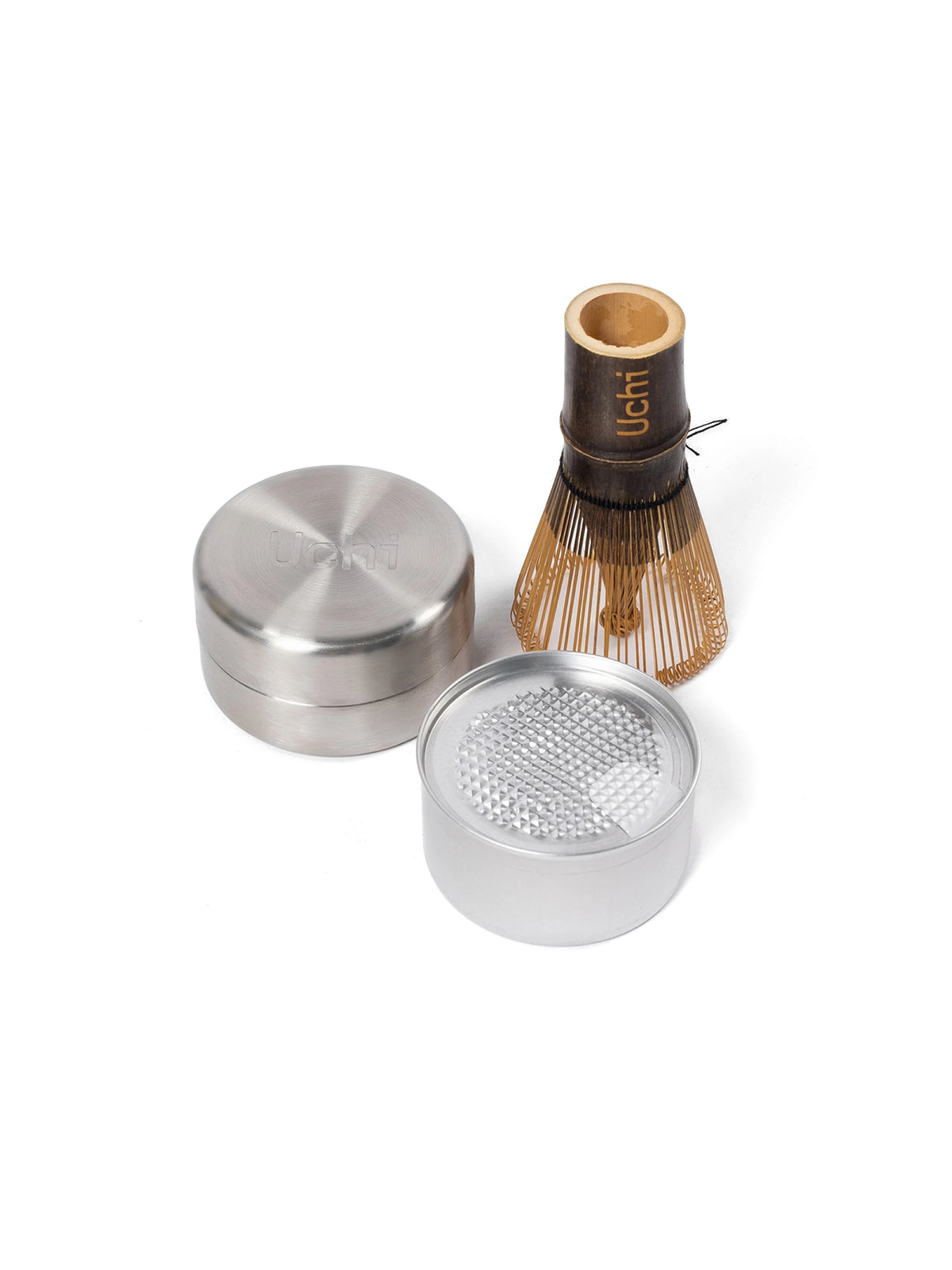
For a small, staff-prepared service, the Uchi Base provides an airtight stainless steel canister that keeps light out. Its limitation is equally clear: the canister does not remove the need for dry handling or a suitable counter position. It is not temperature-controlled storage.
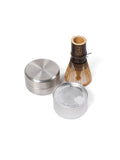
Home contains Base and Pod. Complete contains Base, Pod, Bowl, Spoon, Sieve and Whisk. Choose between them according to the tools missing from your station, not the number of objects on display.
The Whisk is a bamboo chasen with 120 prongs. Give it a defined cleaning and drying place rather than leaving it among general bar utensils.
- Audit existing tools before adding equipment.
- Reserve enough bowl space for whisk movement.
- Keep sifting and measuring tools dry.
- Distinguish storage equipment from preparation equipment.
- Provide a drying position for the whisk.
4. Write the recipe in measurable terms
Use a scale and a written recipe for the first trials. Record powder mass, water quantity, water temperature, milk quantity where relevant, and the serving vessel. These are operating settings to establish through tasting, not figures to borrow from an unrelated menu.
Change one setting at a time. If staff alter powder, water and milk together, the tasting does not identify which change affected the drink. Keep the selected recipe beside the station, including the order of preparation.
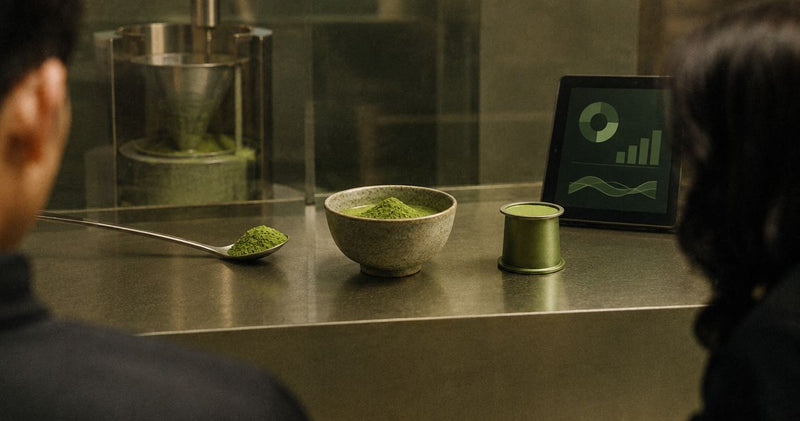
One level Spoon holds 1 gram. Use that reference deliberately; do not turn an unspecified heaped scoop into the club's measuring standard.
Matcha forms a suspension rather than dissolving like sugar. Sifting breaks up clumps, while whisking disperses the powder. Some settling does not, by itself, establish that the tea is stale.
- Record powder mass in grams.
- Record water and milk quantities separately.
- Specify water temperature and preparation order.
- Sift before adding water.
- Change one recipe setting per tasting.
- Keep the approved recipe visible to staff.
5. Give staff an accurate sourcing description
Begin with the supplier's factual product information. Create a short internal note that distinguishes producer, growing regions, harvest and blend composition. Staff should be able to explain the tea without adding claims that the supplier has not made.
Uchi sources Kaze no Shiro from Horii Shichimeien, founded in Uji, Japan, in 1879. It is a first-flush blend composed by the house tea master, drawing first-harvest tencha from Kyoto, Nara and Shiga and weaving Okumidori, Yabukita and Sayamakaori.
The tea is shaded for 25 days before harvest and stone-milled at 40 grams an hour. These details describe its production. They do not support calling the blend single origin, single estate or single cultivar.
For your 2026 menu copy, choose the facts members need to understand the drink. Keep the fuller sourcing note available for staff rather than compressing every detail into a menu line.
- Name the producer accurately.
- Describe a blend as a blend.
- Separate producer location from leaf-growing regions.
- Use harvest and milling details without embellishment.
- Keep menu descriptions focused on tea, preparation and taste.
6. Test the handover, not only the first cup
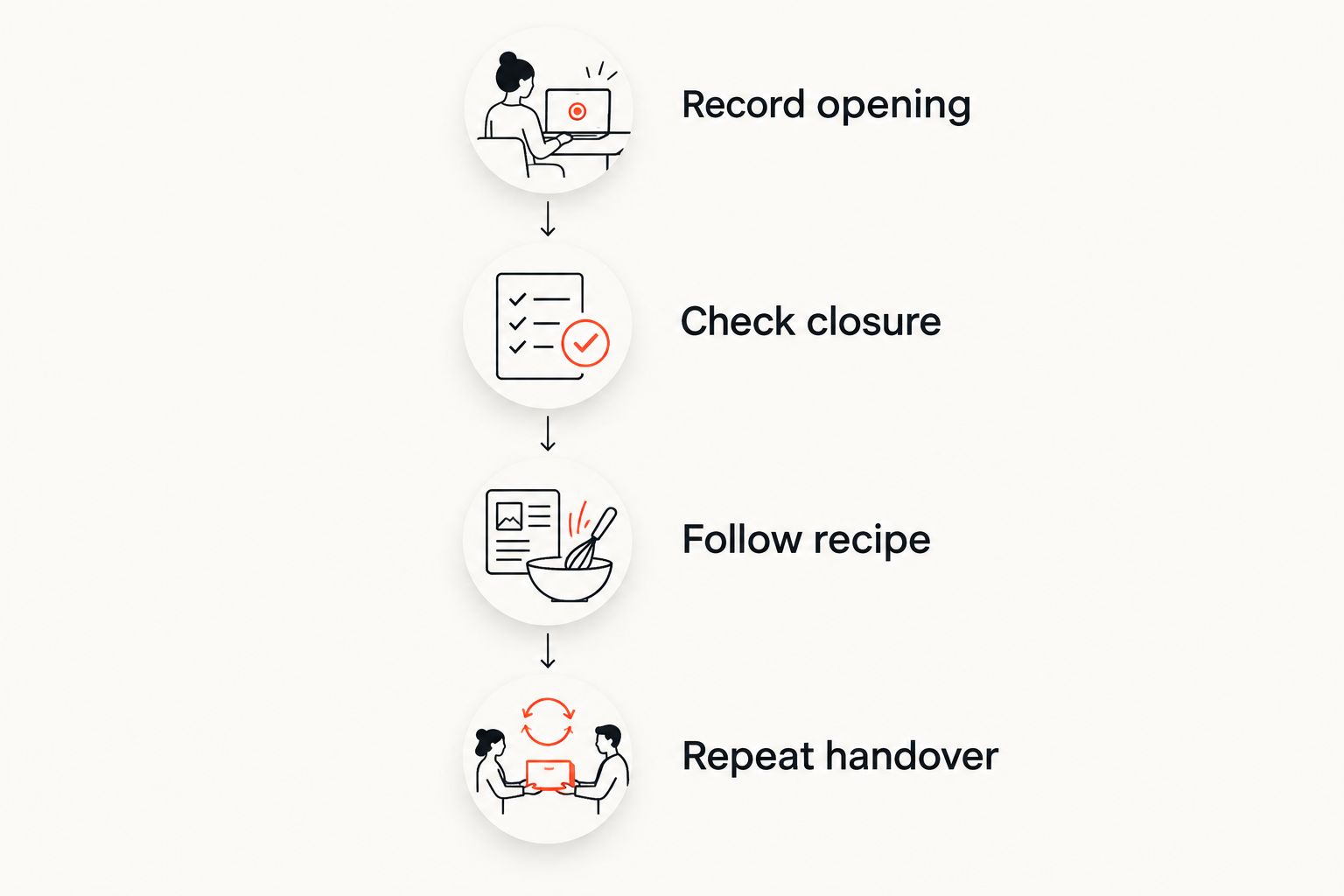
Prepare the written recipe with more than one staff member. Observe the sequence as well as the finished drink: where the container stays open, where the measuring tool lands and whether the preparation area remains dry.
Use a simple service log. Record the opening date, recipe changes, preparation problems and tasting observations. Describe aroma, texture and taste plainly. Do not assign an unsupported shelf life based on a single successful tasting.
Matcha and loose-leaf tea need different preparation instructions. While loose-leaf tea for hospitality centres on an infusion that separates leaves from liquor, matcha service disperses the powder into the drink. Keep their recipe cards distinct, even when both occupy the same beverage station.
Approve the process only when another colleague can repeat it. A demonstration by the person who selected the tea is not a complete handover.
- Record the date each working supply is opened.
- Observe container closure during preparation.
- Check that staff follow the same recipe.
- Note clumps, settling and taste separately.
- Repeat the handover after changing equipment or ingredients.
7. Set replenishment from recorded use
Count actual servings and powder use before deciding the size of the working supply. A home-sized format can support a controlled trial, but that does not establish its suitability for service across several club locations or counters.
A Pod contains 40g of matcha, described as about twenty cups. Your club's yield depends on the approved dose. Use measured consumption rather than the approximate cup count when planning replenishment.
Ask the supplier to confirm the appropriate hospitality format and handling instructions before expanding. Do not infer delivery arrangements, commercial terms or service capacity from a consumer product description.
Keep packaging decisions precise too. Aluminium described as recyclable is not the same claim as recycled material. Where packaging includes a foam insert, account for it rather than describing the whole arrangement as plastic-free.
- Count servings against measured powder use.
- Match the working supply to observed consumption.
- Confirm hospitality requirements directly with the supplier.
- Keep opening dates visible during stock rotation.
- Separate material claims from disposal instructions.
Compare the options for a club trial
Choose according to the tools already present and the scale you have actually tested. The table separates entry into the preparation method from replenishment; it does not establish suitability for high-volume service.
| Option | Suited to | Key limitation |
|---|---|---|
| Existing equipment | A manual recipe trial | Storage and tool suitability need checking |
| Home | A trial with preparation tools already available | Contains Base and Pod, not the preparation tools |
| Home + Whisk | A trial with a suitable bowl and measuring tools | Bowl, Spoon and Sieve are not included |
| Complete | A trial needing storage and preparation tools | Staff training and service testing remain necessary |
| Pod | Replenishment for an existing Base owner | Contains tea, not a complete preparation arrangement |
Home keeps the initial choice narrow when suitable tools are already on the counter. Complete brings the named preparation tools together. Neither option supplies a club-specific recipe, staff training or a validated service capacity.
Choose equipment after defining the service, not instead of defining it. Confirm the requirements of a larger operation separately.
Common mistakes in private members' club matcha service
Treating display as storage
An open container can make powder visible, but it also exposes the working supply. Keep the storage container closed and let the prepared drink carry the presentation.
Writing one recipe for every drink
Plain matcha and milk-based matcha need separate testing. Record each approved preparation rather than asking staff to adjust by eye during service.
Turning sourcing into an invented story
A producer based in Uji does not make every blend single origin. Use the stated regions and cultivars, and leave unsupported estate or ceremonial narratives out of the menu.
Promising a wellness effect
Do not describe the drink through health or physiological promises. Staff can discuss the tea's origin, preparation, aroma, texture and taste without making those claims.
Extending service before checking the handover
A successful tasting does not prove that every shift can repeat the method. For your 2026 rollout, settle storage, recipe and cleaning responsibilities at one station before adding another.
FAQ
How do I introduce matcha to a private members' club?
Start with one preparation station, a written recipe and protected storage. Test the method across staff handovers before extending it to other service points.
What equipment does a club need to prepare matcha?
A club needs suitable dry storage, a measuring method, a fine-mesh sifter, a bowl and a whisk for the preparation described here. Check existing equipment before choosing additional tools.
Is Home or Complete more suitable for a club trial?
Home suits a trial where preparation tools are already available; Complete suits a trial that also needs Bowl, Spoon, Sieve and Whisk. Both include Base and Pod, but neither replaces recipe testing or staff training.
How many club servings does a Pod provide?
A Pod contains 40g of matcha, described as about twenty cups. Calculate the club's actual yield from its measured recipe rather than treating that approximate count as a fixed service yield.
Should matcha powder stay beside the espresso machine?
Keep matcha powder away from heat, steam and splashes. Choose a dry storage position and close the container immediately after measuring.
Is this matcha single origin?
Kaze no Shiro is a first-flush blend, not a single-origin tea. It draws first-harvest tencha from Kyoto, Nara and Shiga and combines Okumidori, Yabukita and Sayamakaori.
Does settling mean a member's matcha was prepared incorrectly?
Settling alone does not establish incorrect preparation because matcha is a suspension. Check sifting, whisking and the written recipe separately from storage and freshness.
One last thing
Close the container before whisking. It is a small instruction, but it removes the preparation interval from the powder's exposure to the room.
For your 2026 service check, watch that action during a real handover. It reveals whether freshness is built into the working method or left to individual memory.