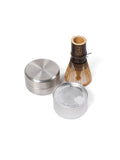
Uchi and Yukai are both matcha brands, and they solve different problems first. Uchi is built around how matcha is kept; choose Yukai if you have already tasted it and prefer its flavour. This page sets out the differences that can be stated from Uchi's side, and names what to confirm on Yukai's side before you buy in 2026.
- Uchi vs Yukai matcha in 2026: Uchi leads with storage, a stainless steel Base that keeps matcha away from air and light.
- Uchi discloses its producer, blend and method: Horii Shichimeien, Uji, 25 days of shade, 40 grams an hour.
- Choose Yukai if you already prefer its flavour or want a different house's blend.
- Confirm Yukai's producer, harvest and packaging on its own product pages before deciding.
Why this comparison matters in 2026
Matcha changes fast once it is opened. Air, light and heat dull the colour first, then the aroma, then the taste. Most matcha is stored badly, so two brands can start from comparable leaf and end up very different in the bowl.
That is the axis here. Uchi puts the keeping of matcha at the centre of the product. A comparison with Yukai therefore starts with what happens after the powder leaves the mill, and then moves to sourcing, tools and how you buy.
This page states what Uchi does, in specific terms. It makes no claims about Yukai that Yukai has not published. Where Yukai's side matters, you get the question to ask, not an answer invented for it.
At a glance
The table is short on purpose, so it reads on a phone. Uchi's column is stated. Yukai's column lists what to confirm.
| Dimension | Uchi | Yukai: confirm |
|---|---|---|
| Best for | A counter-ready system | Your own taste |
| Storage | Stainless Base | Container type |
| Producer | Horii Shichimeien | Named producer |
| Blend | Three cultivars | Cultivar details |
| Shade | 25 days | Shade period |
| Milling | 40 g an hour | Milling method |
| Tools | Whisk, Bowl, Sieve, Spoon | Range offered |
| Refills | Pod, about 20 cups | Refill format |
The rows follow the sections below, in the same order.
Uchi is built around storage
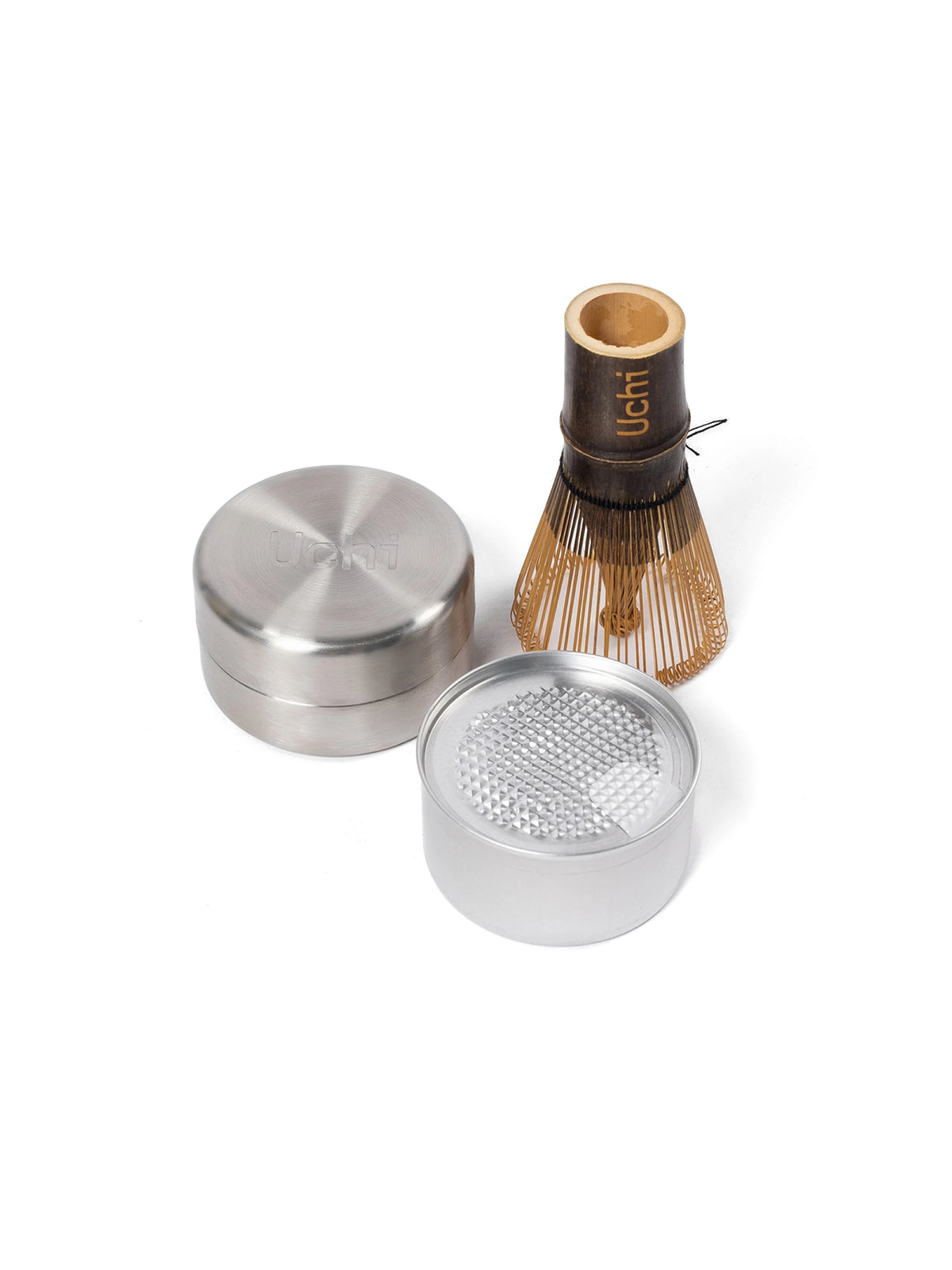
Uchi offers more protection after opening. The Base is an airtight stainless steel canister, kept for life. It blocks light, limits air and sits on the counter. You do not decant, and you do not hunt for a dark cupboard.
The Pod is the matcha itself: 40 grams, about twenty cups, in recyclable aluminium. When it is empty, you refill the Base from a new Pod. The container stays, and the matcha inside is the only thing that changes.
The mechanism is simple. Matcha oxidises. Less air and less light mean the powder tastes in week three as it did on day one. That is the reason the Base comes before anything else in the system.
One material is worth naming. The Base ships with a foam insert. It is not part of the matcha system, and it is not solved yet. We say so rather than gloss it.
On Yukai's side, check how the matcha is packaged when it arrives and what you are meant to keep it in afterwards. A resealable bag and a light-proof, airtight canister are not the same thing. If Yukai states its storage format on the product page, that is your answer.
Sourcing: Uchi names its house, blend and method
Uchi is specific here, and specificity is easy to verify. The matcha comes from Horii Shichimeien, a tea house founded in Uji, Japan, in 1879.
The matcha is Kaze no Shiro, a first-flush blend composed by the house tea master. It draws first-harvest tencha from Kyoto, Nara and Shiga, and weaves three cultivars: Okumidori, Yabukita and Sayamakaori.
It is a blend, not a single origin and not a single cultivar. In Uji, blending is not a shortcut. It is how a house builds a flavour of its own and holds it steady, season after season.
The leaf is shaded for 25 days before harvest. It is then stone-milled at 40 grams an hour. Slow milling is part of why the texture is fine.
Okunoyama is Horii Shichimeien's historic garden, the last surviving of the seven designated in the Muromachi period as sources of Uji tea. Kaze no Shiro itself is a blend of first-harvest tencha from Kyoto, Nara and Shiga.
For Yukai, look for the same five facts: the producing house, the region, the harvest, the shade period and the milling method. A label that names them is easy to compare. A label that does not is a reason to write and ask.
The guide to ceremonial matcha labels explains which details to look for on any brand, Uchi included.
Flavour is personal, and neither side wins it
Taste is a tie until you taste both. Uchi's Kaze no Shiro is a first-flush blend. The aim of a blend is a steady flavour, season to season.
Yukai may taste different. Different houses, cultivars and harvests produce different bowls. That is a difference, not a ranking.
If you are choosing between them on flavour, taste both. Uchi sells a Matcha Sample, a 6 gram sachet that makes two servings. Make both the same way: same water, same gram of powder, same bowl. Taste them one after the other.
The side-by-side tasting guide walks through the method. It is the only fair way to settle a question of taste.


Uchi offers more of the tools in one system
Uchi covers the whole bowl. The range includes the accessories that make matcha properly, each with a defined job.
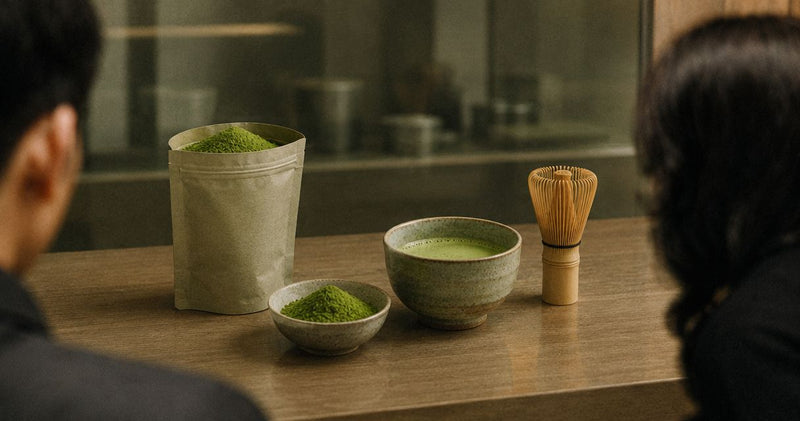
- Whisk: a bamboo chasen with 120 prongs. It combines powder and water.
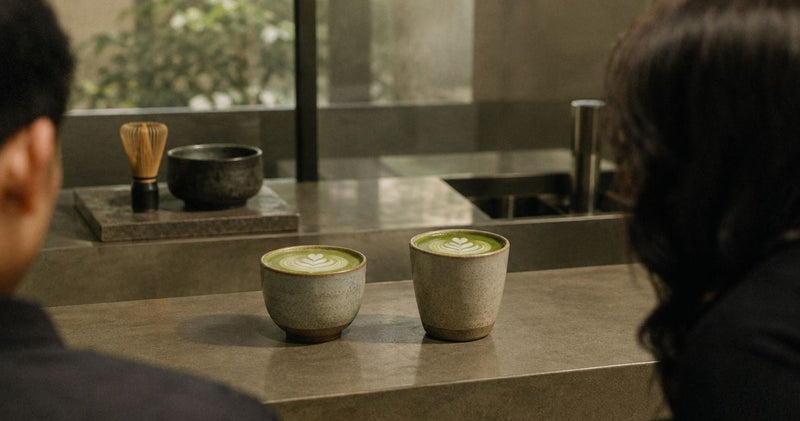
- Bowl: a chawan with a wide base and high walls, so the Whisk moves freely.
- Sieve: a fine-mesh sifter that breaks clumps before water touches the powder.
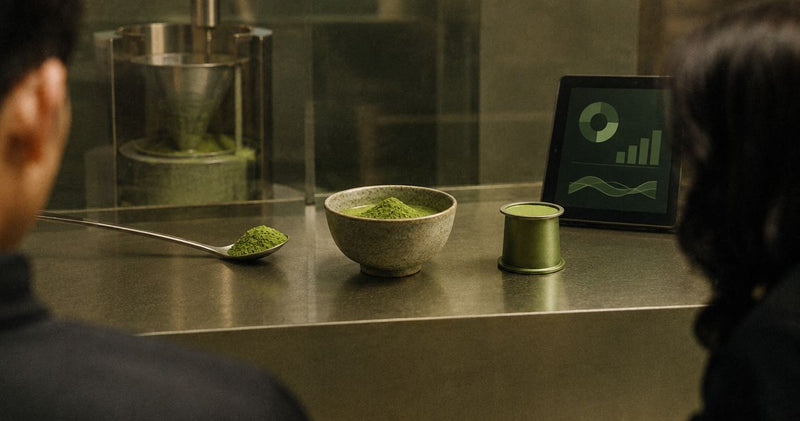
- Spoon: a matcha scoop. One leveled Uchi Spoon holds 1 gram.
The sets are distinct. Home is the Base and a Pod. Home + Whisk adds the Whisk. Complete is the Base, a Pod, Bowl, Spoon, Sieve and Whisk.
If you already own a Whisk and a Bowl, you do not need the Complete set. The guide to Home versus Complete is written for that decision.
For Yukai, check which tools it sells, if any. If you plan to buy tools elsewhere, add that to the plan. It is a different way to build the same routine, and it may suit you.
Refilling: the Pod keeps the container
Uchi is the more considered refill system. You buy a Base once. After that you buy Pods, and each Pod holds 40 grams, about twenty cups. One leveled Spoon is one gram, so the measure stays consistent without a scale.
The aluminium is recyclable. It is not described as recycled, because it is not. The foam insert in the Base is the part we have not solved.
Ask the same of Yukai: what do you do with the packaging when it is empty? What do you keep, and what do you throw away? A system that asks you to buy a new container every time is a different proposition from one built to be kept.
For how the Pod fits into a routine, see the Pod. It is the matcha refill for existing Base owners. If you are new, the Home set is the way in.
Both are worth reading carefully
Both brands ask you to read a label. Uchi publishes its house, region and method. Yukai may do the same. A brand that states these facts can be checked. A brand that does not has made a choice, and you can weigh it.
There is one more honest tie. Both are matcha, and both can make a good bowl. Preparation matters as much as the brand. Water temperature, the gram of powder, sifting and whisking decide most of what reaches the cup.
That is why the tools matter. A powder that clumps, or settles, or tastes bitter, is often a preparation problem. The bitter matcha troubleshooting guide covers the causes.
What to confirm about Yukai before you decide
A short list. Each answer takes a minute on Yukai's own pages, or one message to ask.
- Producer: which tea house made it, and where it is based.
- Harvest: first harvest or later, and which year.
- Cultivars: named, or not stated.
- Shade period: days of shade before harvest.
- Milling: stone-milled or otherwise, and the rate.
- Packaging: what it arrives in and what you store it in.
- Refills: what you buy next, and what you keep.
Then put the answers beside Uchi's. The page on Yukai Matcha alternatives is a useful companion if the list raises doubts.
Pricing
Uchi sells the Base and Pod as a set, the Pod on its own as a subscription product, and each accessory separately. Yukai will have its own model, and the two may be built differently.
The comparison to make is the shape of what you buy, not a figure. With Uchi you buy a container you keep and matcha you replace. Check whether Yukai asks you to buy the container again each time. Current prices for Uchi are on each product page.
Scorecard
| Dimension | Winner |
|---|---|
| Storage after opening | Uchi |
| Disclosed sourcing | Uchi |
| Flavour | Tie, taste both |
| Tools in one system | Uchi |
| Refill format | Uchi |
| Preparation quality | Tie |
| Flavour you already know | Yukai, if you prefer it |
Uchi leads where the facts are published and checkable. Yukai leads wherever your own palate says so. Neither lead is permanent, and a Sample settles the second one.
Final verdict
Choose Uchi if you want matcha kept the way it was milled. You want a Base that stays on the counter, a Pod you replace, and a producer, blend and method you can read. You like one system rather than several parts.
Choose Yukai if you have tasted it and prefer it. Or you want a different house's flavour, or you already own the tools and want only the powder. Taste is a legitimate reason, and it outranks every table on this page.
If you are undecided, taste both. That takes two servings of each and an afternoon.
FAQ
What is the difference between Uchi and Yukai matcha?
Uchi is built around storage: a stainless steel Base and a Pod of 40 grams. Yukai's format, producer and packaging should be confirmed on its own pages.
Where does Uchi matcha come from?
Uchi matcha comes from Horii Shichimeien, a tea house founded in Uji, Japan, in 1879. It is a first-flush blend called Kaze no Shiro.
Is Uchi matcha single origin?
No. Kaze no Shiro is a blend of first-harvest tencha from Kyoto, Nara and Shiga, weaving Okumidori, Yabukita and Sayamakaori.
How many cups are in one Uchi Pod?
A Pod holds 40 grams, about twenty cups. One leveled Uchi Spoon holds 1 gram.
How can I compare Uchi and Yukai by taste?
Make both the same way: same water, same gram, same bowl. Uchi sells a Matcha Sample of 6 grams, which makes two servings.
What do I need to make Uchi matcha at home?
A Whisk, a Bowl and a Spoon are the core. The Sieve breaks clumps. The Complete set includes all four with a Base and a Pod.
Is the Uchi packaging recyclable?
The Pod aluminium is recyclable. The Base ships with a foam insert, which is not solved yet.
Which should I choose in 2026?
Choose Uchi for storage and published sourcing. Choose Yukai if you have tasted it and prefer its flavour.
One last thing
The Spoon is the smallest object in the system and the one that fixes the ratio. One leveled Uchi Spoon is one gram, so a bowl made on Monday matches a bowl made on Friday. Whichever brand you choose in 2026, measure it the same way each time. Consistency does more for a bowl than most upgrades.