Air and light affect matcha’s colour, aroma and taste; both choices include an airtight stainless steel Base. For an existing bowl owner, Uchi Home + Whisk is the direct choice when the bowl already works for whisking; Complete adds a Bowl, Spoon and Sieve. This 2026 guide separates the storage decision from the tools you actually need.
- For a matcha set for existing bowl owner, choose Uchi Home + Whisk when the current bowl suits whisking.
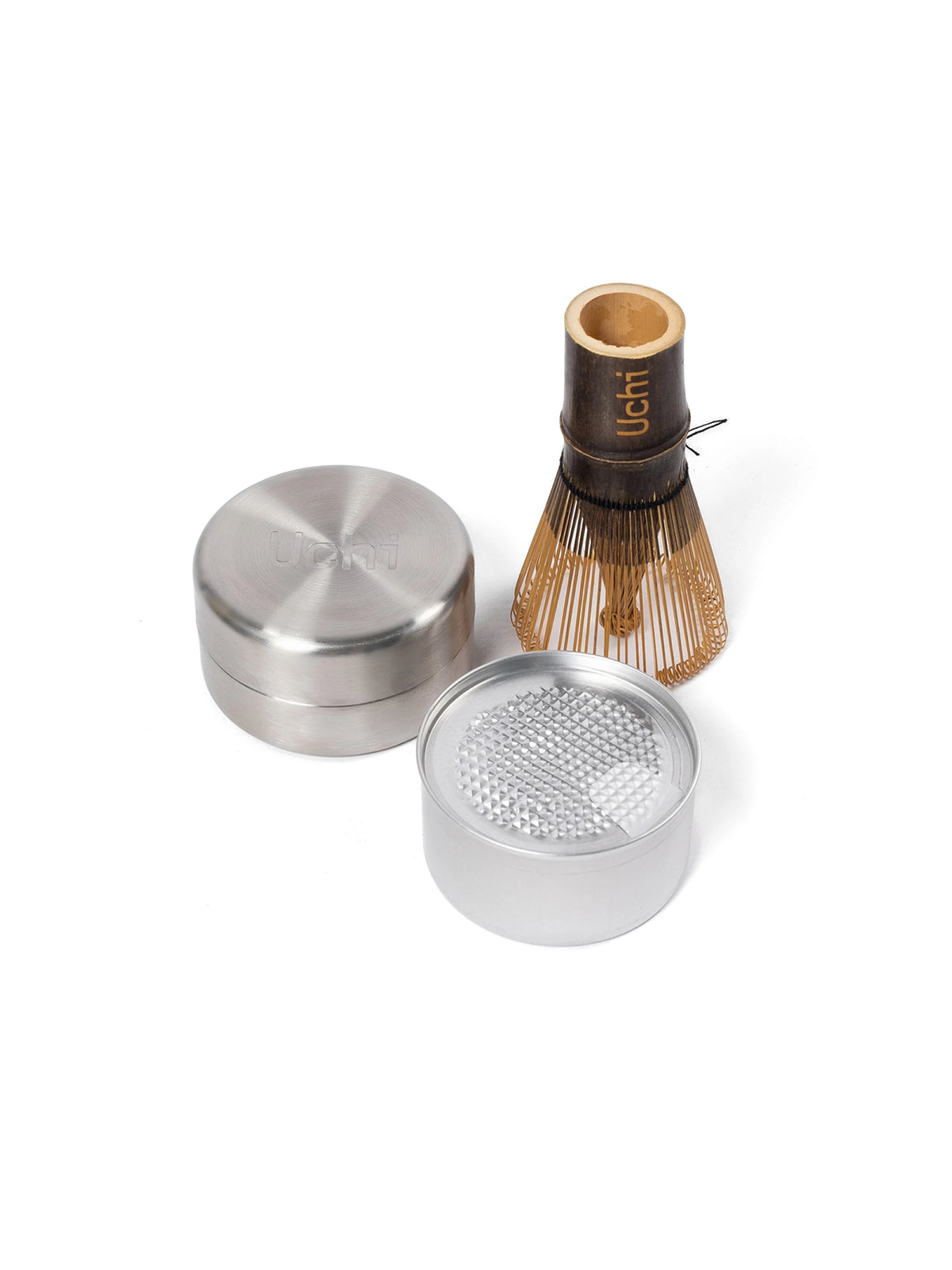
- Home + Whisk contains Base, Pod and Whisk. Complete adds Bowl, Spoon and Sieve.
- Both choices include the same storage foundation: an airtight stainless steel Base and a 40g Pod.
- Choose Complete when the additional Bowl, Spoon and Sieve each have a clear role at home.
Why storage comes before another bowl
Matcha is finely ground tea. Exposure to air, light, moisture and heat affects how it keeps after opening. A new bowl does not address those conditions. Storage does.
The Base is an airtight stainless steel canister, kept for life. Its opaque material keeps out light; its closure limits exposure to air while closed. Both Home + Whisk and Complete include it, so neither choice has a different storage foundation.
The Pod contains 40g of matcha, about twenty cups, in recyclable aluminium. The decision between these two combinations is therefore about preparation equipment, not a different quantity of tea or a different container.
For this 2026 comparison, start with the bowl already in the cupboard. Keep it in the decision rather than treating ownership as a reason to replace it.
What matters when a bowl is already owned
A useful comparison starts with the work each object does. These criteria put storage and preparation ahead of a matching arrangement on the counter.
- Storage: both choices include Base and Pod. There is no storage distinction to resolve between them.
- Whisking room: the existing bowl needs enough open space for the Whisk to move without repeatedly striking the sides.
- Handling: the bowl should sit securely and contain the liquid during whisking.
- Sifting: Complete includes a Sieve. Home + Whisk leaves that task to equipment already owned or selected separately.
- Measuring: Complete includes a Spoon. Home + Whisk does not add a measuring utensil.
- Duplication: an additional Bowl has a purpose when it replaces an unsuitable vessel or serves another person. Otherwise, it repeats something already owned.
A bowl does not need to match the other objects to remain useful. Its shape and condition matter more than whether it was originally sold for matcha.
Home + Whisk and Complete at a glance
The contents below define the comparison in 2026. Complete adds three objects to Home + Whisk: Bowl, Spoon and Sieve.
| Choice | Contents and fit |
|---|---|
| Home + Whisk | Base, Pod, Whisk. Suited to an existing bowl owner with a workable measuring and sifting arrangement. |
| Complete | Base, Pod, Bowl, Spoon, Sieve, Whisk. Suited to replacing an unsuitable bowl while adding the preparation tools. |
The distinction is equipment, not a different matcha. Both choices contain a Pod and the same named storage and whisking components.
1. Home + Whisk: retain a bowl that already works
Home + Whisk contains Base, Pod and Whisk. It adds storage, matcha and a bamboo chasen without adding another bowl. The Whisk has 120 prongs.
This is the direct route for someone whose current bowl already supports comfortable whisking. The missing pieces are specific: there is no Bowl, Spoon or Sieve in this combination.
Home + Whisk strengths
- Keeps an existing, suitable bowl in daily use.
- Includes the airtight stainless steel Base rather than leaving storage unresolved.
- Includes a Whisk, so owning a bowl does not also require already owning a chasen.
- Leaves measuring and sifting choices separate from the main purchase.
Home + Whisk limitations
- Does not include a Sieve for breaking up dry clumps before whisking.
- Does not include a Spoon for a consistent scoop-based measure.
- Depends on the existing bowl being suitable, not merely available.
Suited to: an existing bowl owner who wants Base, Pod and Whisk, and has a clear plan for measuring and sifting.
Home + Whisk does not require every accessory to come from the same collection. An appropriate utensil already in use can continue doing its job. Check the actual cupboard before adding anything else.
Verdict: Choose Home + Whisk when the bowl works and the remaining preparation tasks are covered.
2. Complete: replace a bowl and add the preparation tools
Complete contains Base, Pod, Bowl, Spoon, Sieve and Whisk. It brings the named storage and preparation objects together. For someone who already owns a bowl, its relevance depends on what that existing bowl cannot do.
The Bowl is a chawan. The Spoon is a matcha scoop, and the Sieve is a fine-mesh sifter. These are separate functions, not interchangeable additions.
Complete strengths
- Includes a Bowl when the current vessel is awkward for whisking.
- Includes a Sieve for preparing the powder before water is added.
- Includes a Spoon for a repeatable scoop-based measure.
- Includes the same Base, Pod and Whisk found in Home + Whisk.
Complete limitations
- Adds another Bowl even when the current one is already suitable.
- Duplicates measuring or sifting equipment if those tasks are already covered.
- Requires space for the additional objects and somewhere for them to dry after use.
Suited to: someone replacing an unsuitable bowl who also wants the Spoon and Sieve.
Complete also has a clear role when the existing bowl belongs to another routine and is not available for matcha. That is a practical distinction. Owning a bowl somewhere in the kitchen is different from having one ready for this use.
Verdict: Choose Complete when Bowl, Spoon and Sieve each answer an actual need; skip it when they mainly duplicate existing equipment.
Check the existing bowl before choosing
A bowl’s name does not establish how it handles a Whisk. Inspect its interior, then consider the motion needed to prepare a drink. There is no single bowl dimension supplied here that can settle every fit.
Use these checks in order:
- Inspect the surface. Set aside a bowl with chips, cracks or a damaged interior. Inspecting an existing object comes before deciding whether it suits a new task.
- Check whisking room. Look for an open interior that allows a short back-and-forth motion. A narrow opening restricts movement even when the bowl holds enough liquid.
- Check stability. Place the bowl on the surface where matcha will be prepared. It should sit securely rather than rock.
- Check containment. Consider whether the sides contain liquid during whisking. A shallow dish and a deep, narrow vessel present different handling problems.
- Check daily handling. Decide whether the bowl is comfortable to hold, rinse and put away. A vessel that is awkward every morning remains awkward after a new purchase.
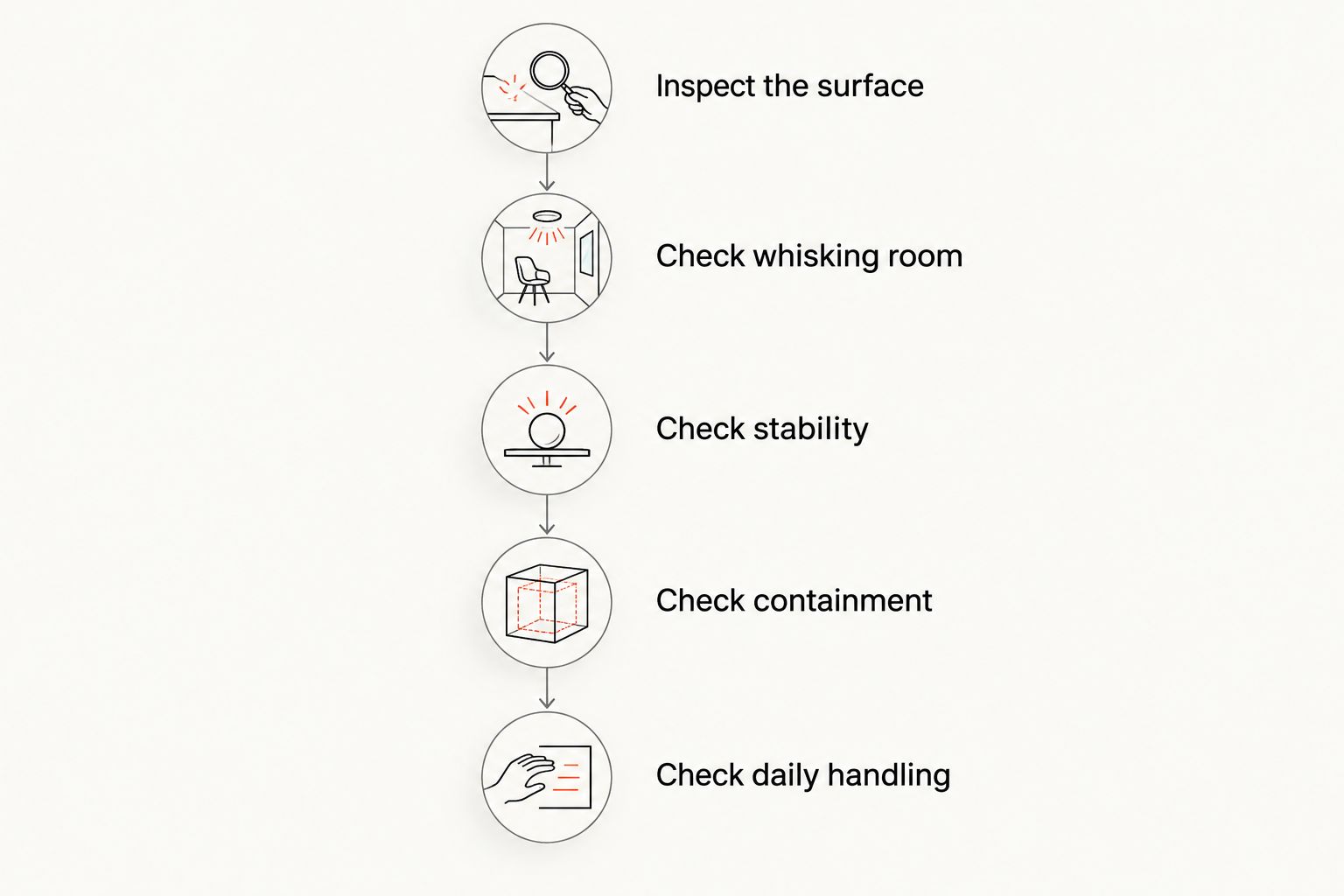
For a closer look at shape, read matcha bowl dimensions and room for the whisk. Capacity alone does not describe the space available for movement.
Separate the Spoon decision from the Sieve decision
The additional accessories in Complete solve different tasks. Assessing them separately prevents a familiar mistake: choosing the larger combination because one missing tool makes the whole arrangement feel incomplete.
The Spoon measures a portion
One level Uchi Spoon holds 1 gram. That is a defined measure for that Spoon, not a conversion for every teaspoon or scoop in the kitchen.
If weighing is already part of the routine, a dedicated scoop is a handling preference rather than a missing measurement method. If another spoon is used, do not assume that its level volume represents the same weight.
The Sieve breaks up dry clumps
A Sieve passes dry powder through a fine mesh before whisking. It addresses clumps before water is introduced. It does not replace the Whisk, which disperses the powder in water.
An existing fine-mesh sifter deserves inspection before another is added. It should be clean, dry and practical to use over the chosen bowl. A wet utensil is not suitable for handling dry matcha.
The Bowl provides the working space
The Bowl gives the Whisk a vessel in which to move. It does not measure a portion or sift the powder.
If the current bowl already provides that working space, the case for Complete rests on the other objects or a deliberate wish for another Bowl. There is no need to invent a preparation problem to justify keeping an object already liked.
The matcha does not change between these choices
Uchi’s Kaze no Shiro is a first-flush blend composed by the house tea master at Horii Shichimeien. It draws first-harvest tencha from Kyoto, Nara and Shiga, weaving Okumidori, Yabukita and Sayamakaori.
The leaves are shaded for 25 days before harvest. The matcha is stone-milled at 40 grams an hour. Those details describe the tea, not a difference between Home + Whisk and Complete.
For this 2026 decision, there is no need to choose the larger combination to obtain a different blend. Choose the equipment around the bowl and preparation routine; assess the tea on its own stated sourcing.
After opening, close the Base between uses. Keep dry utensils away from steam and splashes. Stainless steel blocks light, but storage still requires attention to where the container sits and how the powder is handled.
How these choices are ordered
Home + Whisk comes first because the starting point is ownership of a suitable bowl. It adds the shared storage components and Whisk without automatically adding a replacement vessel.
Complete follows for a distinct situation: the existing bowl needs replacing, and the Spoon and Sieve are also wanted. The order reflects equipment fit. It is not a ranking of tea quality, appearance or price.
The 2026 recommendation uses the stated contents and the role of each object. It makes no claim of comparative product testing.
The choice for an existing bowl owner
Choose Home + Whisk if the current bowl works. Then check measuring and sifting separately. Those are smaller, more precise decisions than replacing the entire preparation arrangement.
Choose Complete when the existing bowl is unsuitable and the additional tools have a place in daily use. A coordinated collection is a legitimate preference, but it is different from a functional requirement.
Uchi Home + Whisk suits the bowl owner who wants to keep using a familiar vessel while adding matcha storage and a Whisk.
FAQ
Which choice suits someone who already owns a bowl?
Home + Whisk suits someone whose existing bowl works for whisking. It contains Base, Pod and Whisk; measuring and sifting need to be covered separately.
What does Complete add to Home + Whisk?
Complete adds Bowl, Spoon and Sieve. Both choices include Base, Pod and Whisk, so the additional objects concern preparation rather than different matcha storage.
Can an ordinary bowl be used for matcha?
An ordinary bowl can be used when its shape, surface and stability suit whisking. Check for an undamaged interior, room for the Whisk and sides that contain the liquid during preparation.
Do both choices contain the same amount of matcha?
Both Home + Whisk and Complete include a Pod containing 40g of matcha, about twenty cups. Complete does not add another Pod.
Is a Sieve necessary if a Whisk is included?
A Sieve and a Whisk do different jobs. The Sieve breaks up dry clumps before water is added; the Whisk disperses the powder in water. Home + Whisk does not include a Sieve.
Does every level spoon hold one gram of matcha?
No. One level Uchi Spoon holds 1 gram, but that measure does not apply to every spoon. A different utensil needs its own measurement rather than an assumed conversion.
Does Complete keep matcha fresher than Home + Whisk?
Both choices include the same airtight stainless steel Base. Complete does not add a different storage mechanism; handling, closure and placement remain relevant with either choice.
One last thing
Before choosing, place the existing bowl beside the utensils already used for measuring and sifting. Name the missing task, not the missing object.
If the only missing task is whisking, Home + Whisk answers it while adding Base and Pod. If the bowl itself is the problem, assess Complete. A clear inventory often makes the decision smaller.