For a repeatable daily dose, choose a matcha spoon with a stated level measure: one leveled Uchi Spoon holds 1 gram. This 2026 guide compares spoon types by how clearly they define a portion; a scale remains the way to check the mass actually delivered.
- One leveled Uchi Spoon holds 1 gram of matcha, making it a clear reference for daily preparation.
- A measuring spoon defines volume, not the mass of matcha it contains.
- A chashaku portions matcha without defining a universal gram measure.
- Keep the scoop dry, close the container promptly, and weigh portions when checking accuracy.
Matcha spoon comparison at a glance
The order below favours a clearly defined portion over an unspecified scoop. It is a guide to measurement control, not a laboratory ranking of measured errors.
| Spoon type | Suited to | Measurement limit |
|---|---|---|
| Uchi Spoon | A stated daily portion | Level filling still matters |
| Measuring spoon | Repeating a known volume | Volume does not establish grams |
| Chashaku | Scooping and adjusting by eye | No universal mass per scoop |
| Household teaspoon | Using an existing utensil | Shape and fill are unspecified |
Why this matters
A spoon changes how much powder enters the bowl. Storage changes the condition of that powder before the spoon reaches it. Both affect the cup, but they solve different problems.
Air and light exposure contribute to deterioration in matcha's colour, aroma and taste. A carefully measured portion cannot restore freshness lost through poor storage. Keep the container closed between uses rather than leaving it open while preparing water and tools.
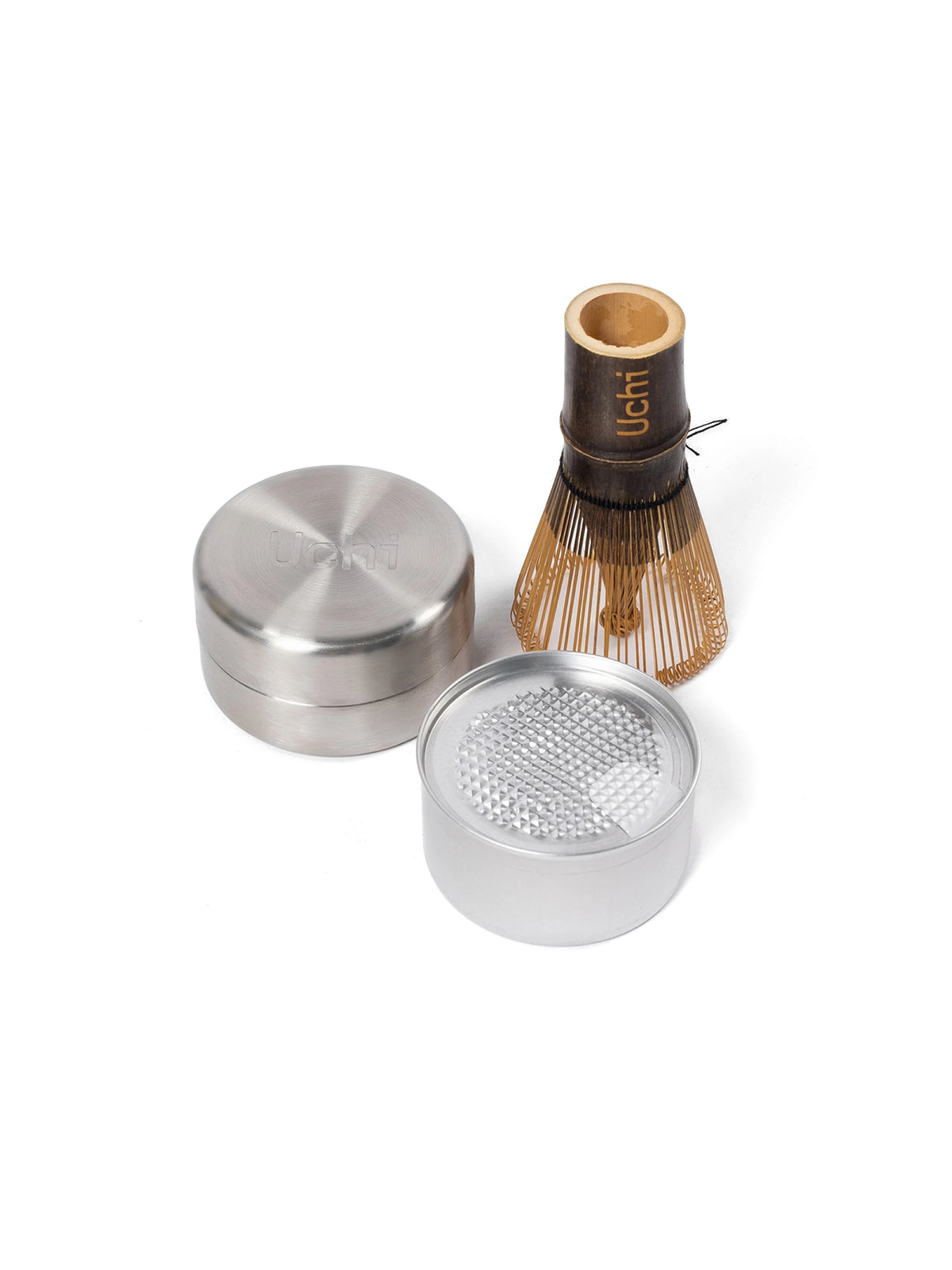
The Base is an airtight stainless steel matcha canister, kept for life. Its opaque walls exclude light. The spoon's role begins when that container opens: take a dry, consistent portion and close it again.
A repeatable portion makes taste adjustments easier to interpret. If the amount of powder changes each morning, a stronger bowl does not necessarily mean the matcha itself has changed.
What makes a useful matcha spoon
For this 2026 comparison, the criteria are practical rather than decorative. A spoon needs to make the portion understandable and the handling straightforward.
- Defined measure. A stated mass gives a clearer starting point than an unspecified scoop. It still needs the stated filling method.
- Repeatable filling. Level, heaped and compressed portions are different. Choose a method that can be repeated without guessing where the mound ends.
- Dry handling. A scoop must be dry before it enters the powder. Keep it separate from a wet bowl or whisk.
- Clean transfer. The portion should reach the bowl rather than remain on the utensil or spill across the counter.
- Checkable results. A scale lets you compare the intended portion with the mass delivered. Appearance alone cannot establish measurement error.
Accuracy and repeatability are not interchangeable. Accuracy concerns closeness to a target mass. Repeatability concerns how consistently the same method produces the same result.
A spoon can give similar portions without those portions matching the intended mass. That distinction is the reason this guide separates a stated measure from a verified measurement.
1. Spoon: for a stated daily portion
The Spoon has an explicit reference: one leveled Uchi Spoon holds 1 gram of matcha. That makes the filling instruction part of the measure, rather than an optional detail.
For home drinkers who want a stated portion without weighing every bowl, the Uchi matcha Spoon provides a clear starting point. It does not remove the need to fill consistently.
Spoon advantages
- A level portion has a stated mass.
- The instruction is easy to repeat at home.
- Multiple level portions let you adjust the amount deliberately.
Spoon limitations
- A heaped portion is outside the stated measure.
- Pressing powder into the scoop changes the filling method.
- The stated measure is not a published tolerance for every portion.
Two leveled portions correspond to the stated 2 grams. That is an example of portioning, not a requirement for every drink. Choose the amount for the preparation, then keep it steady while adjusting other variables.
For a useful check, weigh several separately filled portions rather than assuming a single result establishes consistency. Return to the same level filling method each time.
Suited to: a daily bowl with a clear gram reference.
Verdict: Choose the Spoon when a stated level portion matches the way you prepare matcha.
2. Measuring spoon: for repeating a known volume
A measuring spoon specifies volume. That is useful information, but it is not the same as specifying the mass of matcha inside it.
Powder can sit loosely or become packed. A level measuring spoon therefore defines the space filled, while a scale establishes how much that portion weighs.
Measuring spoon advantages
- A marked volume gives an identifiable reference.
- A level fill is clearer than an undefined heap.
- An existing measuring spoon can be checked with your usual powder.
Measuring spoon limitations
- Its volume marking does not establish grams of matcha.
- Pressing or tapping powder changes how it occupies the spoon.
- A measured portion needs checking before it becomes a gram reference.
Start by weighing the portion produced by a level fill. Repeat the fill without packing the powder. If the results vary, the filling method needs attention before the spoon becomes a useful daily reference.
Do not transfer a result automatically to a different powder. A volume-to-mass relationship belongs to the powder and filling method being checked, not to the spoon alone.
Suited to: a home routine that already uses a marked measuring utensil.
Verdict: Keep a measuring spoon if you are willing to establish its portion by weight.
3. Chashaku: for scooping by eye
A chashaku is a Japanese tea scoop used to handle powdered tea. Its curved shape provides a way to lift and transfer matcha, but the name does not define a universal gram measure.
The amount depends on the particular scoop and how it is filled. Counting scoops without defining their size leaves the portion open to interpretation.
Chashaku advantages
- It serves a specific powder-handling purpose.
- Small additions allow gradual adjustment.
- It can remain part of a routine that includes weighing.
Chashaku limitations
- A scoop count alone does not establish mass.
- Different scoop shapes need separate checks.
- A visible mound has no fixed measurement boundary.
A chashaku and a scale are not competing tools. One transfers powder; the other measures its mass. Use them together when preparing a reference bowl or comparing two matchas.
For daily use without a scale, keep the scoop and filling gesture consistent. Treat that as a familiar portioning habit, not proof of gram accuracy.
Suited to: drinkers who prefer the handling of a tea scoop and accept visual portioning.
Verdict: Choose a chashaku for handling, not for an assumed mass per scoop.
4. Household teaspoon: for an occasional preparation
A household teaspoon can move matcha from its container to the bowl. Its everyday name does not establish a measuring capacity or a portion in grams.
The distinction is between a utensil used for eating and a marked measuring spoon. Similar names do not make their measurements interchangeable.
Household teaspoon advantages
- It uses an utensil already at home.
- It transfers powder without another dedicated object.
- It works alongside a scale when mass matters.
Household teaspoon limitations
- The bowl shape is not a stated matcha measure.
- Different household teaspoons need separate checks.
- A heaped teaspoon leaves the portion particularly undefined.
Choose one utensil rather than switching between several. Keep the fill consistent, and weigh the amount when following a recipe stated in grams.
There is no need to replace a familiar teaspoon solely because it lacks a specialist name. The reason to change is a clearer portioning method, not the label on the object.
Suited to: occasional preparation with weight checked separately.
Verdict: Skip an assumed teaspoon-to-gram conversion; keep the utensil if it serves the routine.
A dry, repeatable measuring routine
A useful 2026 routine separates powder handling from water preparation. Have the dry tools ready before opening the matcha, then keep wet utensils away from the container.
Prepare dry tools
Check that the spoon and receiving vessel are dry. A spoon resting beside a wet whisk needs particular attention before it goes back into powder.
Fill consistently
Use the same filling method each time. For a level measure, remove the mound without pressing the powder down. Do not alternate between loose and compressed fills.
Check the mass
Place the receiving vessel on a suitable scale and tare it before adding powder. Read the delivered mass rather than weighing the spoon and powder together without accounting for the utensil.
Close promptly
Return the lid before continuing with water and whisking. Keep the dry scoop away from steam and splashes during the rest of preparation.
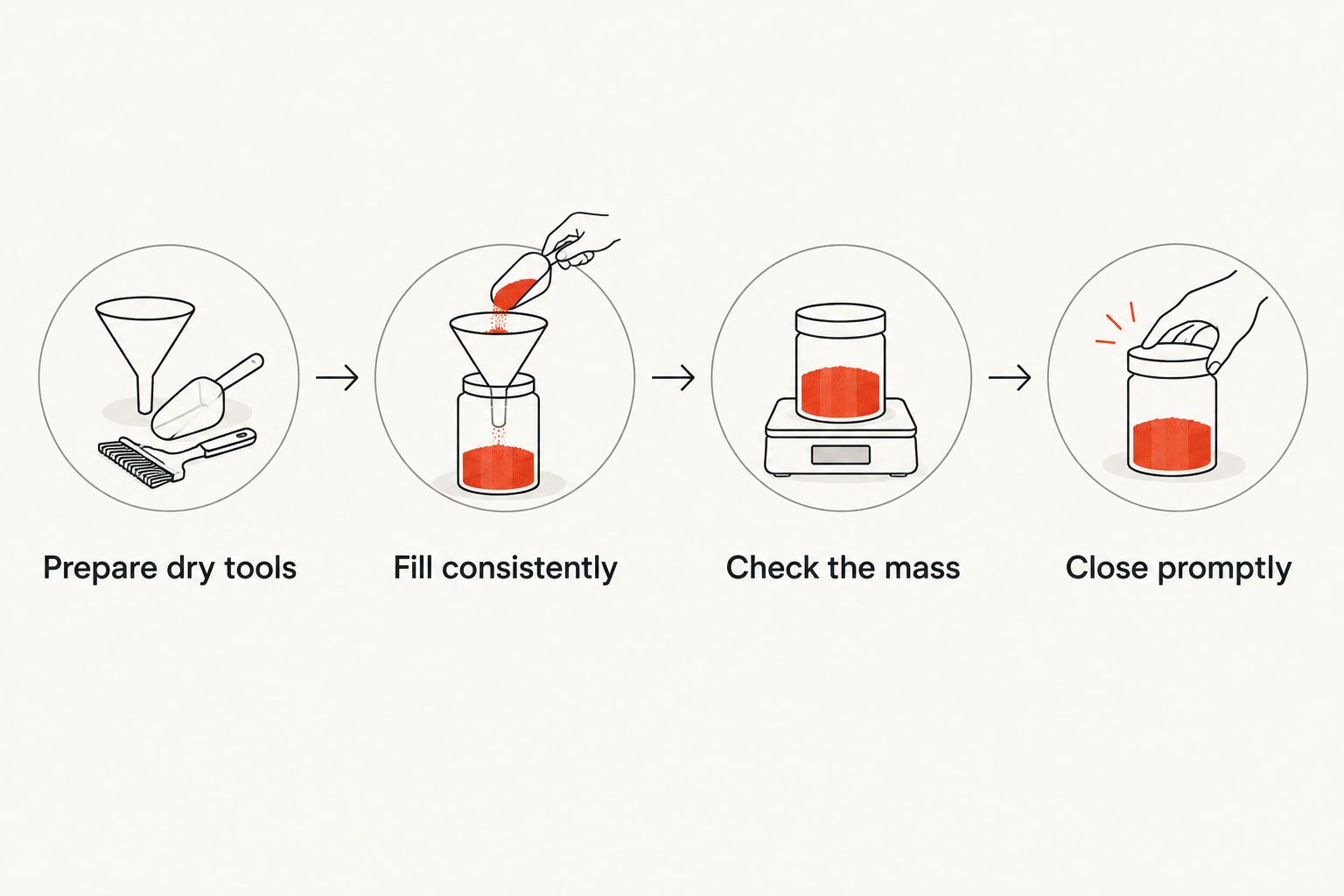
Keep the routine simple enough to repeat. A longer sequence is not inherently more accurate; consistent filling and a clear measurement reference do the useful work.
Reading the portion against the container
The Pod contains 40 grams of matcha, about twenty cups. That cup count is a portion reference, not a promise that every preparation uses the same amount.
A leveled Spoon defines an increment of 1 gram. A cup is a preparation chosen by the drinker. Keeping those ideas separate prevents the word scoop from becoming an unexplained serving size.
For a shared kitchen, write down the portion in grams rather than leaving an instruction such as two scoops without naming the utensil. The same wording otherwise produces different preparations when someone reaches for a different spoon.
In 2026, a useful home recipe needs no elaborate record. Note the powder mass and the preparation used. Change one variable at a time when comparing taste, so the result remains interpretable.
How the order was decided
This 2026 order follows measurement clarity: a stated level mass, a marked volume, then scoops without a universal mass reference. It does not assign measured error rates to products that have not been compared under the same conditions.
Handling remains separate from accuracy. A scoop can feel comfortable while giving an undefined portion, and a defined portion can still be filled inconsistently.
For checking accuracy, weigh the delivered powder. For daily repeatability, define the fill. Neither task is answered by the utensil's appearance alone.
Choosing a matcha spoon for home
Choose the Uchi matcha Spoon when the aim is a daily portion with a stated level measure. Keep a marked measuring spoon when you already know its delivered mass. Choose a chashaku for its handling, with a scale whenever the preparation calls for grams.
For an undecided reader, the practical default is a defined level measure and an occasional weight check. That keeps the daily gesture simple without confusing a familiar scoop with verified accuracy.
Storage remains part of the decision. Keep the powder protected from air and light, use a dry utensil, and close the container before continuing the preparation.
FAQ
How many grams does a matcha spoon hold?
One leveled Uchi Spoon holds 1 gram of matcha. Other spoons need their own stated measure or a weight check; the term matcha spoon does not define a universal capacity.
Is a matcha spoon more accurate than a teaspoon?
A stated level measure gives a clearer reference than an unspecified household teaspoon. Comparative accuracy still requires weighing the portions delivered by each utensil.
Can I use a chashaku without a scale?
Yes, a chashaku can portion matcha by eye. Keep the scoop and filling gesture consistent, but do not treat the scoop count as a verified mass.
Should a matcha spoon be level or heaped?
Use a level fill when the stated measure specifies level filling. A heap adds an undefined amount and no longer follows that measurement instruction.
Do I need to weigh matcha every morning?
Not if a familiar portioning routine gives the preparation you want. Weigh the powder when establishing that routine, checking a recipe or comparing portions.
Can I return a wet spoon to matcha powder?
No. Use a dry spoon and keep it separate from wet bowls, whisks and steam before it enters the container.
What should I check when choosing a matcha spoon in 2026?
Check whether the spoon specifies mass or volume and how it must be filled. A stated measure is useful only when the filling method is clear.
One last thing
The spoon does not have to change for the portion to change. A level fill and a compressed fill use the same object differently.
Before replacing a scoop, check the gesture. Keep the powder loose, define the fill, and verify the mass when it matters.