Air and light matter as much after opening as origin does before it: for readers comparing Megami matcha alternatives in 2026, Uchi offers first-harvest matcha with an airtight stainless steel Base. Choose Home for matcha and storage; choose Complete when preparation tools are needed too.
- Comparing Megami matcha alternatives starts with freshness, sourcing and the tools already at home.
- Uchi pairs a first-flush blend from Horii Shichimeien with an airtight stainless steel Base.
- Home includes Base and Pod; Complete adds Bowl, Spoon, Sieve and Whisk.
- Keep Megami as the tasting reference if its flavour already suits your daily bowl.
Why this matters
Changing matcha does not solve poor storage. Powder exposed to air, light, moisture or heat can change in colour, aroma and taste after opening.
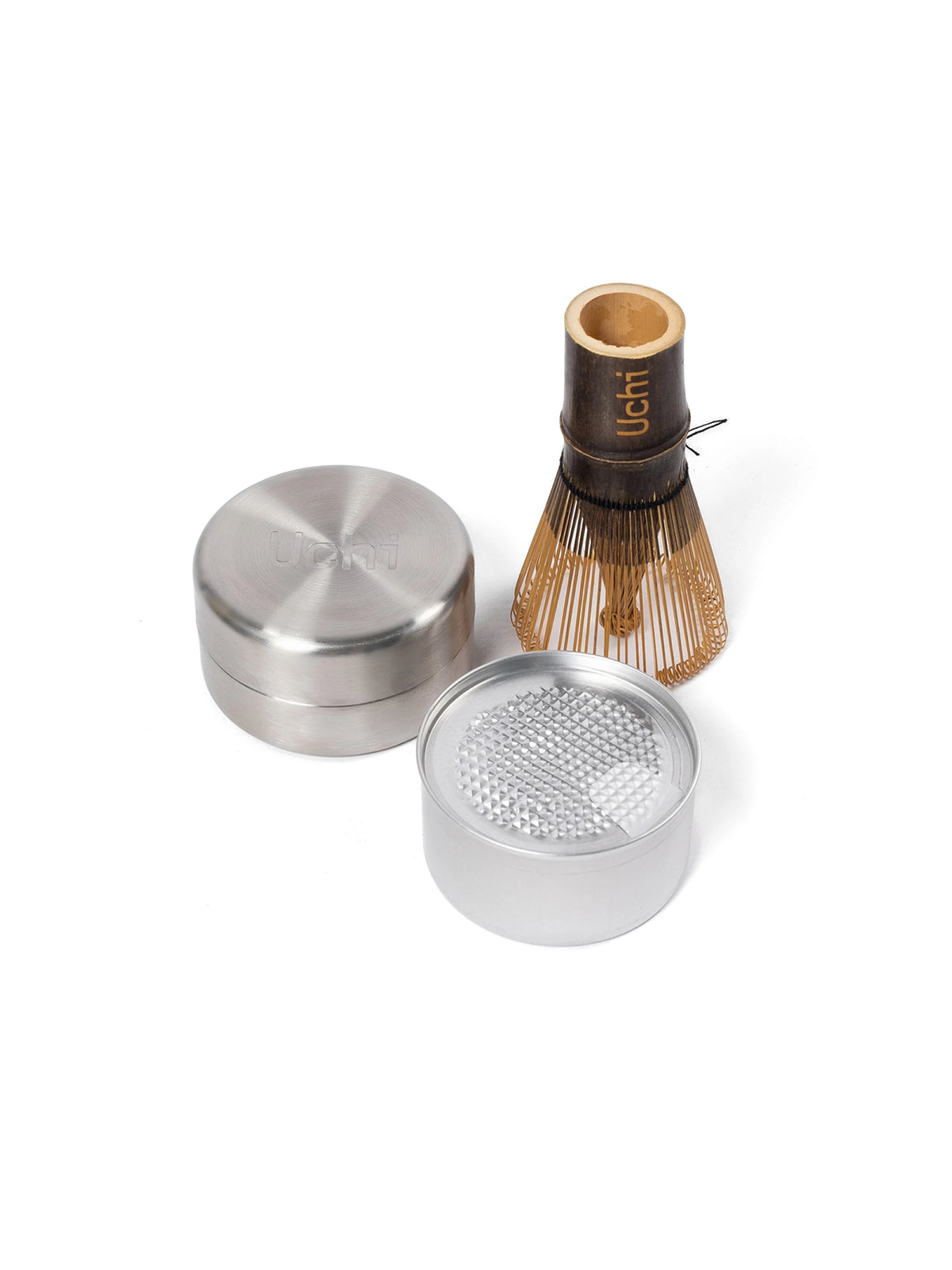
The Base is an airtight stainless steel matcha canister. Its opaque body keeps light away from the powder. It belongs away from heat, rather than beside the hob or in direct sunlight.
That distinction matters when choosing an alternative. The matcha determines what enters the cupboard. Storage and preparation shape what reaches the bowl.
This 2026 comparison focuses on three routes from one brand: Home, Home + Whisk and Complete. They contain the same matcha, with different tools around it. They are not three different teas.
Megami matcha alternatives at a glance
Use Megami as the reference already under consideration, rather than assuming another name guarantees a preferred flavour. Compare the actual product label, the storage arrangement and a bowl prepared consistently.
| Option | Suited to | Decision point |
|---|---|---|
| Megami Matcha | Keeping an established preference | Assess the specific matcha already enjoyed |
| Uchi Home | Keeping existing preparation tools | Base and Pod only |
| Home + Whisk | Adding a bamboo chasen | Base, Pod and Whisk |
| Complete | Starting without preparation tools | Base, Pod, Bowl, Spoon, Sieve and Whisk |
The choice between Home and Complete is about equipment, not a different grade of matcha. No price comparison is needed to make that distinction.
Before choosing, put the tools already owned on the counter. A suitable bowl and a sound bamboo whisk change which option makes sense. Buying them again does not change the tea.
1. Uchi Home: for existing matcha drinkers
Home contains the Base and a Pod. The Base stays; the Pod supplies 40g of matcha, approximately twenty cups. Preparation tools are separate.
The storage mechanism is concrete. An airtight closure limits exposure to surrounding air, while stainless steel keeps light out. Neither removes the need to close the container promptly or choose a cool storage position.
Where Home fits
- Keeps storage and matcha together without adding preparation tools.
- Includes a keep-for-life stainless steel Base.
- Suits a kitchen that already has a bowl, whisk and measuring method.
Where Home falls short
- Does not include a Whisk, Bowl, Spoon or Sieve.
- Does not offer a choice of blend within Home itself.
- Requires the same dry handling and careful placement as other matcha storage.
Suited to: someone who already makes matcha and wants a permanent storage object alongside the next purchase of powder.
For a Megami drinker, Home changes both the tea and its storage arrangement. Those are separate variables. Taste the matcha before treating the container as evidence of flavour preference.
Verdict: choose Home when the preparation tools are already covered.
2. Home + Whisk: for a kitchen with a suitable bowl
Home + Whisk contains Base, Pod and Whisk. The Whisk is a bamboo chasen with 120 prongs. It adds the preparation tool without adding every accessory.
This route suits someone who has a suitable bowl but needs a whisk. It also avoids treating an ordinary kitchen inventory as if nothing useful is already there.
Where Home + Whisk fits
- Includes the same matcha and storage as Home.
- Adds a bamboo Whisk for dispersing powder through water.
- Leaves the choice of bowl and measuring method open.
Where Home + Whisk falls short
- Does not include Bowl, Spoon or Sieve.
- Still requires a vessel with room for whisk movement.
- Adds an unnecessary Whisk if a serviceable chasen is already owned.
Suited to: someone with an appropriate bowl who wants matcha, storage and a bamboo whisk together.
A whisk changes preparation, not provenance. When comparing this option with Megami, keep the powder comparison separate from the effect of changing tools. Use the same bowl and technique for both teas where practical.
Verdict: choose Home + Whisk when the missing tool is the chasen.
3. Complete: for a first home preparation setup
Complete contains Base, Pod, Bowl, Spoon, Sieve and Whisk. It brings storage, measuring, sifting and whisking into one purchase. The matcha remains the same as in Home.
The Bowl is a chawan. The Spoon is a matcha scoop, with one leveled Spoon holding 1 gram. The Sieve separates clumps before water is added.
Where Complete fits
- Includes every named preparation tool alongside Base and Pod.
- Provides a defined measuring method through the Spoon.
- Suits a first purchase when no matcha tools are owned.
Where Complete falls short
- Duplicates tools for someone with an established setup.
- Requires storage space for more objects than Home.
- Does not replace learning a consistent preparation method.
Suited to: someone beginning at home without a bowl, chasen, scoop or sifter.
In 2026, the useful distinction remains simple: Complete adds equipment, not a different blend. Someone moving from Megami with a full collection of tools has a different need from someone preparing a first bowl.
Verdict: choose Complete when the tools are genuinely needed.
What changes in the matcha itself
Uchi matcha is Kaze no Shiro, a first-flush blend composed by the house tea master at Horii Shichimeien. The producer was founded in Uji, Japan, in 1879.
The blend draws first-harvest tencha from Kyoto, Nara and Shiga. It brings together three cultivars: Okumidori, Yabukita and Sayamakaori. It is not single origin, single estate or single cultivar.
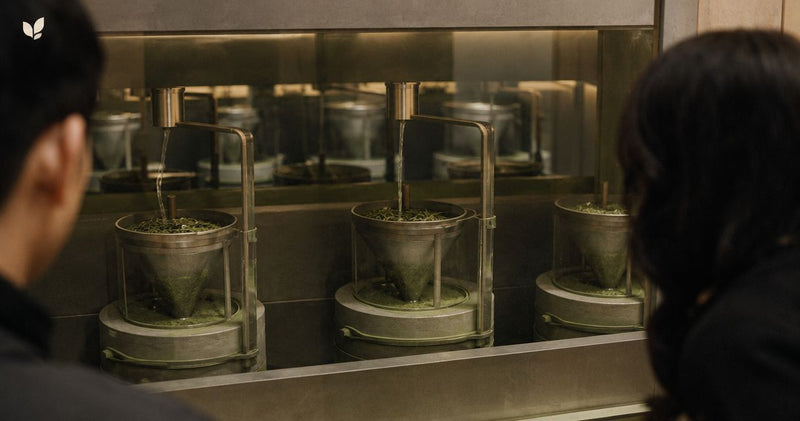
The leaves are shaded for 25 days before harvest. The matcha is stone-milled at 40 grams an hour. These details describe sourcing and production; they do not establish that every drinker will prefer the result.
Blending is part of the composition. The house tea master brings leaves together to build a flavour and hold it steady across seasons. A blend is not an incomplete version of a single-cultivar tea.
When comparing Megami matcha alternatives in 2026, separate three questions:
- Producer: who makes the matcha?
- Composition: which regions and cultivars are named?
- Preference: which prepared bowl is more enjoyable?
A detailed label helps answer the first two. Only tasting answers the third. Neither packaging nor a familiar regional name substitutes for that final step.
Comparing flavour without changing everything
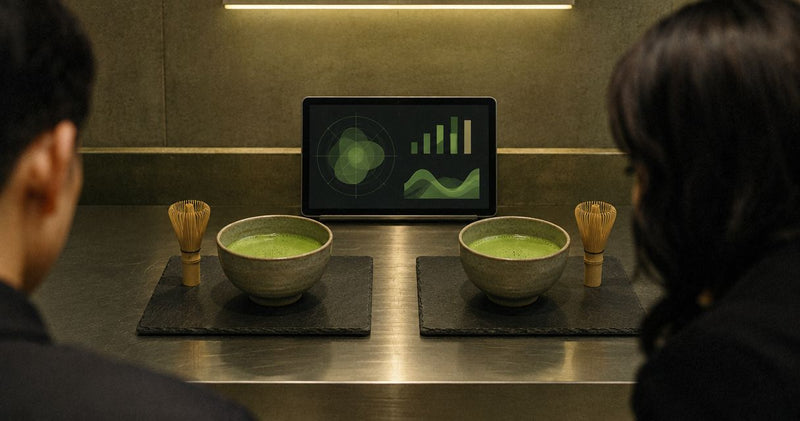
A side-by-side tasting is more informative when preparation stays consistent. Use equal powder weights, the same water, the same water temperature and the same whisking method.
Make the bowls close together. Taste each without milk first if the aim is to notice the powder itself, then prepare the drink normally enjoyed at home. A preference in plain water does not automatically settle a preference in a latte.
Use four simple observations:
- Aroma: smell the dry powder and the prepared bowl.
- Texture: notice clumps, smoothness and settling.
- Taste: describe what is present without forcing a score.
- Finish: notice what remains after swallowing.
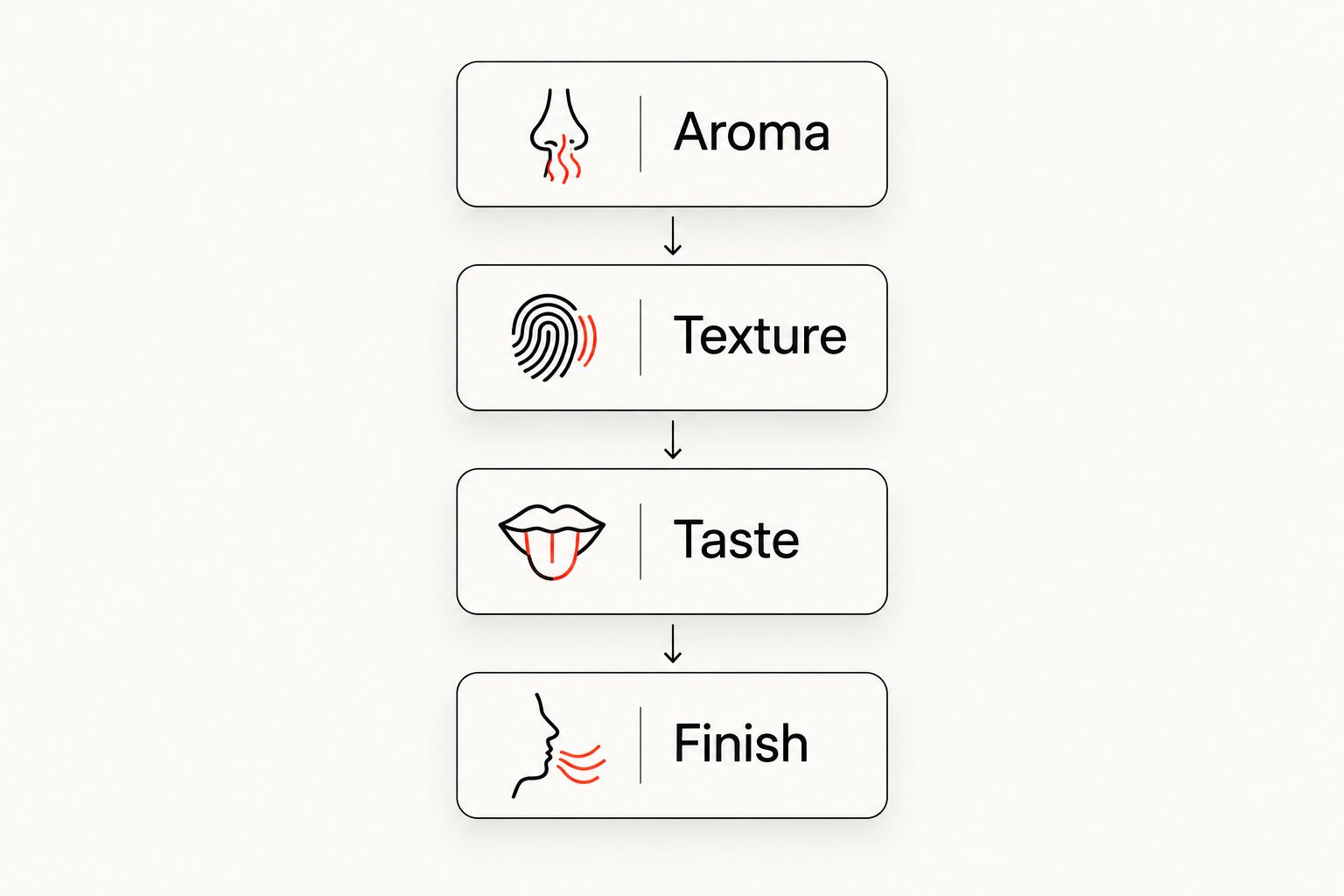
These observations distinguish preference from preparation. Clumps call for a closer look at sifting and whisking. A change in taste after days of careless storage calls for a closer look at handling.
The preparation method also matters when comparing matcha with loose-leaf green tea blends for everyday brewing. Loose leaves are infused and removed; matcha powder remains suspended in the drink. They belong to different daily routines, not interchangeable tests of the same product.
For a useful comparison, write a few plain words about each bowl before looking again at the packaging. Repeat the preparation another day. Choose according to the drink actually made at home, rather than the description that sounded more appealing.
Why people consider switching from Megami
A reason to switch should describe a need, not invent a fault in another brand. Someone considering Megami matcha alternatives can assess storage, sourcing and equipment without assuming Megami fails on any of them.
A permanent storage object
An airtight, opaque container is a concrete requirement. Someone who wants stainless steel storage kept across subsequent purchases has a reason to consider Home.
That is a packaging preference, not evidence that another matcha tastes worse. The distinction keeps the decision honest.
A named blend and producer
Horii Shichimeien, Kaze no Shiro and the named cultivars provide specific information to evaluate. Compare these details with the exact Megami product being considered, rather than comparing one detailed description with a brand name alone.
Tools alongside the first purchase
Complete suits a different starting point from Home. The relevant reason to choose it is an empty equipment drawer, not an assumption that more objects improve every bowl.
A different flavour preference
Taste is a valid reason to change. It is also a valid reason to stay. No production detail can make that decision on the drinker's behalf.
Storage after the first opening
A 2026 buying decision should include the weeks after delivery. A container works through repeated use, not only while it is photographed closed.
Keep the Base away from direct sunlight and kitchen heat. Open it to measure the powder, then close it. Do not leave the matcha open while preparing the rest of breakfast.
Keep scoops and other utensils dry. Avoid measuring over a steaming kettle or saucepan. Moisture introduced during handling defeats the purpose of careful storage.
The Pod contains 40g of matcha in recyclable aluminium. It is intended for existing Base owners; Home provides Base and Pod together for a first purchase.
Recyclable aluminium describes a material, not the entire environmental footprint. The foam insert remains an unresolved material. A permanent canister does not remove every packaging consideration.
Nor does stainless steel make powder immune to deterioration. Storage reduces exposure. It does not turn an opened food product into something unchanged indefinitely.
When staying with Megami is the right call
Stay with Megami when the particular matcha already suits the way it is prepared and enjoyed. A new container or a more detailed sourcing story does not require abandoning a flavour preference.
Keep the current preparation tools if they work. A bowl with enough room for whisk movement and a serviceable chasen do not need replacing simply because the powder changes.
For 2026, treat switching as a specific decision: a different tea, a different storage arrangement, or missing equipment. If none of those needs exists, there is no reason to manufacture one.
FAQ
Which Megami matcha alternative suits someone who already owns the tools?
Uchi Home suits someone who already owns suitable preparation tools. It contains Base and Pod without adding Bowl, Spoon, Sieve or Whisk.
Is Uchi matcha single origin?
No. Kaze no Shiro is a first-flush blend composed at Horii Shichimeien from first-harvest tencha from Kyoto, Nara and Shiga, using Okumidori, Yabukita and Sayamakaori.
What is the difference between Home and Complete?
Home contains Base and Pod. Complete contains Base, Pod, Bowl, Spoon, Sieve and Whisk; the matcha is the same.
Does Home include a bamboo whisk?
Home does not include a Whisk. Home + Whisk contains Base, Pod and Whisk, while Complete also includes Bowl, Spoon and Sieve.
How much matcha is in a Pod?
A Pod contains 40g of matcha, approximately twenty cups. The number of cups depends on the amount used in each drink.
How should I compare Megami with another matcha at home?
Prepare both matchas with equal powder weights and the same water, temperature and whisking method. Compare aroma, texture, taste and finish before changing the preparation.
Should I change brands if I already enjoy Megami?
Not solely to change brands. Keep the matcha already enjoyed unless a different flavour, storage arrangement or equipment purchase answers a specific need.
One last thing
Do not replace the tea and every preparation variable on the same morning. Keep the bowl, water and method familiar for the first comparison. The powder becomes easier to judge when everything around it stays still.