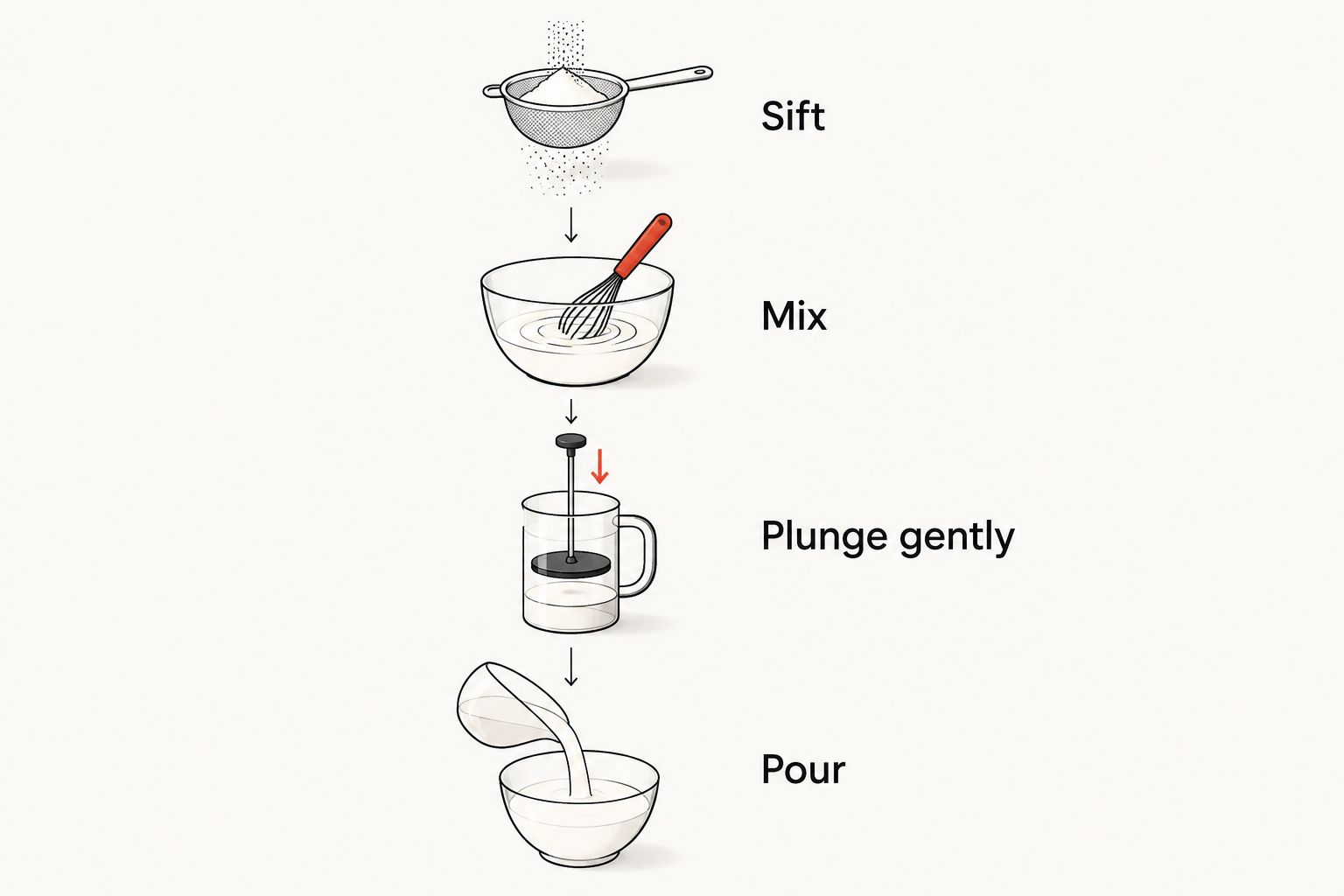
Instead of chasing matcha clumps around a French press, sift the powder, mix it with water, then use gentle plunger strokes to disperse it before pouring. French press matcha needs mixing, not steeping or filtration; this 2026 workflow keeps those jobs separate and starts with powder protected from air and light.
- French press matcha works as a mixing method, not a coffee-style brewing and filtering method.
- Sift matcha before adding water; the plunger does not replace a fine-mesh sifter.
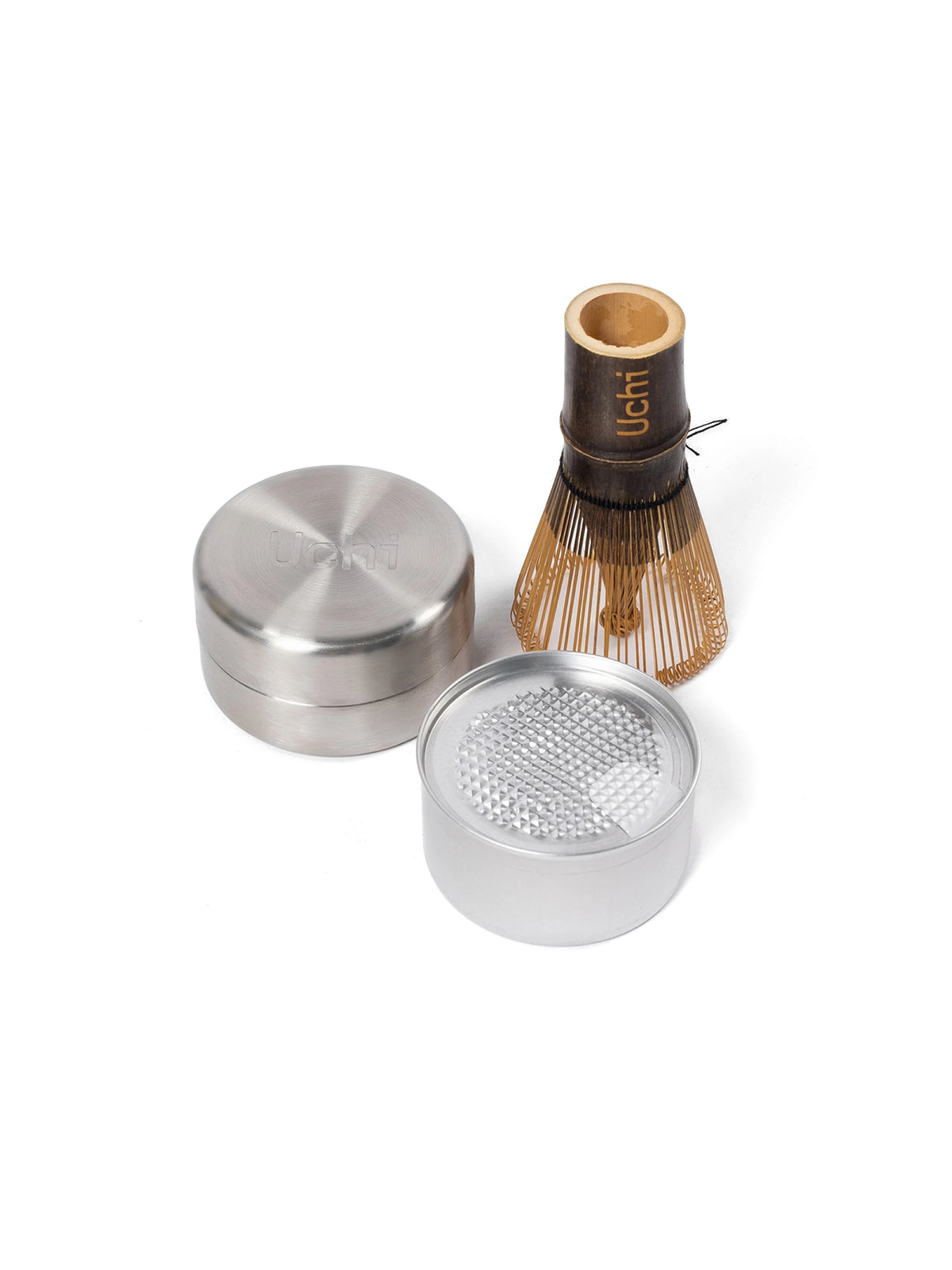
- Uchi suits home matcha drinkers who want first-harvest matcha with reusable, airtight storage.
- Use gentle strokes below the spout and follow the French press manufacturer's hot-liquid instructions.
Why this matters
Matcha is finely ground tea leaf. It disperses in water rather than dissolving, so a French press cannot turn it into a filtered infusion without changing what reaches the bowl. Pressing the powder down as though it were coffee grounds works against the drink you are making.
Storage comes first. Air and light affect matcha's colour, aroma and taste before any mixing method enters the picture. Uchi's Base is an airtight stainless steel canister that blocks light; it still belongs away from heat. The guide to choosing a matcha container that keeps out air and light covers that decision separately.
The practical distinction for 2026 is simple: protect the dry powder, break up clumps, then disperse it. Foam is a finishing detail, not proof that the powder underneath is evenly mixed.
Before you start
- Gather the materials. Use matcha, drinking water, a fine-mesh sifter, a dry measuring spoon or scale, a small mixing vessel, a serving bowl and a clean French press. Read the press manufacturer's instructions for hot liquids and plunger use.
- Check the equipment. Inspect the glass, mesh and fittings. Remove coffee residue from the screen and lid, rinse thoroughly, and keep the powder-handling tools completely dry.
- Check the plunger's reach. Some French presses leave a gap beneath the screen. A single serving can sit below that gap, where repeated strokes barely move through it. If the screen cannot pass through the liquid safely, use a whisk rather than forcing the mechanism.
Do not start with boiling water or a press filled near its spout. Keep the vessel stable and the spout directed away from you. Stop if the plunger binds or the liquid surges towards the lid.
Equipment choice
A French press offers a way to mix matcha with an object already in the kitchen. It also adds a mesh assembly to clean and gives less direct control than a bamboo whisk in an open bowl.
Choose the method around the serving, not the appearance of the foam.
| Method | Suitable use and limitation |
|---|---|
| French press | For an existing press whose screen reaches the liquid. More parts to rinse; small servings can sit below the screen. |
| Bamboo whisk | For mixing directly in a bowl. Requires enough bowl space and a separate tool. |
Neither method corrects stale powder or removes the need to break up dry clumps. A French press is a practical alternative for suitable equipment, not an exact replacement for a bamboo whisk.
Powder preparation
Protect, measure, sift
- Prepare the dry area. Put the sifter, measuring tool and mixing vessel away from kettle steam. Check that the inside of the mixing vessel is dry.
- Measure the matcha. For this guide's starting recipe, use 2 grams of matcha with 40 millilitres of water. This is a preparation choice, not a required ratio for every matcha or every press.
- Close the storage container. Return the powder to its usual storage position before heating or pouring water nearby. Do not leave it open while assembling the rest of the drink.
- Sift into the mixing vessel. Gently work the powder through the mesh. Break up clumps without scraping aggressively against the sifter.
Expected result: a measured portion of loose powder, with no obvious dry lumps, and the remaining matcha closed away from steam.
One leveled Uchi Spoon holds 1 gram. Two leveled measures therefore provide the starting portion above; a kitchen scale offers another way to keep the recipe consistent.
Do not increase the serving merely to make a large press usable. If its screen cannot reach this volume, change the mixing method. The equipment should fit the drink.
Liquid preparation
Make an even mixture
- Heat the water. Use your matcha producer's preparation guidance. A starting temperature around 75°C is a practical recipe setting here, not a claim that every blend needs the same temperature.
- Add a little water first. Pour enough of the measured water over the sifted powder to make a loose paste. Stir until no dry pockets remain.
- Add the remaining water. Stir again, reaching the base and corners of the mixing vessel. Inspect the mixture before transferring it.
- Pour into the French press. Keep the pour controlled. Check that the liquid sits within the screen's working range and below the manufacturer's maximum fill level.
Expected result: an evenly green mixture without visible islands of dry powder. Large clumps at this stage need stirring, not harder pumping.
The paste stage separates two jobs. Sifting breaks apart dry agglomerates; wet mixing distributes the powder through the water. Neither step makes the tea leaf dissolve.
For a repeatable 2026 routine, keep the powder weight and water volume unchanged while adjusting technique. Changing the ratio, temperature and plunger movement together makes the result harder to interpret.
Plunger movement and serving
Disperse, then pour
- Fit the lid according to the manufacturer's instructions. Hold the press as directed. Do not improvise with loose fittings or remove safety components.
- Plunge gently. Use short, controlled movements through the liquid. Avoid sharp downward force, splashing and any motion that drives liquid towards the spout.
- Inspect the mixture. Stop and allow the surface to settle enough to see it. Look for even colour and the absence of large clumps rather than aiming for a particular foam depth.
- Pour into the bowl. Follow the press's pouring instructions. Do not deliberately compact the matcha at the bottom as though separating coffee grounds.
- Rinse promptly. Once safe to handle, rinse the vessel, screen and lid. Clean and dry the components according to their care instructions.
Expected result: a drink with dispersed matcha and no obvious dry clumps. Some sediment remains normal because the leaf particles are suspended, not dissolved.
A smooth bowl is not necessarily a sediment-free bowl. Letting matcha stand gives particles time to settle; gentle movement redistributes them. A thick layer of foam can hide uneven mixing underneath.
If the screen traps a noticeable amount of powder, do not compensate automatically with more matcha. Review the equipment choice. An open bowl and whisk avoid the press's filtering step altogether.
A milk-based variation
For a French press matcha latte, prepare the matcha with water first, then add milk in the serving cup. This keeps powder dispersion separate from the larger finished drink.
- Sift and mix the same starting portion with water.
- Use the French press only if its screen reaches that mixture safely.
- Pour the dispersed matcha into the serving cup.
- Add milk gradually and stir. Adjust the amount to the concentration you prefer.
Expected result: a milk-based drink without dry powder trapped beneath a layer of milk foam.
Adding more milk changes the balance of the drink. It does not repair clumps. Taste the water-based mixture first when diagnosing texture or flavour, then add milk once the preparation is consistent.
For cold milk, prepare the matcha separately and combine it in the cup. Avoid abrupt temperature changes in glassware unless its manufacturer permits them. Do not assume a press suitable for hot brewing tolerates every hot-to-cold sequence.
Troubleshooting
Dry clumps remain beneath the foam
Fix the preparation before increasing the plunger force. Sift the powder, then work it into a loose paste before adding the remaining water. Inspect the bottom of the mixing vessel for dry pockets.
A plunger moves liquid. It does not reliably crush every compacted lump against the vessel wall.
The plunger barely touches the drink
Use a whisk for that serving. A gap beneath the screen is an equipment limitation, not a reason to press harder or tilt a hot vessel.
Keep the intended portion unchanged. Move to a bowl with enough room for the whisk to travel freely.
Liquid splashes towards the lid
Stop the movement. Let the vessel settle, check the fill level and review the manufacturer's instructions before continuing.
Use gentler strokes only within the permitted operating method. If the press does not allow controlled movement at your serving volume, use another mixing method.
The drink tastes of coffee or detergent
Clean the press components separately where the care instructions allow. Check the screen, joints and underside of the lid, then rinse thoroughly.
A clean-looking carafe does not establish that the mesh is free of residue. Smell the dry equipment before preparing another serving.
The bowl has sediment or a coarse texture
Distinguish settling from clumps. Fine sediment after standing is consistent with matcha being a suspension. Dry lumps or a compact layer left behind in the press point to preparation or equipment problems.
Stir gently before drinking. If the texture remains unpleasant, repeat the sift-and-paste method in an open bowl to remove the press as a variable.
Customize your workflow
For daily preparation, simplify the sequence before adding accessories. Keep dry measuring tools near the closed matcha container. Place the kettle and wet tools elsewhere, so steam does not cross the powder-handling area.
Uchi's Pod contains 40 grams of matcha, about twenty cups. The Base provides airtight, light-blocking storage; it does not remove the need for dry handling or a position away from heat.
For a first purchase, Home contains Base and Pod and suits someone who already owns preparation tools. Complete adds Bowl, Spoon, Sieve and Whisk for someone assembling the preparation area. The limitation is straightforward: Home does not include those tools, while Complete includes objects an equipped kitchen might already have.
In a 2026 kitchen routine, repeatability matters more than adding stages. Record the powder weight, water volume and chosen temperature once. Change one variable at a time when the result needs adjustment.
For more direct control in the bowl, a bamboo whisk is the next method to try. Uchi's Whisk has 120 prongs. The guide to matcha whisks by prong count explains that choice without making the number a substitute for technique.
FAQ
Can I make matcha in a French press?
Yes, a suitable French press can mix sifted matcha with water. Use it for dispersion rather than coffee-style steeping and filtration, and follow its manufacturer's hot-liquid instructions.
Do I need to steep French press matcha?
No, matcha does not need a coffee-style steeping stage. It is ground tea leaf dispersed in water, so the preparation centres on breaking up clumps and mixing evenly.
Should I push all the matcha to the bottom?
No, do not deliberately compact matcha at the bottom as though it were coffee grounds. The suspended powder belongs in the drink; a screen that retains much of it is a limitation of the method.
Why does my French press leave matcha clumps?
A French press does not replace sifting and initial mixing. Sift the dry powder, make a loose paste with a little water, then add the remaining water before using the plunger.
Can I make one serving in a large French press?
Only if the screen safely reaches the liquid at that serving volume. If the mixture sits beneath the screen's lowest position, use a whisk rather than forcing or tilting the press.
Can I add milk directly to dry matcha?
Mixing sifted matcha with a little water first gives more control over clumps. Add milk after the powder is evenly dispersed, then stir the finished drink.
Why does matcha settle after I pour it?
Matcha settles because its leaf particles are suspended rather than dissolved. Gentle stirring redistributes fine sediment; visible dry lumps require better sifting and initial mixing.
One last thing
The useful test is below the foam. On your next preparation, let the surface settle and inspect the liquid and the bottom of the vessel. Even colour and the absence of dry lumps reveal more than a tall foam layer.
Keep that check in your 2026 routine. If the French press adds cleaning without improving control, leave it for coffee and prepare matcha directly in the bowl.