Matcha for yoga studios is a tea service built around powdered green tea, with the aim of offering a considered drink before or after a class. This 2026 guide starts with air, light and freshness, then covers sourcing, preparation and a serving station that fits around teaching.
- Matcha for yoga studios starts with airtight storage, measured portions and a separate preparation area.
- Uchi matcha suits yoga studios planning a small, made-to-order tea service.
- Choose Home when preparation tools are already in place; Complete includes the Bowl, Spoon, Sieve and Whisk.
- Keep studio menu descriptions grounded in origin, preparation and taste.
Why matcha matters for yoga studios
A studio tea service has to work around arrivals, departures and the next class. Start with that constraint. A drink that requires preparation needs a named person, a clear surface and time to wash and dry the tools afterward.
Freshness belongs in this plan from the beginning. Matcha loses its character through exposure to air, light and heat; an open display vessel works against the drink being served. The principles of choosing a matcha container that keeps out air and light apply just as much to a reception counter as a home kitchen.
For a 2026 studio menu, start with a service that staff can repeat, not a long list of drinks. A small menu makes it easier to identify whether differences in the cup come from the powder, the water or the preparation.
Matcha should remain a drink in its own right. Describe where it comes from and how it tastes. Its place beside a yoga practice does not require a promise about what it does to the body.
Build a matcha service around the studio
Define the serving moment
Start with a written service plan rather than new equipment. Decide whether tea belongs at reception, after selected classes or within a separately scheduled gathering. Each arrangement asks something different of the person teaching.
A made-to-order service offers direct control over each drink. Its limitation is attention: measuring, sifting and whisking cannot happen while the same person checks in a queue of guests. Assign preparation to someone who is actually free to do it.
Keep the first trial narrow. Record requests and unfinished drinks without treating either as proof of wider demand. Those observations describe the studio's own service, which is the useful starting point.
- Choose a serving moment outside active teaching.
- Assign responsibility for preparation and cleanup.
- Decide whether drinks are served plain, with milk, or both.
- Record actual requests rather than estimating demand.
- Keep drinking vessels away from the practice floor.
Check the matcha's sourcing
Ask the supplier for the producer, harvest information and composition. Read those details together. A regional name alone does not explain whether the matcha is a blend, which leaves it contains or who composed it.
Uchi sources Kaze no Shiro from Horii Shichimeien, founded in Uji, Japan, in 1879. Kaze no Shiro is a first-flush blend composed by the house tea master, drawing first-harvest tencha from Kyoto, Nara and Shiga and weaving Okumidori, Yabukita and Sayamakaori.
The leaves are shaded for 25 days before harvest and stone-milled at 40 grams an hour. These are production details, not instructions for preparing a cup. Keep that distinction clear in staff notes.
For a 2026 supplier review, request the current product information and taste the matcha using the intended studio recipe. Choose on documented sourcing and the cup you intend to serve. A blend is not a lesser substitute for a single cultivar; it is a composition with its own character.
- Record the producer and named matcha.
- Distinguish a blend from a single cultivar.
- Keep the supplier's origin wording intact.
- Taste the powder with the intended water and milk.
- Avoid adding certifications that the supplier has not documented.
Protect the powder between servings
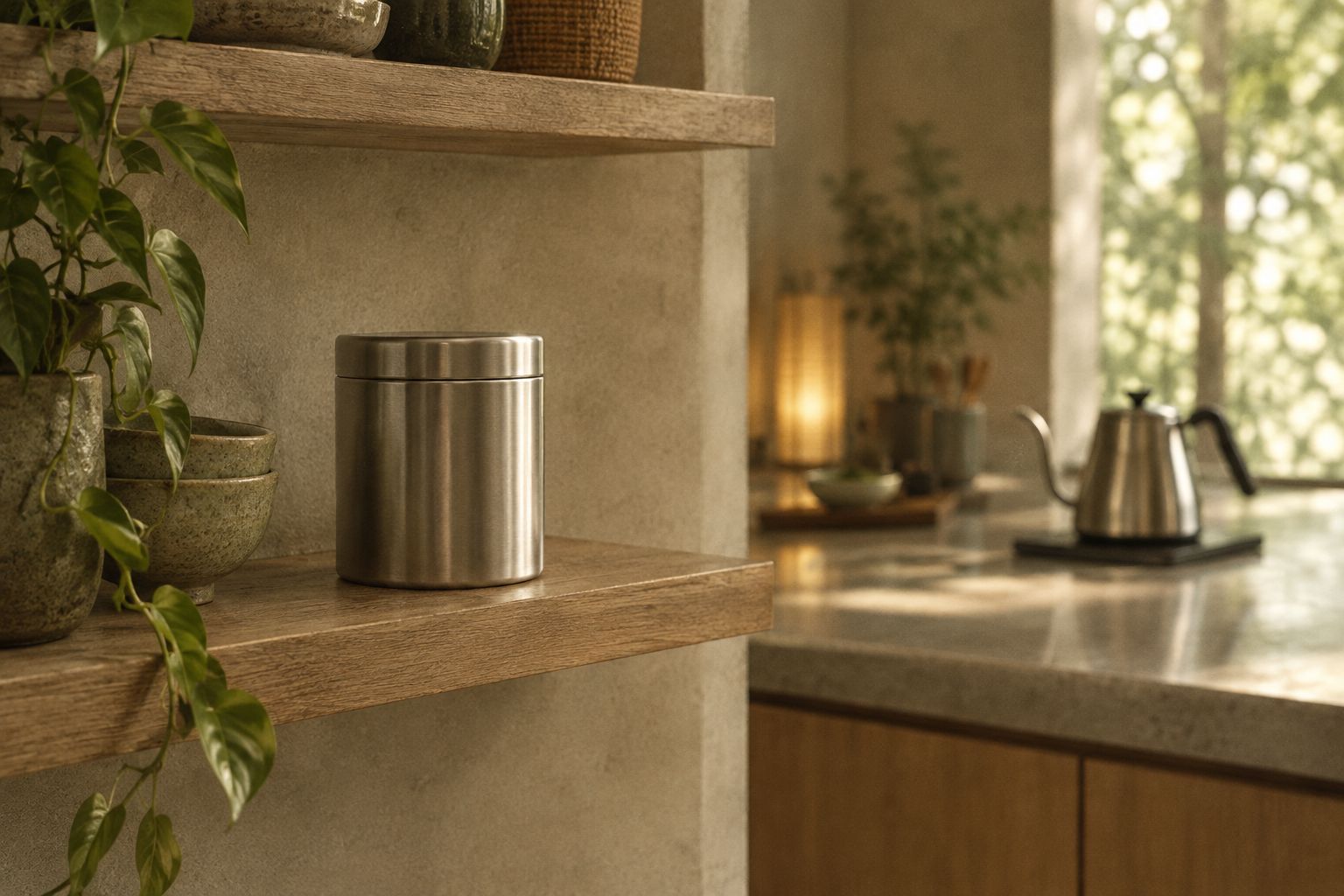
First assess the storage already available. An opaque, airtight food container in a cool, dry position addresses the practical requirement without adding a dedicated object. Keep it away from the kettle, direct sunlight and damp utensils.
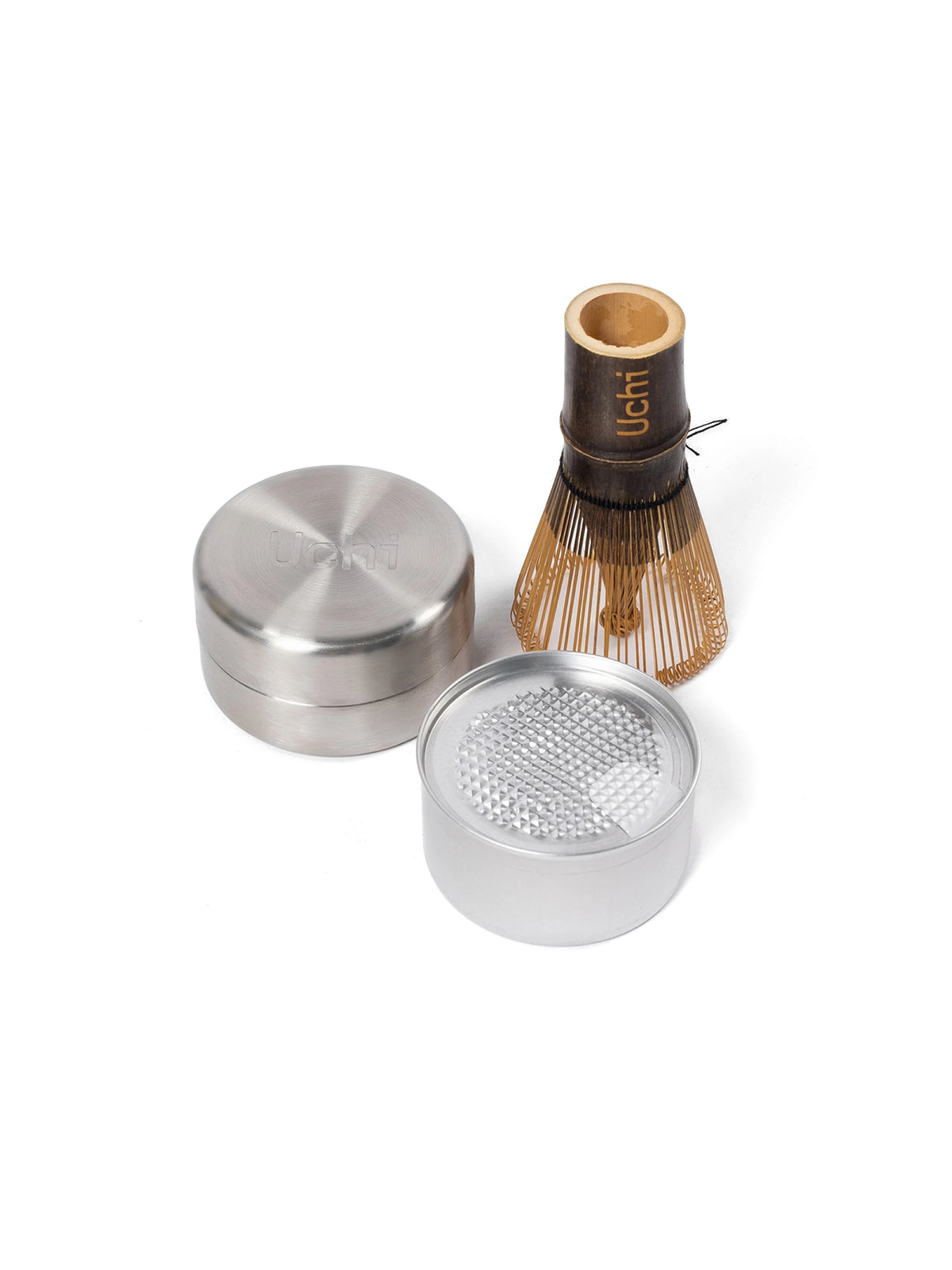
The Base provides a dedicated alternative: an airtight stainless steel matcha canister, kept for life. Its opaque body keeps light away from the powder. It still needs a sensible position; stainless steel is not a reason to leave matcha beside a heat source.
The Pod contains 40g of matcha, about twenty cups, in recyclable aluminium. Treat that serving count as an indication, not a promise for every studio recipe. A different powder dose changes how many drinks the Pod makes.
- Keep the powder closed between individual preparations.
- Position storage away from heat and sunlight.
- Use only dry measuring tools.
- Keep cleaning sprays and strongly scented items elsewhere.
- Mark the opening date in the service log.
Standardise the preparation
Use the tools already available to establish a repeatable recipe. A suitable scale records the powder dose; a written recipe records the water and any milk. Change one variable at a time when tasting.
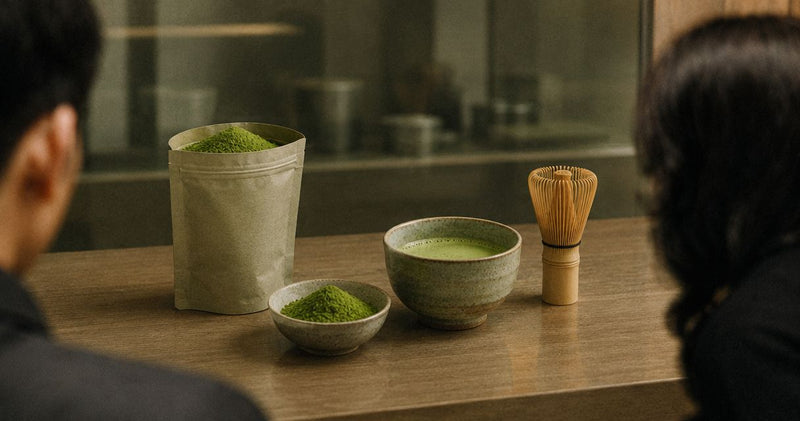
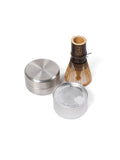
One leveled Uchi Spoon holds 1 gram. The Whisk is a bamboo chasen with 120 prongs, and the Sieve is a fine-mesh sifter. These give the station dedicated measuring, whisking and sifting tools rather than asking staff to improvise each time.
Sift the measured powder before adding water. Matcha forms a suspension rather than dissolving completely, so some settling is normal. Sifting addresses clumps; it does not turn powdered tea into a soluble ingredient.
- Record the powder dose by weight.
- Specify the water quantity and preparation method.
- Sift the powder before adding water.
- Keep the whisking method consistent.
- Record milk quantities separately from the plain preparation.
Arrange a dry-to-wet workflow
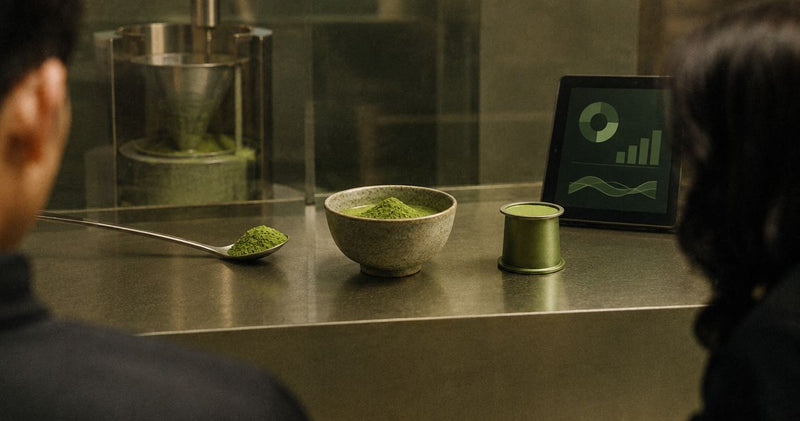
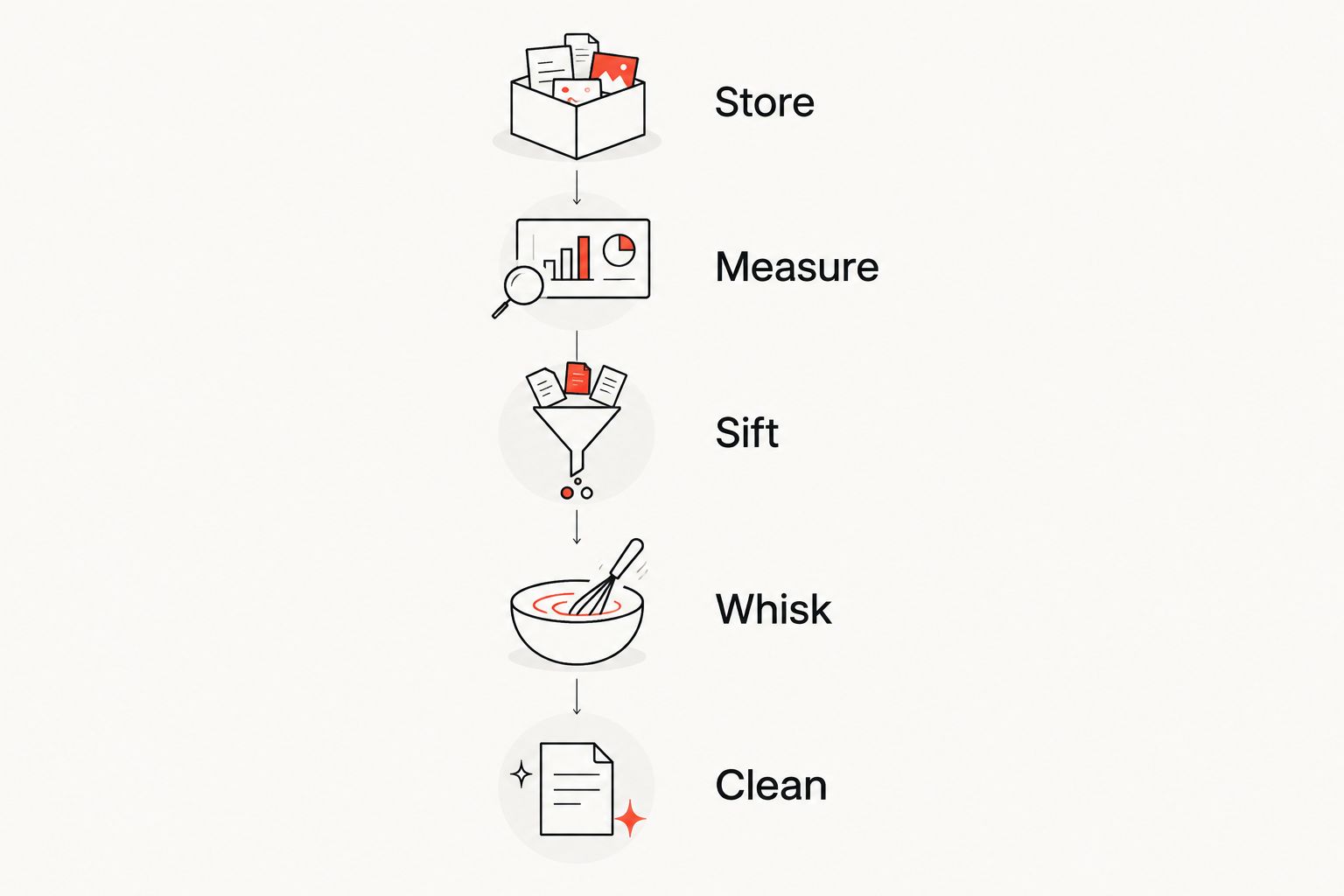
Lay out the station in the order of use: dry storage, measuring and sifting, then water and whisking. Place the return area for used tools away from the powder. This arrangement keeps a wet Spoon from finding its way back into the container.
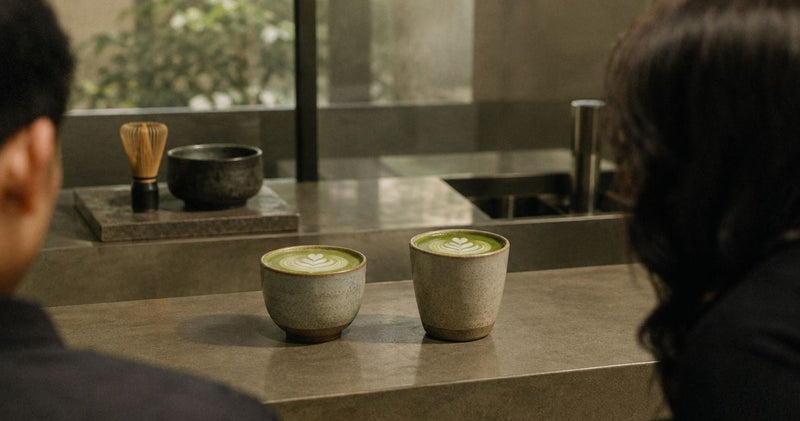
An existing suitable bowl can remain in service. Check that it gives the whisk room to move without striking the walls. The Bowl is a chawan; choose it for the preparation task rather than as a display object that staff are reluctant to use.
A compact station still needs a drying area. If clean tools have nowhere to dry, the next preparation starts with a handling problem. Plan that space before adding accessories to the counter.
- Store: keep the powder closed and dry.
- Measure: use a clean, dry tool.
- Sift: break up clumps before adding water.
- Whisk: prepare the drink away from open storage.
- Clean: wash and dry tools before returning them.
Review portions, handling and menu language
Use a paper record before adding ordering software or a subscription. Track the opening date, measured powder used and drinks actually served. This separates consumption from assumptions about how often classes run.
Do not use the Pod's approximate cup count as the studio recipe. Write the chosen dose first, then calculate usage from that dose. Spills, tasting and staff preparation also use powder and belong in the record.
Before publishing the 2026 menu, check the description against the supplier's sourcing information. Keep wording about origin, ingredients and preparation exact. Name any milk used and follow the food-handling and allergen requirements applicable to the service.
Packaging needs the same precision. Recyclable aluminium describes the Pod material; it does not mean every packaging component belongs in the same collection stream. The foam insert remains a separate material to account for.
Compare the starting options
Choose the starting arrangement by what the studio already owns. None of these combinations replaces a food-handling plan, staff training or a suitable washing area.
| Option | Suited to | Limitation |
|---|---|---|
| Home | Studio with tools | Base and Pod only |
| Home + Whisk | Studio with a bowl | No Bowl, Spoon or Sieve |
| Complete | New small station | No washing facilities |
Home suits an existing preparation station. Complete suits a station that still needs the dedicated tools. Home contains Base and Pod. Home + Whisk adds the Whisk. Complete contains Base, Pod, Bowl, Spoon, Sieve and Whisk.
For a 2026 studio opening, inventory what is already usable before choosing. Duplicating a suitable bowl adds an object without resolving storage, drying or staff availability.
The store also lists Wholesale Matcha 1KG for hospitality partners. That is a separate conversation about supply. Confirm the current product details and partner terms directly rather than treating a home-oriented combination as a commercial service specification.


Common mistakes yoga studios make
Leaving powder open during arrivals
An open container beside reception exposes the powder while staff handle bookings and questions. Measure what is needed, close the container and then prepare the drink. Do not make the storage vessel part of an open display.
Asking the teacher to prepare every drink
A service that depends on the teacher immediately before class competes with teaching responsibilities. Assign another person or move the serving moment. Equipment does not resolve a scheduling conflict.
Treating every scoop as the same dose
A heaped scoop and a leveled scoop are different measures. Record the studio recipe and teach the same measuring method to everyone. Check the result by weight when establishing the preparation.
Buying tools before planning cleanup
A bowl and whisk need a place to be washed and dried between uses. Plan the return path for used tools before arranging the display. Keep damp equipment separate from stored powder.
Turning a drink description into a wellness promise
A yoga setting does not change what can be claimed about a food. Describe the tea's producer, composition and preparation instead. Keep that wording consistent across the menu, booking emails and social posts.
FAQ
What matcha suits a small yoga studio?
Choose matcha with documented sourcing, a taste that works in the intended drink and packaging that fits actual consumption. Uchi matcha suits a small, made-to-order service, provided the studio has suitable preparation and washing facilities.
Should a studio choose Home or Complete?
Choose Home when suitable preparation tools are already in place. Complete contains Base, Pod, Bowl, Spoon, Sieve and Whisk, but the studio still needs serving vessels and washing facilities.
How many drinks does a Pod make?
A Pod contains 40g of matcha, about twenty cups. The actual number depends on the powder dose used in the studio's recipe.
Can matcha stay on the reception counter?
Keep matcha on a reception counter only in closed, opaque storage away from sunlight, heat and moisture. An open container is not suitable for display between servings.
Does matcha dissolve completely when whisked?
Matcha forms a suspension rather than dissolving completely. Sifting helps break up clumps, while some settling after preparation is normal.
Is Kaze no Shiro a single-origin matcha?
Kaze no Shiro is a first-flush blend composed by the Horii Shichimeien house tea master. It draws first-harvest tencha from Kyoto, Nara and Shiga and combines Okumidori, Yabukita and Sayamakaori.
Can a studio order matcha for hospitality use?
The store lists Wholesale Matcha 1KG for hospitality partners. Confirm current product details, ordering arrangements and partner terms directly before planning the service around it.
One last thing
Test the reset, not just the first drink. Prepare a cup, clean the tools and return the station to its closed, dry state. Then ask another staff member to use it without verbal instructions.
The useful test is whether the next preparation starts cleanly. A well-arranged counter makes that visible before guests arrive.