Choose an opaque, airtight container for matcha storage; reserve clear glass for display. Uchi’s Base suits home matcha drinkers who want an airtight stainless steel canister, while opaque food-safe ceramic offers an alternative when its closure seals properly.
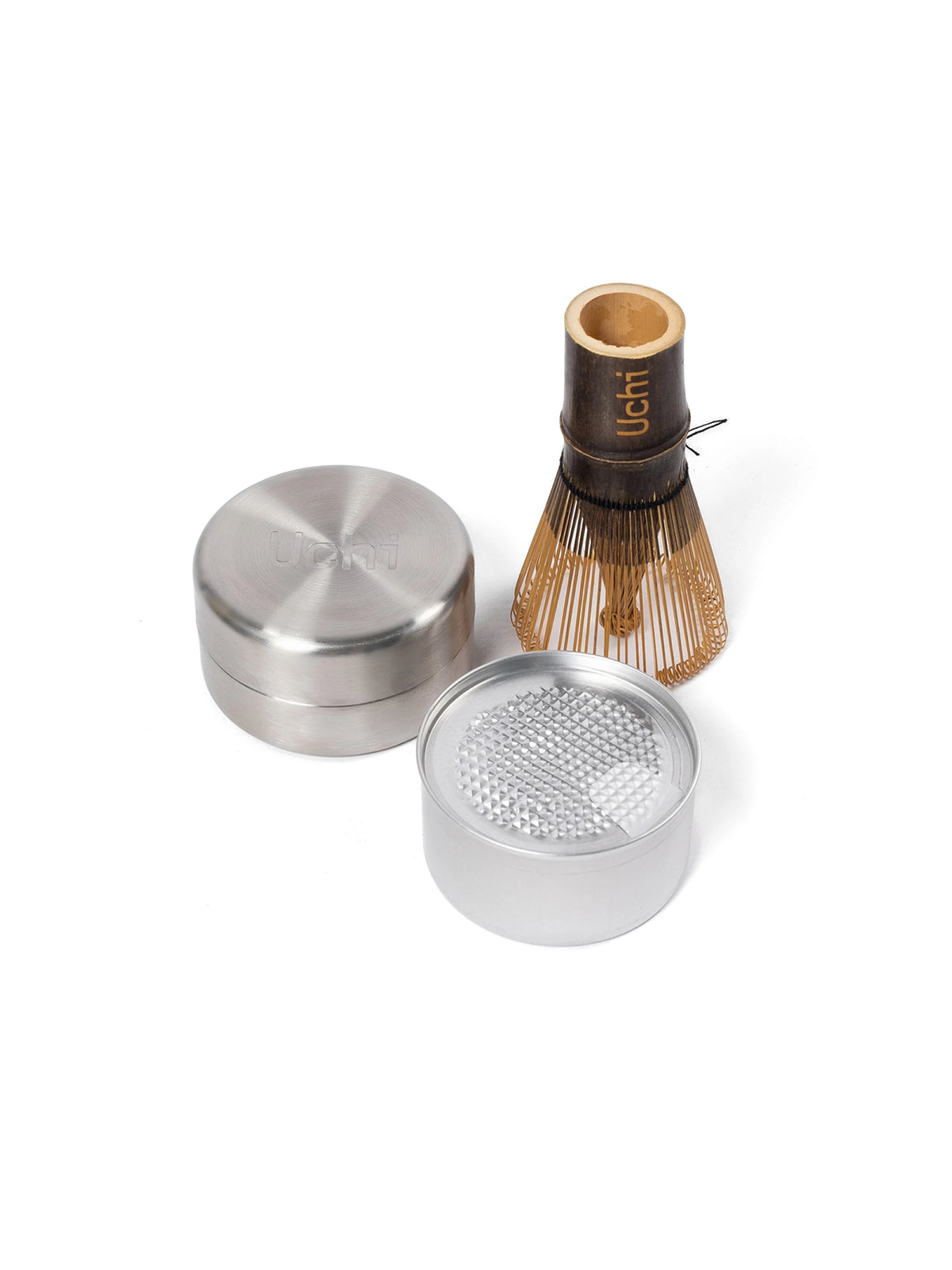
- For matcha container storage, Uchi Base combines an opaque stainless steel body with an airtight closure.
- Opaque ceramic suits cupboard storage when the vessel is food-safe and its lid seals properly.
- Clear glass shows the powder but needs a dark storage location and an airtight closure.
- Display the container, not the powder. Keep matcha away from light, heat, steam and damp utensils.
Why this matters
Matcha storage and matcha display ask different things of a container. Display makes the contents visible. Storage limits their exposure to air, light, moisture and heat. A clear vessel can satisfy the first requirement while making the second harder.
For a home kitchen in 2026, start with the place where the container will live. A sunny shelf, the space beside a kettle and a dark cupboard are not interchangeable. The material matters, but so do the closure and the surrounding conditions.
An opaque body blocks light through its walls. An airtight closure limits air exchange while the container is shut. Neither feature removes the need to close the lid promptly or keep the contents dry.
The useful distinction is simple: a container can be visible without making its contents visible. That leaves room for an object on the counter without asking the powder to become part of the display.
What makes a matcha container suitable for storage
Judge matcha containers by these criteria before choosing a material:
- Light protection. An opaque body keeps light from reaching the powder through the container walls. Clear glass depends on a dark location.
- Closure. Check how the lid seals. A heavy lid or a close-looking fit does not establish that a container is airtight.
- Dry handling. The opening should allow a dry scoop to enter without touching a wet rim or nearby preparation surface.
- Suitable interior. Choose food-contact materials. Inspect accessible surfaces for damage and follow the maker’s care instructions.
- Practical capacity. Choose around the amount of matcha being stored, rather than the amount of shelf space available.
- Daily placement. Keep the container away from direct sun, cooking heat and kettle steam. An opaque wall does not prevent heating.
For a 2026 purchase, ask for the closure specification rather than treating appearance as evidence. Stainless steel, ceramic and glass describe the body. They do not describe the seal.
Matcha containers at a glance
| Container | Suitable use | Main limitation |
|---|---|---|
| Base | Airtight, opaque storage at home | Still needs dry handling and sensible placement |
| Opaque food-safe ceramic | Cupboard storage with a verified sealing lid | Ceramic alone says nothing about airtightness |
| Clear food-safe glass | Storage inside a dark cupboard | Exposes powder to light when displayed |
The order follows storage suitability, not decoration. Each option has a distinct role. The first combines stated light-blocking and closure properties; the other two require closer attention to the individual vessel and where it is kept.
1. Base: for an opaque container kept in daily use
The Base is Uchi’s airtight stainless steel matcha canister, kept for life. Its opaque body blocks light through the walls, while its airtight closure limits air exchange when shut. Those are concrete storage features, not a promise that matcha stays unchanged indefinitely.
The Pod is the matcha itself: 40g, about twenty cups, in recyclable aluminium. The Base and Pod have different roles. One is the lasting canister; the other contains the matcha.
That distinction suits a home routine built around keeping the container rather than choosing another vessel each time. It also means the amount being stored is known. A much larger display jar is not necessary simply because there is room for one.
Base pros:
- The stainless steel body is opaque.
- The closure is specified as airtight.
- The canister is designed to be kept for life.
- Its role is separate from the Pod that contains the matcha.
Base limitations:
- The opaque body does not show the remaining powder without opening.
- Airtight storage still depends on closing the container after use.
- Stainless steel does not make a position beside a heat source suitable.
Suitable for: Home matcha drinkers who want a lasting, opaque container with a stated airtight closure.
Home contains Base and Pod. Complete contains Base, Pod, Bowl, Spoon, Sieve and Whisk. The storage component is the same; the difference is the preparation equipment included. Choose according to the tools already at home, not an expectation of different storage performance.
Verdict: Buy Base for its airtight closure and opaque body. Keep placement and dry handling part of the routine.
2. Opaque food-safe ceramic: for cupboard storage with a sealing lid
An opaque ceramic container can keep light away from matcha. It needs a food-safe interior and an effective sealing lid to serve as storage rather than simply a covered vessel. A ceramic lid resting on a ceramic rim is not, by itself, evidence of airtightness.
This is the option to assess individually. Look at the interior, the rim and the closure specification. Decorative appearance does not establish that a vessel is intended for direct food contact, and the word ceramic does not settle the question.
A suitable ceramic container belongs in a stable, dry place where it can be opened without being knocked against other objects. The cupboard is useful here: it removes the expectation that the container must remain on display throughout the day.
Opaque ceramic pros:
- An opaque body blocks light through its walls.
- A suitable sealing lid can limit air exchange.
- Food-safe ceramic offers an alternative to a metal body.
Opaque ceramic limitations:
- A loose lid does not provide an airtight seal.
- Ceramic can chip or break if dropped or struck.
- Decorative vessels need their food-contact suitability checked.
Suitable for: Someone choosing a food-safe ceramic vessel with a documented sealing closure for cupboard storage.
Before transferring matcha, confirm that the container is clean and completely dry. Pay attention to the underside of the lid and any removable closure components. A dry-looking exterior does not establish that every internal surface is dry.
Verdict: Buy only when food-contact suitability and the sealing closure are clear. Otherwise, hold.
3. Clear food-safe glass: for storage behind a cupboard door
Clear glass makes the quantity and colour of matcha visible without removing the lid. That is its practical attraction. It also allows light to reach the powder when the container sits on an exposed shelf.
An airtight glass container inside a dark cupboard separates those two characteristics. The glass provides visibility when the cupboard is open; the cupboard supplies the light protection that the transparent walls do not.
This makes glass a conditional storage choice, rather than a counter-display recommendation. A transparent vessel beside a window asks location to do none of the protective work. A dark cupboard changes that arrangement.
Clear glass pros:
- The remaining quantity is visible without opening.
- The interior is visible for inspection after cleaning.
- A suitable airtight closure can limit air exchange.
Clear glass limitations:
- Clear walls do not block light.
- Glass can break if dropped or struck.
- Seeing the powder does not establish its freshness.
Suitable for: Someone who already uses an airtight, food-safe glass container and keeps it in a dark cupboard.
Avoid opening the container solely to inspect the powder more closely. Colour is one observation, not a complete assessment of storage condition. Aroma and taste also matter, and none of them replaces suitable handling.
Verdict: Hold for cupboard use. Skip clear glass as an exposed powder display.
Display versus storage on a small counter
In a small kitchen, one surface often holds preparation tools, storage and objects chosen for their appearance. Give those functions separate places, even when they share a counter. Keep the storage container outside the path of steam and splashes.
The useful distinction is between counter display, cupboard storage and the preparation area. An opaque, closed container can remain visible. A clear container belongs behind a cupboard door. Open the powder away from the wet work of preparing a bowl.
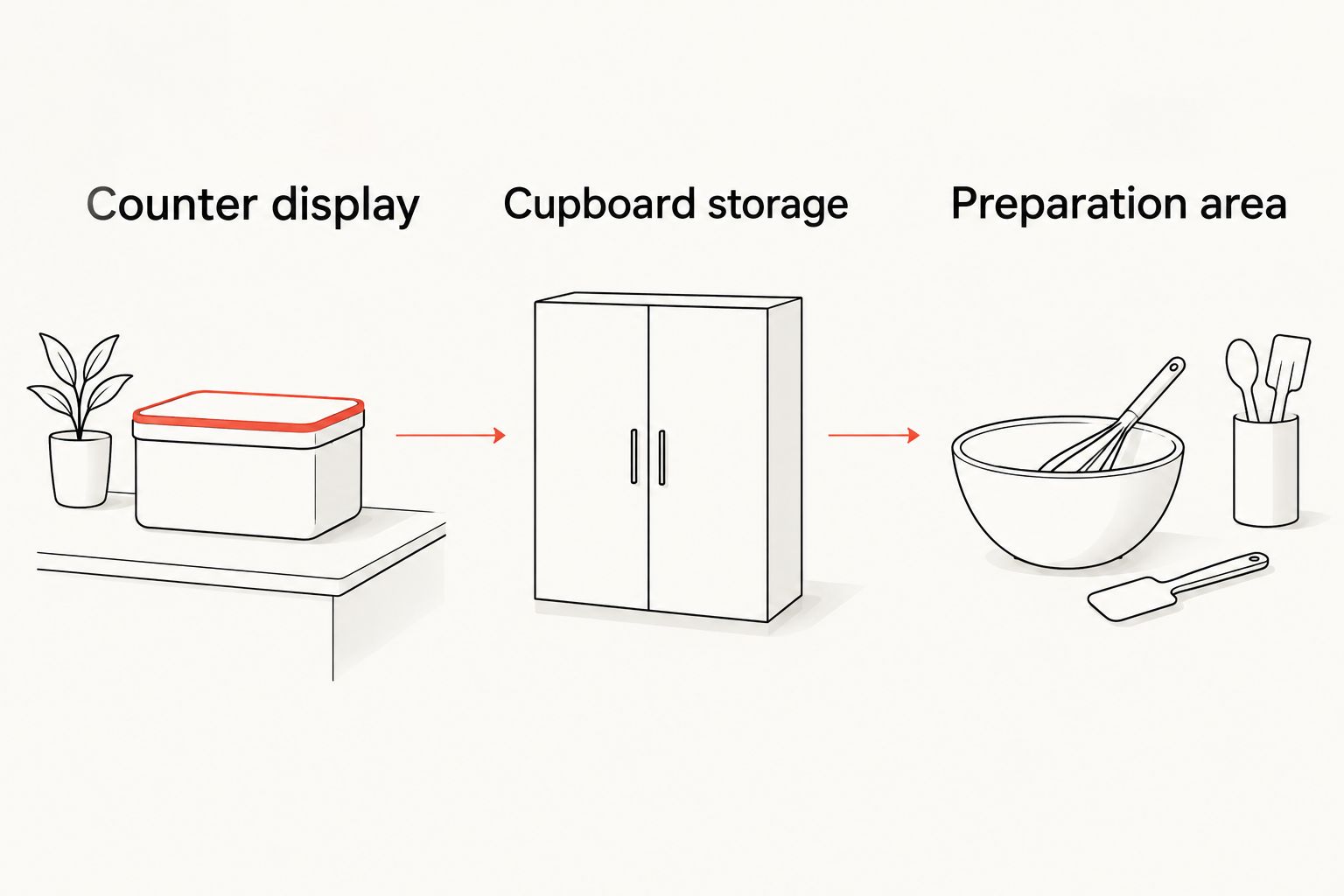
Do not place the container beside the kettle merely because the two are used together. Steam belongs to preparation, not storage. The same separation applies beside a hob or a window receiving direct sun.
For a counter arrangement in 2026, judge the location during use, not only when the kitchen is still. A shelf can look sheltered until the kettle boils beneath it. Move the container if ordinary preparation puts it in steam.
Capacity and handling belong in the same decision
A container should hold the intended quantity without making scooping awkward. More capacity is not automatically useful. It can leave a small amount of powder at the bottom of a vessel chosen mainly for its appearance.
The Pod contains 40g of matcha, about twenty cups. One leveled Uchi Spoon holds 1 gram. These figures help describe the quantity and the scoop; they are not a storage-life promise or a requirement to prepare every bowl identically.
Use a dry utensil before bringing water into the preparation area. Close the container after measuring, then continue with sieving and whisking. That sequence keeps the open powder separate from steam and wet tools.
Avoid repeatedly transferring matcha between a storage container and a display vessel. Each transfer adds another handling step and another surface that must be clean and dry. If the aim is simply to see an attractive object on the shelf, display the closed container instead.
Cold storage needs its own handling routine. Read the guide to refrigerating matcha powder without introducing condensation before moving a container between cold storage and a warm kitchen.
How the containers are ranked
This 2026 comparison ranks the options by light protection, closure, dry handling, food-contact suitability and placement. It does not assign a shelf-life extension to any material. The container categories are not interchangeable laboratory-tested products.
Base comes first because its stated construction combines an opaque stainless steel body with an airtight closure. Ceramic is conditional on the vessel and lid. Clear glass is conditional on both the closure and a dark storage location.
The order is deliberately practical. It asks how much of the storage requirement the container itself supplies, then identifies what the owner must provide through placement and handling.
The default choice for home
Choose Uchi Base for matcha container storage when an airtight, opaque canister is the priority. Choose verified sealing ceramic for a cupboard-based routine. Keep clear glass behind a cupboard door rather than treating the powder as a display object.
For a first purchase in 2026, Home provides Base and Pod. Complete adds the preparation tools named above. The choice between them starts with what is already in the kitchen; the freshness mechanism remains the airtight, opaque Base and the way it is used.
FAQ
What matters most for matcha container storage?
Matcha container storage needs protection from air, light, moisture and heat. Choose an opaque body with an airtight closure, then keep it in a dry location away from sun and steam.
Is stainless steel more suitable than clear glass for matcha?
Stainless steel blocks light through its walls, while clear glass does not. Both still need an effective closure; clear glass also needs a dark storage location.
Can I keep matcha in a ceramic container?
A food-safe, opaque ceramic container with a sealing lid can hold matcha. A decorative vessel or loose-fitting ceramic lid does not establish suitable food contact or airtightness.
Can an airtight matcha container stay on the counter?
An opaque, airtight container can stay on a counter away from direct sunlight, heat, steam and splashes. The location matters even when the container walls block light.
Does a green colour prove that matcha is fresh?
Green colour alone does not prove freshness. Consider aroma and taste alongside colour, and do not use appearance as a substitute for suitable storage.
How much matcha does a Pod contain?
A Pod contains 40g of matcha, about twenty cups, in recyclable aluminium. That quantity describes the contents, not how long the matcha will retain its character after opening.
Do Home and Complete use different storage containers?
Home and Complete both include Base and Pod. Complete also includes Bowl, Spoon, Sieve and Whisk; the storage component does not change.
One last thing
Check the lid before choosing the material. An opaque ceramic vessel with a loose cover solves the light problem but leaves the closure unresolved. Clear airtight glass solves the closure problem but still needs darkness.
The quieter arrangement is often the simpler one: a closed, opaque container in a dry place. Let the bowl show the matcha when it is time to drink it.