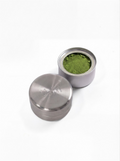
Keep matcha powder green after opening by storing it in an airtight, opaque container away from heat, light and moisture, and closing it immediately after measuring. Storage slows deterioration; it does not restore colour or flavour already lost, and green colour alone does not establish freshness.
- Keep matcha powder airtight, dry and out of direct light after opening.
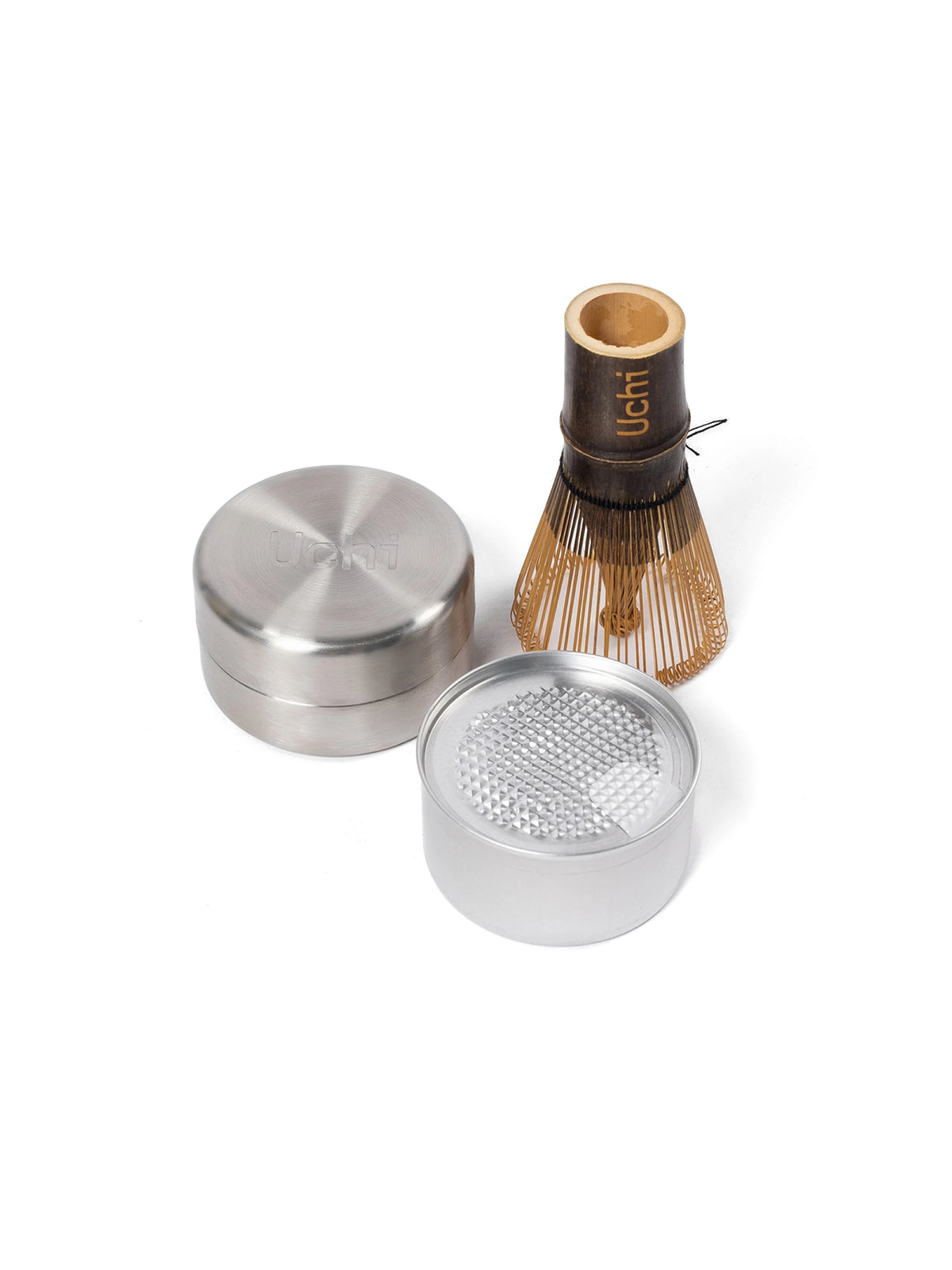
- Uchi’s Base suits home matcha drinkers who want an airtight stainless steel container to keep.
- Use a dry scoop and close the container before preparing the drink.
- Judge freshness through colour, aroma and taste together, not green colour alone.
The useful sequence is simple: protect the powder between drinks, expose only what is needed, and keep water away from the remaining matcha. A container left open during preparation defeats the point of an airtight lid.
- Choose the container. Use an opaque container with a lid that closes securely.
- Choose the location. Keep it away from a sunny window, the hob and steam from a kettle.
- Measure dry. Use a clean, completely dry scoop.
- Close immediately. Replace the lid before adding water to the bowl.
- Check the powder. Notice changes in colour, aroma and the prepared drink.
Uchi’s Base is an airtight stainless steel matcha canister, kept for life. Its purpose is concrete: contain the powder behind an opaque wall and a closed lid between preparations. The remaining work is the daily habit of keeping it dry and closing it promptly.
Why this matters
Matcha is finely ground tea. Its exposed surface meets the surrounding air whenever the container opens. Light, heat and moisture add separate storage problems.
Colour gives one visible signal. A powder that becomes duller deserves attention, but colour does not tell the whole story. Aroma and taste belong in the same assessment.
A vivid starting colour also reflects the tea itself. Growing conditions, processing and the composition of a blend influence its appearance before it reaches the kitchen. Storage preserves the starting character; it cannot make different teas identical.
The aim is therefore not to maintain a particular shade at any cost. It is to keep the powder close to the colour, aroma and taste it had when first opened. That is a more useful reference than a photograph of somebody else’s tea.
Storage priorities for 2026
Choose storage by what it excludes, not by how the container looks on a shelf. Airtightness, opacity and a dry interior do different jobs. None replaces the others.
| Storage option | Strength and limitation |
|---|---|
| Airtight, opaque container | Excludes light and limits air exchange; still needs prompt closure. |
| Clear container | Makes the contents visible; requires protection from light. |
| Refrigerated container | Provides cool storage; requires care around condensation and odours. |
An opaque container is suited to a kitchen where the powder would otherwise receive light. A clear container requires a dark storage location. Refrigeration needs a different handling routine, not simply a different shelf.
Do not treat a heavy lid as proof of airtightness. Check that the closure seats properly and that powder has not collected where the lid meets the container. A container can look closed without being correctly closed.
The storage priorities in 2026 remain physical rather than decorative. A shaded shelf beside a steaming kettle is not a dry location. A clear jar in a bright room is not protected simply because its lid fits.
Air: shorten the open interval
Open the container when the scoop and bowl are ready. Measure the powder, then close it. There is no reason to leave the remaining matcha exposed while heating water, preparing milk or whisking.
This is not a demand to rush. It is a change in order. Prepare the workspace first, take out the powder second, and put the closed container away before making the drink.
Repeated openings are part of normal use. The practical response is to avoid unnecessary exposure, not to make a promise that an airtight container eliminates oxidation. Air enters whenever the lid comes off.
Keep the closure clean as well. Loose powder around the rim belongs back in the preparation area, not trapped in the lid. Wipe the exterior with a dry cloth when needed, without introducing moisture to the contents.
The useful habit is closure before preparation. It is easier to repeat than an elaborate storage routine, and it addresses the moment when the powder is most exposed.
Light: make the container opaque
A bright kitchen is pleasant for preparing tea. It is not a reason to display matcha powder in direct sunlight. Give the powder a dark place between drinks.
Opacity removes the need to judge how much light reaches the contents through the container wall. Stainless steel serves that purpose. A clear vessel depends on the cupboard or drawer around it to provide the same protection.
There is a distinction between displaying the object and displaying the powder. An opaque container can sit visibly on a shelf without exposing its contents to light. That shelf still needs to be away from heat and steam.
Do not use colour as a display feature at the expense of storage. Look at the powder when measuring it. The remaining matcha does not need a window.
Moisture: keep preparation separate from storage
Water belongs in the bowl, not in the stored powder. A scoop that looks clean can still carry moisture after rinsing. Let utensils dry completely before they touch the matcha.
Steam deserves the same attention. Opening a container above a kettle or beside a steaming pan puts the powder in a damp environment. Move the measuring step to a dry part of the work surface.
Some clumping is normal in fine powder. A sieve helps separate those clumps during preparation, but it does not correct damp storage. Persistent dampness or a musty smell is a different issue from ordinary small lumps.
If the container needs washing, empty it first and let every part dry fully before refilling. Do not put fresh powder into a container with moisture around the lid or inside the base. Keep the storage vessel and the wet preparation tools separate until both are dry.
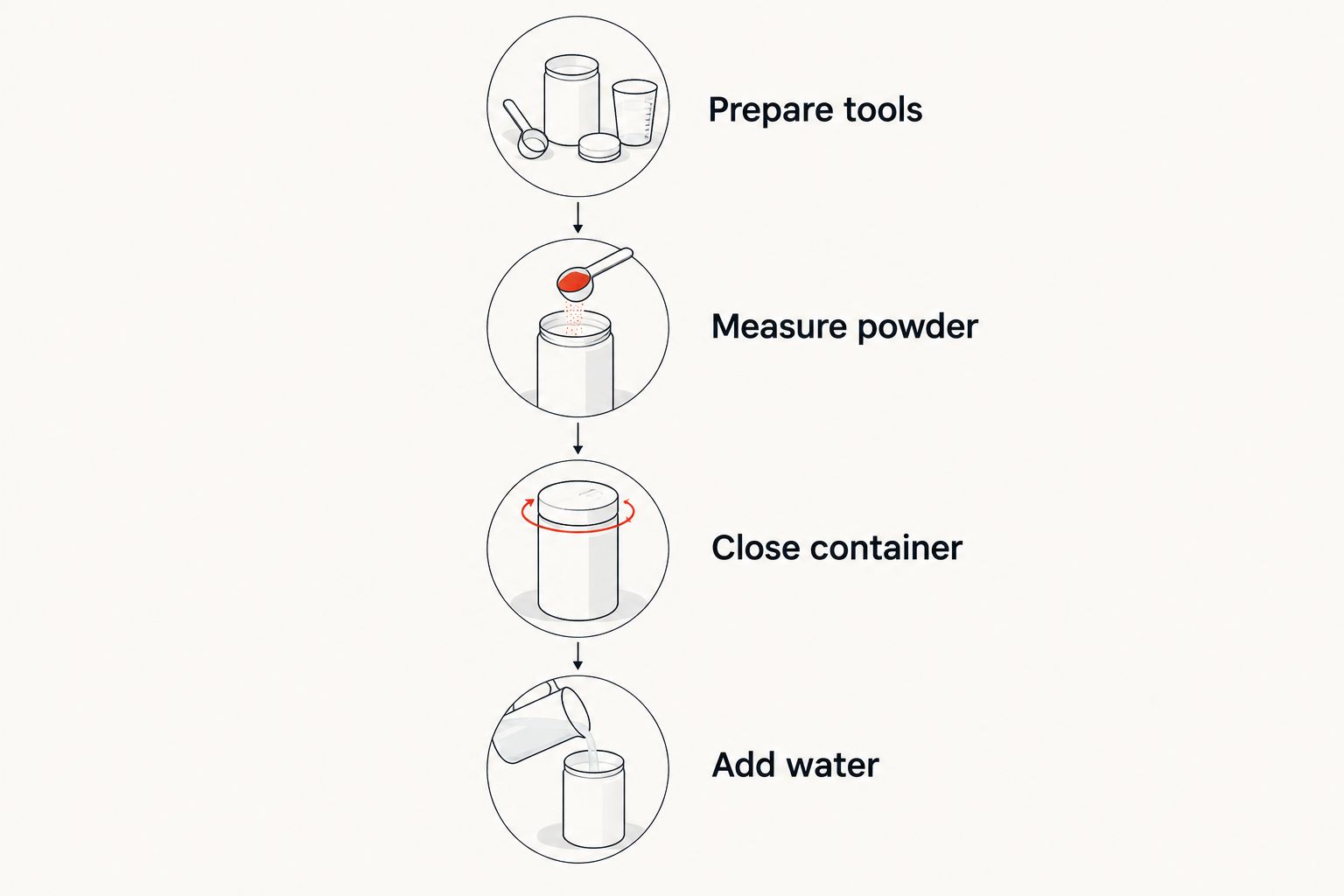
A repeatable preparation sequence
A short sequence keeps the storage step from disappearing into the rest of the drink. Gather the dry tools before opening the powder. Leave water until the container is closed.
- Prepare tools: set out the bowl, dry scoop and sieve.
- Measure powder: take out the amount needed for the drink.
- Close container: secure the lid and return it to its storage place.
- Add water: prepare the measured powder away from the stored matcha.
One levelled Spoon holds 1 gram. A consistent measure makes it easier to compare successive drinks without changing the amount of powder each time.
That matters when assessing freshness. If the amount of powder, water or milk changes substantially, a different taste does not isolate a storage problem. Keep the preparation familiar when checking whether the tea itself has changed.
Refrigeration: handle condensation deliberately
Refrigeration offers a cool environment, but a refrigerator also contains moisture and food odours. The container needs to remain sealed. An open bowl of powder does not belong there.
If matcha is refrigerated, let the closed container reach room temperature before opening it. Opening a cold container in warmer, humid air invites condensation. The relevant distinction is sealed warming versus opening while cold.
Follow any storage directions supplied with the matcha. Do not assume that a refrigerator creates an unlimited shelf life or compensates for a loose lid. Cool storage and correct handling are separate requirements.
For a cupboard routine, choose a cool, dark, dry position instead. Avoid locations above the hob or immediately beside the kettle. The convenient location is the one that supports correct handling every day, not merely the closest place to the bowl.
Why colour and freshness vary
Matcha powders do not all begin with the same colour or develop in exactly the same way. Compare the powder with its own starting condition rather than using one universal green as a standard.
These factors explain the differences that matter at home:
- Starting tea: cultivation, processing and blend composition influence initial colour and flavour.
- Air exposure: each opening brings the powder into contact with its surroundings.
- Light exposure: an opaque container and a dark location reduce exposure between drinks.
- Heat: a warm storage position adds a condition the lid cannot address.
- Moisture: wet utensils, steam and condensation introduce a separate storage risk.
- Time after opening: storage slows change but does not stop it indefinitely.
A fresh purchase and careful storage work together. Neither cancels the need for the other. Buying a large amount does not help if the amount exceeds the household’s actual drinking routine.
Choosing matcha powder for home in 2026
Choose an amount that belongs in the routine already taking place. An occasional drinker and a household preparing matcha daily do not need the same quantity open at once. There is no useful universal replacement interval without considering the tea and its handling.
Uchi’s Pod contains 40g of matcha, about twenty cups, in recyclable aluminium. That quantity gives a concrete reference for the number of preparations, rather than an unsupported promise about how long opened powder stays fresh.
The matcha is Kaze no Shiro, a first-flush blend composed by the house tea master at Horii Shichimeien. It draws first-harvest tencha from Kyoto, Nara and Shiga, weaving Okumidori, Yabukita and Sayamakaori. It is not single origin or single cultivar.
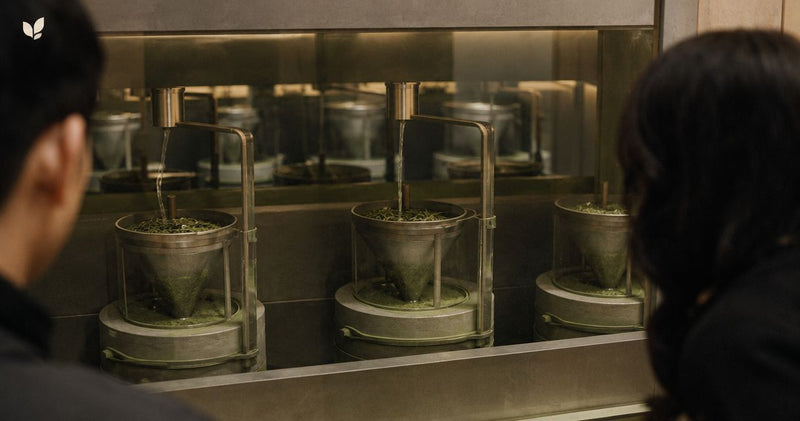
The tea is shaded for 25 days before harvest and stone-milled at 40 grams an hour. Those production details describe the tea before opening. They do not remove the need to protect it from air, light and moisture at home.
For a first home purchase in 2026, separate the storage requirement from the preparation tools. Home contains Base + Pod. Complete contains Base + Pod + Bowl + Spoon + Sieve + Whisk.
Home suits a drinker who already has preparation tools. Complete suits a drinker who needs those tools as well. Home does not include a Whisk; Complete includes a bamboo chasen with 120 prongs. Neither choice changes the storage habit required after opening.
Reading colour without overreading it
Inspect the powder in consistent lighting. A change from daylight to warm indoor lighting can alter how green appears. Phone photographs add another layer through exposure and colour processing.
Then notice the aroma and prepare a familiar drink. A duller colour accompanied by a flatter aroma and changed taste gives more information than colour alone. Do not try to diagnose freshness through a photograph in isolation.
Keep quality and safety distinct. A muted colour is not, by itself, proof that a food is unsafe. Equally, a vivid colour is not a guarantee of safe storage. Follow the product’s date and storage instructions, and discard powder showing mould or clear signs of moisture-related spoilage.
Storage cannot reverse a change that has already happened. Transferring tired powder into a better container protects it from further exposure; it does not return the original aroma or flavour.
FAQ
How do I keep matcha powder green after opening?
Keep matcha powder in an airtight, opaque container away from heat, light and moisture. Measure with a dry scoop and close the container before preparing the drink.
Should I keep opened matcha powder in the fridge?
Refrigeration requires a sealed container and careful handling around condensation. Let the closed container reach room temperature before opening it, and follow the matcha’s supplied storage directions.
Does brownish matcha powder mean it has gone bad?
Brownish or duller colour alone does not establish whether matcha powder is unsafe. Assess aroma and storage conditions as well, follow the product’s date, and discard powder showing mould or moisture-related spoilage.
Can I store matcha powder in a clear jar?
A clear jar requires a dark storage location because it does not exclude light. The lid must still close securely, and the interior must remain dry.
How long does opened matcha powder stay fresh in 2026?
There is no single freshness period for every opened matcha powder. Follow the supplied storage instructions and assess changes in colour, aroma and taste rather than relying on an invented universal interval.
Does an airtight container keep matcha fresh indefinitely?
An airtight container does not keep matcha fresh indefinitely. It limits air exchange when closed, but opening, time and the surrounding storage conditions still matter.
What does Uchi offer for storing matcha powder in 2026?
Uchi offers Base, an airtight stainless steel matcha canister kept for life. Home contains Base + Pod; Complete adds Bowl, Spoon, Sieve and Whisk.
One last thing
Put the lid back on before the kettle becomes part of the preparation. This small change separates dry storage from steam, water and the time spent making the drink.
For a home routine in 2026, start there. A carefully chosen container only works when it is closed.