Yes, ceremonial matcha can be used for lattes, hot or iced. Milk changes how clearly the tea’s character comes through, but it does not make ceremonial matcha unsuitable. Freshness, careful mixing and the balance between tea and milk matter more than reserving a particular label for drinking with water alone.
- Can ceremonial matcha be used for lattes? Yes. Milk changes the flavour balance, not the suitability of the tea.
- Uchi pairs first-harvest matcha with airtight, light-proof storage for home preparation.
- Sift and whisk the matcha with water before adding milk. Dry powder clumps when mixed carelessly.
- Choose ceremonial matcha for its traceable origin and taste, not a promise printed on the label.
Why this matters
A latte begins before the milk is poured. Air, light, heat and moisture affect the powder while it sits between cups. Milk cannot restore aroma lost through poor storage.
For home preparation in 2026, keeping matcha away from air and light is a more useful starting point than treating ceremonial matcha as too precious for milk. Protect the tea first. Then decide how to drink it.
Ceremonial matcha can be used for lattes
Ceremonial matcha works in a latte because it is finely ground tea that can be dispersed in water and combined with milk. There is no preparation rule that confines it to a bowl of water. The choice is about flavour.
Milk contributes its own sweetness, texture and aroma. That changes the balance of the drink and makes some details in the tea less distinct. It does not mean those details were irrelevant when choosing the powder.
| Preparation | Suits | Trade-off |
|---|---|---|
| Matcha with water | Tasting the tea directly | Leaves its bitterness and texture more exposed |
| Matcha latte | Drinking tea with milk | Makes delicate differences harder to distinguish |
Use ceremonial matcha for a latte when its taste suits the drink. Use water alone when the purpose is to examine the tea more closely. Neither preparation needs to become a rule for the other.
The ceremonial label is not a complete tasting description. For a purchase in 2026, producer, harvest information and storage details give that label something concrete to stand on.
Freshness comes before the milk
Matcha is powdered leaf, not an infusion that leaves the leaf behind. Its condition follows it into the cup. An open container beside a steaming kettle exposes the powder before preparation even begins.
Choose an airtight, opaque container. Keep it away from direct sunlight and heat, and use dry utensils when taking out a portion. Close it before preparing the drink rather than leaving it open beside the bowl.
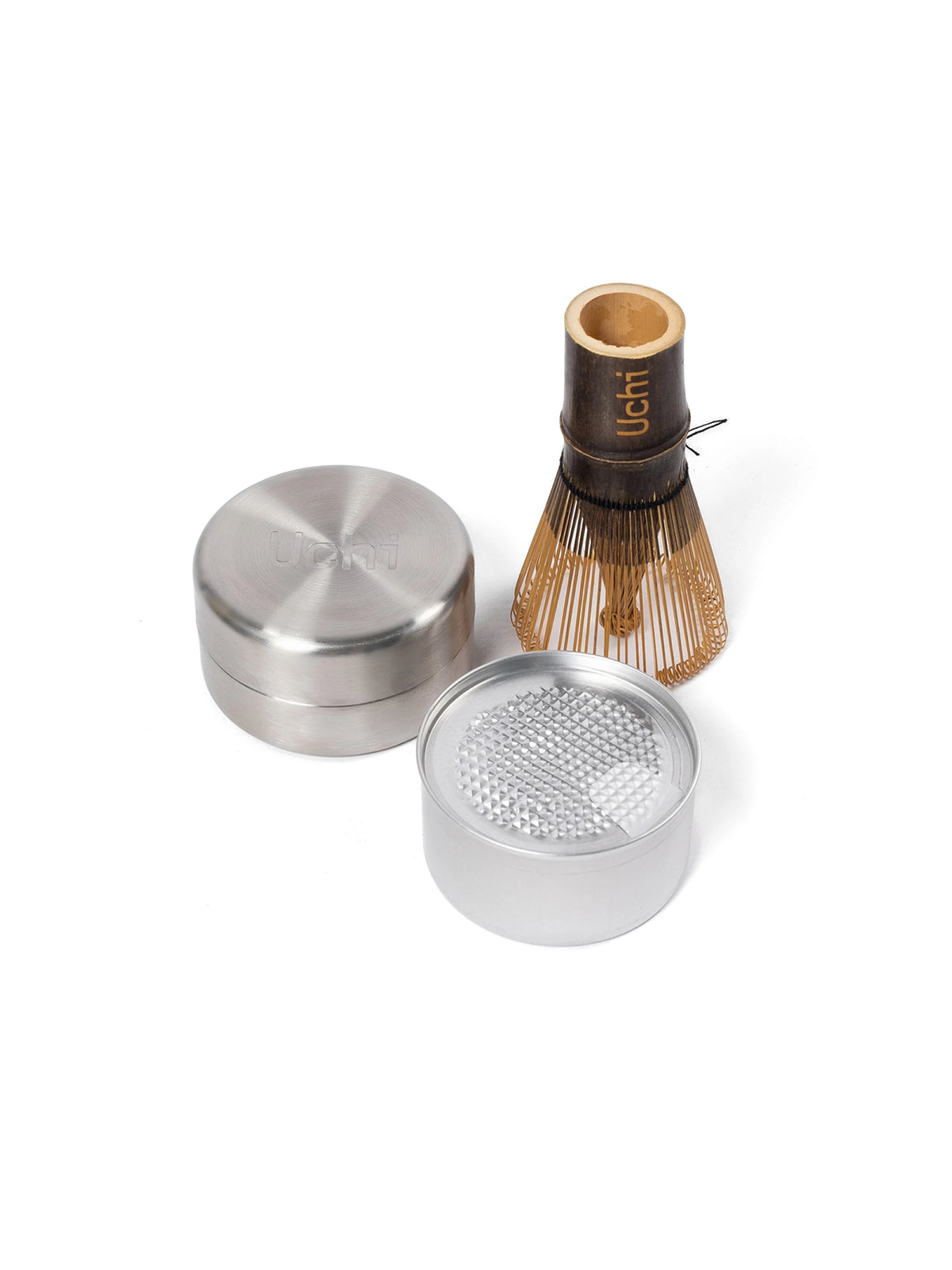
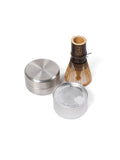
The Base is an airtight, light-proof stainless steel canister, kept for life. Its role is specific: limit exposure to air and light between servings. It still needs a sensible position in the kitchen; stainless steel does not make a hot shelf a suitable storage place.
Freshness also deserves more attention than colour alone. Lighting changes how green a powder looks, and a photograph cannot describe its aroma. Assess the dry tea and the prepared drink together rather than using a shade of green as the whole verdict.
A latte method that keeps the tea distinct
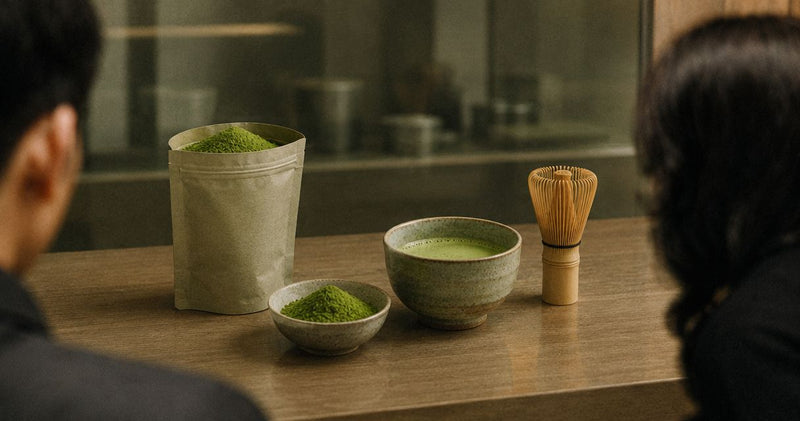
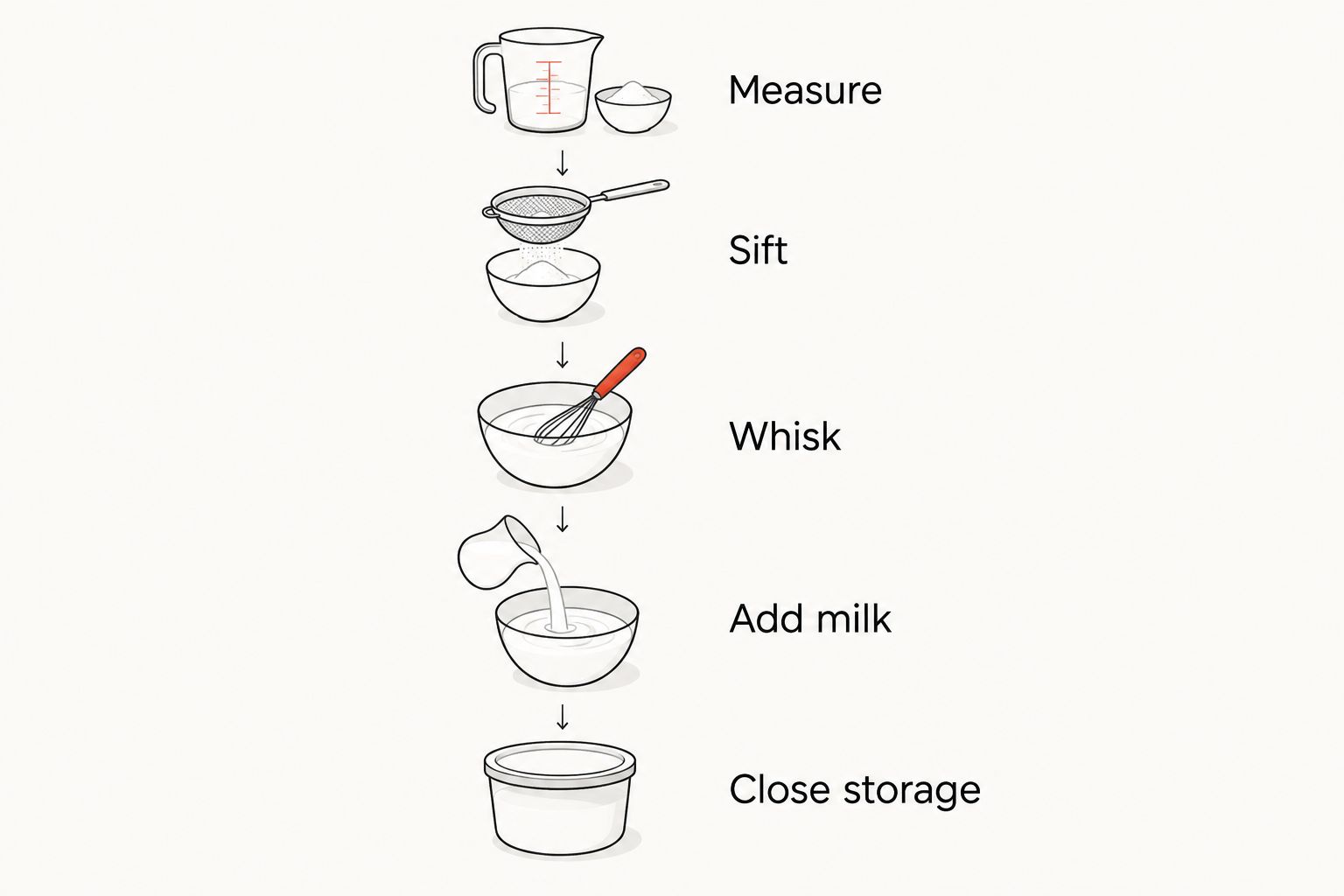
Start with a clean bowl, dry measuring utensil, sieve and bamboo whisk. Prepare the matcha with water before it meets the milk. This makes it easier to see whether dry clumps remain.
- Measure. Choose a repeatable portion of matcha. Keep that portion steady while adjusting the milk, so the result is easier to judge.
- Sift. Pass the powder through a fine-mesh sieve into the bowl. Break apart dry clumps before adding water.
- Whisk. Add enough water for the whisk to move freely. Work the powder into an even suspension rather than leaving a thick, unmixed deposit.
- Add milk. Combine the prepared matcha with milk gradually. Taste before adding more.
- Close storage. Return the remaining powder to its closed storage position, away from steam and splashes.
Matcha forms a suspension; it does not dissolve like sugar. Some settling is therefore different from finding dry clumps. A gentle stir can redistribute settled tea, while clumps call for better sifting and mixing at the start.
For an iced latte, whisk the matcha before pouring it into the milk and ice. For a warm latte, prepare the tea separately before combining it with warmed milk. The essential sequence stays the same.
Why the flavour of a ceremonial matcha latte varies
A ceremonial label does not make every latte taste alike. The leaf, its condition and the preparation all remain part of the drink.
- Blend composition. The cultivars and leaves selected by a producer shape the tea before milk is added.
- Freshness. Exposure to air, light, heat and moisture changes the powder during storage.
- Tea portion. Changing the amount of powder changes its presence in the finished latte.
- Milk proportion. More milk shifts the balance towards the milk’s own flavour and texture.
- Milk choice. Dairy milk and plant-based drinks contribute different tastes; sweetened versions introduce another variable.
- Mixing. Dry clumps create an uneven drink, even when the ingredients remain unchanged.
Change one factor at a time. If the latte tastes mostly of milk, reduce the milk before changing the tea and preparation together. If the texture is uneven, correct the mixing before drawing conclusions about the matcha.
Read the blend, not just the label
In 2026, a useful ceremonial matcha description identifies what the tea actually is. A named producer and a clear account of the blend are more informative than an adjective without supporting detail.
Uchi’s matcha is Kaze no Shiro, produced by Horii Shichimeien, founded in Uji, Japan, in 1879. It is a first-flush blend composed by the house tea master, drawing first-harvest tencha from Kyoto, Nara and Shiga and weaving three cultivars: Okumidori, Yabukita and Sayamakaori.
That is a blend, not a single-origin, single-estate or single-cultivar tea. The distinction matters. Blending is how the house builds its flavour and holds it steady across seasons.
The tea is shaded for 25 days before harvest and stone-milled at 40 grams an hour. Those are specific production details. They describe the tea without promising that every drinker will prefer it with the same milk or in the same proportion.
For a latte, begin with a tea whose identity is clear. Then let the finished drink determine the milk balance.
Milk changes the drink rather than invalidating it
Adding milk creates a different preparation. It does not erase the origin of the tea, though it makes that origin harder to examine through taste alone.
The distinction also applies to a chamomile tea latte: milk becomes part of the flavour rather than an invisible addition. The preparation differs, however. Chamomile is infused and strained; matcha remains suspended in the drink.
Keep that difference in mind when choosing a method. A matcha latte needs the powder dispersed evenly, not simply steeped and removed. The milk stage cannot compensate for dry pockets left in the bowl.
Unsweetened milk makes it easier to assess the combination before introducing another ingredient. Sweeten afterwards if that is the intended drink. There is no need to turn a preference into a claim about how matcha should always be served.
A home setup for repeated preparation
For a home setup in 2026, separate storage from preparation. One protects the powder between drinks; the other helps turn a measured portion into an even suspension. Buying more tools does not replace either task.
Uchi suits home matcha drinkers who want first-harvest tea with airtight, light-proof storage. The limitation is equally clear: storage does not measure, sift or whisk the drink, and adding milk still requires attention to balance.
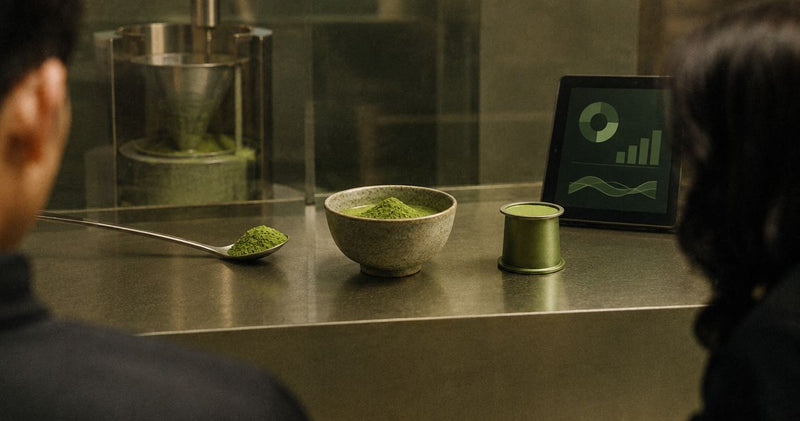
The Pod contains 40g of matcha, about twenty cups. That serving count is approximate, not a fixed number of lattes. A different portion changes how many drinks the Pod makes.
One leveled Uchi Spoon holds 1 gram. The Whisk is a bamboo chasen with 120 prongs. These details make the tools understandable without suggesting that prong count alone determines the result.
| Choice | Suits | Limitation |
|---|---|---|
| Home | A first purchase with preparation tools already at home | Contains Base and Pod, not the preparation accessories |
| Complete | A first purchase needing storage and preparation tools | Includes accessories an existing drinker may already own |
Home contains Base and Pod. Complete contains Base, Pod, Bowl, Spoon, Sieve and Whisk. Choose according to what is missing, rather than assuming that every home needs the same collection of objects.
The Pod uses recyclable aluminium. That describes a material, not the whole packaging system; the foam insert remains an unresolved material. Keeping the Base for life does not remove that distinction.
Adjust the latte without losing the reference point
A useful tasting comparison keeps the tea constant. Prepare the matcha with water, taste a little, then add milk gradually. This reveals what the milk changes without requiring a separate purchase.
If the latte seems faint, first check whether the tea was clearly present before the milk went in. A lively water preparation followed by a muted latte points towards the milk balance. A flat-tasting water preparation calls for closer attention to the powder and storage.
For a repeatable morning drink in 2026, retain the same portion and preparation sequence while adjusting a single ingredient. Memory is less dependable when the powder, milk and method all change together.
Keep the tea recognisable at the milk proportion you enjoy. A latte does not need to imitate matcha served with water, and the water preparation does not need to become the preferred drink.
FAQ
Can ceremonial matcha be used for lattes?
Yes, ceremonial matcha can be used for hot or iced lattes. Milk changes the flavour balance, so choose the tea for its taste and freshness rather than reserving the ceremonial label for water alone.
Does adding milk waste ceremonial matcha?
Adding milk does not make ceremonial matcha unsuitable or wasted. It makes delicate differences less distinct, so drinking with water is more revealing when the purpose is to compare teas.
Should I whisk matcha before adding milk?
Whisk matcha with water before adding milk. Sifting first helps break apart dry clumps, making an even suspension easier to prepare.
Can I use ceremonial matcha in an iced latte?
Yes, ceremonial matcha works in an iced latte. Prepare the matcha with water first, then combine it with milk and ice rather than adding dry powder directly to the finished drink.
Why does matcha settle at the bottom of my latte?
Matcha settles because the powdered leaf forms a suspension rather than dissolving like sugar. Gentle stirring redistributes settled tea; dry clumps indicate a separate mixing problem.
How many lattes does a 40g Pod make?
A 40g Pod contains about twenty cups of matcha. The number of lattes depends on the portion used, so the cup count is approximate rather than guaranteed.
Is Uchi matcha single origin?
Uchi matcha is a first-flush blend, not a single-origin tea. Kaze no Shiro draws first-harvest tencha from Kyoto, Nara and Shiga and combines Okumidori, Yabukita and Sayamakaori.
One last thing
Close the powder before warming the milk. It is a small change to the sequence, but it keeps the open container away from the steam and splashes that follow.
The latte deserves attention. So does the matcha that stays behind for tomorrow.