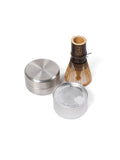
Matcha for home baristas is the practice of choosing, storing and preparing powdered green tea at home with the aim of making a consistent cup. Unlike espresso, the leaf stays in the drink, so freshness, dry handling and whisking deserve as much attention as the recipe.
- Matcha for home baristas starts with airtight, light-proof storage, not more equipment.
- Uchi suits home baristas who want first-harvest matcha with a permanent stainless steel storage vessel.
- Sift before adding water; matcha forms a suspension rather than dissolving.
- Choose Home for storage and matcha; choose Complete when you also need the preparation tools.
Why freshness matters for home baristas
Air, light and heat change matcha's colour, aroma and taste. An open container beside an espresso machine exposes the powder to conditions that careful preparation cannot undo. Protect the dry leaf before adjusting the drink.
For a 2026 home setup, start with choosing a matcha container that keeps out air and light. Then decide where that container belongs. A shaded cupboard away from the kettle is a more useful starting point than a display position beside steam.
Home baristas already understand repeatability. Matcha needs the same discipline, but different mechanics: measured powder, controlled water, room to whisk and storage that closes immediately after portioning.
Why matcha matters for home baristas
Matcha adds a preparation method that does not depend on an espresso machine. A bowl and a whisk handle the mixing. The decisions move from grind size and extraction to powder condition, concentration and texture.
That difference matters in a small kitchen. A narrow mug restricts whisk movement. A damp scoop introduces moisture to the stored powder. Milk changes how clearly the tea's own character comes through.
A repeatable matcha routine separates storage, mixing and finishing. Keep the powder dry, prepare the tea before adding milk, and change one variable at a time. These habits work whether matcha becomes a daily drink or an occasional alternative to espresso.
Build a repeatable home matcha routine
1. Choose the drink before choosing the equipment
Decide whether the first cup will be matcha with water or a latte. The former leaves fewer ingredients between the leaf and the palate. The latter adds milk texture, sweetness and dilution to the preparation.
Use a bowl already at home if it gives a bamboo whisk enough room to move without striking the sides. A kitchen scale and an ordinary fine-mesh sieve also let the first attempts remain simple. Dedicated objects become useful when they solve a specific handling problem.
For a 2026 routine, choose one reference drink before building several variations. Switching between hot lattes, iced drinks and plain matcha makes comparisons harder.
- Choose one drink to repeat first.
- Check that the bowl allows whisk movement.
- Use a scale already in the kitchen.
- Keep milk separate until the tea is mixed.
2. Read the producer and blend information
Look beyond the word ceremonial. Producer, harvest and blend details tell a more specific story than a grade label alone. They describe what is being offered; they do not replace tasting it.
Uchi matcha is Kaze no Shiro, a first-flush blend composed by the house tea master at Horii Shichimeien. It draws first-harvest tencha from Kyoto, Nara and Shiga and weaves three cultivars: Okumidori, Yabukita and Sayamakaori.
The leaf is shaded for 25 days before harvest and stone-milled at 40 grams an hour. This is a blend, not a single-origin or single-cultivar tea. Read those details as production information, not as instructions for how the finished cup must taste.
- Identify the producer.
- Read the stated harvest information.
- Distinguish a blend from a single cultivar.
- Keep tasting notes separate from label claims.
3. Protect the powder between cups
Begin with the container already available: it should close securely, exclude light and remain completely dry. Keep it away from the hob, direct sun and steam. Open it only when the dry measuring tool is ready.
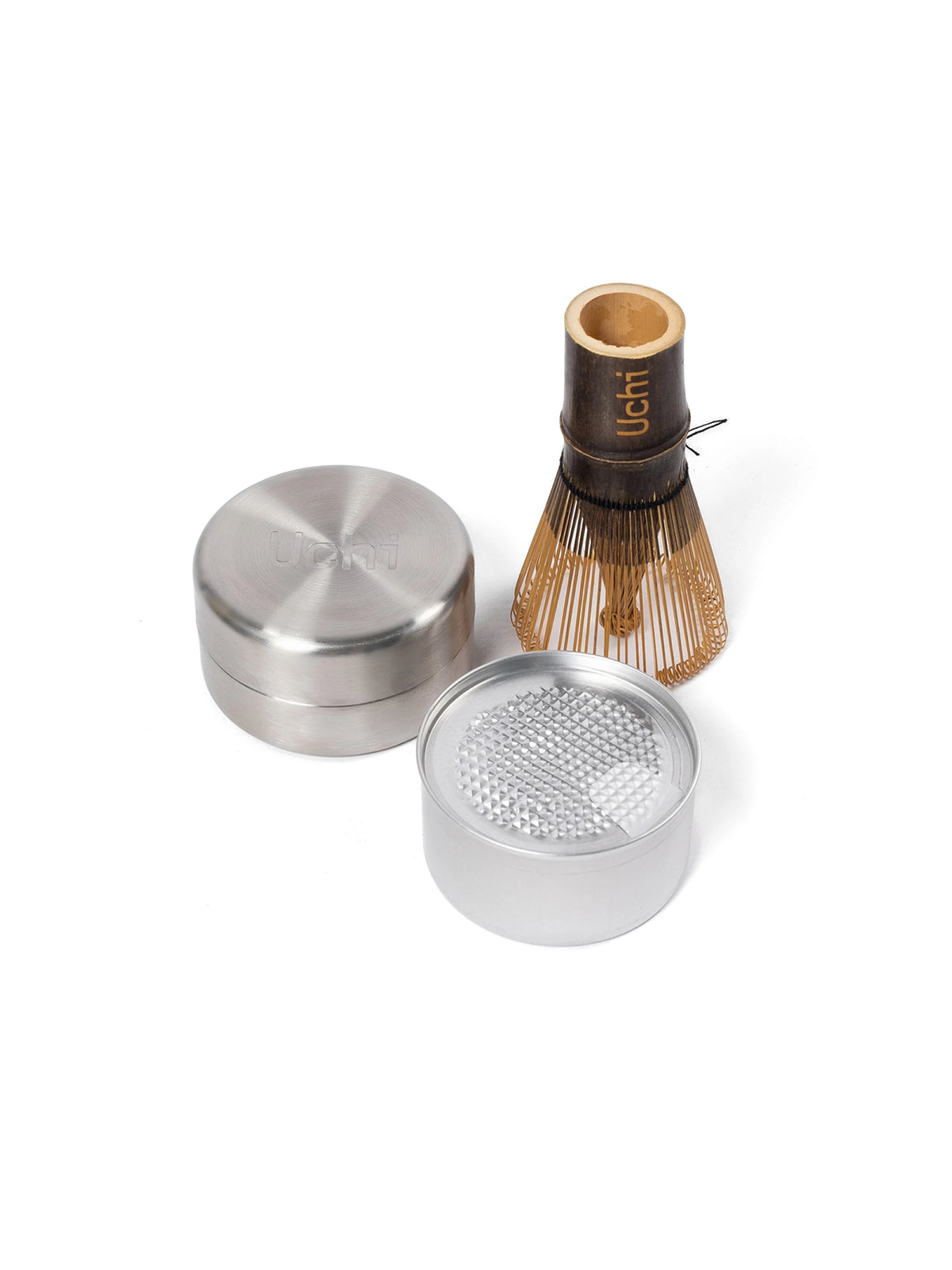
The Uchi Base provides an airtight, light-proof stainless steel canister intended to be kept for life. The Pod contains 40g of matcha, about twenty cups, in recyclable aluminium. Home combines Base and Pod.
The storage vessel does not remove the need for sensible placement. Stainless steel is not permission to leave matcha beside a hot machine. Likewise, an airtight closure cannot reverse moisture introduced by a wet utensil.
- Choose a shaded storage position.
- Keep the measuring tool dry.
- Close the container after portioning.
- Move powder handling away from steam.
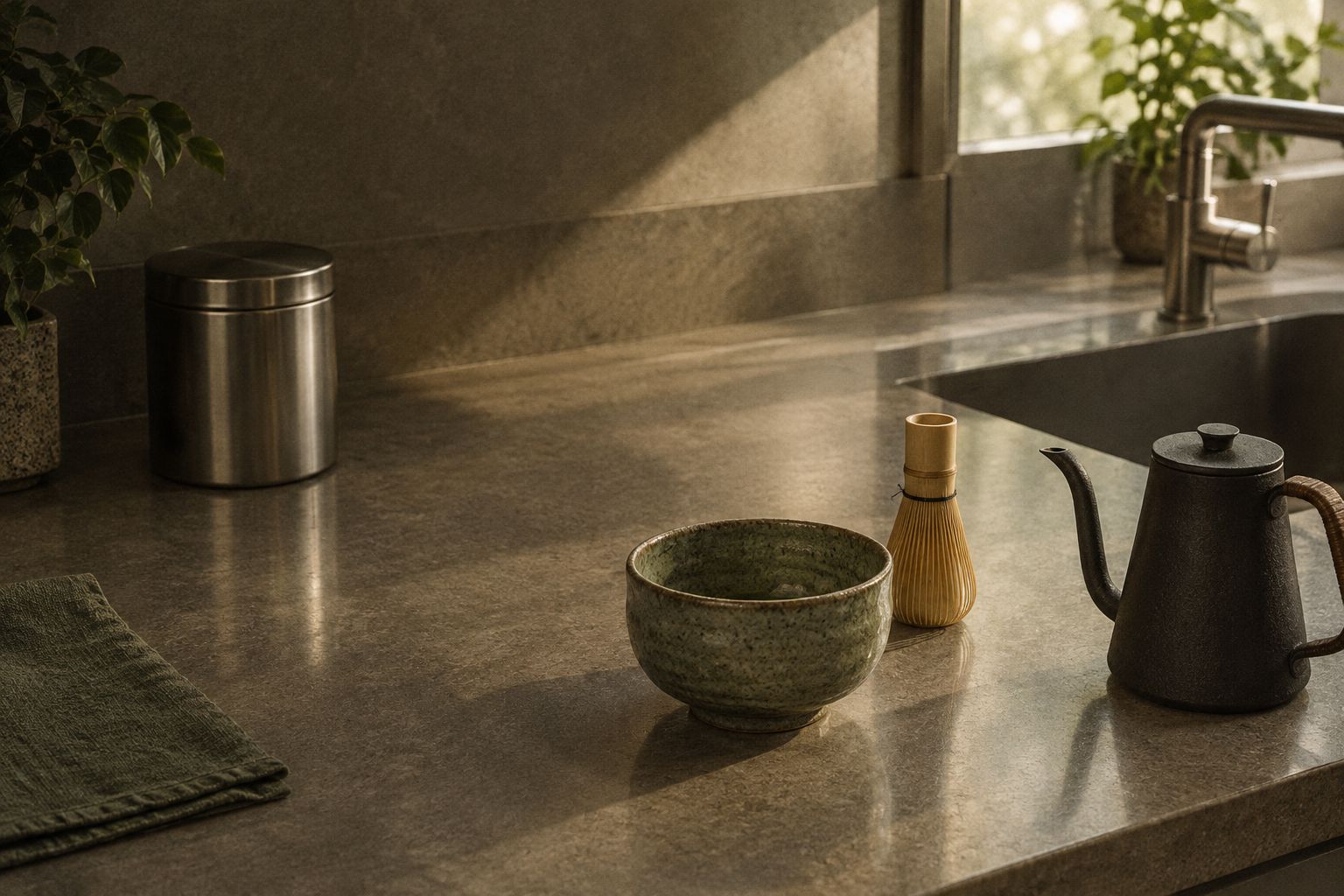
A practical arrangement puts the closed storage vessel away from the wet preparation area. The bowl can sit near the water; the stored powder does not need to.
4. Measure and sift before adding water
Use a dry scale and sieve first. Measuring by eye changes the concentration from cup to cup, while sifting breaks apart clumps before they become harder to disperse in water.
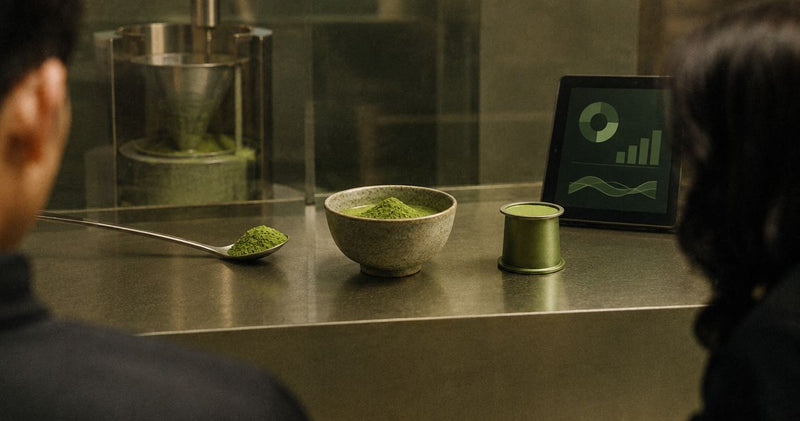
One leveled Uchi Spoon holds 1 gram. Two leveled Spoon measures therefore give 2 grams. Treat a chosen dose as a repeatable starting point, then adjust it to the drink rather than treating it as a universal serving rule.
The Sieve is a fine-mesh sifter. Its job is to break up clumps, not to make matcha soluble. Matcha remains finely divided leaf suspended in liquid. Some settling is normal and does not, by itself, identify a problem with the powder.
- Measure the dry powder consistently.
- Sift directly into a dry bowl.
- Break up visible clumps before wetting.
- Record the dose used for each comparison.
5. Whisk the tea before adding milk
Start with the existing bowl and bamboo whisk. Add water to the sifted powder and work through any dry pockets before whisking across the bowl. Keep the movement light rather than pressing the whisk into the base.
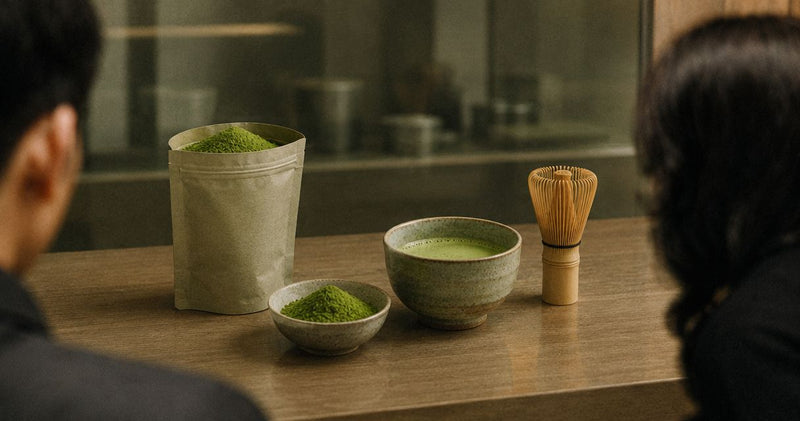
A W-shaped motion moves the whisk through the liquid. A bowl with room across its base makes that movement easier than a narrow drinking mug. The Whisk is a bamboo chasen with 120 prongs; the Bowl is a chawan designed to allow that movement.
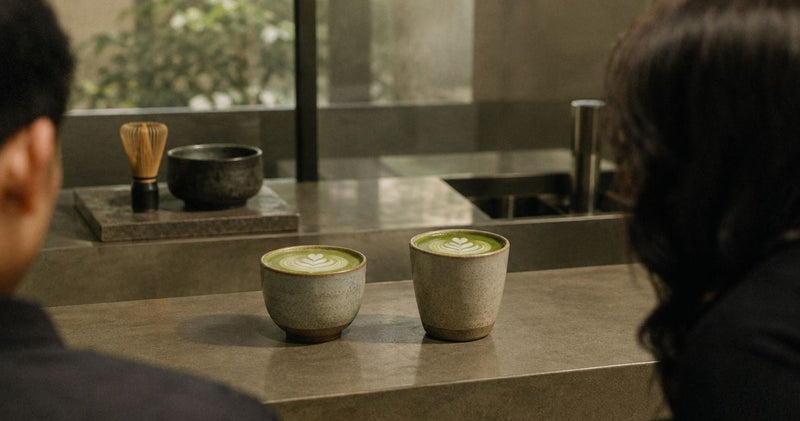
For a latte, prepare the matcha with water before adding milk. This separates dispersion from the finished drink's texture. An espresso steam wand changes the milk; it does not replace the task of dispersing dry matcha.
- Wet all the sifted powder.
- Whisk across the bowl with a light hand.
- Avoid grinding the whisk against the surface.
- Add milk after mixing the tea.
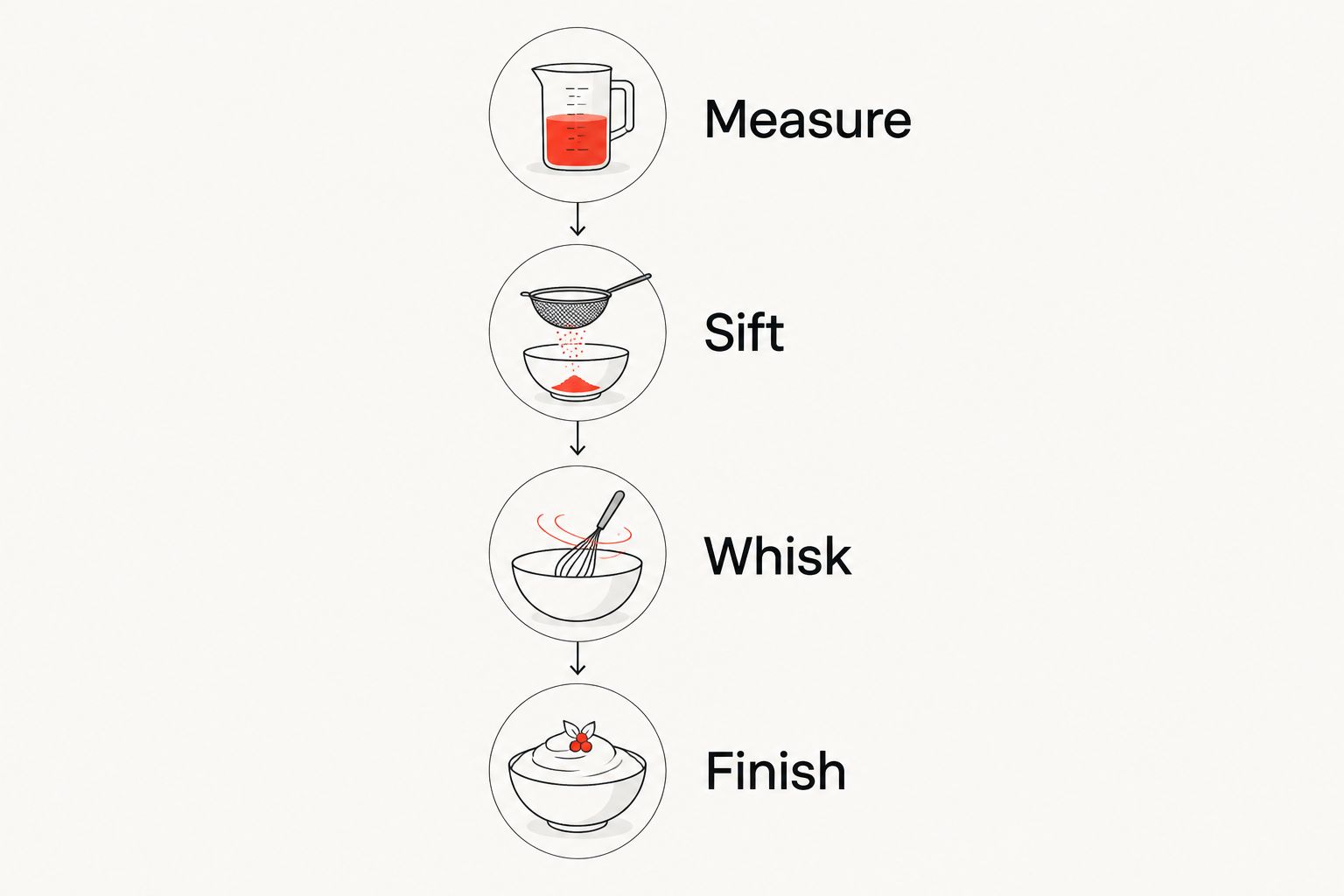
The preparation sequence stays short: measure, sift, whisk, then finish. Keep that order fixed while learning the drink.
6. Adjust one variable at a time
Use a notebook or a note on the phone. Record the powder dose, water quantity, water temperature and milk choice. A small record makes the next cup an adjustment rather than another guess.
If the drink tastes too concentrated, change the dilution while keeping the powder dose fixed. If milk obscures the tea, compare a smaller milk addition before changing the matcha. If clumps remain, inspect the sifting and mixing before increasing the dose.
For a 2026 tasting record, keep colour observations under similar lighting. A photograph taken beside a window and one taken under warm kitchen lights are not a controlled comparison.
- Record the preparation quantities.
- Change only one variable per comparison.
- Taste plain matcha before evaluating milk.
- Compare colour under similar light.
7. Clean and dry before putting tools away
Rinse the whisk after use and let it dry in an open, ventilated position. Do not return a damp whisk to enclosed storage. Check the bowl and sieve for residue rather than leaving it to dry in place.
Keep cleaning separate from powder handling. A freshly rinsed Spoon is not ready to enter stored matcha until it is completely dry. The same rule applies to any container cleaned before refilling.
Choose the storage position for convenience as well as dryness. If tools are difficult to put away, the routine becomes cluttered. A clear place for each object makes the next preparation easier without adding more equipment.
- Rinse the whisk after preparation.
- Let bamboo dry before enclosing it.
- Remove residue from the bowl and sieve.
- Dry measuring tools completely.
- Keep the powder container away from washing splashes.
Choose the starting point that matches your counter
Uchi suits home baristas who want first-harvest matcha with a permanent stainless steel storage vessel. The useful distinction between the options is what is already in the kitchen, not how many objects fit in a photograph.
For a 2026 first purchase, inventory the bowl, whisk, measuring tool and sieve before choosing. Home addresses matcha and storage. Complete also supplies the preparation tools.
| Option | Suits | Limitation |
|---|---|---|
| Existing tools | Trying the method | Bowl and sieve suitability varies |
| Home | Existing tool owners | No preparation tools included |
| Home + Whisk | Those needing a chasen | No Bowl, Spoon or Sieve |
| Complete | Those needing all listed tools | More objects to store |
| Pod | Existing Base owners | Not the initial storage purchase |
Home contains Base and Pod. Home + Whisk adds Whisk. Complete contains Base, Pod, Bowl, Spoon, Sieve and Whisk. Pod is the matcha for the next refill, rather than a substitute for choosing the initial storage arrangement.
The permanent Base and recyclable aluminium Pod have distinct material roles. The foam insert remains an unresolved packaging material. Recyclable aluminium does not make every part of the packaging recyclable.
Common mistakes home baristas make
Putting matcha beside the espresso machine
The arrangement looks convenient but places dry powder near heat and steam. Separate storage from the wet station. Bring the measured portion to the bowl, then leave the closed container in its shaded position.
Treating whisking like espresso extraction
Matcha does not pass through a filter that removes the leaf. More agitation does not correct stale powder or an unsuitable ratio. Check storage, sifting and concentration before blaming the whisk.
Adding dry powder directly to milk
Milk makes it harder to see whether dry pockets remain. Mix sifted powder with water first, then add milk. This also gives a clearer view of the tea before the finished drink changes its colour and texture.
Buying tools without checking what is already there
A suitable bowl does not become unsuitable because it was bought for another purpose. Check its width and whisk clearance first. Choose the missing objects rather than duplicating everything by default.
Judging freshness from colour alone
Lighting changes the appearance of powder and prepared tea. Aroma, taste and storage history belong beside colour in the assessment. Keep those observations together in the 2026 preparation record rather than making a verdict from one photograph.
FAQ
What do I need to make matcha at home?
You need matcha, water, a suitable bowl, a whisk and a way to measure the powder. A fine-mesh sieve helps break up clumps, while airtight, light-proof storage protects the powder between preparations.
Can I make matcha with the equipment I already own?
Yes, an existing bowl, kitchen scale and fine-mesh sieve can handle several preparation tasks. Check that the bowl gives a bamboo whisk room to move without striking the sides.
Should I whisk matcha directly into milk?
Prepare sifted matcha with water before adding milk. This makes dry pockets easier to identify and separates mixing the tea from finishing the latte.
Why does matcha settle at the bottom of my cup?
Matcha settles because it is suspended leaf powder rather than a dissolved ingredient. Sifting and whisking help disperse it, but they do not make the leaf soluble.
What is the difference between Home and Complete?
Home contains Base and Pod. Complete contains Base, Pod, Bowl, Spoon, Sieve and Whisk, so the choice depends on which preparation tools are already at home.
How much matcha does one leveled Spoon hold?
One leveled Uchi Spoon holds 1 gram of matcha. Use the same measuring method when comparing preparations so that concentration changes are deliberate.
Where should I keep matcha in a small kitchen?
Keep matcha in a dry, airtight, light-proof container away from heat and steam. A shaded position away from the kettle and espresso machine separates storage from wet preparation.
One last thing
A dense layer of foam is not a freshness test. It shows something about preparation, not the full history of the leaf.
For the next cup, leave the recipe unchanged and inspect the storage position instead. A closed container away from the kettle is a quieter intervention than another accessory. It addresses what happens during all the hours between drinks.