For one serving, choose a matcha bowl with room for the whisk to move below the rim; for two servings, choose a larger working bowl or prepare each serving separately. This 2026 matcha bowl size guide ranks those choices by usable space, not brimful capacity alone.
- Choose matcha bowl size by whisking space, wall height and the amount prepared together.
- The Uchi Bowl has a wide base for Whisk movement and high walls to contain splashes.
- For two servings, compare a shared preparation bowl with making each serving separately.
- A tall drinking vessel does not necessarily give a bamboo whisk enough room to move.
Why working space matters
Air and light affect stored matcha. Keep the powder protected between preparations, then bring only the measured portion to the bowl. A larger bowl is preparation space, not a place to leave unused powder.
Once water is added, shape becomes the practical question. A bowl can hold the liquid yet leave little room for the whisk. Its stated capacity describes what fits inside, not how freely it can be used.
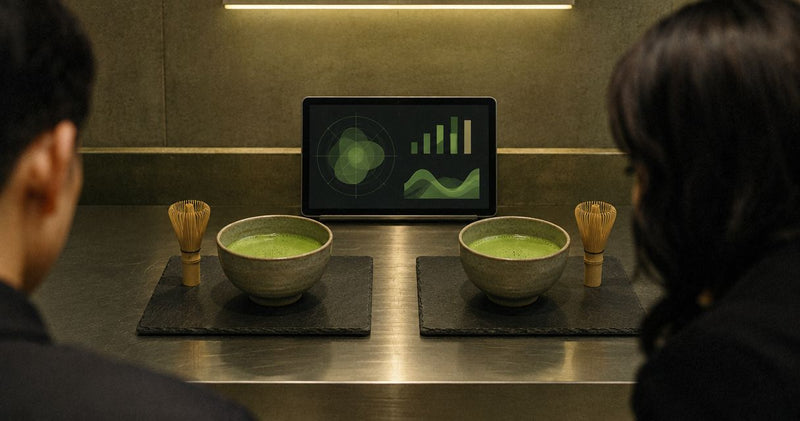
The Bowl has a wide base for the Whisk to move in a full W motion, with high walls to keep matcha inside during whisking. The Uchi Bowl is for home matcha drinkers who want a wide working base and walls that contain the movement.
What makes a suitable matcha bowl size
Use these criteria for a 2026 purchase. Read capacity alongside shape rather than treating a larger number as a recommendation.
- Working width: The whisk needs lateral space where its prongs meet the liquid. A broad opening alone does not establish that.
- Clearance above the liquid: Leave space between the prepared matcha and the rim. Filling to the top removes that margin.
- Wall shape: Look at the inside profile. Walls that narrow around the whisk restrict its path.
- Preparation volume: Size the bowl for what is whisked together, not automatically for the finished drink.
- Serving method: Drinking directly and dividing matcha between cups place different demands on the bowl.
- Handling: Consider lifting, holding and pouring the bowl when it contains liquid, not only how it looks empty.
Capacity remains useful. It simply answers one part of the question. Check whether a listing describes brimful capacity or a recommended working amount before comparing it with another bowl.
Matcha bowl sizes at a glance
The ranking follows common home routines: one serving, two servings prepared together, then a compact bowl for deliberately small preparations. These are functional categories rather than fixed millilitre bands.
| Bowl choice | Suited to | Main trade-off |
|---|---|---|
| Roomy single-serving bowl | One serving at a time | Needs storage space |
| Larger shared-preparation bowl | Two servings whisked together | Requires dividing the drink |
| Compact preparation bowl | Small preparations with a compatible whisk | Less movement clearance |
A separate bowl for each person remains an alternative to buying a larger shared bowl. It keeps the preparation familiar, but repeats the measuring and whisking.
1. Roomy single-serving bowl: for daily preparation
A roomy single-serving bowl holds the intended preparation with space left for movement. It need not be filled anywhere near the rim. Its purpose is to make one serving comfortable to whisk and straightforward to handle.
This is the default choice for a home routine centred on one drink. It also works for two people when each serving is prepared separately.
Suitable for: One person making matcha regularly, or two people who prefer separate preparations.
Roomy single-serving bowl advantages
- Leaves working space around the whisk rather than using all available volume.
- Supports a repeatable routine with the same bowl and measured preparation.
- Allows direct drinking when the bowl's shape is comfortable to hold.
Roomy single-serving bowl limitations
- Takes up more cupboard space than a compact vessel.
- Does not automatically accommodate two servings prepared together.
- Still needs checking for internal width; a large capacity can come from depth.
The Uchi Bowl belongs in this comparison through its stated construction: a wide base and high walls. Evaluate those features against the amount normally prepared, rather than assigning the Bowl a serving count from appearance.
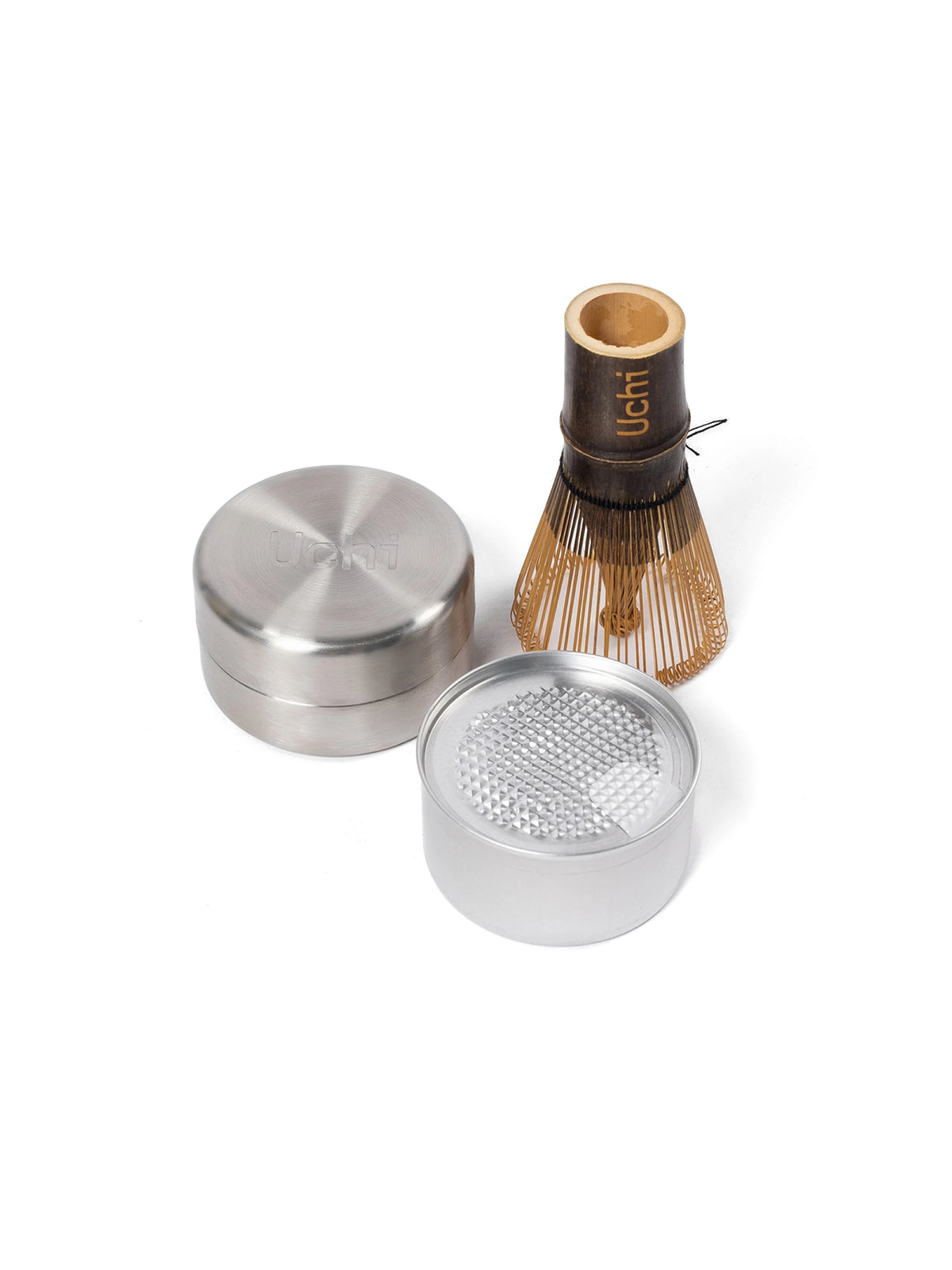
For a first purchase, Complete contains Base, Pod, Bowl, Spoon, Sieve and Whisk. Home contains Base and Pod. The distinction matters when a bowl and preparation tools are part of the decision.
Verdict: Choose a roomy single-serving bowl as the default for one drink at a time.
3. Compact preparation bowl: for deliberately small amounts
A compact bowl makes sense when the preparation is small and the whisk fits its interior. Compactness is not a fault. A mismatch between bowl, whisk and liquid level is.
The decision becomes less forgiving as working space shrinks. Check the whisk's movement at the base, rather than assuming it fits because it passes through the opening.
Suitable for: Small preparations with a whisk that has enough room to move.
Compact preparation bowl advantages
- Occupies less storage space than a larger bowl of comparable shape.
- Keeps a deliberately small preparation in a smaller vessel.
- Can suit direct drinking when its shape is comfortable to hold.
Compact preparation bowl limitations
- Leaves less clearance for broad whisk movement.
- Offers less margin above the liquid as the preparation increases.
- Is not the default choice for two servings together.
Avoid choosing a compact bowl solely because the finished drink is small. Preparation needs movement. A vessel that contains the drink can still be awkward for making it.
A compact bowl also deserves a practical handling check. Confirm that it rests steadily and that the rim is comfortable before treating small size as an advantage.
Verdict: Choose a compact bowl only when the intended preparation and whisk fit comfortably together.
Capacity, diameter and depth measure different things
Capacity describes volume. Diameter describes width at a stated point. Depth describes vertical space. None substitutes for the others.
Two bowls with similar capacity can feel different in use. One can be broad and shallow; another narrow and deep. For whisking, the internal profile explains what the capacity figure cannot.
Read dimensions carefully during a 2026 comparison. An external measurement includes the walls. A rim measurement does not establish the width lower down, where the whisk actually works.
Use three separate checks:
- Working width: Is there room for lateral movement at the base?
- Liquid clearance: Is there space above the intended preparation?
- Serving method: Will the drink stay in the bowl or be poured out?
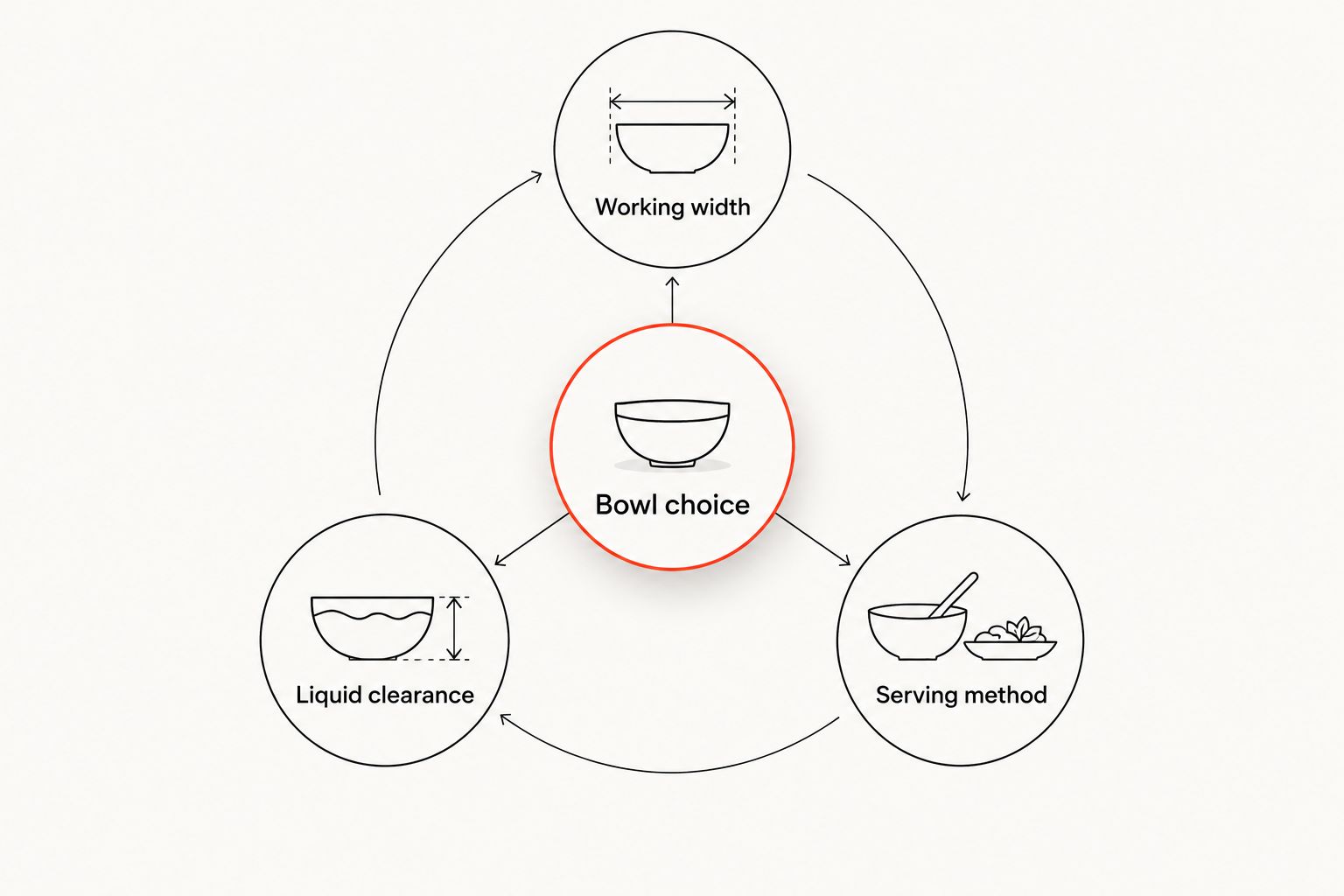
A taller wall can provide clearance without increasing the whisking area. A wider base can provide movement without making the bowl suitable for every serving volume. Look for both features in relation to the routine.
One serving and two servings need separate decisions
Begin with the amount normally prepared. Keep the recipe fixed while comparing bowls; otherwise the vessel and the drink change at the same time.
One leveled Uchi Spoon holds 1 gram. That is a measuring reference, not a rule that every serving must contain that amount. Measure the intended portion consistently, then assess the bowl around it.
For two people, decide whether preparation is shared or separate. A shared preparation needs room for the combined amount. Separate preparations need only the working space required for each serving.
The Pod contains 40g of matcha, about twenty cups. That portion guidance does not establish bowl capacity. Powder quantity, preparation water and finished drink volume are different measurements.
For a latte, distinguish the matcha preparation from the finished drink. If milk is added in another vessel, the bowl needs room for the matcha being whisked, not the entire latte. If everything is combined in the bowl, assess that larger amount separately.
Match the bowl to the whisk already in use
Prong count does not tell you the diameter of a whisk. Nor does a bowl's capacity establish whether that whisk can move freely inside it.
The Whisk has 120 prongs. The Uchi Bowl's wide base is designed to allow its W motion. Those are separate facts: one describes the tool, the other its working space.
During a 2026 purchase, compare the actual shapes rather than treating either number as a compatibility standard. Check room at the base, clearance near the walls and the intended liquid level.
A larger bowl does not require filling higher. Keep the preparation measured and use the remaining space for movement.
How the choices are ranked
This 2026 ranking prioritises working width, liquid clearance, preparation volume, serving method and handling. It is a fit guide, not a laboratory capacity test or a ranking of ceramic quality.
The roomy single-serving bowl comes first because it matches a one-drink routine without requiring shared preparation. The larger bowl follows for two servings together. The compact bowl serves a narrower use case where the preparation and whisk already fit.
The default choice for home
Choose a roomy single-serving bowl unless preparing two servings together is a regular part of the routine. For two people, separate preparations remain a clear alternative to a larger vessel.
Check the working interior before the stated capacity. Then check the rim, handling and cupboard space. A bowl should suit making the drink as well as holding it.
FAQ
What matcha bowl size should I choose for one serving?
Choose a bowl that holds the intended preparation with room for lateral whisk movement and clearance below the rim. Capacity alone does not establish that fit; internal width and wall shape matter too.
What matcha bowl size works for two servings?
Two servings prepared together need a bowl with working space for the combined amount. Alternatively, prepare each serving separately in a single-serving bowl.
Can I use a large matcha bowl for one serving?
Yes, provided the whisk can work comfortably in the measured preparation. The bowl does not need to be filled to make use of its wider working space.
Does a matcha bowl need to hold the whole latte?
No, not when the matcha is whisked separately and transferred to another vessel before milk is added. Size the preparation bowl for what is actually whisked inside it.
Is a deep bowl better than a wide bowl for matcha?
Depth and width serve different purposes. Depth provides vertical clearance, while internal width gives the whisk room to move; assess both against the intended preparation.
How do I compare matcha bowl capacity in 2026?
Compare the stated capacity alongside internal dimensions, wall shape and serving method. Check whether the capacity describes a brimful measurement or a recommended working amount.
Can I whisk matcha in a mug instead of a bowl?
A mug is suitable only if its interior gives the whisk enough room to move. A tall, narrow mug can hold the liquid while restricting the whisking path.
One last thing
The useful space in a matcha bowl includes the space left empty. That margin lets the whisk move without bringing the liquid to the rim.
Before replacing a bowl that feels small, check the preparation amount and the whisk's path. Before buying a larger one, decide whether the extra capacity will actually be used.