Experienced drinkers’ matcha gifting is choosing tea or storage that fits an established routine, with the aim of preserving flavour without duplicating tools. A thoughtful matcha gift starts with what happens after opening: protection from air and light, not another whisk. For someone who already owns Uchi’s storage, the Pod adds matcha rather than equipment.
- Uchi matcha suits home drinkers who want first-harvest tea and airtight storage without replacing familiar tools.
- Choose a matcha gift around freshness, existing storage and the recipient’s preparation habits.
- Home contains Base and Pod; Complete adds tools an experienced drinker might already own.
- Check producer and harvest information rather than choosing by ceremonial-grade wording alone.
Why freshness matters for experienced matcha drinkers
Someone who already makes matcha has preferences. Their bowl has a familiar shape. Their whisk has a place to dry. Another accessory needs a reason to join that routine.
Tea is different. It is used, opened and stored. Exposure to air, light, heat and moisture affects how matcha keeps, so the container matters alongside the powder. A gift should account for both.
Give what their routine lacks, not what it already contains. For a 2026 gift, that might mean matcha from a named producer, airtight storage, or the replacement of a worn tool. It does not automatically mean a larger collection of objects.
The useful distinction is between owning the tools and having suitable storage. A person can prepare matcha confidently while keeping the powder beside a warm hob or in a container that admits light. Solve the actual gap.
Choose a matcha gift around their existing routine
1. Identify what they already use
Start with a quiet inventory. Find out whether the recipient has a whisk, a bowl with room to whisk, a scoop and a fine-mesh sifter. Then ask how they store the powder between servings.
The questions need not turn the gift into a consultation. A conversation about their morning preparation often reveals more than a photograph of their kitchen. Someone who owns several bowls might still need a reliable storage container.
Separate preference from absence. A favourite bowl does not need replacing because it differs from yours. A missing sifter is a different matter, particularly if the recipient already mentions troublesome clumps.
- Note the tools they actually use, not merely own.
- Check whether their current whisk needs replacement.
- Ask how they close and store opened matcha.
- Establish whether they drink it with water or milk.
- Find out whether they already have unopened tea waiting.
2. Read the tea’s identity before its grade
Choose matcha with a clear producer and harvest description. Ceremonial-grade wording alone does not tell the recipient who made the tea, which leaves went into it, or how the producer composed its flavour.
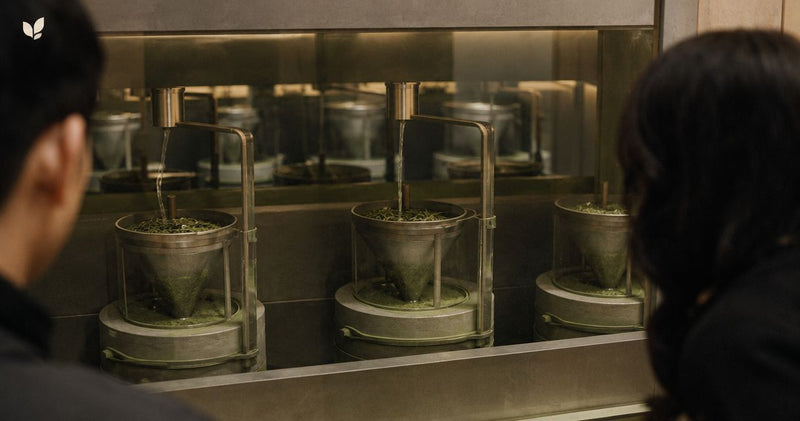
Uchi matcha is Kaze no Shiro, a first-flush blend composed by the house tea master at Horii Shichimeien. It draws first-harvest tencha from Kyoto, Nara and Shiga, weaving three cultivars: Okumidori, Yabukita and Sayamakaori.
The tea is shaded for 25 days before harvest and stone-milled at 40 grams an hour. Those details describe its production. They are not a promise that every recipient will prefer its taste.
For a 2026 matcha gift, accurate information gives an experienced drinker something useful to explore. Do not turn a blend into a single-origin claim to make the gift sound more distinctive.
- Look for a named producer.
- Read the harvest information provided.
- Distinguish a blend from a single cultivar.
- Keep the producer’s sourcing description intact.
- Avoid choosing solely by grade or colour.
3. Check whether storage is the missing piece
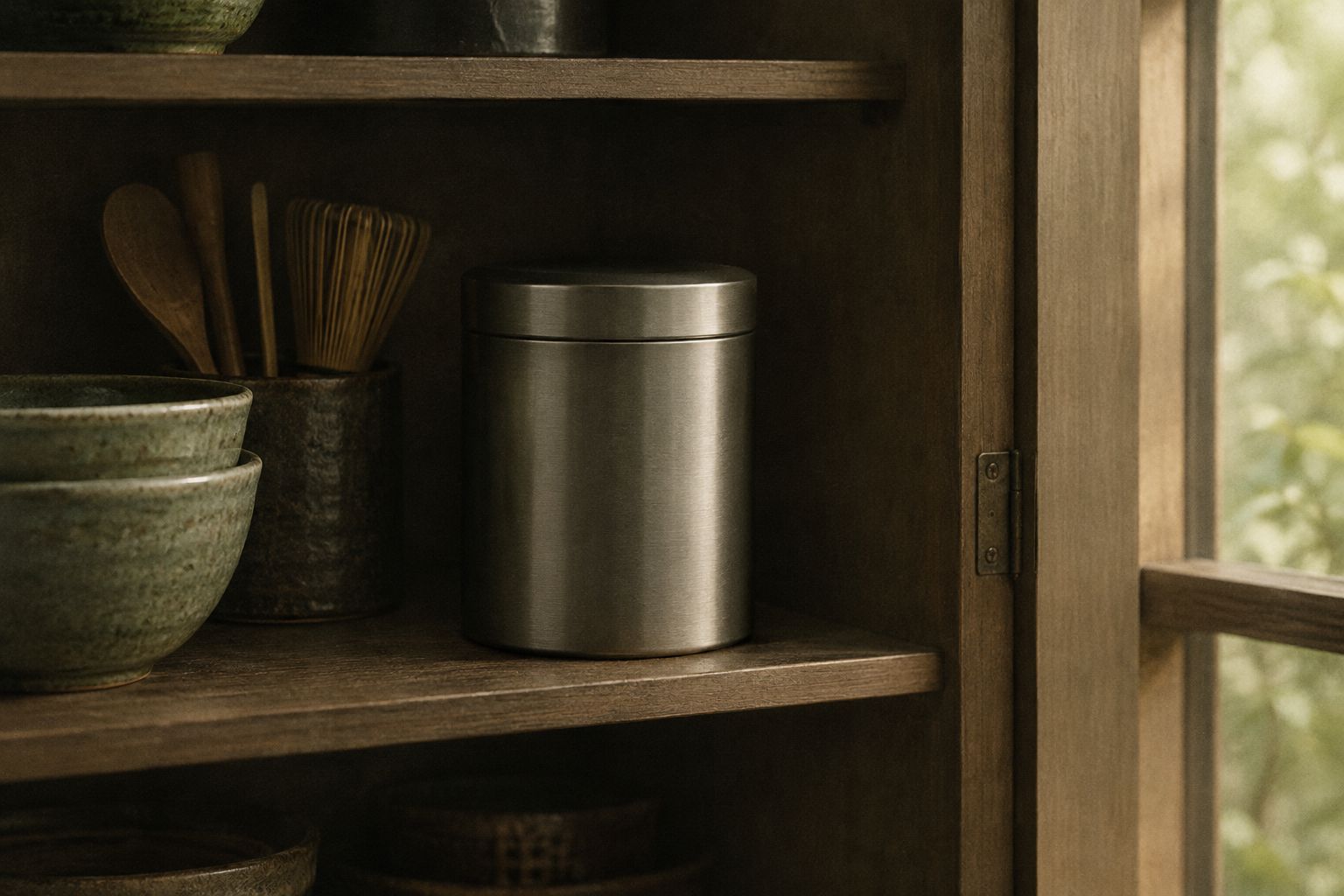
The manual starting point is straightforward: inspect the current container. It should close securely, keep out light and stay dry inside. Place it away from heat and strong kitchen odours.
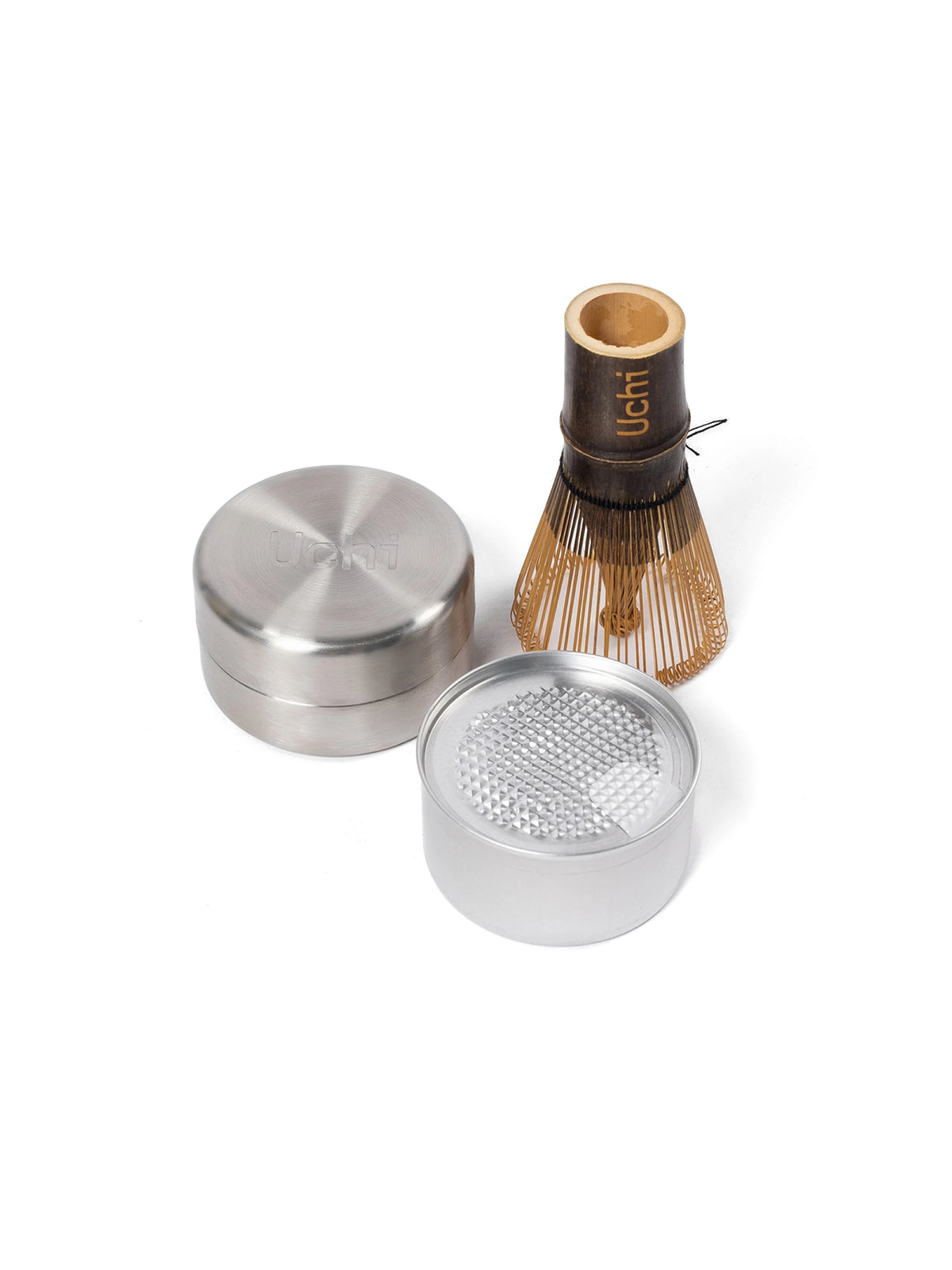
If those conditions are already met, another container adds little to the routine. Tea alone is the more focused gift. If storage is the gap, Uchi’s Base is an airtight stainless steel canister, kept for life. Home pairs Base with Pod without adding preparation tools.
The distinction is practical. Base addresses storage; it does not correct an unsuitable preparation method or restore tea that has already deteriorated. Airtight storage also depends on closing the container after use.
- Check that the lid closes securely.
- Keep the container out of direct light.
- Move it away from the hob and other heat sources.
- Use only dry utensils around the powder.
- Choose Home when storage, rather than tools, is missing.
4. Match the quantity to their use
A larger amount is not automatically a more considered gift. Think about how the recipient uses matcha and what is already waiting to be opened. Avoid creating a queue of opened containers.
Pod contains 40g of matcha, about twenty cups, in recyclable aluminium. The cup estimate is approximate. Someone who uses a different amount per drink will finish it at a different pace.
One leveled Spoon holds 1 gram. That is a measuring reference, not an instruction to change the recipient’s established recipe. A gift can respect the way someone already prepares their tea.
For gifting in 2026, choose the amount around use rather than the visual impression of abundance. Leave the tea unopened so the recipient decides when to begin it.
- Check whether another matcha is already open.
- Consider their usual serving amount.
- Treat cup counts as estimates.
- Leave the gift’s tea packaging unopened.
- Avoid adding several teas without knowing their preferences.
5. Add a tool only for a specific reason
A tool earns its place when it answers a known need. A worn whisk is a reason. A bowl that leaves too little room for whisking is another. Owning matcha does not establish either problem.
Whisk is a bamboo chasen with 120 prongs. Bowl is a chawan. Sieve is a fine-mesh sifter, and Spoon is a matcha scoop. Each has a distinct role; none needs to be included simply to make a gift look complete.
Home + Whisk contains Base, Pod and Whisk. Complete contains Base, Pod, Bowl, Spoon, Sieve and Whisk. For an experienced drinker, these additions deserve a check against the existing collection.
Keep familiar tools unless there is a clear reason to replace them. A gift should join a routine, not quietly prescribe a new one.
- Replace a whisk only when its condition calls for it.
- Check bowl shape and whisking room before choosing another.
- Add Sieve when a fine-mesh sifter is genuinely missing.
- Add Spoon when a dedicated scoop is wanted.
- Choose Complete when the full group of tools is needed.
6. Give the tea with a short storage note
Presentation should not require opening the tea. Keep the original information with it, so the recipient can read the producer and harvest details directly rather than relying on a rewritten description.
A short note can explain why you chose the gift. Mention a genuine detail: the blend, the storage container, or the absence of duplicate tools. Leave preparation instructions brief unless the recipient has asked for them.
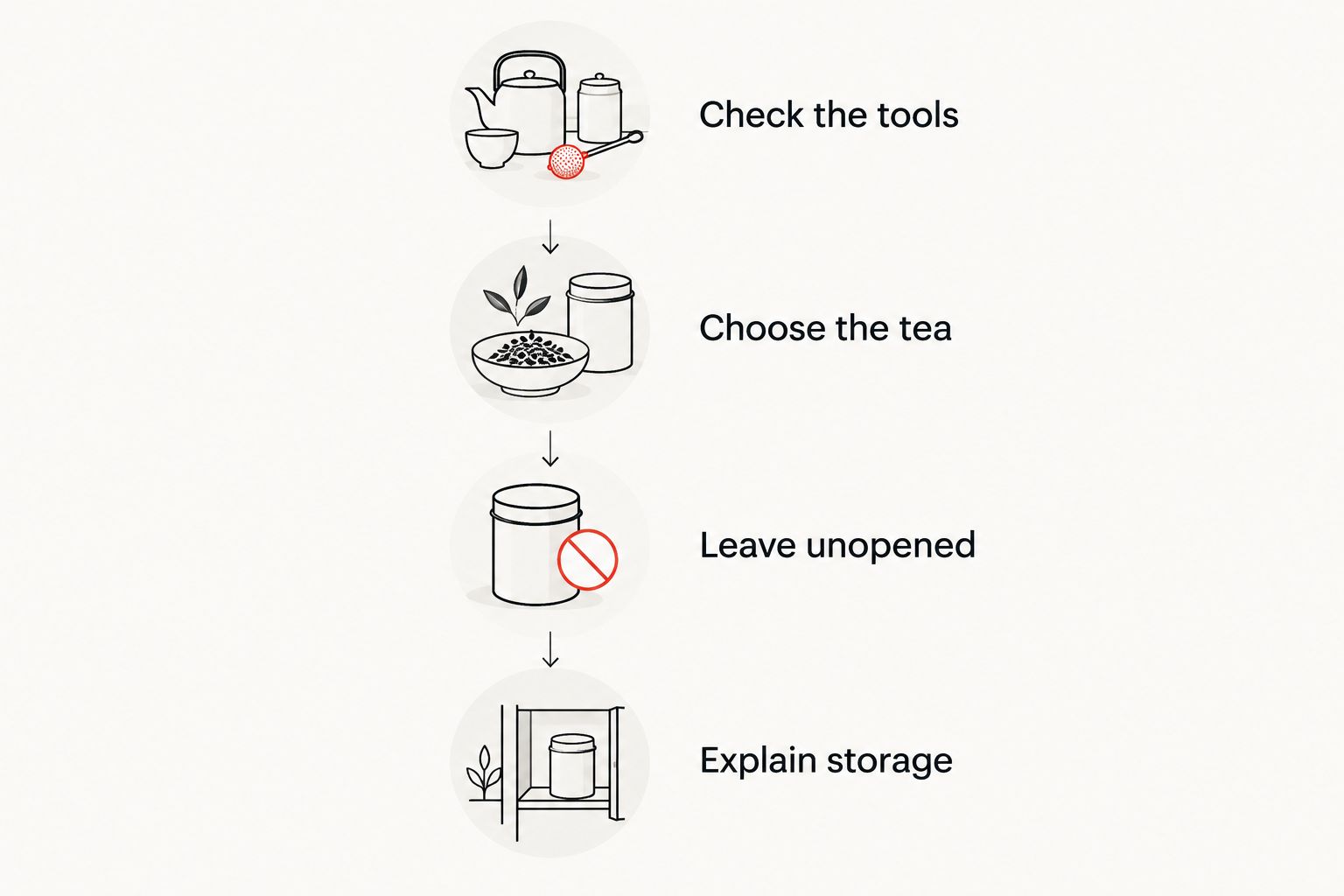
The useful handover sequence is simple: check the existing routine, choose the missing element, leave the tea sealed and explain storage. It preserves the recipient’s freedom to open the gift when their current matcha is finished.
- Keep the tea unopened.
- Retain the producer’s information.
- Mention the specific reason for your choice.
- Remind the recipient to close the container after use.
- Avoid promising a flavour preference on their behalf.
Gift options for an established matcha routine
Choose by what the recipient lacks. The following options serve different situations; none needs to replace a collection that already works.
| Option | Suited to | Main limitation |
|---|---|---|
| Pod | Someone who already owns Base | Check their existing storage before choosing it alone. |
| Home | Someone with tools but no suitable storage | Adds a container they might already have. |
| Home + Whisk | Someone who also needs a whisk | Duplicates a serviceable whisk. |
| Complete | Someone who needs storage and all listed tools | Adds several objects an experienced drinker might not need. |
Pod is the focused choice for an existing Base owner. Its limitation is the need to understand the recipient’s storage arrangement. Do not assume that every matcha drinker already owns Base.
Home suits someone whose preparation tools are settled but whose storage is not. Home + Whisk makes sense when the whisk also needs attention. Complete belongs with a genuine need for Bowl, Spoon, Sieve and Whisk, not simply with an interest in matcha.
For your 2026 shortlist, write down the missing item beside each option. If there is no missing item, tea for an existing storage arrangement is enough.
Common mistakes when gifting experienced drinkers
Duplicating a favourite object
A familiar bowl or whisk can be part of the pleasure of preparation. Replacing it without a reason creates an extra decision rather than removing one. Choose an accessory only when its purpose is clear.
Treating ceremonial grade as a full description
A grade label does not replace producer and harvest information. Look for details the recipient can read and understand. A named blend offers a more specific starting point than an adjective alone.
Calling a blend single origin
Kaze no Shiro draws first-harvest tencha from Kyoto, Nara and Shiga. It is not single origin, single estate or single cultivar. Describe the blend accurately; its composition is part of its identity.
Opening the tea for presentation
Decanting powder into decorative packaging introduces an unnecessary handling step. It also separates the tea from its original information. Keep it unopened and let the recipient choose when to begin.
Confusing refillable with material-free
Base is kept for life, and Pod uses recyclable aluminium. That does not mean every material has been resolved. The foam insert remains a material to acknowledge; avoid describing the gift as waste-free.
FAQ
What matcha gift suits someone who already owns the tools?
Matcha or suitable storage suits someone who already owns the preparation tools. Check their current container and unopened tea before adding another bowl, whisk or scoop.
Should I choose Pod or Home as a gift?
Choose Pod for someone who already owns Base; choose Home when they need Base as well as matcha. Home contains Base and Pod, without additional preparation tools.
Is Complete suitable for an experienced matcha drinker?
Complete is suitable when the recipient needs storage and the listed preparation tools. It contains Base, Pod, Bowl, Spoon, Sieve and Whisk, so check for duplication first.
How much matcha is in Pod?
Pod contains 40g of matcha, about twenty cups, in recyclable aluminium. The number of cups varies with the amount used per drink.
Is Uchi matcha single origin?
Uchi matcha is not single origin. Kaze no Shiro is a first-flush blend composed by the house tea master at Horii Shichimeien, drawing first-harvest tencha from Kyoto, Nara and Shiga and weaving Okumidori, Yabukita and Sayamakaori.
Should I open matcha before giving it?
Leave matcha unopened before giving it. Keep the original producer information with the gift and let the recipient decide when to open it.
What should I check when choosing a matcha gift in 2026?
Check the recipient’s existing tools, storage and unopened tea when choosing a matcha gift in 2026. Then choose a named tea or a specific missing item rather than a larger collection by default.
One last thing
The most useful gift note might be a storage instruction rather than a tasting description. Taste belongs to the recipient. Keeping the container closed, dry and away from light gives them a sound starting point.
Before choosing, look beyond the tools on display. The missing object might be the one kept inside the cupboard.