Keep matcha powder in a clean, dry, airtight container, away from cooking fumes, spices and scented cleaning products. Open it only to measure a portion, then close it before preparing the drink. This 2026 guide covers cupboard placement, container care and the extra precautions needed when storing matcha in the fridge.
- Keep matcha powder sealed and separate from strong kitchen odours; an open container leaves the powder exposed.
- Uchi Base suits home matcha drinkers who want an airtight stainless steel canister kept for life.
- Choose a dry cupboard away from heat and light; keep the scoop clean and dry.
- If refrigerating matcha, let the closed container reach room temperature before opening it.
Why this matters
Tea can absorb surrounding odours. With matcha, the powder becomes part of the drink rather than being removed after steeping. An unwanted smell in the powder therefore deserves attention before preparation, not after whisking.
A lid helps only while it is closed. Leaving the container open beside frying food, a spice drawer or a fragranced cleaner defeats the purpose of sealed storage. Separate storage from preparation: measure, close, then make the drink.
For choosing the container itself, start with keeping out air and light. Odour protection belongs alongside those concerns, not instead of them.
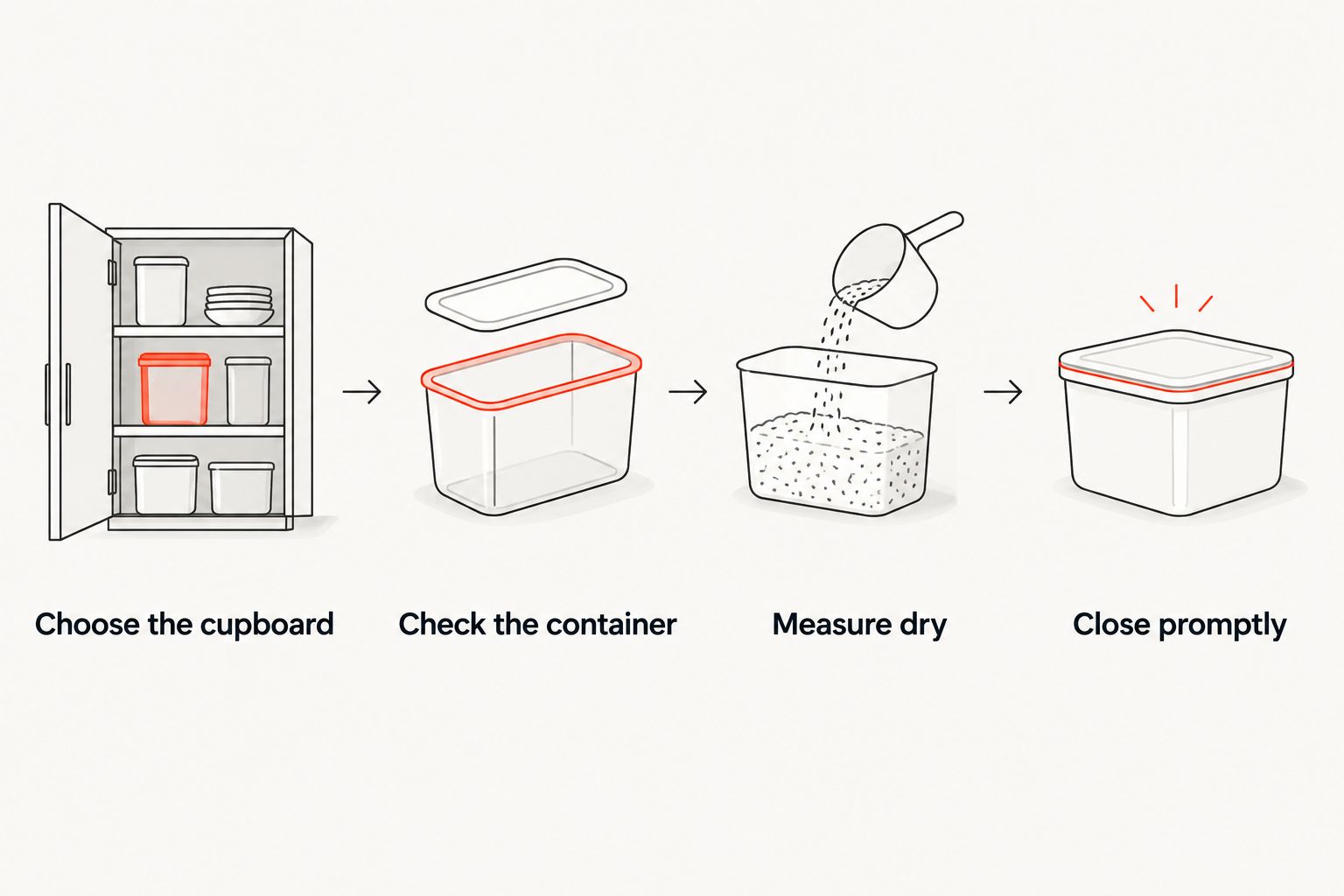
The practical sequence is simple. Choose a suitable place, check the container, measure with a dry utensil and close the lid promptly. The same sequence applies whether matcha is prepared every morning or less often.
Choose the cupboard
Choose a dry cupboard away from the hob, oven and dishwasher steam. Keep matcha apart from strongly scented foods and household products. A tea cupboard is useful only if its contents and surfaces are themselves free of strong smells.
An opaque container blocks light, but it does not make a warm shelf suitable. Likewise, a cool cupboard does not compensate for a loose lid. Treat location and closure as separate checks.
Check the container
Before adding matcha powder, check that the inside is clean, completely dry and free of residual smells. Inspect the lid and its closing surfaces. Powder caught around the rim needs removing before the container is closed.
A container that previously held coffee, spices or strongly flavoured food needs particular attention. Do not assume that washing has removed every smell. Check it again once it is fully dry.
Measure dry
Use a clean, dry scoop. Measure the portion into a separate preparation vessel rather than holding the open storage container above hot water. Keep wet utensils away from the remaining powder.
Prepare the workspace before opening the lid. Having the scoop and vessel ready reduces unnecessary handling and prevents the container from sitting open while other tasks are completed.
Close promptly
Close the container as soon as the portion has been measured. Check that the lid is seated correctly, then return it to its storage place. Whisking, adding water and cleaning the preparation tools come afterwards.
Do not leave the lid resting loosely on top. A container designed to close tightly still requires the closure to be engaged. The useful habit is a complete closure, not simply covering the opening.
Storage locations and their trade-offs
For a home kitchen in 2026, start with the conditions around the container rather than the appearance of the shelf. A convenient position is useful only if it also keeps the powder away from heat, moisture and surrounding smells.
The table compares locations, not guaranteed storage outcomes. In every location, the container must be clean, dry and properly closed.
| Location | Suited to | Limitation |
|---|---|---|
| Dry cupboard | Regular home preparation | Check neighbouring foods and cleaners. |
| Worktop | Preparation only | Exposes the container to light and cooking activity. |
| Refrigerator | Storage with careful handling | Adds food odours and condensation concerns. |
Dry cupboard
A dry cupboard is the straightforward starting point for regular use. It keeps the container out of direct light and away from the active preparation area. Choose a shelf that does not share space with strongly scented products.
Its limitation is the cupboard itself. A cupboard beside a heat source, containing damp items or smelling of cleaning products is not suitable merely because it has a door. Check the actual conditions inside.
Worktop
Use the worktop for measuring and preparation, not as the default storage place. It provides space to work and makes it easier to keep utensils organised. Return the closed container to its cupboard afterwards.
The limitation is exposure. A worktop near the hob receives cooking fumes; one near the sink receives splashes and steam. An opaque container addresses light through its walls, but not every condition around it.
Refrigerator
Refrigeration requires a sealed container and a deliberate opening routine. Cold storage does not remove the need to separate matcha from strong-smelling foods. A loosely covered container remains unsuitable inside a fridge.
The additional concern is condensation. When a cold container is opened in warmer air, moisture can condense on cold surfaces. Let the closed container reach room temperature before opening it, and follow any storage instructions supplied with the matcha.
Why odour exposure varies
Odour exposure depends on the storage environment and daily handling. For a 2026 kitchen storage check, these are the conditions to review:
- Nearby smells. Cooking fumes, spices, coffee and fragranced cleaners introduce different sources of odour. Separate matcha from them rather than relying on distance within an open shelf.
- Closure. A properly seated lid limits exposure while the container is closed. A loose lid or powder around the closing surfaces compromises that routine.
- Open handling. Measuring beside active cooking exposes the powder directly. Set up elsewhere and close the container before starting preparation.
- Residual smells. A previously used container or utensil can carry an unwanted scent into otherwise suitable storage. Check both before use.
- Moisture. Wet utensils, steam and condensation introduce a separate storage problem. Odour control does not replace keeping the powder dry.
- Heat and light. These affect storage suitability independently of smell. A scent-free location still needs protection from direct light and nearby heat sources.
No single check replaces the others. An airtight container stored badly and a suitable cupboard holding an open container are different versions of the same problem: the powder remains exposed to conditions that can change the cup.
Container care without lingering fragrance
Cleaning should leave a container ready for food storage, not smelling of the cleaning product. Follow the container manufacturer's care instructions. Where washing is permitted, remove cleaning residue and allow every part to dry fully before adding powder.
Check the lid as carefully as the body. Moisture or residue around a closing surface is easy to miss. Do not refill a container while those areas are still damp.
Keep the storage scoop separate from wet preparation tools. A utensil used to stir a drink should not return to the remaining powder. If a scoop needs washing, dry it completely before its next use.
Avoid masking an unwanted smell with another scent. A fragranced cupboard liner or scented cleaning spray near the storage area adds an odour source rather than removing one. Clean the area and let it dry before returning the closed container.
Uchi: storage before preparation
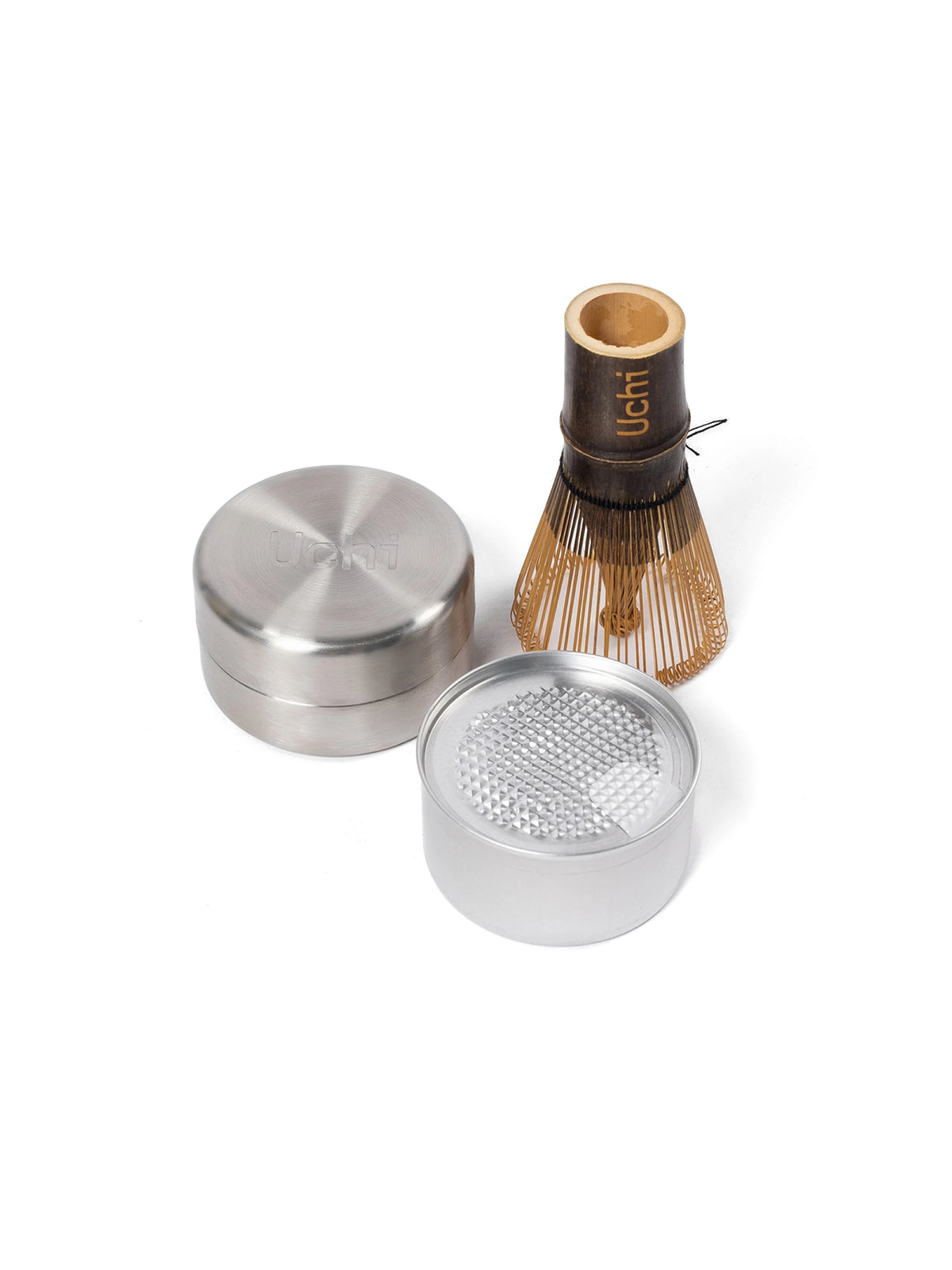
Uchi's Base is an airtight stainless steel canister, kept for life. Its closed walls keep light away from the contents; its closure addresses exposure to surrounding air during storage. The daily habit remains essential: close it after measuring.
Uchi suits home matcha drinkers who want a refillable storage object and a separate preparation routine. The limitation is practical rather than decorative. No storage container protects exposed powder while its lid is open, or removes a smell already introduced through a utensil.
The Pod contains 40g of matcha, about twenty cups, in recyclable aluminium. That cup count is approximate; the amount used in each drink determines how quickly the powder is consumed. Plan storage around actual use rather than treating the stated count as a freshness deadline.
One leveled Uchi Spoon holds 1 gram. A dry measured portion can go straight into the preparation vessel while the remaining powder stays closed. Keeping those two stages separate is more useful than leaving the container beside the bowl throughout preparation.
Distinguishing odour from other changes
An unfamiliar smell is not the same finding as a change in colour, clumping or bitterness. These observations deserve separate checks. Calling every change an odour problem can lead to adjusting the wrong part of the routine.
Start with the dry container, away from active cooking. Check whether the container itself smells when empty. Then inspect the utensils and storage area. This separates possible sources without repeatedly opening the powder beside them.
For a 2026 storage review, colour alone is not a diagnosis. It does not identify which surrounding smell reached the powder, and it does not establish food safety. Likewise, clumping alone does not prove odour transfer.
Do not attempt to remove an unwanted smell by leaving matcha open to air. That creates further exposure rather than restoring the original powder. Do not mix questionable powder into a fresh supply.
If a chemical cleaner has contacted the powder, do not use it. If there is visible mould or suspected contamination, discard it rather than trying to correct the drink with flavourings. Storage advice is not a method for making contaminated food suitable to consume.
Refrigeration without introducing moisture
A refrigerator changes the handling requirements. Strong-smelling foods still need separation, and the matcha container still needs to close tightly. Refrigeration is not a substitute for suitable packaging.
Move the closed container out of the fridge before preparation. Let it reach room temperature while still sealed. Opening comes afterwards, not immediately after removal.
Do not apply a fixed waiting time to every container. Its size, contents and surrounding temperature affect how it warms. The relevant condition is the container reaching room temperature, not a timer borrowed from another kitchen.
For regular preparation, decide on a storage routine that can be followed consistently. Repeatedly moving an open container between cold storage and a warm kitchen defeats the precautions. Keep the powder sealed during that transition.
FAQ
Can matcha powder absorb kitchen smells?
Matcha powder can absorb surrounding odours, so keep it sealed and separate from cooking fumes, spices and scented cleaners. Open the container only to measure a portion, then close it before preparing the drink.
Where should I keep matcha powder in a kitchen?
Keep matcha powder in a clean, dry, airtight container in a cupboard away from heat, direct light and strong smells. Check the cupboard's contents and conditions rather than assuming every enclosed shelf is suitable.
Can I store matcha powder beside coffee?
Separate matcha powder from strongly scented coffee storage and preparation areas. A closed container limits exposure, but measuring matcha beside open coffee introduces avoidable contact with surrounding smells.
Should I refrigerate matcha powder to keep smells out?
Refrigeration does not keep smells out by itself; matcha still needs a properly sealed container. If refrigerating it, let the closed container reach room temperature before opening to avoid introducing condensation.
Does Uchi Base remove smells already in matcha?
Uchi Base is an airtight stainless steel canister, not a treatment for powder that has already absorbed an unwanted smell. Use it with clean, dry utensils and close it promptly after measuring.
Can I leave matcha powder open to remove an unwanted smell?
Do not leave matcha powder open to remove an unwanted smell. Airing it introduces further exposure; check the container, utensils and storage location instead, and do not use powder suspected of contamination.
One last thing
For your next storage check in 2026, inspect the scoop before replacing the container. A dry cupboard and a properly closed lid cannot undo residue introduced by a wet or strongly scented utensil.
Make closing the container the last storage action, not the last preparation action. Measure the powder, close the lid, return the container, then add water. That small separation keeps the remaining matcha away from the busiest part of the kitchen.