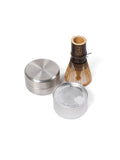
Glazed stoneware is the default matcha bowl material for daily home use; porcelain suits a lighter vessel, while heat-resistant glass suits a clear view of preparation. This 2026 guide compares five materials by surface, handling and care—not appearance alone.
- Glazed stoneware is the default matcha bowl material for daily whisking, provided its interior is smooth and food-safe.
- Porcelain suits lighter handling; heat-resistant glass makes remaining clumps easier to see.
- Stainless steel suits travel, but its exterior conducts heat readily.
- Uchi’s Bowl suits home whisking through its wide base and high walls; assess material and shape separately.
Why this matters
Air, light and moisture affect matcha before it reaches the bowl. A beautiful vessel cannot restore powder that has lost its aroma through poor storage. Keep the powder protected, then choose a bowl that makes preparation straightforward.
The material matters most where the Whisk meets the interior. Rough patches, narrow corners and a slippery grip create practical problems. Colour and finish come after those checks.
Uchi’s Bowl has a wide base for a W-shaped whisking motion and high walls to contain the matcha. Those are shape decisions. They remain relevant whichever material you choose.
What makes a useful matcha bowl material
For a bowl bought in 2026, assess these five criteria before choosing a finish:
- Smooth interior. The bamboo Whisk needs an even surface without sharp ridges or damaged glaze.
- Food-contact suitability. Choose a vessel intended for food and hot drinks, not a decorative object repurposed for tea.
- Comfortable handling. Assess weight, grip and how the exterior feels when warm.
- Clear care requirements. Follow the maker’s instructions for washing, prewarming and dishwasher use.
- Compatible shape. Leave room for the Whisk to move without repeatedly striking the walls.
Material does not settle every question. A thick porcelain bowl can weigh more than a thin stoneware bowl. A narrow glazed bowl can be less useful than a broad glass one.
Matcha bowl materials at a glance
The order below follows everyday home use first, then more specific preferences. These are material recommendations, not test results for individual products.
| Material | Suited to | Main limitation |
|---|---|---|
| Glazed stoneware | Daily home whisking | Weight and glaze vary |
| Porcelain | Lighter handling | Thin rims need care |
| Heat-resistant glass | Seeing the mixture | Thermal limits vary |
| Stainless steel | Travel and breakage concerns | Exterior conducts heat |
| Unglazed earthenware | Dedicated pottery care | Porous surface needs attention |
The labels are broad families. Ceramic bodies, wall thicknesses and surface treatments differ. Judge the actual vessel rather than assuming every example behaves alike.
1. Glazed stoneware: for daily home whisking
Glazed stoneware is the starting point for a bowl that stays on the kitchen counter. Its fired ceramic body and glazed interior provide a practical combination when the vessel is made for food use.
Choose the surface before the exterior finish. The inside should feel smooth, including the transition from the floor to the walls. A visibly textured exterior does not tell you how the whisking surface feels.
Glazed stoneware advantages:
- A smooth glaze gives the Whisk an even working surface.
- Different shapes allow a broad, stable whisking area.
- An intact glazed interior is straightforward to rinse clean.
Glazed stoneware limitations:
- Thick examples feel heavy when lifted to drink.
- Ceramic can chip or break if dropped.
- A glaze’s appearance does not establish food-contact suitability.
Suited to: a regular home routine where the bowl stays in one place.
Verdict: Buy a food-safe example with a smooth interior and room for the Whisk. Do not choose stoneware solely for a handmade appearance.
2. Porcelain: for lighter handling
Porcelain is a ceramic material, not an alternative to ceramics. Its dense fired body allows makers to produce relatively thin walls, though porcelain bowls are not uniformly thin or light.
A pale interior makes green matcha easy to see against the surface. That contrast helps with inspection, but it does not establish the quality or freshness of the powder.
Porcelain advantages:
- Thin-walled examples suit readers who dislike a heavy vessel.
- A smooth glazed interior supports straightforward whisking and cleaning.
- A pale surface provides a clear background for the tea.
Porcelain limitations:
- Thin rims are vulnerable to knocks.
- Light examples need a stable base to resist movement while whisking.
- Dishwasher and thermal-shock tolerance depend on the individual bowl.
Suited to: drinking directly from a lighter bowl at home.
Verdict: Buy porcelain when the weight and rim feel comfortable in the hand. Check the base as carefully as the lip; a delicate appearance should not come at the expense of stability.
3. Heat-resistant glass: for seeing the mixture
Heat-resistant glass lets you see the liquid through the sides as well as from above. That makes it useful when learning to spot dry powder caught near the bottom or clumps remaining after whisking.
Choose glass explicitly intended for hot drinks. Clear glass alone tells you nothing about its thermal limits, and heat resistance does not mean resistance to every sudden temperature change.
Heat-resistant glass advantages:
- Transparent walls expose parts of the mixture hidden by an opaque bowl.
- A smooth interior is easy to inspect after rinsing.
- Glass keeps the preparation visible without an interior glaze colour.
Heat-resistant glass limitations:
- Glass can break after impact.
- Permitted temperature changes depend on the product.
- Condensation or wet hands can make a smooth exterior slippery.
Suited to: learning preparation through close visual observation.
Verdict: Buy heat-resistant glass for visibility, provided the bowl also has a broad working area. Skip ordinary decorative glass with no stated hot-drink use.
4. Stainless steel: for travel and breakage concerns
Stainless steel avoids the shattering risk associated with glass and ceramic. It suits a bowl that travels, moves between kitchens or needs to tolerate accidental knocks.
A single-wall steel vessel conducts heat readily. Its exterior can become uncomfortable to hold, so do not assume that a practical travel material is also comfortable for drinking directly from the rim.
Stainless steel advantages:
- The metal body does not shatter like glass or ceramic.
- A smooth interior provides a washable working surface.
- It suits situations where protecting fragile pottery is inconvenient.
Stainless steel limitations:
- A single-wall exterior becomes warm quickly.
- Light examples need support while whisking.
- Scratched or sharply finished interiors are unsuitable for delicate bamboo tines.
Suited to: preparation away from home where breakage is a concern.
Verdict: Buy stainless steel for that practical role. For slow drinking at home, assess the warmth of the rim and exterior before making it the daily bowl.
5. Unglazed earthenware: for dedicated pottery care
Unglazed earthenware exposes the ceramic body rather than covering it with glaze. Its porosity and surface texture depend on the clay and firing, so the category requires closer attention to the maker’s intended use.
A decorative earthenware bowl is not automatically suitable for matcha. Even food-use pottery needs a whisking surface that will not catch or abrade bamboo tines.
Unglazed earthenware advantages:
- The exposed clay provides a distinct tactile surface.
- It suits readers who want to understand and follow a potter’s care method.
- A dedicated tea vessel gives the material a clearly defined use.
Unglazed earthenware limitations:
- Porous surfaces can absorb moisture and odours.
- Rough interiors can interfere with the Whisk.
- Washing and drying require particular attention.
Suited to: an established pottery practice with clear care instructions.
Verdict: Hold unless the maker confirms suitability for tea and explains the care. For uncomplicated daily preparation, choose a smooth glazed interior instead.
Shape remains the deciding detail
A material comparison cannot tell you whether the Whisk fits. Look at the working floor, the curve into the walls and the space above the liquid. Deep, narrow vessels restrict lateral movement even when their surface is smooth.
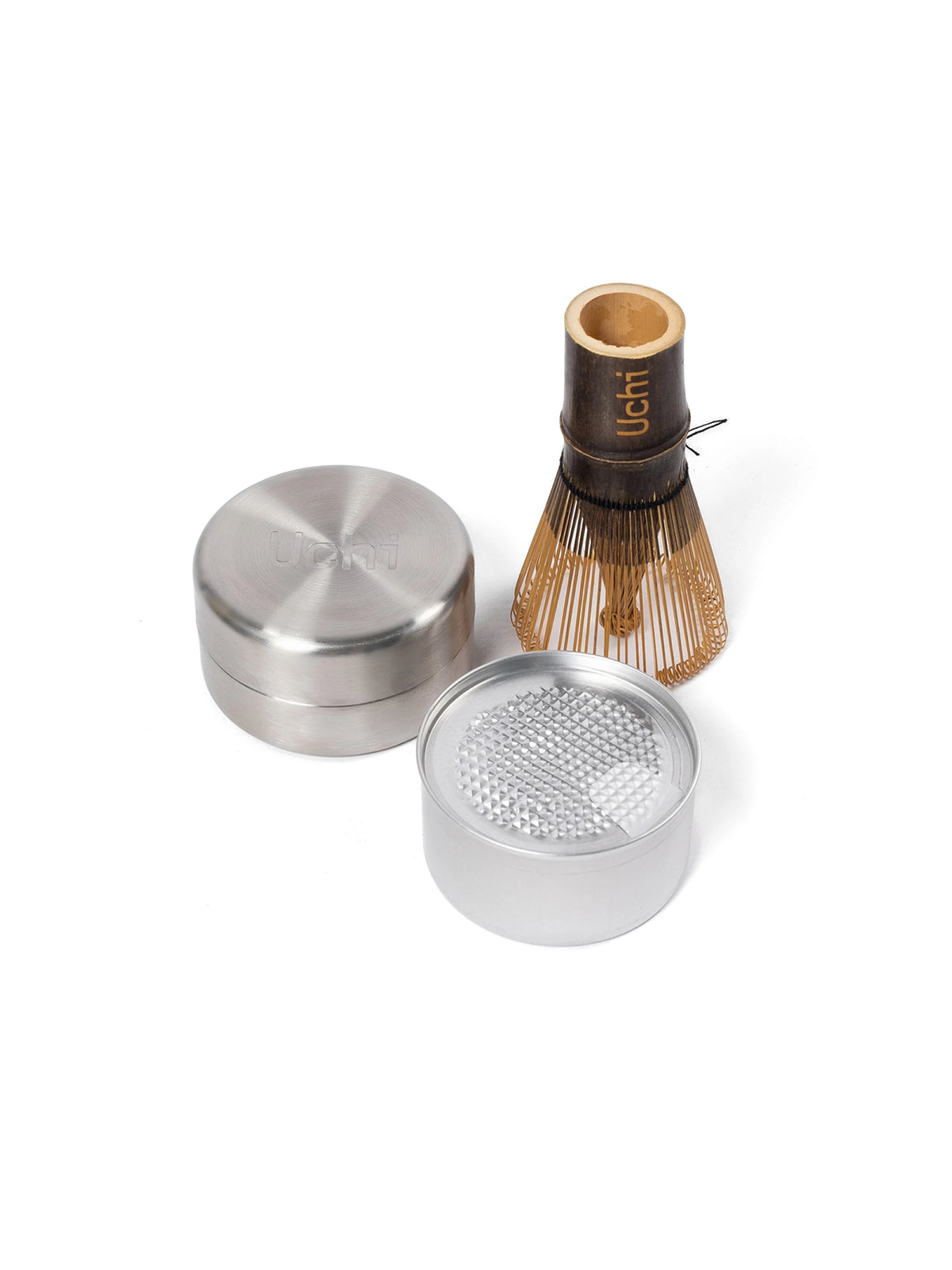
The Uchi Whisk is a bamboo chasen with 120 prongs. Those fine tines need space to move through the liquid without being pressed hard into the floor. More pressure is not a substitute for room.
Before choosing a bowl, check three things:
- Working floor. There is an open area for short, quick whisking movements.
- Wall curve. The transition is smooth rather than a tight corner that traps powder.
- Grip. The outside can be held securely without covering the whole vessel with both hands.
For a first bowl in 2026, these checks are more useful than choosing by colour alone. A suitable shape makes the material’s advantages usable.
Keep preparation separate from storage
The bowl is a preparation vessel, not a place to leave open matcha powder. Measure what you need, close the powder container and then add water to the bowl. Keep wet tools away from the remaining powder.
One leveled Uchi Spoon holds 1 gram. The Pod contains 40g of matcha, about twenty cups. Those details help establish a repeatable routine without leaving the powder exposed while deciding what to use.
The Base is an airtight stainless steel canister, kept for life. Its job differs from a stainless steel bowl: the closed canister protects stored powder from air and light; the open bowl provides room for preparation.
For a first purchase, Home contains Base and Pod. Complete contains Base, Pod, Bowl, Spoon, Sieve and Whisk. Choose according to the objects already at home, rather than adding a second version of a tool that already works.
Care follows the vessel, not the category
Do not infer dishwasher, microwave or boiling-water suitability from the material name. Decoration, glaze, construction and the maker’s instructions all matter. A bowl sold as ceramic is not a complete care specification.
Rinse the bowl after preparation, clean it according to its instructions and let it dry before putting it away. Inspect chips, cracks and damaged surfaces rather than treating them as merely visual changes.
Prewarming also needs care. Avoid sudden temperature changes, particularly when a vessel is cold. Use the maker’s method instead of assuming every bowl tolerates the same treatment.
How the materials are ranked
This 2026 ranking prioritises a smooth working surface, manageable care and comfortable daily handling. It then separates narrower uses: lighter drinking vessels, visible preparation, travel and dedicated pottery care.
The ranking does not claim that one material makes matcha taste better. No comparative tasting or product testing supports that conclusion here. The recommendation concerns the vessel’s practical role.
The default choice for home
Choose smooth, food-safe glazed stoneware unless another material answers a specific need. Move to porcelain for lighter handling, heat-resistant glass for visibility or stainless steel when breakage is the main concern.
For a 2026 home purchase, choose the interior and shape first. Exterior colour is the final decision, not the first one.
FAQ
Which matcha bowl material should I choose in 2026?
Choose smooth, food-safe glazed stoneware for a straightforward daily home routine. Porcelain, heat-resistant glass and stainless steel suit more specific handling preferences.
Is porcelain different from ceramic?
Porcelain is a type of ceramic. Compare porcelain with stoneware or earthenware rather than treating porcelain and ceramic as separate material families.
Can I whisk matcha in a glass bowl?
Yes, if the glass bowl is intended for hot drinks and has enough room for the Whisk. Follow its thermal-care instructions and avoid sudden temperature changes.
Is stainless steel suitable for a matcha bowl?
Stainless steel is suitable when the vessel is intended for food use and has a smooth interior. A single-wall bowl conducts heat readily, so assess the exterior and rim before drinking from it.
Does a matcha bowl need a glazed interior?
A glazed interior is not compulsory, but a smooth glazed surface simplifies daily use. Unglazed pottery needs confirmation of food-use suitability and clear care instructions from its maker.
Does bowl material change the taste of matcha?
Bowl material alone is not enough to predict taste. Powder condition, water, preparation and cleanliness also affect the cup, so do not treat a material choice as a flavour guarantee.
Can I put every ceramic matcha bowl in the dishwasher?
No. Dishwasher suitability depends on the individual bowl, including its glaze and decoration; follow the maker’s instructions rather than the general material label.
One last thing
Inspect the inside before admiring the outside. The point where the floor curves into the wall is easy to overlook in photographs, yet it determines whether powder collects in a tight corner and whether the Whisk can move freely.
A quiet exterior cannot compensate for an awkward interior. Choose the surface that works.