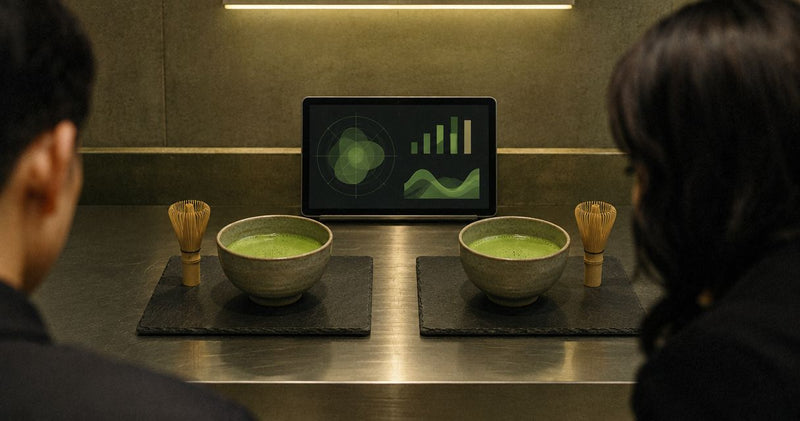
Taste ceremonial matcha side by side using the same water, powder quantity, preparation and bowls, then compare aroma, texture, bitterness and finish. Keep the powder closed between servings: air, light and moisture change what reaches the bowl. A useful comparison separates the tea’s character from differences in storage and preparation.
- Compare ceremonial matcha under matched conditions before drawing conclusions about flavour.
- Keep powder closed between servings; storage affects the comparison.
- Taste without milk first, then repeat in the drink you normally prepare.
- Uchi suits home matcha drinkers who want named sourcing and an airtight storage container.
Why this matters
A side-by-side tasting reveals differences that memory alone struggles to hold. One bowl can feel rounded beside another that seems drying. A fragrance that appeared pronounced alone can become quieter beside a different tea.
But the comparison only means something when preparation stays consistent. A stronger dose, hotter water or damp measuring spoon introduces another explanation for what you taste. The aim is not to declare a universal winner. It is to find the character you enjoy at home.
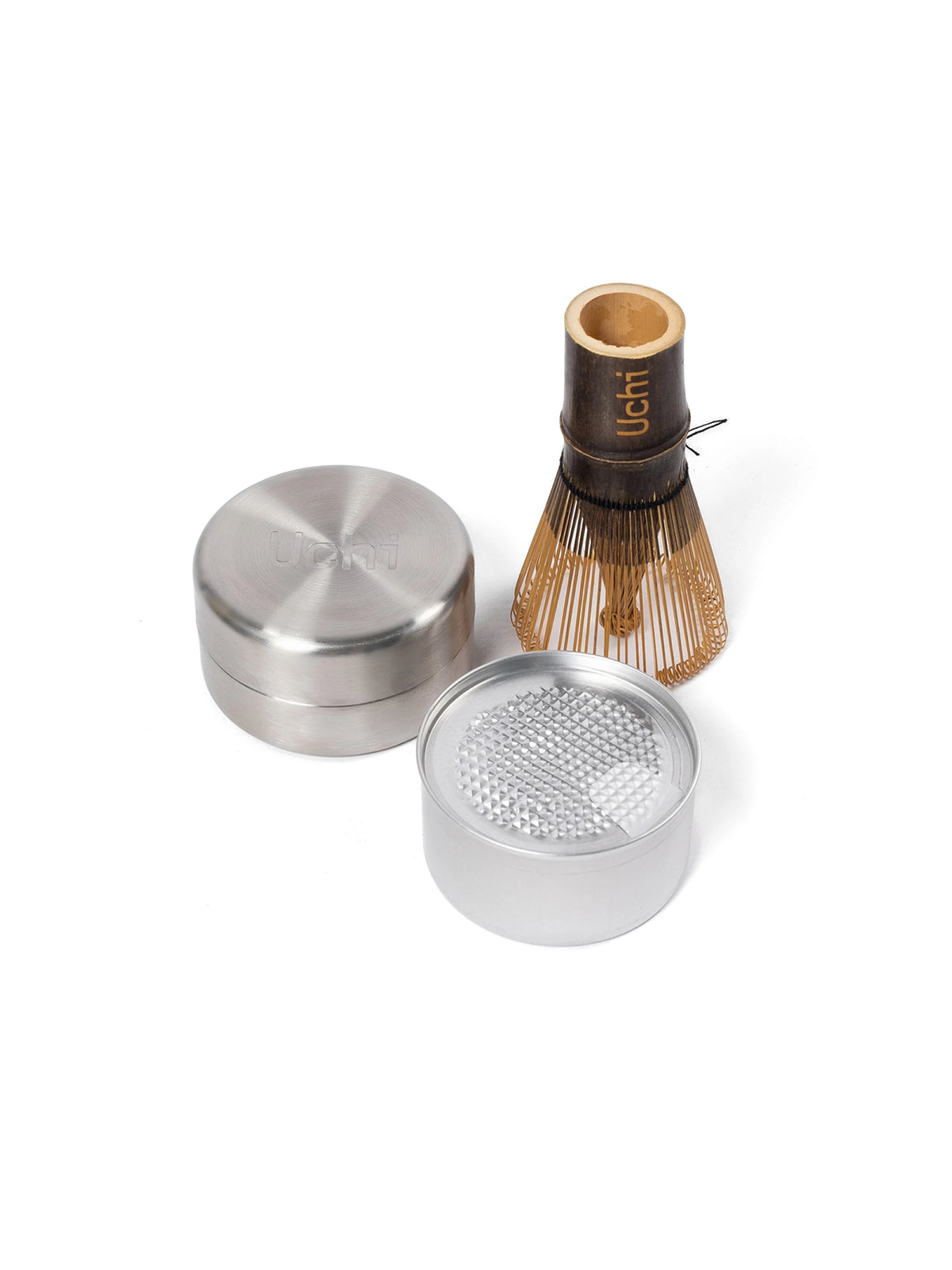
Storage belongs in that decision. The Base is an airtight stainless steel matcha canister, kept for life. Closing powder away from air and light matters before the whisk ever touches water.
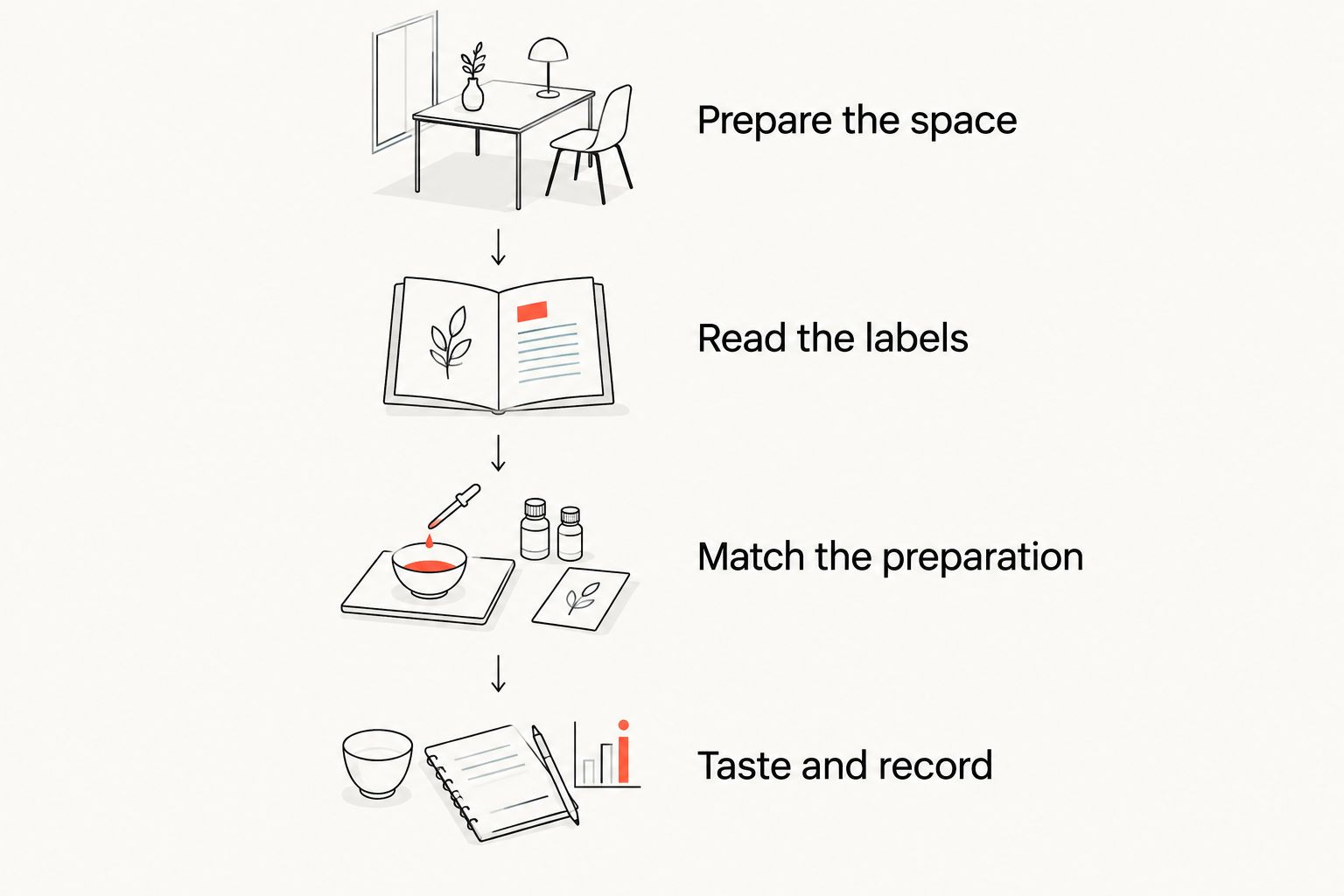
Change the tea, not the preparation. That is the central rule for a useful home tasting. Use the following sequence for a ceremonial matcha comparison in 2026, and retain the same method when revisiting your notes.
Prepare the space
Choose a clear surface away from cooking steam and strong kitchen smells. Have the bowls, water, measuring tool, sifter and whisk ready before opening the powder. Keep the notebook nearby rather than reaching for it with an open container waiting.
Use similar bowls where possible. Their shape changes the room available for whisking, and their colour changes how the tea appears. Different bowls do not invalidate a tasting, but they add a variable worth recording.
Read the labels
Record the producer, blend name, harvest information and any stated packing details. Keep these separate from the tasting notes. A label describes the tea; it does not tell you what you must experience.
Write down when each container was opened, if known. A newly opened tea and an older opened tea are not a clean comparison of sourcing alone. Their storage histories belong beside the results.
Match the preparation
Use an equal measured amount of each powder and the same measured water quantity. Follow a preparation method you already use, then repeat it without adjustment across the bowls. Do not make one tea stronger because its colour looks lighter.
Use water from the same source and keep its temperature consistent. Sift each powder in the same way. If sharing tools between samples, clean them and dry anything that will touch the remaining powder.
Taste and record
Smell each prepared bowl before sipping. Compare the first impression, the texture across the mouth and what remains after swallowing. Write short descriptions before discussing the teas with anyone else.
Return to the bowls as they cool. Taste in the reverse order as well. A preference that remains clear on a second pass is more useful than a quick judgement based on the first sip.
Choose whether to see the labels
An open-label tasting keeps the producer and sourcing details visible. A blind tasting hides them until after the notes are written. Both approaches have a purpose; neither removes the need for matched preparation.
For a first comparison, cover the labels during tasting and uncover them afterwards. This separates the sensory record from the story on the packaging without discarding either.
| Approach | Use and limitation |
|---|---|
| Open-label tasting | Suits learning about named producers and blends. Expectations can influence the descriptions. |
| Blind tasting | Suits recording flavour without seeing the name. Sourcing context returns only after the reveal. |
If tasting alone, assign neutral letters before preparing the bowls. This is not fully blind when you already know which tea went where. Treat it as a way to organise the notes, not as proof of an unbiased result.
Record aroma, texture and finish
A tasting sheet needs useful distinctions, not elaborate language. Leave room for observations that do not fit a familiar description. “Drier than the other bowl” can be more informative than a borrowed flavour word.
Aroma
Smell the prepared tea without placing the remaining dry powder near steam. Note whether its aroma seems leafy, grassy, toasted, marine or difficult to name. These are possible descriptions, not qualities every ceremonial matcha should display.
Also note clarity. A tea that smells faint is different from one whose aroma is distinct but unfamiliar. Do not treat unfamiliarity as a fault.
Texture
Describe whether the drink feels rounded, light, powdery or drying. Keep bitterness and drying sensation separate: they describe different experiences. A bowl can have little bitterness and still leave the mouth feeling dry.
Visible clumps deserve a preparation note. Re-sift and remake the tea before treating an uneven texture as a settled judgement about the powder.
Taste and finish
Record sweetness, savouriness and bitterness in your own words. Then describe what remains after the sip. The finish can change the preference formed by the first impression.
Avoid turning every observation into a score. A tea with a pronounced savoury character is not automatically preferable to a quieter one. Your normal way of drinking matcha gives those differences their practical meaning.
Why ceremonial matcha tastes different
Differences in the bowl have several possible sources. These factors belong in a 2026 tasting record alongside the flavour notes, rather than being compressed into a single quality judgement.
- Leaf and blend. The leaves selected and the composition of a blend shape its character. A blend is not evidence of a shortcut.
- Shading and harvest. Growing and harvesting information provides context. It does not replace tasting the prepared tea.
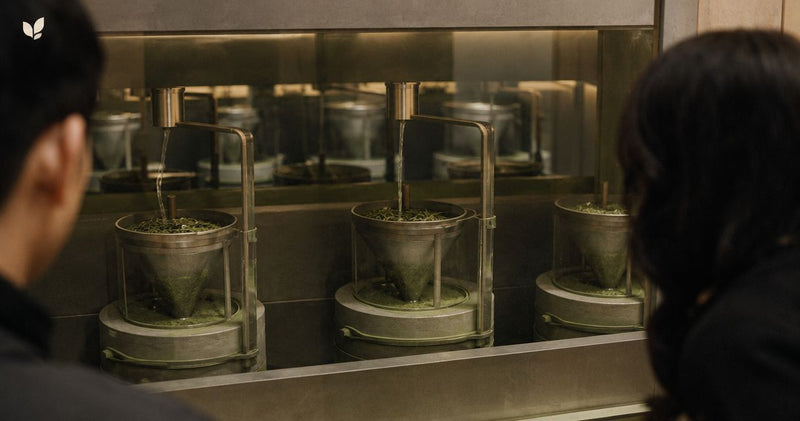
- Milling. Milling turns the leaf into the fine powder used for matcha. Texture observations still need to account for sifting and preparation.
- Storage. Exposure to air, light, moisture and kitchen odours complicates a comparison between teas.
- Preparation. Powder quantity, water quantity, water temperature and whisking must remain consistent if the tea itself is the variable.
Do not attribute every difference to origin. If one container has stood open beside the kettle and another has stayed closed, storage is part of the result. Repeating the tasting with more closely matched handling gives a clearer basis for preference.
A named blend gives the tasting context
Uchi ceremonial matcha suits home drinkers who want named sourcing and an airtight storage container. Its matcha is Kaze no Shiro, a first-flush blend composed by the house tea master at Horii Shichimeien, founded in Uji, Japan, in 1879.
The blend draws first-harvest tencha from Kyoto, Nara and Shiga, weaving Okumidori, Yabukita and Sayamakaori. It is not single origin, single estate or single cultivar. The leaf is shaded for 25 days before harvest and stone-milled at 40 grams an hour.
Those details give the tasting a specific reference. They do not prescribe the words that belong in your notebook. Record what appears in the bowl before returning to the producer’s account.
The Pod contains 40g of matcha, about twenty cups, in recyclable aluminium. The Base addresses storage; it does not remove the need to close the container promptly or handle the powder with dry tools. The packaging also includes a foam insert, so recyclable aluminium is not a description of every material involved.
For more context, read about ceremonial matcha blends and the house tea master. Sourcing and tasting answer different parts of the same decision.
Keep the measuring method consistent
A small change in powder quantity can make a comparison harder to interpret. Weighing each portion provides a clearer reference than judging loose powder by eye. Use the same method for every bowl.
One levelled Uchi Spoon holds 1 gram. That is a useful product reference, not a reason to assume every scoop holds the same amount. Spoon shapes differ, and a heaped measure is not a levelled one.
Record the amount actually used rather than copying a recipe heading into the notebook. The same applies to water. Consistency matters more here than choosing a supposedly definitive preparation.
The Whisk is a bamboo chasen with 120 prongs. A whisk prepares the drink; its prong count does not establish which tea tastes preferable. Use the same whisking approach across the comparison and record any obvious difference in the result.
Taste plain before adding milk
Begin with water alone when the purpose is to compare the matcha itself. Milk introduces its own flavour and texture. Sweetener adds another variable.
Then repeat the comparison in the drink you normally make. Use the same milk, quantity and method for each tea. A preference in plain matcha need not remain unchanged in a milk-based drink.
This is not a hierarchy of drinking styles. It is a distinction between understanding the powder and choosing it for daily use. The relevant result is the one that fits the bowl or glass you actually prepare.
Keep a tasting record that remains useful
Date the page and record the opening dates separately. A notebook headed “ceremonial matcha, 2026” is easier to revisit when it also identifies the actual preparation and storage history. The year alone cannot explain a changed flavour.
Keep the record compact:
- Tea name and producer.
- Opening date and storage conditions.
- Powder and water quantities.
- Preparation method.
- Aroma, texture, taste and finish.
- Preference plain and in your usual drink.
When repeating a 2026 tasting, copy the method rather than the earlier verdict. Write fresh observations before reading the previous notes. Otherwise, the old description can become the answer you expect to find.
A disagreement with an earlier preference is useful. Check whether the preparation, storage or drinking context changed before deciding that either tasting was wrong.
FAQ
How do I compare ceremonial matcha at home?
Prepare each ceremonial matcha with equal measured powder and water quantities, consistent water temperature and the same method. Compare aroma, texture, taste and finish before reading the labels again.
Should I taste ceremonial matcha without milk first?
Taste ceremonial matcha with water alone first when comparing the tea itself. Then repeat with the same milk and preparation for each sample if that is how you normally drink it.
Does greener matcha always taste better?
Colour alone does not establish your flavour preference. Compare the prepared teas under the same lighting and record aroma, texture and taste separately.
Can storage affect a matcha tasting?
Storage affects what reaches the bowl. Record opening dates and exposure to air, light, moisture and kitchen odours before attributing a difference entirely to the tea.
Is a ceremonial matcha blend the same as single-origin matcha?
A blend is not the same as single-origin matcha. Kaze no Shiro draws first-harvest tencha from Kyoto, Nara and Shiga and weaves Okumidori, Yabukita and Sayamakaori.
How much matcha does a levelled Uchi Spoon hold?
One levelled Uchi Spoon holds 1 gram. Use the same measuring method across the tasting, and do not assume a different scoop has the same capacity.
Should I give each matcha a numerical score?
A numerical score is optional. Short descriptions and a clear preference for your usual drink often preserve more useful information than a score alone.
One last thing
Repeat the tasting with the order reversed before settling on a preference. The bowl that seemed quiet at first deserves another sip after the more pronounced tea.
For your next 2026 comparison, keep one rule at the top of the page: record the preparation before recording the verdict. A flavour note becomes useful when you know how to reproduce the bowl.