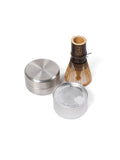
Matcha for home offices is a preparation and storage routine designed to protect freshness and make a consistent cup during the working day. This 2026 guide starts with air, light and placement, then covers the tools and habits that keep preparation separate from the desk.
- Uchi matcha suits home-office drinkers who want airtight storage and a repeatable preparation routine.
- Keep matcha away from sunlight, radiators and kettle steam; close the container immediately after measuring.
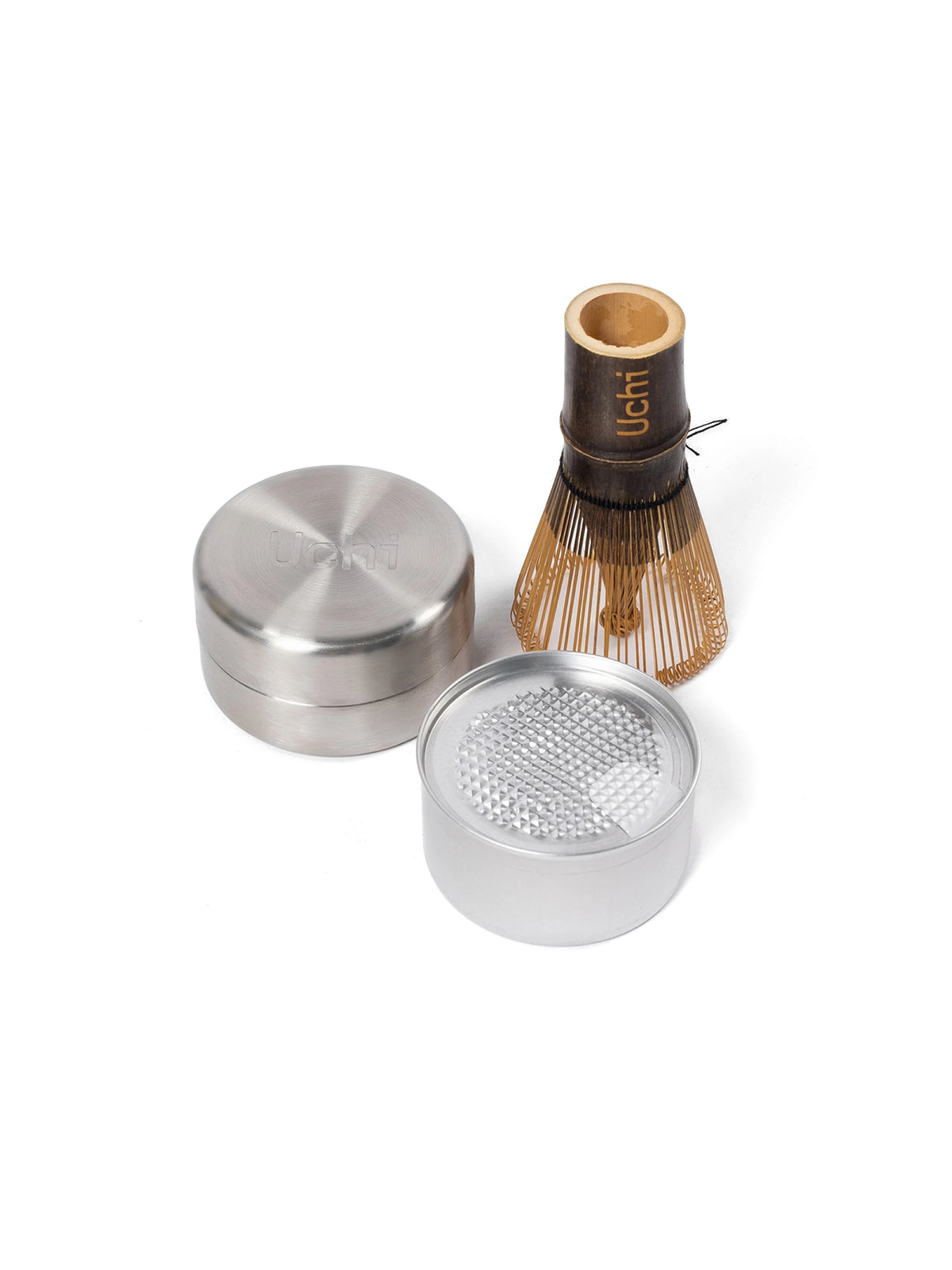
- Home includes Base and Pod; Complete also includes Bowl, Spoon, Sieve and Whisk.
- Prepare matcha near the sink, then bring only the finished drink to your desk.
Why storage matters for home-office matcha
A home office puts a drink within reach for much of the day. It does not necessarily provide a suitable place to store its ingredients. A sunny windowsill, a shelf above a radiator or a desk beside a kettle introduces conditions that work against freshness.
Matcha is finely ground tea leaf. Exposure to air, light, heat and moisture affects its condition. Choose the storage position before choosing the preparation objects. An airtight container still needs a sensible place to stand.
The Base is an airtight stainless steel matcha canister that blocks light and is kept for life. It addresses air and light exposure, but it does not remove the need to keep matcha away from heat. Closing it promptly remains part of the routine.
Why matcha preparation matters for home-office drinkers
At home, the kitchen and the workplace often share space. Matcha preparation adds loose powder, water and wet utensils to that arrangement. Keeping those stages in the kitchen leaves the desk for the finished drink.
The useful distinction is between storage, preparation and drinking. These do not need separate rooms. They need clear places and a repeatable order, especially when the same surface also holds a laptop or paperwork.
There is also no need to turn matcha into a productivity promise. Choose it for its taste and the preparation you enjoy. A routine should fit the working day without making claims about what the drink will do for your work.
Build a home-office matcha routine for 2026
Choose a cool, shaded storage position
Start with a cupboard or shaded shelf already available in your kitchen. Check the position during the working day, not just in the morning. Sunlight moves, and a shelf that looks sheltered before work can sit in direct light later.
Keep storage away from the kettle's steam path. A nearby radiator, oven or sunny window is also a reason to choose another position. An attractive container does not make an unsuitable location suitable.
If your current container closes securely and excludes light, assess its condition before replacing it. Check the rim and closure rather than judging the object by appearance alone.
- Choose a position away from direct sunlight.
- Keep the container clear of radiators and cooking heat.
- Leave space between stored matcha and kettle steam.
- Check that the closure is clean and properly seated.
Separate preparation from the desk
Use an existing kitchen surface near the sink. A bowl, measuring utensil and whisk need somewhere to stand while wet. Keeping that work away from electronics also makes spills easier to manage.
Bring only the finished drink to the home office. This removes the need to carry an open container between rooms or leave damp tools beside a keyboard. If the kitchen is also your workspace, clear a preparation area before opening the matcha.
A small tray can mark that area using something already at home. It is not another required purchase. Its purpose is simply to keep dry ingredients distinct from rinsed utensils.
- Prepare beside the sink rather than beside the laptop.
- Keep loose powder away from paperwork and electronics.
- Give wet utensils a separate drying place.
- Carry the finished drink to the desk after preparation.
Measure with a dry utensil
Begin with a kitchen scale if you already own one. A measured portion gives you a reference when comparing cups. Without that reference, changing the amount of powder and water together makes differences harder to interpret.
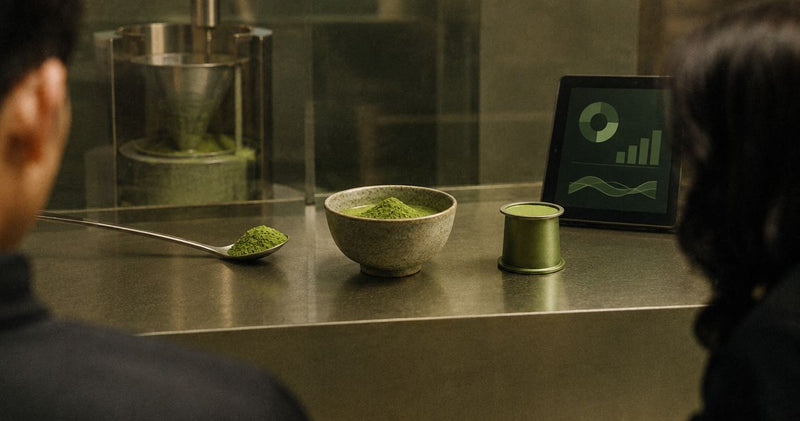
A Pod contains 40g of matcha, about twenty cups. That corresponds to approximately 2g per cup; it is a useful starting portion rather than a rule for every preparation. Adjust deliberately to suit the drink you make.
One leveled Uchi Spoon holds 1 gram. Two leveled measures therefore provide a straightforward alternative to weighing that starting portion each time. The important storage habit is to keep the utensil dry and close the container before working with water.
- Weigh a starting portion if a scale is available.
- Use the same measure when comparing preparations.
- Keep the measuring utensil completely dry.
- Close the container immediately after measuring.
Sift before adding water
Use a clean, dry fine-mesh sifter if you already have one. Sifting breaks apart clumps before water reaches the powder. It is easier to deal with dry clumps in the preparation area than to chase them around a finished drink.
Matcha forms a suspension in water; it does not dissolve like sugar. Sifting and whisking help distribute the particles, but they do not change that distinction. Some settling in a drink left beside the laptop is not, by itself, evidence of poor storage.
The Sieve is a fine-mesh sifter for this stage. Its limitation is practical: it is another utensil to clean and dry. Keep that maintenance in the kitchen rather than putting a recently rinsed sifter beside open matcha.
- Sift into the preparation bowl before adding water.
- Use dry equipment for contact with powder.
- Keep the open container away from rinsing and steam.
- Allow washed equipment to dry before its next use.
Whisk in a bowl with room to move
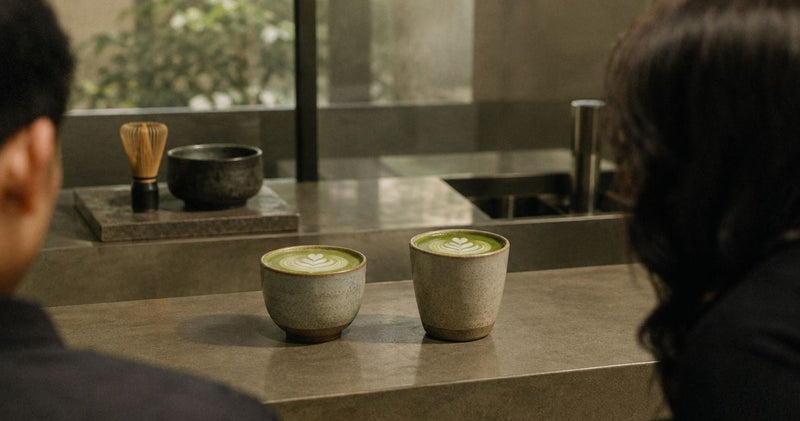
Try an existing bowl before adding a dedicated one. It needs sufficient room for whisk movement without forcing the whisk against the sides. A narrow drinking mug makes that movement more restricted.
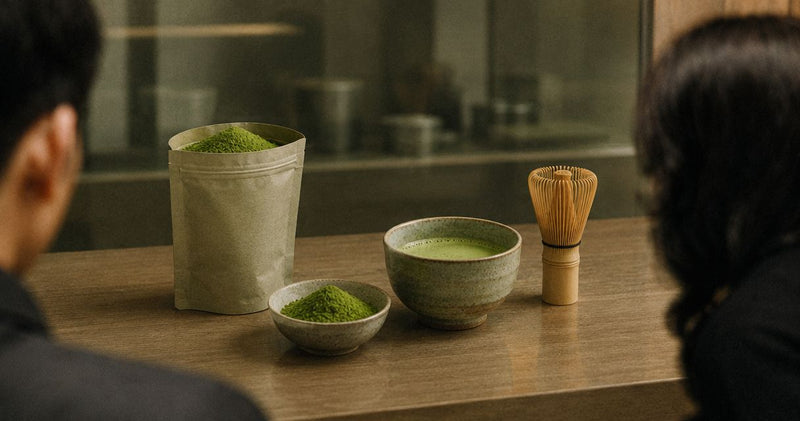
The Bowl is a chawan with a wide base and high walls. The Whisk is a bamboo chasen with 120 prongs. Together they provide room and a tool for mixing matcha and water; they still require preparation, rinsing and drying after use.
Keep your method consistent while learning what you enjoy. Use the same portion and measured water amount, then change one variable at a time. Comparing cups becomes less useful when every part of the method changes between them.
- Choose a bowl that allows free whisk movement.
- Whisk with a light back-and-forth motion.
- Keep the preparation method consistent between cups.
- Rinse the whisk after use and leave it to dry.
Reset the preparation area before returning to work
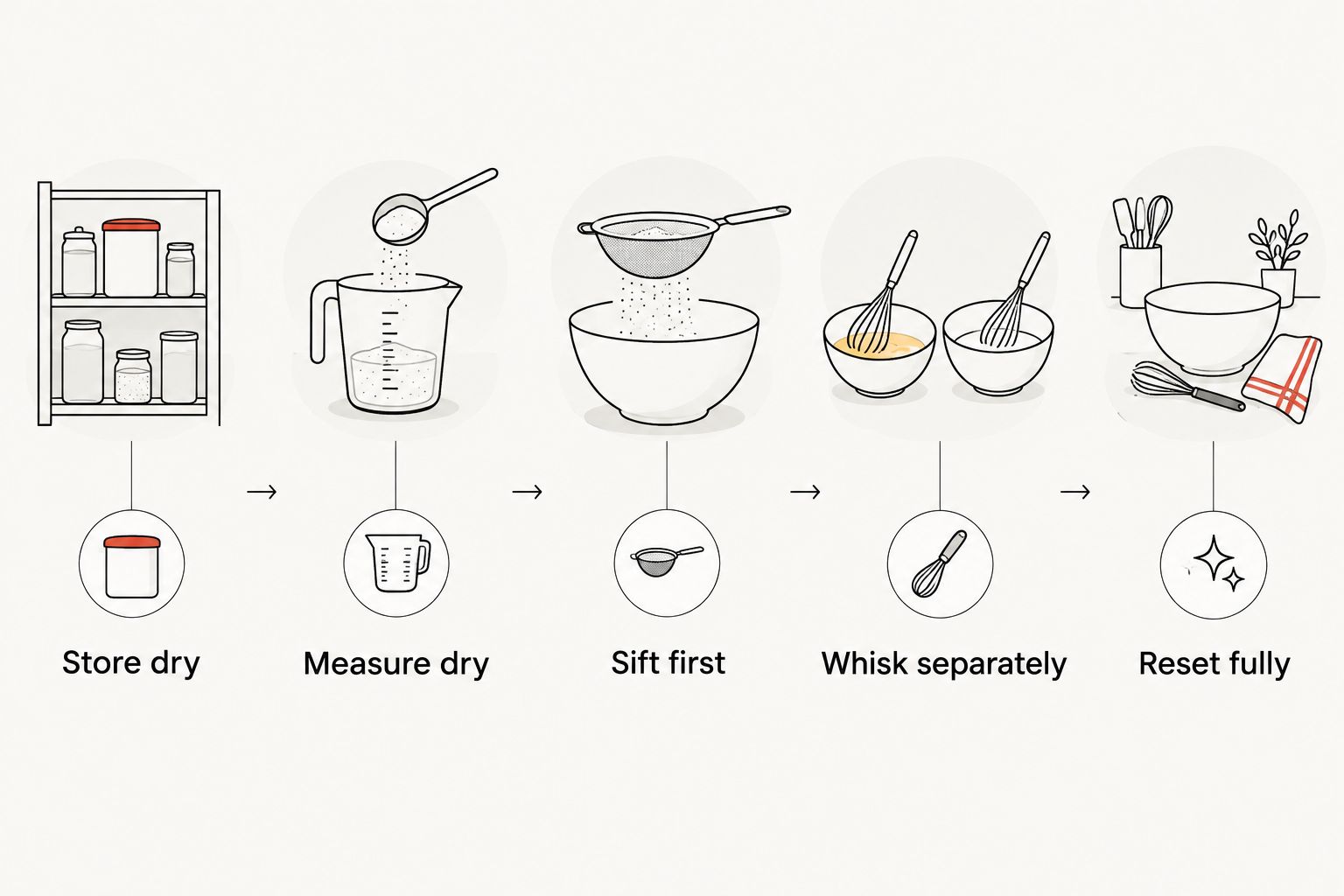
Finish the preparation by restoring the area, not by leaving it for the next break. Check the matcha closure, move rinsed utensils to their drying place and wipe up loose powder. The next cup then begins with a dry surface.
Keep the order simple: dry handling first, wet preparation second, cleaning last. This separates the container from the part of the process that introduces moisture. The guide to dry handling of matcha powder covers that boundary in more detail.
A preparation routine is easier to repeat when every object has a destination. Storage belongs away from steam; wet tools belong where they can dry; the finished drink belongs wherever you intend to enjoy it.
- Store dry.
- Measure dry.
- Sift first.
- Whisk separately.
- Reset fully.
Choose a home-office setup in 2026
Choose around the tools you already use. Storage and preparation are separate requirements. Buying a storage container does not supply a whisk, and buying a whisk does not solve exposure to air and light.
The options below differ in contents, not in the need for careful handling. Each still needs a shaded storage position, dry measuring and space to clean the preparation tools.
| Option | Suited to | Limitation |
|---|---|---|
| Existing equipment | Drinkers with suitable storage, bowl and whisk | Each object's suitability needs checking |
| Home | Drinkers who already own preparation tools | Includes Base and Pod, not utensils |
| Home + Whisk | Drinkers with a suitable bowl | Does not include Bowl, Spoon or Sieve |
| Complete | Drinkers establishing a preparation area | More individual objects to clean and dry |
| Pod | Existing Base owners | Does not include Base or preparation tools |
Choose Home when the preparation tools are already there
Home contains Base and Pod. It suits a home-office drinker who already has a suitable bowl, whisk and way to measure matcha. Its scope is storage and matcha, not the full preparation area.
Check the existing tools first. A bowl that restricts movement or a damaged whisk remains a limitation after adding Home. There is no reason to duplicate suitable utensils, but there is also no reason to count unsuitable ones as a finished setup.
Choose Home + Whisk when the bowl is already there
Home + Whisk contains Base, Pod and Whisk. It suits someone who has a bowl with room to whisk and wants the bamboo chasen included. It does not contain Bowl, Spoon or Sieve.
This option leaves measuring and sifting to equipment already at home. Confirm those details before choosing it, rather than assuming that the additional whisk supplies every preparation object.
Choose Complete when establishing the whole preparation area
Complete contains Base, Pod, Bowl, Spoon, Sieve and Whisk. It suits someone starting without the dedicated utensils. The contents cover storage, measuring, sifting and whisking.
The trade-off is the number of objects. Complete needs a place for dry storage and a place for washed utensils to dry. It does not make the working desk a suitable preparation surface.
Read the matcha, not just the objects
A home-office routine starts with storage, but the tea itself still deserves a clear description. Uchi matcha is Kaze no Shiro, a first-flush blend composed by the house tea master at Horii Shichimeien.
The blend draws first-harvest tencha from Kyoto, Nara and Shiga. It weaves three cultivars: Okumidori, Yabukita and Sayamakaori. It is not single origin, single estate or single cultivar.
The tea is shaded for 25 days before harvest and stone-milled at 40 grams an hour. Those are production details, not substitutes for careful handling after opening. Keep the container closed between preparations, however detailed the sourcing information is.
Common home-office matcha mistakes
Leaving the container beside the kettle
A kettle is convenient for preparation, but its steam is a reason to store powder elsewhere. Measure the matcha, close the container and move it away before handling hot water. Proximity should not undo the storage routine.
Treating the desk as a preparation counter
An open container, loose powder and wet utensils compete with electronics and paperwork. Keep preparation in the kitchen, even when the finished drink stays beside the screen. This also gives cleaning a clear place to happen.
Buying utensils twice
Home does not include Whisk. Complete does include Bowl, Spoon, Sieve and Whisk. List what you already have before choosing, and distinguish between an object being present and being suitable for daily preparation.
Assuming stainless steel removes every storage concern
An airtight stainless steel canister addresses air and light exposure. It still needs to stand away from heat, and it cannot protect powder while left open. The closure habit matters as much as the position on the shelf.
FAQ
How should I store matcha in a home office in 2026?
Store matcha in an airtight, light-blocking container away from heat and moisture. A shaded kitchen cupboard is a more suitable starting point than a sunny desk or a shelf beside a kettle.
Can I keep matcha on my desk?
Keep matcha on a desk only if the container and position provide suitable storage conditions. Avoid direct sunlight and nearby heat, and prepare the drink away from electronics.
Which Uchi option suits someone who already owns a whisk?
Home suits someone who already has suitable preparation tools. It contains Base and Pod; it does not include Bowl, Spoon, Sieve or Whisk.
What does Complete contain?
Complete contains Base, Pod, Bowl, Spoon, Sieve and Whisk. It covers storage and the named preparation tools, but those utensils still need cleaning and drying after use.
How much matcha is in a Pod?
A Pod contains 40g of matcha, about twenty cups. The number of cups depends on the amount used for each preparation.
Does matcha dissolve completely in water?
Matcha does not dissolve completely in water; it forms a suspension of finely ground tea leaf. Sifting breaks apart clumps, while whisking distributes the powder through the water.
Can I put a wet measuring utensil into matcha?
Keep wet utensils out of stored matcha. Measure with a completely dry utensil, close the container and begin the wet preparation separately.
One last thing
For your 2026 home-office routine, inspect the storage position during the afternoon. A shaded morning shelf can become a sunlit one later. Before adding another object, check what happens to the place where the matcha already stands.