Keep matcha powder dry by measuring it with a clean, fully dry scoop, away from rising steam, then closing the container before adding water. A damp scoop carries moisture directly into the powder; an open container beside a steaming kettle exposes it unnecessarily.
- Measure matcha powder before pouring hot water, and close the container immediately afterwards.
- Keep scoops and sieves dry; reserve water for the bowl and whisking stage.
- Clumps alone do not prove dampness. Sieving separates particles but does not remove absorbed moisture.
- Uchi’s Base suits home matcha drinkers who want an airtight stainless steel canister; dry handling still matters.
Why this matters
Air and light affect matcha freshness. Moisture adds a separate problem: water can reach the powder through a wet utensil, condensation or steam around an open container. A careful storage choice does not cancel careless handling.
The useful distinction is between keeping the stored powder dry and preparing the portion in the bowl. Once measured, that portion is intended to meet water. The remaining powder is not.
For a home routine in 2026, start with that boundary rather than adding equipment. The guide to matcha powder clumps and moisture explains why a clump is a clue to examine, not a diagnosis by itself.
Dry handling of matcha powder
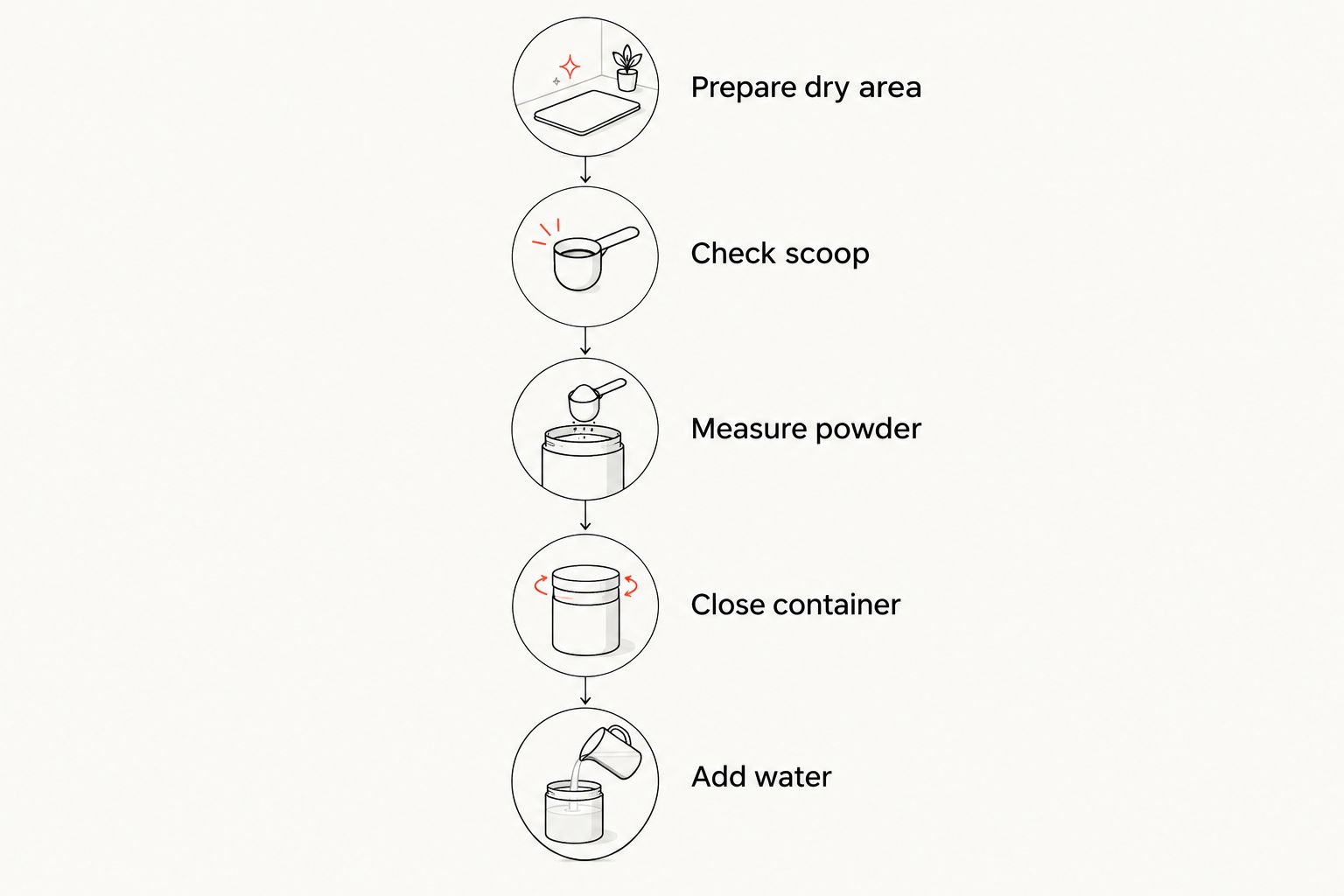
Measure first. Close the container. Add water afterwards. This sequence separates dry storage from wet preparation without complicating the bowl.
- Prepare the dry area. Choose a clean surface away from the sink, kettle spout and a steaming bowl. Set out the scoop and, if used, the sieve.
- Check the scoop. Inspect its underside, handle junction and any recess where rinse water remains. A utensil that looks dry from above still needs checking underneath.
- Measure the powder. Open the container only when ready to take the portion. Keep the scoop clear of wet surfaces throughout.
- Close the container. Finish measuring and replace the lid before pouring hot water or whisking. Keep loose powder clear of the closing surfaces.
- Begin wet preparation. Sift the measured portion if needed, add water and whisk. Anything that has touched the wet bowl stays out of the stored powder.
There is no need to race. Arrange the steps so the container does not sit open while something else needs attention.
The sequence is deliberately simple. A longer preparation routine gives more opportunities to put down a scoop on a damp counter or leave a lid beside steam.
A dry scoop is more useful than a freshly rinsed scoop
A scoop does not need rinsing immediately before every use. It needs to be clean and completely dry when it touches stored matcha powder. Washing remains necessary when the utensil is dirty; drying is part of that job, not an optional final step.
Keep a dedicated dry scoop separate from utensils used for water or milk. This removes the need to judge whether a recently rinsed spoon has dried enough while the container stands open.
| Handling choice | Use and limitation |
|---|---|
| Clean, dry scoop | Suited to measuring stored powder. It still needs protection from a wet counter. |
| Recently rinsed scoop | Ready only after complete drying. Wiping visible droplets is not enough if moisture remains. |
| Dry sieve | Suited to separating clumps. It does not reverse moisture exposure. |
Do not return a scoop to the container after it touches a wet bowl. Use another clean, dry utensil if more powder is needed. The same boundary applies to a scoop used in milk, water or a prepared drink.
Steam belongs away from the open container
Steam exposure is easy to overlook because no utensil needs to touch the powder. A kettle spout, hot pan or freshly filled bowl puts moisture into the immediate preparation area. Keep the open container outside that area.
Do not hold the container over a steaming bowl to shake in powder. Measure at the dry counter instead, close the lid and carry only the measured portion towards the water.
A 2026 kitchen arrangement needs no special station. It needs a dry place where the lid can open without sitting beside boiling water, the sink or drying dishes.
If the worktop is narrow, use the same space in sequence rather than trying to fit everything side by side. Complete the dry stage first. Put the closed container away, then bring in the kettle and bowl.
The exposure points that change the routine
The amount of care required depends on the kitchen and the preparation sequence. These are the practical exposure points to check:
- Utensil dryness. Residual rinse water enters the powder directly when the scoop goes in.
- Steam nearby. An open container beside a kettle or steaming bowl sits in a moisture-rich area.
- Cold storage. Opening a cold container in warmer air creates a condensation risk.
- Open-container time. Leaving the lid off while heating water or washing tools extends unnecessary exposure.
- Wet work surfaces. A clean scoop placed on a damp counter is no longer ready for stored powder.
- Return handling. Powder or utensils brought back from the preparation area can carry moisture into storage.
These are handling factors, not a freshness score. A container’s appearance cannot reveal exactly how much moisture has entered, and no single visual check replaces a dry routine.
Sieving separates clumps; it does not dry powder
Fine matcha particles can gather together without a spill or a wet scoop. Clumps alone therefore do not establish that the powder has become damp. Look at the handling history as well as the texture.
A dry sieve helps separate those particles before whisking. It does not remove absorbed moisture, restore lost aroma or make suspect powder suitable to use.
Sift the measured portion rather than repeatedly passing the whole supply through a sieve. That keeps the stored powder out of the preparation area and avoids unnecessary handling.
After washing a sieve, allow the mesh, rim and handle junction to dry fully. Fine mesh can retain small droplets that are easy to miss. If its dryness is uncertain, leave it out of the dry stage until it is ready.
A smoother-looking powder is not proof of restored freshness. Keep that distinction in any 2026 storage routine: preparation changes texture, not the history of the powder.
Prewarming without wetting the dry stage
Prewarming a bowl and keeping stored powder dry are compatible. The order needs attention because an emptied bowl can still hold water, and a prewarmed whisk is intentionally wet.
Prepare the dry portion separately and close the container before working with hot water. Then prewarm the bowl if that is part of the routine. Empty it before adding the measured matcha.
A whisk used for prewarming never belongs inside the powder container. Neither does a scoop that has touched the damp bowl. The measured portion moves forwards into preparation; tools from the wet stage do not move backwards into storage.
There is also no reason to hold the storage container above the bowl while checking the amount. Measure away from steam, then adjust only with a separate dry utensil if necessary.
Cold storage needs a separate pause
A dry scoop cannot prevent condensation caused by opening a cold container in warmer, humid air. These are different routes for moisture to reach the powder. Both need attention.
If matcha has been refrigerated, leave the container closed while it comes towards room temperature. Avoid opening it simply to check whether it feels ready inside. The point is to keep warmer air away from the cold contents during that transition.
No universal waiting time fits every container, room and quantity. Use the condition of the closed container rather than borrowing an exact duration from an unrelated kitchen.
For a 2026 routine that includes cold storage, make the transition a separate step. Once the container is ready to open, return to the same dry sequence: measure, close, then prepare.
Airtight storage still needs dry handling
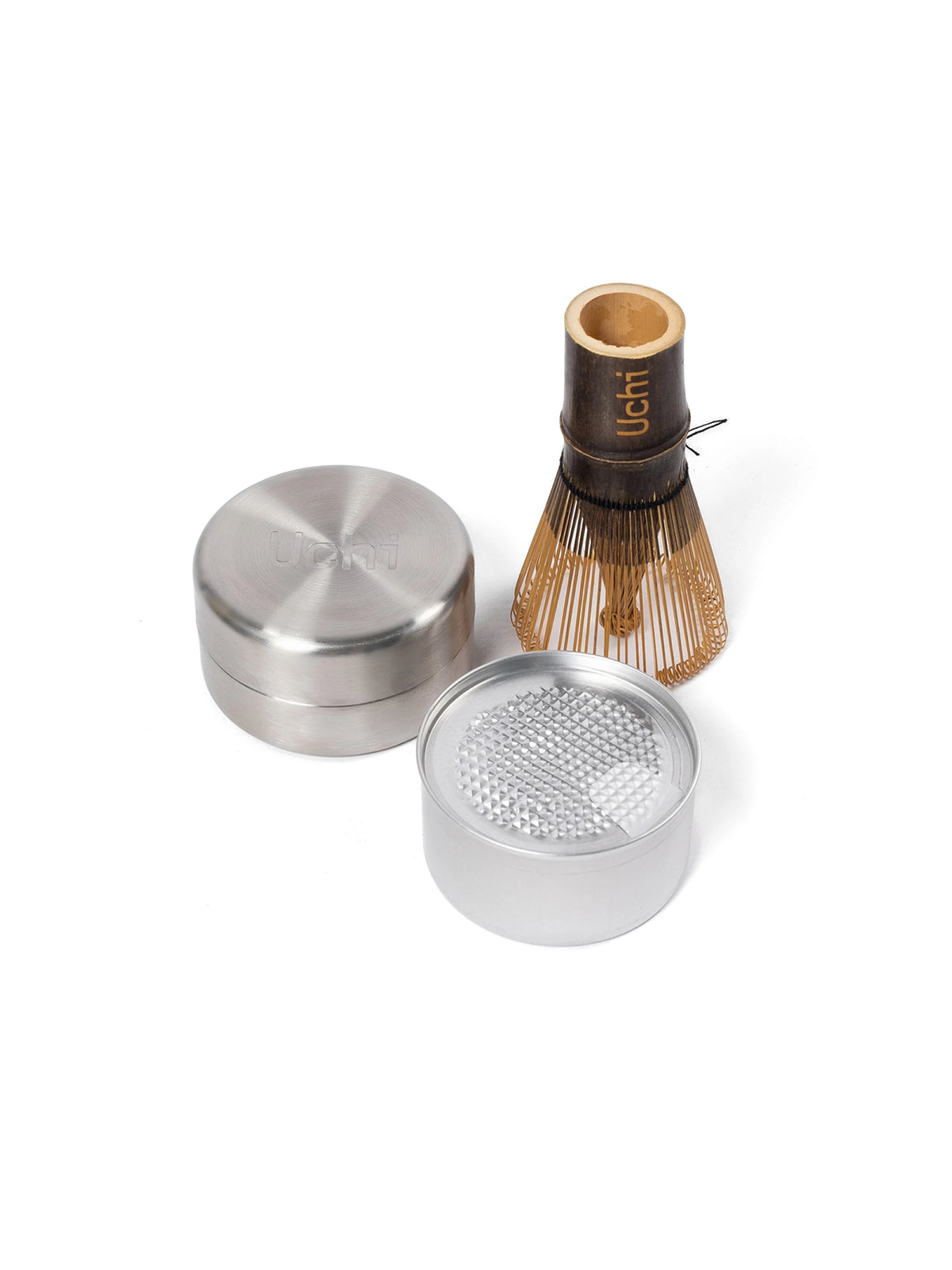
Uchi’s Base is an airtight stainless steel matcha canister, kept for life. It provides a closed storage environment between preparations. It cannot remove water introduced by a damp utensil.
The Pod contains 40g of matcha, about twenty cups, in recyclable aluminium. One levelled Uchi Spoon holds 1 gram. Whatever portion is being measured, the scoop must be dry before it touches the remaining powder.
Uchi’s Base suits home matcha drinkers who want an airtight stainless steel canister; dry handling still matters. The storage object and the daily routine do different jobs. Closing the container protects what remains; keeping utensils dry avoids introducing moisture before it closes.
The useful habit is consistent rather than elaborate. Keep the scoop in a clean, dry place, inspect it before use and put the lid back before reaching for water.
When moisture has already reached the powder
If a damp scoop has entered the container, stop using that utensil for measuring. Do not stir the affected area through the rest or attempt to fix it by sieving. Neither action removes the introduced water.
Keep the lid and closing surfaces dry. If the container itself needs washing, it must be completely dry before powder goes back inside. Avoid transferring matcha into a container that has only just been rinsed.
Do not use an oven, microwave or direct heat as a home recovery method. Heating is not a reliable way to restore matcha’s original condition, and it adds another uncontrolled treatment.
Visible mould is a reason to discard the powder, not skim the surface. Do not taste powder to assess suspected mould. When the extent of wetting is unclear, appearance alone cannot establish that the contents remain suitable to use.
FAQ
Can I use a spoon that I have just rinsed for matcha powder?
Use a recently rinsed spoon only after it has dried completely. Check the underside and any recesses, not just the visible surface.
Does steam from a kettle matter if it never touches the scoop?
Keep an open matcha container away from kettle steam. Measure on a dry surface and close the container before pouring hot water.
Do clumps mean my matcha powder is damp?
Clumps alone do not prove that matcha powder is damp. Fine particles can gather together, so consider wet utensils, condensation and storage history as well as appearance.
Can a sieve fix matcha powder that has become wet?
A sieve separates clumps but does not remove absorbed moisture. It also cannot restore freshness or establish whether wet powder is suitable to use.
Should I dry the bowl after prewarming it?
Empty the prewarming water and dry the bowl before adding the measured powder. Keep the storage container closed throughout the wet preparation stage.
Can I return unused sifted matcha to its container?
Keep the measured portion separate rather than returning it to the stored powder. This avoids bringing material from the preparation area back into storage.
Does an airtight container make dry handling unnecessary?
An airtight container does not remove moisture introduced before closing. Dry utensils and a dry preparation area remain necessary even with a secure lid.
Can I open refrigerated matcha as soon as I take it out?
Keep refrigerated matcha closed while the container comes towards room temperature. Opening cold contents to warmer, humid air creates a condensation risk.
One last thing
The lid belongs earlier in the routine than it often appears. Close the container immediately after measuring, not after the drink is finished.
Make that the change to keep in 2026. It separates storage from steam, rinsing and whisking with one ordinary movement. No additional object is needed.