Keep delivered matcha powder sealed while a warm parcel returns to room temperature, then open it in a dry place away from steam and direct sunlight. Warm outer packaging alone does not establish whether the powder has deteriorated; the seal, storage instructions and condition of the contents matter. If the inner packaging is damaged or moisture has entered, leave it unused and contact the seller.
- Matcha powder needs protection from heat, air, light and moisture after delivery.
- Let a warm delivery settle indoors before first opening; do not use a fixed waiting time.
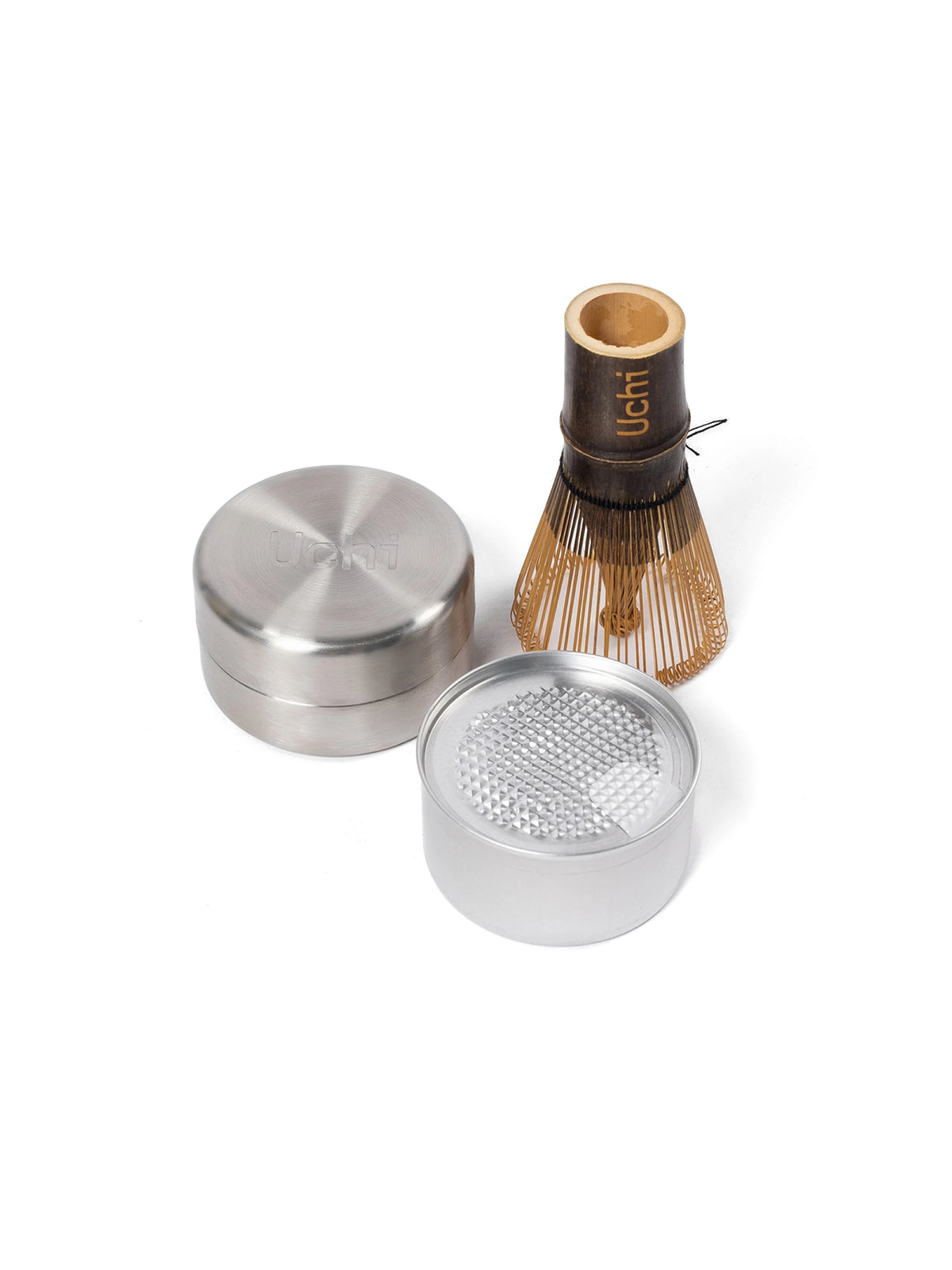
- Uchi pairs matcha with an airtight stainless steel Base for home storage.
- Check the inner seal before opening, and keep scoops and storage surfaces completely dry.
Why this matters
Delivery introduces a period when storage conditions are outside your control. Once the parcel arrives, the useful response is straightforward: remove it from direct heat, inspect the packaging and avoid introducing moisture during the first opening.
Good storage begins before the first scoop. An airtight container limits exposure between servings, but it cannot reverse deterioration that has already happened. The guide to choosing a matcha container that keeps out air and light explains that distinction.
A parcel feels warm. That observation describes the outside of the delivery, not the full temperature history of the powder inside. Check what is visible before drawing a conclusion about the tea.
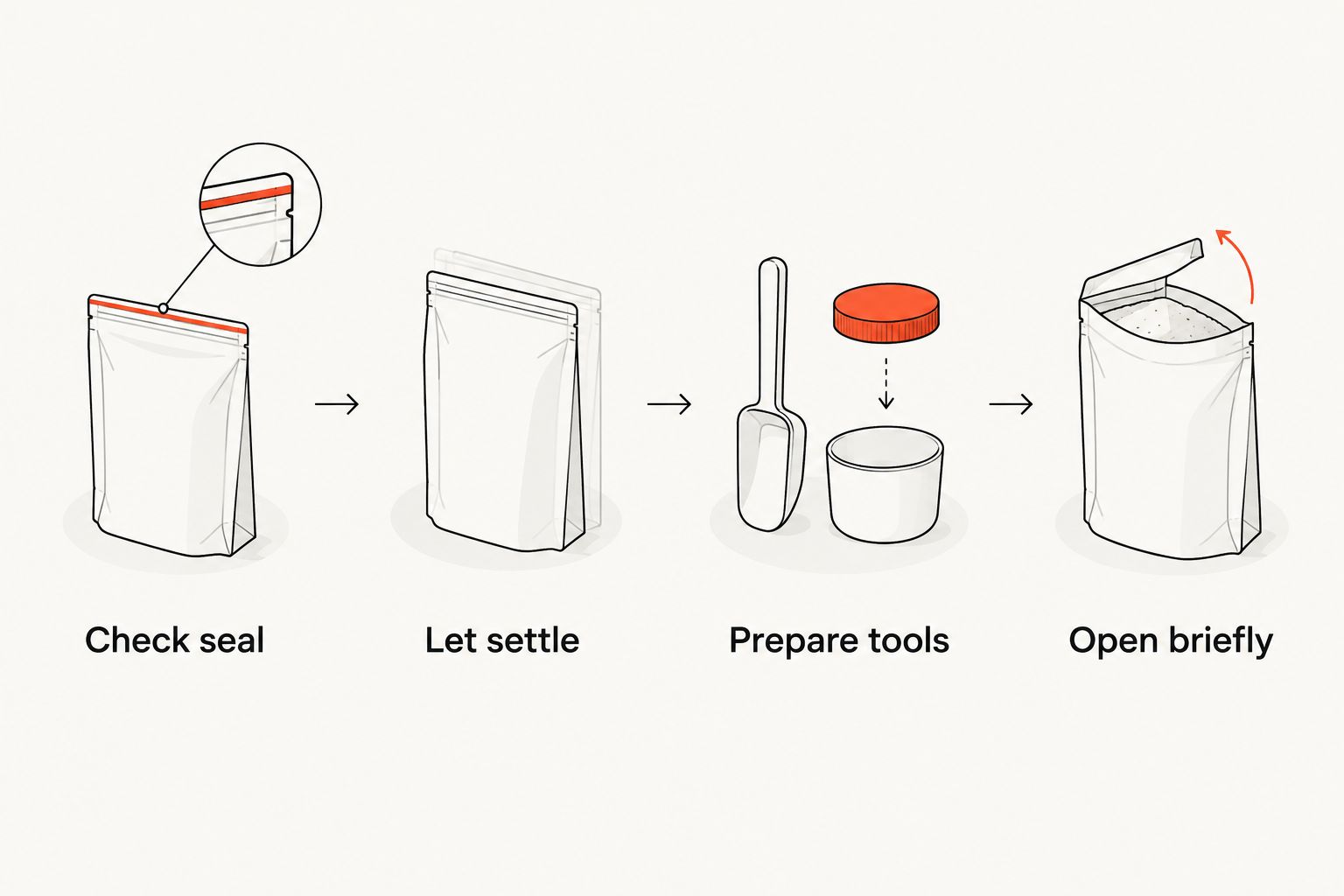
Use this delivery checklist in 2026:
- Check seal. Inspect the inner packaging for tears, open seams, leakage or other damage. An intact shipping box does not establish that the inner seal is intact.
- Let settle. Move a warm delivery to a shaded indoor location. Keep the matcha sealed while it returns to ordinary room temperature.
- Prepare tools. Choose a dry work surface and a clean, completely dry scoop. Keep the kettle, sink and steaming bowl away from the open powder.
- Open briefly. Follow the packaging instructions, inspect the contents and close the storage container after taking the amount needed.
This sequence separates two tasks that are easily confused: assessing a delivery and preparing a drink. There is no reason to whisk a bowl before checking a visibly damaged seal.
The sequence does not certify a delivery as undamaged. It provides a controlled first opening and keeps avoidable moisture out of the powder. For a specific delivery concern, the seller needs the product details and the condition in which it arrived.
A warm parcel with an intact seal
Move a warm parcel away from a sunny windowsill, radiator or hot kitchen appliance. Let it settle indoors while the inner packaging remains closed. Do not open it repeatedly to see whether it has cooled.
There is no universal waiting time for this step. Parcel size, packaging and room conditions differ, so a fixed number of minutes would create precision without a useful basis.
Warm packaging is a reason to inspect, not a verdict on the matcha. It does not establish that the contents are spoiled, and an intact seal does not establish that heat had no effect on flavour.
If the delivery raises a concern, photograph the packaging and record what you observed. Describe the parcel as warm rather than assigning it a temperature that was not measured.
Damaged packaging or signs of moisture
Keep matcha unused if the inner packaging has opened in transit or water appears to have entered. Photograph the damage before discarding the shipping materials, and contact the seller with the order details.
Do not sift, heat or whisk questionable powder as a way to make it acceptable. Those actions do not resolve uncertainty about contamination or the integrity of the packaging.
Dry clumps alone are a different observation. Fine matcha powder can form clumps without having become wet, so clumping by itself does not prove moisture damage. Interpret it alongside the seal, visible dampness and the rest of the delivery condition.
| Delivery condition | Next step |
|---|---|
| Warm, inner seal intact | Keep sealed; let settle indoors |
| Inner seal torn or open | Leave unused; contact the seller |
| Visible water ingress | Leave unused; document the condition |
| Cool from chilled storage | Let warm while sealed before opening |
These conditions require different responses. Cooling an intact delivery addresses temperature; it does not repair an open seal.
Why the response to heat exposure varies
The word “warm” leaves several important details unresolved. A useful assessment separates the conditions rather than treating every summer delivery alike.
- Exposure duration. A brief warm interval and prolonged hot storage are different histories. Touching the parcel cannot reconstruct either one.
- Temperature. Outer packaging and the powder inside need not be at the same temperature. A hand check is not a measurement of the contents.
- Seal integrity. Heat exposure and an open seal are separate concerns. Check both rather than using one to explain the other.
- Moisture. Water ingress during delivery differs from condensation introduced after arrival. Keeping the packaging closed helps avoid adding another variable.
- Light. Once unpacked, matcha needs protection from direct light as well as heat. A bright display position is not a storage recommendation.
- Handling after arrival. A damp scoop or steam from a kettle introduces a new problem, regardless of the delivery history.
For a 2026 delivery enquiry, report observations rather than conclusions: where the parcel was left, whether the inner seal was intact and whether there was visible damage. That information is more useful than describing the matcha as “heat damaged” without evidence.
First opening: a dry surface and a short interval
Prepare the storage location before breaking the seal. Clear a space away from the sink, close any nearby steaming kettle and check that the receiving container is completely dry if a transfer is required.
Follow the supplied opening and storage instructions. Do not assume that every package needs to be emptied into another container immediately; packaging designs differ.
Once open, look at the powder and notice its aroma without holding it over steam. Colour and smell help describe the tea, but neither establishes food safety or reconstructs its journey.
Take the amount needed, close the container and then add water to the preparation bowl. Keeping these actions separate prevents the open matcha from sitting beside a steaming vessel.
Close the powder before beginning the wet part of preparation. It is a small change in sequence, with no extra equipment required.
A useful first-opening record
Write down the opening date somewhere convenient, without covering the product instructions or batch information. Keep the original label details available if the powder moves into another container.
A 2026 date on a label is not, by itself, a freshness assessment. Read what the date describes: packing, best-before information and first opening are different points in the product's life.
The record is for orientation, not a homemade expiry calculation. Follow the product's instructions rather than deriving an unsupported storage period from the day of delivery.
Refrigeration after a warm delivery
Refrigeration is not a repair for prior heat exposure. Its role is storage, and the product's instructions should determine whether it belongs in the routine.
The important distinction is between cooling a closed package and opening a cold one. When cold surfaces meet warmer humid air, condensation can form. Matcha handling should avoid bringing that moisture into contact with the powder.
If matcha has been chilled, keep it sealed while it returns to room temperature before opening. Do not open a cold package to check whether the powder has warmed.
| Storage approach | Benefit and limitation |
|---|---|
| Cool, dark cupboard | Avoids repeated cold-to-warm handling; depends on the cupboard staying cool |
| Refrigerated storage | Provides a cooler environment; requires care around condensation and odours |
Neither approach removes the need for an effective closure. Follow the label, choose a consistent location and avoid unnecessary opening during temperature changes.
Storage for a home matcha routine
Air and light remain relevant after the delivery question is settled. Each serving brings another opening, so a practical container needs to close reliably and fit the way the matcha is used.
Uchi suits home matcha drinkers who want an airtight stainless steel canister they keep between refills. The Base is kept for life. The Pod contains 40g of matcha, about twenty cups, in recyclable aluminium.
Home pairs the Base with the Pod. Complete adds the Bowl, Spoon, Sieve and Whisk. These are different configurations, not different answers to a damaged delivery.
Uchi's storage approach has a clear boundary: an airtight canister protects between openings, but it does not reverse heat exposure or remove moisture already introduced. The same dry-handling discipline still applies.
One leveled Uchi Spoon holds 1 gram. Whatever amount a preparation uses, the scoop must be completely dry before it touches the powder. Keep measuring separate from rinsing and whisking.
Colour, aroma and the first bowl
Freshness is not a single colour judgement. Lighting changes how green powder appears, and a phone photograph is not a calibrated comparison. Compare observations under consistent light rather than against an edited product image.
Aroma and taste are useful for noticing changes over time. They are not a way to clear powder with a compromised seal or visible moisture for use.
If the packaging is intact and there is no delivery concern, prepare the first bowl according to the product instructions. Use that experience as a reference for later bowls made in the same way.
An unexpectedly bitter bowl also needs context. Preparation affects taste, so bitterness alone does not prove that delivery heat caused deterioration. Check the preparation before assigning a cause.
FAQ
Can I open matcha powder as soon as it arrives?
Open matcha powder once the packaging has been checked and a warm or chilled delivery has returned to room temperature while sealed. Use a dry work surface and keep the open powder away from steam.
Does a warm delivery mean my matcha powder is ruined?
A warm delivery does not establish that matcha powder is ruined. Outer packaging cannot reveal the full temperature history of the contents; inspect the inner seal and contact the seller about damage or a specific delivery concern.
How long should matcha powder cool before first opening?
There is no universal cooling time for delivered matcha powder. Keep it sealed until it has returned to ordinary room temperature rather than relying on a fixed number of minutes.
Should I refrigerate matcha powder after a hot delivery?
Refrigeration does not reverse earlier heat exposure. Follow the product's storage instructions, and keep chilled matcha sealed while it returns to room temperature before opening to avoid introducing condensation.
Are clumps proof that delivered matcha powder got wet?
Clumps alone are not proof that matcha powder got wet. Dry fine powder can clump; visible dampness, water ingress or a damaged inner seal require a different response.
Can colour tell me whether matcha powder is safe?
Colour cannot establish whether matcha powder is safe. Use it as an observation about appearance, not as a substitute for checking packaging integrity and following the product instructions.
What should I photograph if a matcha delivery arrives damaged in 2026?
Photograph the shipping packaging, the inner packaging and the visible damage before discarding anything. Keep the order and batch details available, and leave powder unused if the inner seal is compromised or water has entered.
One last thing
Close the matcha before switching on the kettle. The delivery journey is finished, but the open container can still sit beside a new source of heat and moisture.
That sequence is worth keeping: measure dry, close securely, then prepare the bowl. It makes careful storage part of the preparation rather than a separate task to remember.